How Close an Alabama Mentor Must Stay
It can feel a little overwhelming when you're taking a youngster out hunting for the first time in Alabama. You want them to have a great, safe experience, but you're also trying to make sure you're following all the rules. One of the most common questions that comes up, especially for new mentors, is exactly how close you need to stay to your apprentice hunter. This guide will break down Alabama's specific requirements for mentor proximity, helping you understand the regulations so you can focus on making memories and teaching the next generation responsibly.
Understanding Alabama's Mentored Youth Hunting Program
Alabama's Mentored Youth Hunting Program is a fantastic initiative designed to introduce new, often young, hunters to the sport under the direct supervision of an experienced mentor. It's a bridge, allowing individuals who haven't completed a hunter education course yet to still get out into the field and gain invaluable hands-on experience. The program recognizes that learning to hunt safely and ethically often requires real-world guidance, not just classroom instruction.
The Spirit of the Program and Why It Matters
At its heart, this program is about safety, education, and fostering a love for the outdoors. It's an acknowledgment that some of the best lessons in hunting ethics, wildlife identification, and responsible firearm handling are taught directly by a seasoned hunter in the field. Imagine trying to explain wind direction and thermals in a classroom versus feeling the breeze on your face and seeing how it carries scent. That's the power of the mentored approach. It's also a vital tool for hunter recruitment and retention, ensuring that our traditions continue. Without new hunters joining our ranks, the future of conservation funding, which largely comes from license and equipment sales, would be in jeopardy.
This program provides a structured way for parents, grandparents, or other trusted adults to share their passion without waiting for a hunter education course slot to open up or for a child to reach an age where they can attend alone. It's not just about getting a deer or a turkey; it's about connecting with nature, understanding ecosystems, and developing a deep respect for the game we pursue. It's about setting the stage for a lifetime of ethical hunting practices, much like the process of learning proper scouting techniques before the season even begins, a valuable skill you can teach your mentee by using resources like Scouting Alabama Public Land Before Season.
Who Qualifies as a Mentor
To be a mentor in Alabama, you need to be at least 21 years old and hold a valid, unrevoked Alabama hunting license. This isn't just a formality; it ensures that the person providing the instruction is himself a legal and responsible hunter. Beyond the legal requirements, a good mentor embodies patience, knowledge, and a strong commitment to safety. They are responsible for ensuring the apprentice hunter adheres to all hunting laws and regulations, including bag limits, season dates, and legal hunting hours.
Crucially, mentors must have completed their own hunter education course or have been exempt from it (for example, if they were born before January 1, 1961). This requirement ensures that the mentor has a foundational understanding of safety and regulations. It’s also important that the mentor understands the specific rules for the game they are pursuing, whether it's understanding Alabama Deer Season Structure Explained or Alabama Spring Turkey Zones and Dates. The mentor is, in essence, an extension of the state's wildlife enforcement, responsible for the actions of their mentee in the field.
Who Can Be a Mentored Youth
The apprentice hunter, or "mentored youth," can be any individual who has not yet completed a hunter education course. This is the key distinction. They do not need to possess a separate hunter education certification if they are hunting under the direct supervision of a qualified mentor. However, they do need to purchase the appropriate hunting license, such as an Alabama Apprentice Hunter License Rules or another suitable option for their age and residency.
While the program is often associated with young children, it's not exclusively for them. An adult who is new to hunting and hasn't yet taken hunter education can also participate as an apprentice hunter under a mentor. This flexibility makes the program incredibly valuable for hunter recruitment across all age groups. It provides a low-barrier entry point for anyone curious about hunting but intimidated by the upfront requirement of a hunter education course before they've even experienced the field. Remember, understanding Alabama Hunting Licenses and What They Cost is the first step for both mentor and mentee.
The "Close Proximity" Rule: What It Really Means
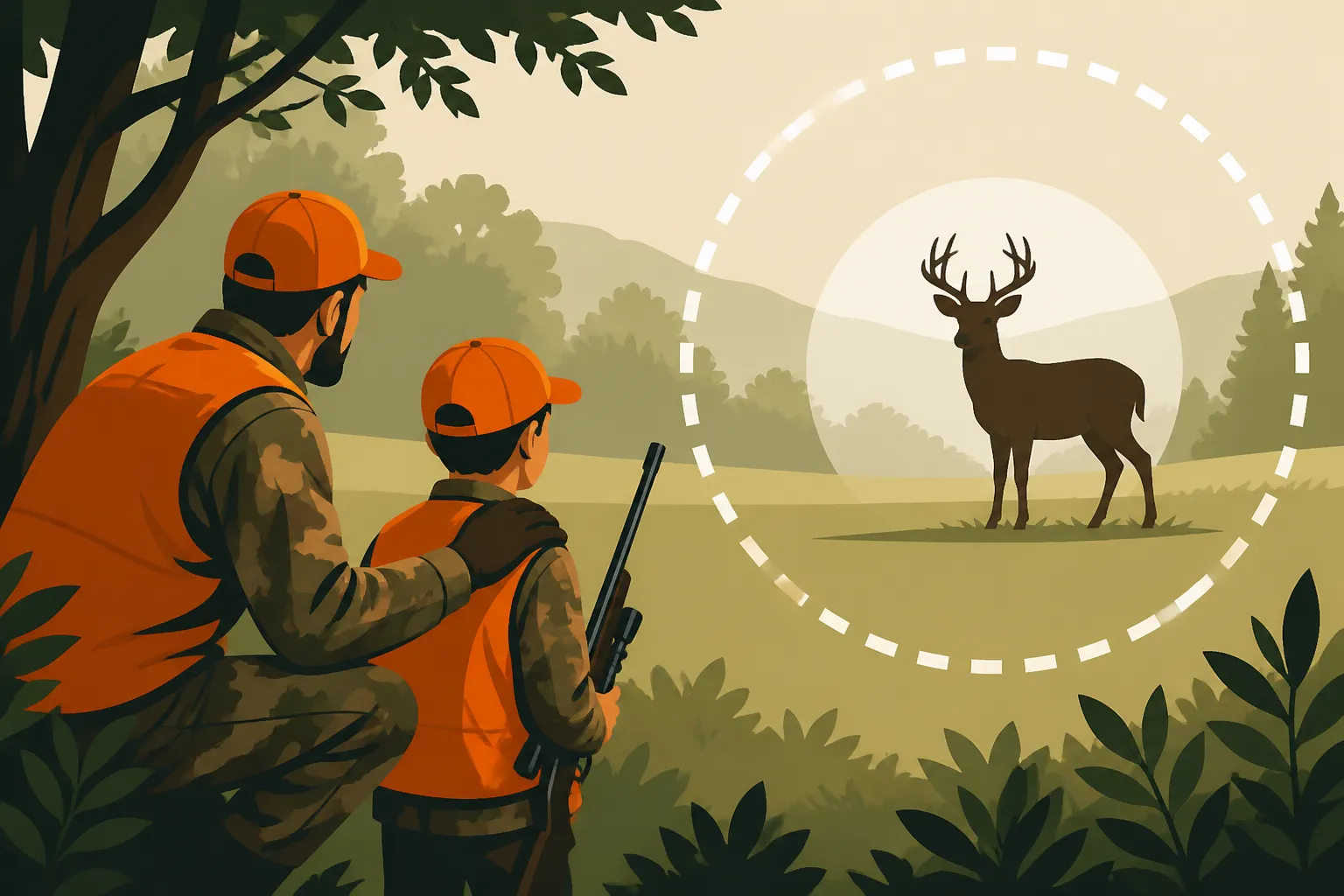
This is where many new mentors get hung up, and it's a critical point for safety and legal compliance. Alabama regulations are quite clear, stating that a mentor must remain "within normal voice communication and in the immediate presence" of the apprentice hunter. While this sounds straightforward, interpreting "normal voice communication" and "immediate presence" in diverse hunting environments can be tricky. It's not a hard-and-fast yardage, but rather a contextual requirement that prioritizes safety and direct supervision.
Interpreting "Normal Voice" and Line of Sight
"Normal voice communication" implies that you should be able to speak to your apprentice hunter without shouting, and they should be able to hear and respond to you easily. This typically means within a range of about 10-20 yards, depending on environmental factors. Crucially, it also implies that you need to be able to see your mentee. If thick brush or terrain features prevent you from seeing them, you're likely too far apart, even if you could theoretically yell loud enough to be heard. The spirit of the rule is about real-time, active supervision, not just periodic communication.
Think about it this way: if your mentee encounters an animal, you need to be close enough to advise them on shot placement, target identification, and safety. You need to confirm it's a legal animal, that the background is safe, and that they are taking an ethical shot. This close proximity also allows you to intervene immediately in case of a misfire, a fall from a Treestand Setups in Talladega National Forest, or any other unexpected event. It means you're almost acting as a second pair of eyes and ears, constantly monitoring their actions and the surroundings.
| Factor | Acceptable Proximity (Approx.) | Unacceptable Proximity (Scenario) | Reason |
|---|---|---|---|
| Visibility | Within clear line of sight | Dense woods, thick underbrush breaks line of sight | Cannot monitor target, safety, or intervene quickly. |
| Communication | Can speak/hear without yelling | Over hills, strong wind, far distances requiring shouting | Impedes immediate instruction, safety checks, or emergency communication. |
| Intervention | Immediate physical access | Separated by water, steep terrain, long walk | Prevents rapid response to unsafe acts, misfires, or animal tracking. |
| Terrain | Open fields, light timber | Rugged mountains, deep ravines, dense swamps | Exaggerates perceived distance, obstructs view, delays response time. |
Practical Scenarios on Public and Private Land
Let's consider a few real-world examples. If you're hunting an open field for doves, maintaining "normal voice communication and immediate presence" might mean you're sitting on the same bucket next to your mentee or within a few feet of them. There's clear line of sight, and conversation is easy. This is a common setup when Working a Dove Field on Opening Day.
Now, imagine you're still-hunting through dense pine timber in Bankhead National Forest. If you let your mentee get 30 yards ahead around a bend in a logging road, even if you can theoretically shout their name, you've likely violated the spirit of the rule. You wouldn't have immediate line of sight to observe their muzzle control, their target identification, or to step in if they stumble. In this scenario, you'd want to be no more than an arm's length away, or certainly within conversational distance, constantly scanning the woods alongside them. You might even want to utilize a tool like GoHunt's mapping features to plan your route through such dense areas, anticipating visibility challenges.
On private land, perhaps in a ground blind tucked into a field edge, the proximity is usually easier to maintain. You can be right next to them in the blind, whispering instructions as deer enter the field. However, if you're in separate ground blinds, even 50 yards apart, you're likely too far. The point is, the "distance" is dynamic. It changes with the environment, the weather, and the specific hunting activity. The core principle is always direct, unimpeded supervision. When Using a Ground Blind on Alabama Public Land, ensuring this close proximity means potentially sharing the same blind, not setting up separate ones.
Safety First: Beyond the Distance Rule
While the proximity rule is about direct supervision, it's just one piece of the larger safety puzzle for mentored hunts. Truly responsible mentoring goes beyond simply being close; it involves proactive planning, clear communication, and ensuring the apprentice hunter is equipped not just with gear, but with knowledge and confidence.
Establishing Clear Communication and Safety Protocols
Before you ever step foot in the woods, a thorough safety briefing is essential. This isn't just a quick chat; it's a detailed discussion about the day's plan, potential hazards, and how to react in various situations. Discuss firearm safety rules extensively: always point the muzzle in a safe direction, treat every firearm as if it's loaded, keep your finger off the trigger until ready to shoot, and be sure of your target and what's beyond it. These are the fundamentals of Firearm Safety Rules on a Guided Group Hunt, and they apply to mentored hunts universally.
Establish clear hand signals, especially if you anticipate moments where verbal communication might be difficult due to noise or the need for silence. Teach them how to use a whistle for emergencies. Make sure they understand the importance of identifying their target thoroughly before making any decision to shoot. Discuss specific scenarios: "What do you do if a deer comes from behind us?" or "If you stumble, what's the first thing you do with your gun?" This kind of pre-hunt planning and communication builds confidence and ensures that both mentor and mentee are on the same page for every moment in the field.
Equipment and Preparedness for Mentored Hunts
Beyond the firearm itself, consider all the gear necessary for a safe and comfortable hunt. This includes proper hunting attire, suitable for the weather conditions. Make sure your mentee is wearing the required amount of blaze orange during gun seasons – How Much Blaze Orange Alabama Requires is a non-negotiable safety measure. Appropriate footwear is also crucial to prevent slips and falls, especially in rugged terrain.
Always carry a well-stocked first-aid kit. Even minor scrapes and cuts can become problematic in the woods. Ensure you have a reliable form of communication, like a fully charged cell phone (though be aware service can be spotty in many Alabama hunting areas). Consider carrying a GPS device or using a reliable hunting app to track your location and navigate, especially if you're on unfamiliar public land. Resources like GoHunt can be invaluable for downloading offline maps and marking key waypoints before you lose cell service, providing an extra layer of safety and preparedness. Having snacks, water, and emergency shelter (even a small tarp) can turn a minor inconvenience into a manageable situation.
Navigating Alabama's Specific Regulations
Understanding the proximity rule is key, but it's part of a broader set of regulations that mentors and their youth apprentices must follow. Alabama's hunting laws are designed to manage wildlife populations ethically and ensure the safety of all hunters. Ignoring any part of these regulations could lead to fines, loss of hunting privileges, and a negative experience for everyone involved.
Mandatory Hunter Education and Exemptions
While the mentored youth program allows apprentice hunters to bypass the hunter education course initially, it's not a permanent exemption. If an apprentice hunter wants to hunt unsupervised in the future, they will eventually need to complete the course. Alabama requires anyone born after August 1, 1977, to complete an approved hunter education course before purchasing an unsupervised hunting license. The program effectively gives them a temporary pass to hunt under strict supervision.
Mentors should encourage their mentees to take the hunter education course as soon as they are ready. It's a comprehensive program that covers not just firearm safety, but also wildlife identification, conservation principles, hunting ethics, and more. This knowledge is fundamental to becoming a responsible, independent hunter. You can find more details on Alabama Hunter Education Requirements and what the course entails through the Alabama Department of Conservation and Natural Resources (ADCNR). There are online and in-person options available to fit different schedules.
Licenses and Permits for Mentors and Youth
Both the mentor and the apprentice hunter need to possess valid Alabama hunting licenses. The mentor must have a standard hunting license appropriate for their residency and the game they are pursuing. The apprentice hunter will need to purchase an "apprentice hunter license." This special license is specifically designed for individuals participating in the mentored program. It explicitly states that the holder must hunt under the direct supervision of a licensed, qualified mentor.
It's vital that both licenses are current and readily available for inspection by a game warden. Digital copies on a smartphone are generally accepted, but always ensure your phone is charged! Understanding the various Alabama Resident Hunting License Options and Alabama Nonresident Hunting License Options is important. Remember, the apprentice license is not a substitute for hunter education; it's a temporary permit. Once the apprentice hunter completes their hunter education, they can then purchase a regular hunting license and eventually hunt independently when they meet the Minimum Age for Unsupervised Alabama Hunting and other requirements. This entire process is about building a foundation for lifelong, safe hunting experiences.
The Role of Public vs. Private Land in Proximity Rules
Whether you're hunting on private land or one of Alabama's many public hunting areas, the proximity rules for mentors and youth remain the same. "Normal voice communication and immediate presence" applies across the board. However, the practical application might differ. On public land, especially in more rugged or heavily timbered areas like parts of the Talladega National Forest, maintaining constant line of sight and communication can be more challenging. This means mentors need to be even more diligent about staying close, often side-by-side, to ensure safety and compliance.
For instance, when utilizing Deer Drives on Alabama Public Land with a mentored youth, the mentor must be with the youth at all times, not simply assigned to the same stand. The dynamic nature of a drive requires constant awareness and immediate supervision. Similarly, when navigating winding trails or crossing creek bottoms, always ensure you're right there with your mentee. While private land often offers more controlled environments, the mentor's responsibility for direct supervision does not diminish. The rule exists to ensure the safety and ethical conduct of the hunt, regardless of who owns the land.
It's clear that hunting with a mentored youth in Alabama is a truly rewarding experience, but it comes with significant responsibilities. The "normal voice communication and immediate presence" rule isn't just about avoiding a ticket; it's about safeguarding the apprentice hunter, ensuring ethical hunting practices, and instilling a deep respect for the sport and its rules. By understanding and diligently following these guidelines, you can provide an invaluable learning experience, help foster the next generation of conservationists, and create cherished memories in the great Alabama outdoors.
Disclaimer
Please remember that hunting regulations can change. Always consult the most current Alabama Department of Conservation and Natural Resources (ADCNR) regulations and local ordinances before heading afield. This guide is intended for informational purposes only and should not be considered legal advice.