How Many Deer Have Tested CWD-Positive in Alabama
It’s a chilling thought for any deer hunter in Alabama: the specter of Chronic Wasting Disease (CWD) creeping into our beloved deer herds. For years, we watched the disease spread in other states, hoping it would never reach the Heart of Dixie. But now it’s here, and the question on everyone’s mind isn't just if it's here, but how many deer have actually tested positive, and what does that mean for our hunting seasons? This guide aims to pull back the curtain on the CWD situation in Alabama, giving you the latest numbers and what you need to know to hunt responsibly.
Understanding Chronic Wasting Disease in Alabama
The moment news broke about CWD in Alabama, a ripple of concern spread through the hunting community. It’s natural to feel uneasy, even a bit scared, about a disease that can literally waste away our deer. But understanding what CWD is and how it got here is the first step in addressing those worries and becoming part of the solution.
What is CWD and Why It Matters
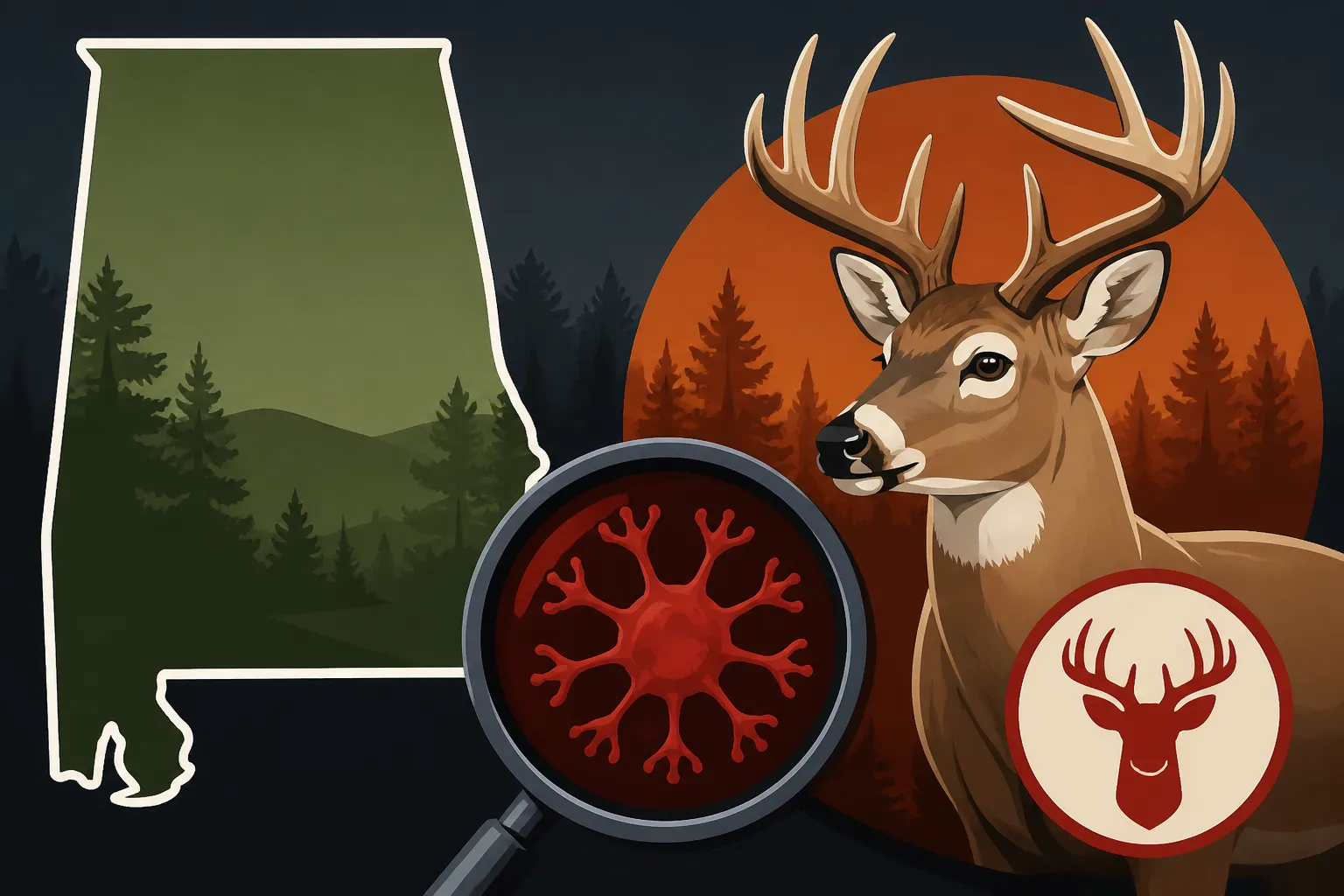
Chronic Wasting Disease is a nasty neurological disease that affects cervids – that’s deer, elk, moose, and caribou. It’s caused by abnormal proteins called prions, which slowly build up in the brain and spinal cord, eventually leading to severe neurological damage. Think of it as a slow-motion degenerative disease for deer. Infected animals become emaciated, exhibit abnormal behavior, drool excessively, and eventually die. It’s always fatal, and there’s currently no vaccine or cure.
The reason CWD matters so much to us hunters, beyond the obvious concern for the health of our deer, is multifold. First, it can decimate local deer populations over time, directly impacting hunting opportunities and the overall ecology of an area. Second, while there's no evidence CWD can spread to humans, health organizations like the CDC recommend against eating meat from infected animals. This raises concerns about venison consumption, a staple for many hunting families. Imagine harvesting a beautiful buck only to wonder if it's safe to feed your family. That's a real frustration many hunters are facing right now. Finally, the disease's persistence in the environment (prions can remain infectious in soil for years) makes it incredibly difficult to manage and eradicate, meaning it's something we'll likely be dealing with for the foreseeable future. It fundamentally changes how we interact with our deer herd and manage our hunting lands.
Alabama's Initial CWD Discovery
For years, the Alabama Wildlife and Freshwater Fisheries Division (ADCNR) conducted surveillance, testing thousands of deer annually, always with a knot in our stomachs hoping for negative results. The unfortunate news finally came in February 2022, confirming the presence of CWD in Alabama. The first case was detected in a hunter-harvested deer in Lauderdale County, specifically in the northwest corner of the state, near the Tennessee border. This discovery wasn't entirely unexpected, given that CWD was already established in bordering states like Mississippi and Tennessee. It felt like an inevitability, but that didn't make the news any easier to swallow.
The immediate aftermath was a flurry of activity and anxiety. ADCNR swiftly implemented its CWD response plan, which included establishing a CWD Management Zone (CMZ) and initiating mandatory testing in specific areas. Hunters felt a mix of disappointment and a renewed sense of responsibility. We had heard the warnings, but now CWD was truly on our home turf. The reality of How CWD Reached Northwest Alabama began to sink in, and everyone realized that our collective actions would determine the path forward for Alabama's deer herd.
The Current Count: CWD-Positive Deer in Alabama
Knowing CWD is here is one thing, but getting a handle on its prevalence is another. The numbers can be fluid as surveillance continues, but having the most up-to-date figures helps us understand the scope of the problem and where our efforts need to be focused.
Official Numbers and Trends Since 2022
Since that first detection in February 2022, Alabama has continued robust surveillance efforts, focusing heavily on the CWD Management Zone. As of early 2024, the Alabama Wildlife and Freshwater Fisheries Division (ADCNR) reports a total of 38 CWD-positive deer have been detected in the state. This number has steadily increased from the initial few cases, indicating the disease is present and slowly spreading within the immediate detection area. While 38 might sound like a small number compared to other states with thousands of cases, it's crucial to remember that this represents positive identifications, and the actual prevalence in the wild could be higher. The trend is one of slow but consistent increase within the localized area, rather than an explosion across the state, which is a testament to the ADCNR's proactive measures and hunter cooperation.
The majority of these confirmed cases have been found in Lauderdale and Colbert counties, with a few detections in Franklin County. This concentration points to a localized outbreak rather than widespread contamination across the entire state, which is a silver lining. Hunters in these specific counties are now operating under new guidelines and playing a critical role in the state's response. Understanding How Many Deer Have Tested CWD-Positive Since 2022 gives us a baseline for future comparisons and helps us gauge the effectiveness of management strategies.
Breakdown by County and Zone
To provide a clearer picture, let's look at where these 38 CWD-positive deer have been found. The disease is highly concentrated in the northwest corner of Alabama, particularly within the CWD Management Zone (CMZ).
| County | Confirmed CWD-Positive Deer (as of early 2024) | Zone Status within CMZ |
|---|---|---|
| Lauderdale | Most cases (Exact number not always specified individually, but majority are here) | High-Risk Zone |
| Colbert | Several cases (Exact number not always specified individually) | High-Risk Zone |
| Franklin | A few cases (Exact number not always specified individually) | Buffer Zone |
| Other Counties | 0 | Not in CMZ |
Note: The exact county-by-county breakdown of individual cases can fluctuate as new detections occur, but Lauderdale and Colbert counties consistently show the highest numbers within the CMZ.
The CWD Management Zone (CMZ) currently encompasses Lauderdale, Colbert, and Franklin counties. Within this zone, Lauderdale and Colbert counties are designated as the "High-Risk Zone," due to the higher concentration of positive detections. Franklin County is considered the "Buffer Zone," where regulations are slightly less stringent but still in place to prevent further spread. This zonal approach allows ADCNR to focus resources and regulations where they are most needed, minimizing impact on hunters in other parts of the state. Hunters often ask, Which Counties Sit in Alabama's CWD Zone, and this table provides that clarity. The reason Why Lauderdale County Drives Alabama's CWD Count is largely due to its geographical proximity to known CWD areas in neighboring states and likely early introduction points.
The Importance of Ongoing Monitoring
The discovery of 38 CWD-positive deer in Alabama isn't just a static number; it's a dynamic situation that requires continuous vigilance. That’s why ongoing monitoring is absolutely critical. ADCNR relies heavily on hunter cooperation, especially during mandatory testing weekends, to collect samples from harvested deer. These efforts help biologists understand the true prevalence of the disease, track its potential spread, and make informed management decisions.
Sampling stations are set up strategically within and around the CMZ, making it as convenient as possible for hunters to submit their deer heads for testing. This isn't just a bureaucratic hurdle; it's a vital part of protecting our deer. Every sample submitted provides valuable data. Hunters can find information on Mandatory CWD Testing Weekends and Finding an Alabama CWD Sampling Station on the Outdoor Alabama website or through their app. Without this collective effort, our ability to monitor and potentially contain CWD would be severely hampered. Your role, as an ethical hunter, goes beyond pulling the trigger; it extends to participating in these crucial monitoring programs.
Navigating the CWD Management Zone (CMZ)
Stepping into the CWD Management Zone (CMZ) for a hunt feels different. There's an added layer of responsibility and a few extra rules to keep in mind. It's not about making hunting harder, but about taking necessary precautions to protect Alabama's deer herd for future generations.
What the CMZ Means for Hunters
If you're hunting in Lauderdale, Colbert, or Franklin counties, you are within Alabama's CWD Management Zone (CMZ). This designation comes with specific regulations designed to minimize the risk of CWD spreading further. One of the most significant rules revolves around mandatory CWD testing. During specific periods, typically opening weekends of gun season, all deer harvested within the High-Risk Zone (Lauderdale and Colbert counties) must be submitted for CWD testing. This isn't optional; it's a requirement to help biologists gather critical data. You'll need to know where the designated sampling stations are and plan your hunt accordingly.
Another crucial aspect of the CMZ is the restriction on carcass movement. You generally cannot transport an entire deer carcass out of the High-Risk Zone. This regulation is in place because the prions that cause CWD are found in various parts of the deer, including the brain, spinal cord, and lymph nodes. Moving an entire carcass could inadvertently spread the disease to unaffected areas. Instead, hunters must bone out the meat, process it locally, or follow specific rules for transporting certain parts like cleaned skull plates or capes. Understanding Alabama Carcass Movement Restrictions is paramount to avoid fines and unknowingly contributing to the problem. These rules might feel inconvenient, but they are essential safeguards.
Adapting Hunting Practices in the CMZ
Hunting in the CMZ requires a bit more foresight and planning. First and foremost, always check the current ADCNR regulations before you head out, as rules can change. You'll need to be hyper-aware of your location; tools like the Outdoor Alabama App or other advanced mapping software can help you pinpoint if you're in the High-Risk Zone or the Buffer Zone, and thus what rules apply. While a tool like GoHunt is excellent for many hunting applications, particularly out West, for Alabama's specific CWD zones, relying on the official Outdoor Alabama App or direct ADCNR resources is your safest bet for accurate, real-time local information.
When you harvest a deer in the CMZ, especially in the High-Risk Zone, immediately plan for processing. Many hunters bring coolers specifically for boned-out meat. If you use a processor, make sure they are aware of the CMZ regulations and can handle the carcass in compliance with the rules. Some local processors within the CMZ are already set up to receive and handle deer under these restrictions. Don't forget that for Mandatory CWD Testing Weekends, you'll need to transport the head (with about 6 inches of neck attached) to an official CWD sampling station. After handling a harvested deer, it’s always a good idea to thoroughly clean and disinfect your tools and equipment. This diligent approach helps minimize any potential spread. If you're wondering about handling the meat, there are specific guidelines for Handling Venison From the CWD Management Zone to ensure safety and compliance.
Future Outlook and Hunter's Role
The presence of CWD in Alabama is a long-term challenge, not a temporary blip. While the current numbers are relatively low, we cannot afford to be complacent. The future health of our deer herd and hunting traditions depends on continued scientific efforts and, most importantly, the proactive participation of every hunter.
What Biologists Are Learning
Wildlife biologists in Alabama, alongside experts nationwide, are constantly working to understand CWD better. They're studying the prevalence of the disease, how it spreads, and what factors might influence its trajectory. For instance, data from mandatory testing helps them map the exact locations of positive cases, identify clusters, and assess the CWD Prevalence in the High-Risk Zone. This information is crucial for determining if current management strategies are effective or if adjustments are needed. They're also investigating environmental factors, deer movement patterns, and genetic susceptibilities within the Alabama herd.
Research extends beyond just counting cases. Scientists are exploring ways to detect CWD earlier, potentially even in live animals, and looking into how different land management practices might impact its spread. The hope is to find innovative solutions for managing the disease in the wild, whether that involves habitat manipulation, targeted removals in high-prevalence areas, or other novel approaches. It's a complex puzzle, and every piece of data gathered from harvested deer contributes to solving it.
Your Part in Protecting Alabama's Deer Herd
As hunters, we are often the first line of defense and observation in the field. Your actions are incredibly important in the fight against CWD. Here’s how you can make a real difference:
- Report Sick Deer: If you ever see a deer exhibiting symptoms consistent with CWD – emaciation, excessive drooling, stumbling, or unusual behavior – do NOT harvest it. Instead, immediately report it to the ADCNR Wildlife and Freshwater Fisheries Division. Providing details about the location and observed symptoms allows biologists to investigate promptly. You can find guidance on Reporting a Sick Animal in Alabama on the Outdoor Alabama website.
- Comply with Testing and Carcass Rules: Adhere strictly to all mandatory CWD testing requirements in the CMZ. Take your harvested deer to the designated sampling stations during the specified times. Understand and follow the carcass movement restrictions meticulously. These rules are designed for a reason, and compliance is non-negotiable for containing the disease.
- Practice Ethical Hunting and Processing: Bone out deer harvested in the CMZ before leaving the zone. Properly dispose of carcass remains by burying them on the property where the deer was harvested, if allowed, or by taking them to designated landfills or processing facilities that accept them. Never discard deer carcasses randomly, especially near roadsides or in new areas.
- Stay Informed: Keep up-to-date with the latest CWD information and regulations from ADCNR. The situation can evolve, and staying informed through official channels like the Outdoor Alabama website or their social media is crucial.
- Clean Your Equipment: After hunting, especially in the CMZ, thoroughly clean your boots, vehicles, and hunting equipment to remove any soil or deer tissue that could potentially harbor CWD prions.
By taking these steps, you’re not just following rules; you’re actively participating in the long-term health and sustainability of Alabama's incredible deer herd. Our shared passion for hunting depends on our collective responsibility.
Disclaimer
The information provided in this article is for general guidance and informational purposes only. While we strive to provide accurate and up-to-date content, hunting regulations, CWD statistics, and scientific understanding are subject to change. Always consult the official Alabama Department of Conservation and Natural Resources (ADCNR) website, current hunting regulations, and local authorities for the most precise and timely information regarding Chronic Wasting Disease and hunting rules in Alabama.