Taking Alabama Hunter Education Online
Trying to fit a hunter education course into a packed schedule can feel like an impossible feat, especially when you're balancing work, family, and the constant pull of the outdoors. But getting certified is a non-negotiable step for many Alabama hunters. This comprehensive guide will walk you through everything you need to know about taking your Alabama Hunter Education course online, making the process as convenient and straightforward as possible so you can get back to what you love.
Why Hunter Education is a Must-Have in Alabama
Before you can legally head into Alabama's woods and fields with a firearm or bow, understanding and demonstrating proficiency in safe hunting practices is absolutely critical. Hunter education isn't just about ticking a box; it's about ensuring safety, promoting ethical hunting, and preserving our hunting heritage for generations to come. Without it, you're not only putting yourself and others at risk but also running afoul of state law.
Who Exactly Needs This Certification?
The rules around hunter education can sometimes feel a little convoluted, but here’s the straightforward breakdown for Alabama. If you were born on or after August 1, 1977, you are required to complete an approved hunter education course before you can purchase a hunting license in Alabama. This applies whether you're a resident or a nonresident. There are a few key exceptions and alternatives to be aware of, which can sometimes make the process seem less daunting.
For instance, if you're new to hunting or just visiting, Alabama offers a fantastic option called the Alabama Apprentice Hunter License Rules. This allows an individual to hunt for one license year without having completed hunter education, provided they are under the direct supervision of a fully licensed and certified hunter who is 21 years of age or older. It's a great way to get a taste of hunting and learn from an experienced mentor before fully committing to the course. However, remember it's a one-time deal – after that first year, you'll still need to get certified. Furthermore, certain licenses, like a designated hunting preserve license, might have different requirements, but for general hunting across the state, the 1977 rule stands firm. Also, anyone holding a valid hunter education card from another state or province that is recognized by the Alabama Department of Conservation and Natural Resources (ADCNR) is exempt from taking the Alabama course.
The Consequences of Skipping Hunter Ed
Ignoring the hunter education requirement isn't just a minor oversight; it carries real weight and can lead to significant problems. First and foremost, without the proper certification, you won't be able to purchase a standard Alabama Hunting Licenses and What They Cost, which means any hunting you do would be illegal. That can result in fines, confiscation of equipment, and even loss of hunting privileges, which nobody wants. Imagine spending all that time scouting, setting up a stand, and waiting for the perfect buck, only to face legal trouble because you didn't have the right paperwork.
Beyond the legal ramifications, there are practical consequences. Many public hunting areas, particularly Wildlife Management Areas (WMAs), strictly enforce hunter education requirements. You might find yourself denied access to prime hunting spots if you can't produce proof of certification, such as when applying for a Alabama WMA Permit Requirement or checking in for a hunt. More importantly, hunter education is designed to make you a safer, more ethical hunter. Skipping it means missing out on vital information regarding firearm handling, identifying game, understanding hunting regulations, and respecting wildlife and fellow outdoors enthusiasts. This knowledge not only keeps you safe but also contributes to a positive public perception of hunting. Ignoring these principles could put yourself or others in harm's way, which is a risk no true sportsman should ever take.
The Convenience of Online Hunter Education
Let's be honest, finding time to sit in a classroom for multiple evenings or an entire weekend can be tough. Work schedules, family commitments, and just the general busyness of life often get in the way. This is where online hunter education truly shines, offering a flexible and accessible alternative that fits into your life, rather than forcing you to rearrange it.
How Online Courses Work
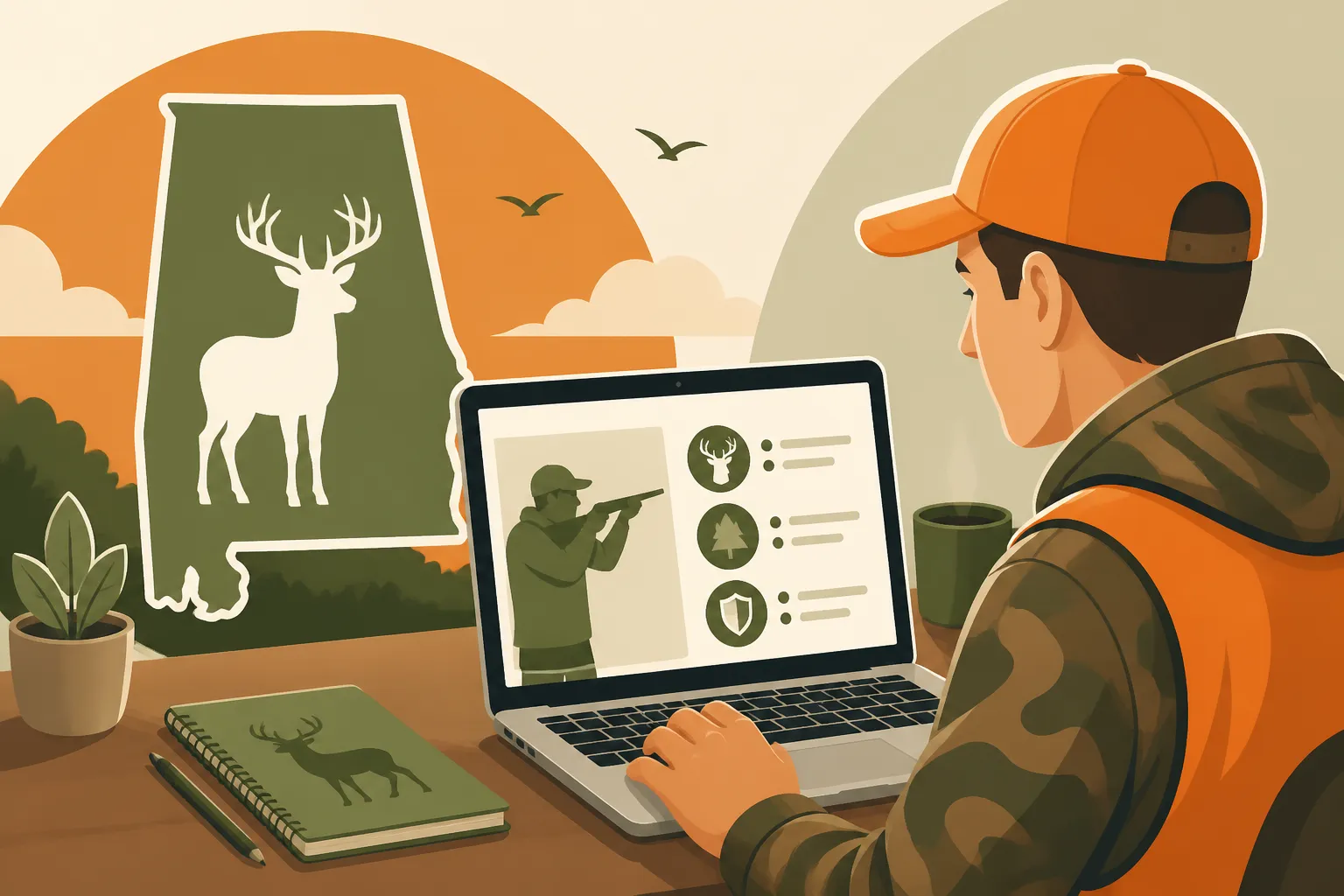
Online hunter education courses are designed with modern learners in mind. They break down the traditional classroom curriculum into easily digestible modules that you can complete at your own pace, from the comfort of your home, or even on your phone during a lunch break. Think of it as a comprehensive digital textbook combined with interactive quizzes, videos, and scenarios that mimic real-life hunting situations.
Typically, these courses cover everything from basic firearm safety, shot placement, and field dressing to hunter ethics, wildlife identification, and state hunting regulations, like Alabama Legal Firearms for Deer Hunting or understanding specific seasons. Each section usually ends with a short quiz to test your understanding before you can move on. This self-paced format means you can spend more time on topics you find challenging and breeze through those you already know. The entire course often takes several hours to complete, but you don't have to do it all in one sitting. You can log in and out as many times as you need, picking up right where you left off. It's truly a game-changer for busy individuals.
Choosing the Right Online Provider
When it comes to selecting an online hunter education provider, it’s crucial to pick one that is officially recognized and approved by the Alabama Department of Conservation and Natural Resources (ADCNR). Not all online courses are created equal, and you want to ensure your time and effort result in a valid certification. The ADCNR website typically lists all approved online providers, so that should always be your first stop to verify legitimacy.
Many reputable organizations offer these courses. For example, GoHunt is one of the platforms that provides a robust, state-approved online hunter education course for Alabama. They've invested in making the content engaging and easy to understand, incorporating interactive elements and clear explanations to help you grasp even complex regulations. Other popular options might include providers like Hunter-ed.com or IHEA-USA, which are often nationally recognized and adapted for specific state requirements. Before you commit, always double-check the ADCNR's official list to ensure the provider you choose will issue a certificate that Alabama fully accepts. Be wary of any site that promises an instant certificate without significant coursework, as these are unlikely to be legitimate and could cost you money and time for nothing.
Step-by-Step: Taking Your Alabama Hunter Ed Online
Embarking on your online hunter education journey is simpler than you might think. With a little focus and dedication, you'll be certified in no time. Let's break down the typical process from start to finish.
Registering and Starting the Course
The first step is to choose your approved online provider (remember to verify it with ADCNR!) and navigate to their Alabama hunter education course page. You'll typically need to register an account, which usually involves providing some basic personal information like your name, address, and date of birth. This is important because your age plays a role in your certification, particularly if you are under 10 years old. As a reminder, while those under 10 can take the course for educational purposes, they won't receive full certification until they complete a conventional, in-person course. If you are 10 years of age or older, you can receive full certification purely from the online course.
You'll also need to pay the course fee upfront. Prices can vary slightly between providers, but generally, they are quite affordable for the convenience they offer. Once your registration is complete and payment processed, you'll gain access to the course material. Take a moment to familiarize yourself with the platform, how to navigate between modules, and where to find your progress tracker. It's a good idea to ensure you have a stable internet connection and a quiet place to study, free from distractions. While you can often pause and resume, an uninterrupted session for a module or two can really help with retention.
Navigating the Course Material
The online course is typically broken down into several chapters or modules, each focusing on a specific aspect of hunting. You'll move through topics systematically, building your knowledge base as you go. Expect to cover:
- Firearm and Archery Safety: This is foundational. You'll learn the cardinal rules of firearm safety, proper handling, storage, and transportation. For archery, it will cover bow handling, arrow safety, and range etiquette. This section is absolutely critical for safe hunting and avoiding accidents, even when just scouting or practicing on the range.
- Hunting Ethics and Responsibility: Beyond the legalities, this part dives into what it means to be an ethical hunter. It covers fair chase principles, respecting landowners, proper game recovery, and the importance of leaving no trace. Understanding these principles helps foster a positive image of hunting and ensures sustainable practices.
- Wildlife Management and Conservation: You'll learn about the role of hunters in conservation, wildlife biology basics, habitat management, and how hunting license fees contribute directly to protecting Alabama's natural resources. This section often brings a deeper appreciation for the system that allows us to hunt.
- Alabama Hunting Regulations: This is where you'll get into the nitty-gritty of Alabama's specific rules, covering everything from bag limits and season dates (like those outlined in Alabama Deer Season Structure Explained) to legal hunting hours and equipment restrictions. You’ll also learn about important safety requirements such as How Much Blaze Orange Alabama Requires during gun seasons.
- Survival and First Aid: Practical skills for the field are also often included, such as how to handle emergencies, basic first aid, and what to do if you get lost or injured in the wilderness. Learning how to properly Field Dressing a Deer in Warm Weather is another crucial skill that might be covered.
Each module will usually have interactive quizzes or short knowledge checks. These aren't meant to trip you up, but rather to reinforce the material and ensure you're absorbing the information. Take your time, review anything you're unsure about, and don't hesitate to retake quizzes if needed. The goal is mastery, not just rushing through.
The Final Exam and Certification
Once you've diligently worked your way through all the modules and completed all the interim quizzes, you'll reach the culmination of the online course: the final exam. This comprehensive test will cover material from all sections of the course, ensuring you have a solid understanding of hunter safety, ethics, and regulations.
The final exam is typically multiple-choice and timed, but usually, you'll have ample time to complete it if you've studied the material thoroughly. Most online providers allow you to retake the exam if you don't pass on your first attempt, sometimes after a short waiting period or a review of specific sections. Make sure you understand the passing score threshold before you begin. Once you successfully pass the final exam, congratulations! You've officially completed the online hunter education course. The system will then typically generate a temporary certificate of completion that you can print immediately. This temporary certificate is your initial proof of having passed the course and is essential for the next steps. It's a tangible reward for your hard work and diligence in making yourself a safer, more responsible hunter.
What Comes After Online Certification?
Passing your online hunter education course is a huge accomplishment, but it's not quite the finish line. There are a couple more steps to ensure your certification is fully recognized and accessible when you need it.
Getting Your Official Alabama Hunter Ed Card
Once you've passed the final exam and printed your temporary certificate, the next crucial step is to obtain your official Alabama Hunter Education card. This is the physical proof you'll carry with you when hunting, and it's what game wardens will ask to see if you're checked in the field. While the temporary certificate is good for immediate proof, you'll want the official, durable card.
Typically, after passing the online course, the approved provider will automatically submit your completion record to the Alabama Department of Conservation and Natural Resources. The ADCNR will then process this information and issue your official Hunter Education Certificate. This certificate usually takes a few weeks to arrive in the mail, but sometimes you can access a digital version or print a more official-looking one directly from the Outdoor Alabama website once your record has been updated. This digital or printable version is often just as valid as the mailed card. It's always a good idea to keep a digital copy saved on your phone (perhaps alongside the Scouting With the Outdoor Alabama App for easy access) and a printed copy in your hunting pack. Remember, if you're new to hunting, don't forget to also apply for your actual hunting license, as the hunter education certificate simply qualifies you to buy one, it isn't the license itself.
Combining Online with a Field Day
For many adult hunters (those 10 years of age and older), the online hunter education course is a complete standalone certification in Alabama. You take the online course, pass the exam, and you're good to go. However, some states do require a mandatory in-person field day or skills component in addition to the online coursework. While Alabama typically does not require this for those 10+, it's important to understand what a field day entails for those who might choose a conventional course or fall into the younger age bracket that requires one.
A field day typically involves hands-on learning and practical application of the safety principles covered online. This might include:
- Live-fire exercises: Safely handling and shooting a firearm under the direct supervision of an instructor.
- Archery range practice: Demonstrating safe bow handling and shooting techniques.
- Tree stand safety demonstrations: Learning proper installation, use of safety harnesses, and ascent/descent techniques. This is critical for preventing accidents, especially when considering Treestand Setups in Talladega National Forest.
- Blood trailing and game recovery scenarios: Putting learned skills into practice for ethical harvesting and recovery, useful for situations like Tracking a Deer Through Alabama Pine Straw.
- Compass and map reading: Basic navigation skills that are invaluable when Finding Ground Others Walk Past on public land.
For those under 10 years old who wish to be fully certified, completing an ADCNR-approved conventional (in-person) course is the path to official certification. These traditional courses will always include these practical, hands-on components, ensuring even the youngest hunters have a strong foundation in safety and responsibility. If you're 10 or older and want to experience a field day, you can often find conventional courses offered by local wildlife agencies or sportsmen's clubs, providing an excellent opportunity for additional practical experience. Just make sure you understand the specific requirements for your age and situation to ensure you are fully compliant with Alabama law.
| Feature | Online Hunter Education Course | Conventional (In-Person) Course |
|---|---|---|
| Flexibility | High; self-paced, can be taken anytime, anywhere with internet | Low; fixed schedule, specific location |
| Cost | Typically $20-$40, plus potential small administrative fees | Often free, but may have small fees for materials |
| Content Delivery | Interactive modules, videos, quizzes, virtual scenarios | Classroom lectures, discussions, physical demonstrations |
| Hands-on Experience | Limited (simulated scenarios) | Extensive (live-fire, archery, field skills, treestand safety) |
| Time Commitment | ~6-10 hours of self-study, broken up as desired | ~8-16 hours of structured classroom time, often over days |
| Minimum Age (Full Cert) | 10 years old (for Alabama) | No minimum age for educational purposes, but practical cert varies |
| Certification Issue | Electronic submission to ADCNR, mailed card or printable PDF | Issued by instructor at course completion |
| Ideal For | Busy adults, those preferring self-study | Younger hunters, those seeking direct instruction and hands-on practice |
Disclaimer
Please remember that hunting regulations, license requirements, and hunter education policies can change. While this guide aims to provide the most current and accurate information, it is always your responsibility to verify all details with the official Alabama Department of Conservation and Natural Resources (ADCNR) website or contact them directly before planning your hunt. This content is for informational purposes only and does not constitute legal advice.