Alabama Rabbit Season Opening Day
For many Alabama hunters, the arrival of autumn doesn't just mean deer stands and duck blinds; it signals the start of another cherished tradition: rabbit season. Getting out there on opening day can feel overwhelming if you're not sure about the dates, regulations, or even the best ways to find these elusive cottontails. This comprehensive guide will walk you through everything you need to know about Alabama's rabbit season opening day, ensuring you're fully prepared for a successful and enjoyable hunt.
Understanding Alabama's Rabbit Season Opening Day
The crisp air, the rustling leaves, the eager barks of a beagle pack – there's something truly special about chasing rabbits in Alabama. But before you can experience that thrill, you need to know exactly when the season kicks off and what rules govern this popular small game pursuit. It's not just about setting a date; there's a tradition and a biological rhythm behind it.
Official Dates and Bag Limits
Alabama's rabbit season typically opens in the early fall and runs well into the winter months, offering a generous window for hunters. The exact opening day can vary slightly year to year, so always double-check the latest regulations published by the Alabama Department of Conservation and Natural Resources (ADCNR). Historically, you can expect the season to begin around mid-September, often aligning with squirrel season, and extending through early March. This long season gives hunters ample opportunities to get afield.
When it comes to the daily bag limit, Alabama is quite generous, allowing hunters to take a good number of rabbits per day. This reflects the healthy and widespread population of cottontail rabbits across the state. The typical daily bag limit for rabbits is usually 8 per hunter, with a possession limit of 16. However, it's absolutely crucial to consult the current year's Alabama Hunting & Fishing Digest to confirm these numbers before you head out. Regulations can change, and being informed is your first step to a legal and ethical hunt.
Why the Season Starts When It Does
You might wonder why rabbit season opens in mid-September. It's not arbitrary; there's a biological and traditional reason behind it. By this time, the rabbit population has seen its peak breeding activity and subsequent population boom through the spring and summer. This means there's a robust population of mature rabbits available, ensuring a sustainable harvest. Young rabbits born earlier in the year have had time to grow to a good size, providing a better hunting experience and more meat.
Furthermore, the cooler temperatures starting in the fall are better for hunters and their dogs. Early fall brings relief from the intense Alabama summer heat and humidity, making it more comfortable to be out in the field for extended periods. It also helps with game care, as cooler weather slows spoilage. From a habitat perspective, some of the dense summer foliage begins to thin out, making it slightly easier to spot rabbits and for dogs to work through cover, though thickets remain key. This overlap with other seasons, like squirrel, also allows hunters to pursue multiple small game species, maximizing their time in the woods.
Preparing for Your First Rabbit Hunt
Opening day is all about preparation. You can't just stumble out into the woods and expect success. A well-planned rabbit hunt involves scouting, gear readiness, and ensuring your hunting companions – especially if they have four legs – are up to snuff.
Essential Gear and Licensing Requirements
Before you even think about hitting the woods, make sure your gear is ready and you're legally compliant. A good pair of briar-resistant pants or chaps is non-negotiable when you're pushing through the thick stuff rabbits love. A comfortable, durable hunting coat or vest with plenty of pockets for shells and game is also key. Don't forget sturdy, waterproof boots, because you'll likely be traversing damp creek bottoms and dewy fields. Safety glasses and hearing protection are always a smart choice, especially if you're hunting with a group or dogs.
For firearms, a shotgun is the most common choice for rabbit hunting, typically a 12 or 20 gauge, loaded with small shot sizes like 6 or 7.5. Many hunters also favor .22 caliber rimfire rifles for a more challenging shot at a sitting rabbit, or for a quieter approach when still-hunting. Always check local WMA rules if you're hunting public land, as some may have restrictions on ammunition types or firearm calibers.
On the legal side, you absolutely need an Alabama hunting license. For most residents, an Alabama Resident All-Game License Cost will cover you. Non-residents have various options, like an Alabama Nonresident Annual License Cost or shorter-term permits. You can purchase your license easily through the Outdoor Alabama website or app, or from authorized license retailers. Don't forget to carry proof of your license, whether it's a physical copy or on your phone, as wardens can and will check. If you're new to hunting, remember that Who Needs Alabama Hunter Education requirements are in place for safety.
Scouting for Rabbit Hotspots
Rabbits are creatures of edge habitat. They love areas where dense cover meets open feeding grounds. This means you should be looking for places like overgrown fencerows, briar thickets, brush piles, clear-cuts with dense new growth, and the edges of agricultural fields, especially those with standing crops or dense weeds. Creek bottoms with heavy undergrowth are also prime real estate.
Pre-season scouting doesn't necessarily mean walking every inch of cover (your beagles will do that for you!), but it means identifying potential areas on maps and driving or walking likely spots. Look for tracks in muddy areas, droppings, and clipped vegetation. Rabbits will often create little trails through dense grass or underbrush, which can be a dead giveaway. Using satellite imagery, perhaps with a tool like GoHunt's mapping features, can help you pinpoint these transition zones and dense covers from the comfort of your home. Focus on areas that offer easy access to food and immediate escape cover. If you find a patch of honeysuckle next to a cut soybean field, you've likely found a rabbit paradise.
Training Your Hunting Companions
For many, rabbit hunting isn't truly rabbit hunting without a good pack of dogs, usually beagles. If you plan to hunt with dogs, the off-season is the time for training. Beagles are born with an instinct to trail, but they need to learn to listen to commands, stay within a reasonable range, and work together as a pack. Early training should focus on basic obedience (come, stay, heel) and getting them accustomed to gunshots in a controlled environment.
As the season approaches, take your dogs on conditioning walks in rough terrain to build their stamina and toughen their paws. You can also run them in areas known to hold rabbits (even out of season, if legal and ethical) to hone their scenting and trailing skills. Remember, a well-conditioned dog is a happy and effective hunting dog. Proper nutrition, veterinary care, and regular exercise are paramount for their performance and well-being during the season. Consider reading up on Running Dogs on Alabama Feral Hogs for a different type of canine hunting, but many principles of dog care and conditioning apply across species.
Key Tactics for Opening Day Success
Opening day can be a whirlwind of excitement. To maximize your chances of success, you'll want to employ proven tactics that capitalize on rabbit behavior and habitat preferences.
Still-Hunting and Stalking Strategies
While dogs are traditional, you can absolutely enjoy a productive rabbit hunt without them. This is often called still-hunting or stalking. The key here is stealth and patience. Move slowly through known rabbit habitats – those fencerows, brush piles, and thickets we talked about. Pause frequently, often for several minutes, and scan the ground ahead and to the sides. Rabbits are masters of camouflage and will often sit tight, hoping you walk past.
When you pause, try to identify anything that looks "out of place" – a slight change in texture, a glint of an eye, or the dark patch of a rabbit's back. Pay close attention to sun-dappled areas where their fur blends in perfectly. When you spot one, if it's sitting still, take a careful shot with a .22 rifle if you're comfortable and safe to do so. If it bolts, be ready with your shotgun. This method requires a lot of focus and quiet movement, but it can be incredibly rewarding. It's also a great way to Squirrel Hunting Alabama Bottomland Hardwoods or other small game.
Hunting with Dogs: Beagles and Brush Piles
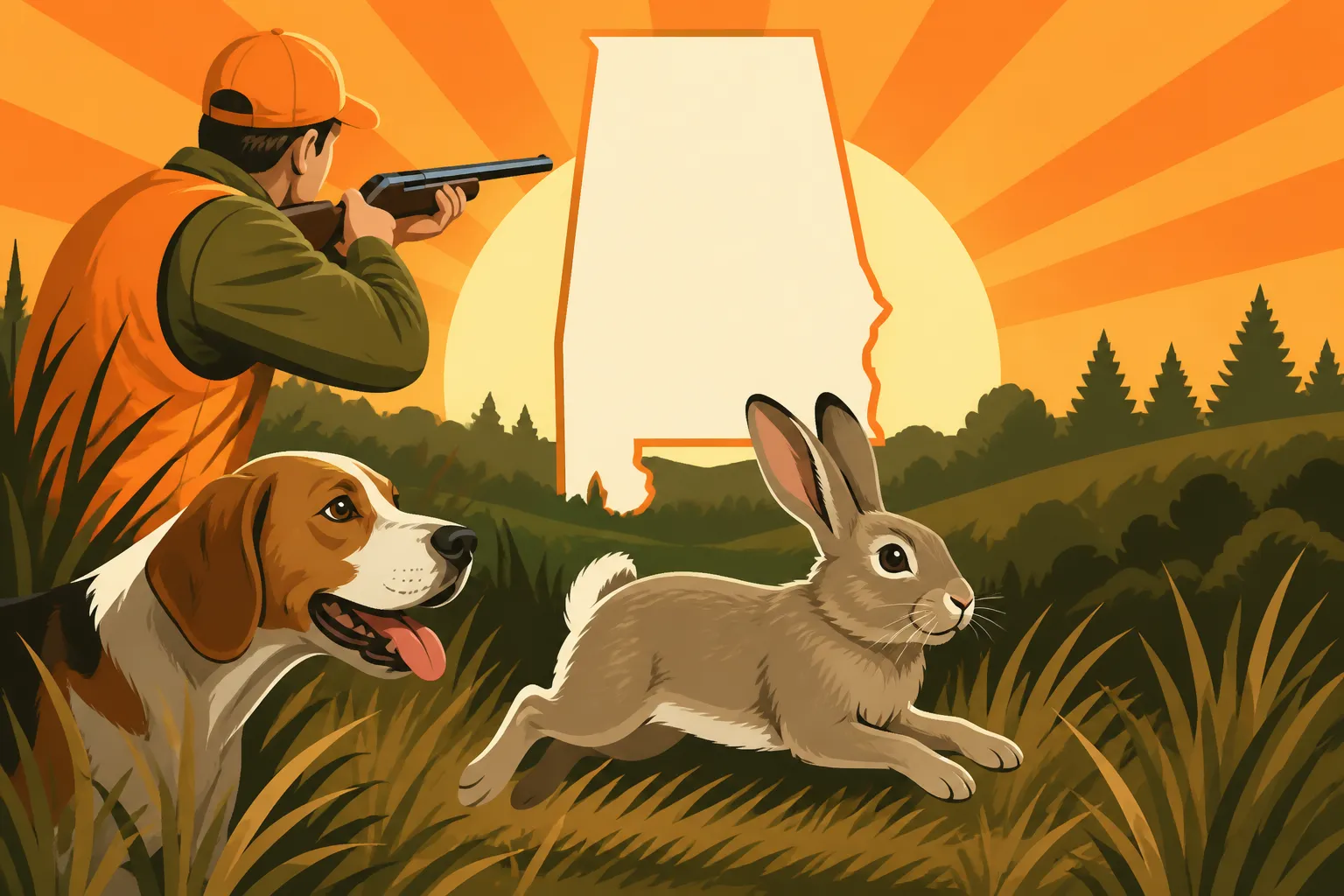
This is the classic Alabama rabbit hunt. A pack of beagles is designed for this job: they pick up a rabbit's scent, trail it, and their excited baying drives the rabbit out of cover and often in a circle back towards where it was jumped. Hunters strategically position themselves along likely escape routes or around dense cover while the dogs work.
The strategy involves understanding how rabbits behave when chased. They rarely run in a straight line for long distances. Instead, they'll circle back to familiar territory, often using the same briar thickets, brush piles, or logging roads as escape routes. Position yourself downwind, quietly, and wait. Listen to the dogs' voices; a frantic, fast bay usually means they're hot on the trail. When the rabbit bursts out, make a quick, clean shot. Be mindful of your fellow hunters and dogs, always knowing your backdrop and swinging safely. After the shot, be sure to keep an eye on your dogs, praising them for a good chase and ensuring they don't get lost or spook other game.
| Hunting Method | Pros | Cons | Ideal Habitat |
|---|---|---|---|
| With Beagles | High success rate, exciting chase, dogs do the work of flushing, covers more ground. | Requires dog training & care, can be noisy, dogs can get lost or injured, higher initial investment. | Dense briar thickets, fencerows, creek bottoms, brush piles. |
| Still-Hunting | Quiet, challenging, good for solo hunters, less gear/prep, targets sitting rabbits. | Lower success rate, physically demanding, requires patience & keen eyesight. | Field edges, brush piles, logging roads, sparse thickets. |
| Driving/Pushing | Effective with multiple hunters, pushes rabbits to blockers. | Requires coordinated effort, can be loud, less sporting for some. | Dense clear-cuts, large brushy fields. |
Weather and Time of Day Considerations
Rabbit hunting can be successful throughout the day, but certain conditions often improve your odds. Rabbits are most active during dawn and dusk when they feed. However, when dogs are involved, they can often be run successfully throughout the mid-day, especially if the temperatures are mild.
Cool, overcast days are often ideal. The scenting conditions for dogs are usually better, as dry, hot air can dissipate scent quickly. After a light rain, the ground can be perfect for scenting, but heavy downpours will shut down both rabbits and dogs. Avoid extremely windy days, as the wind can make it hard for dogs to pick up scent and can make shooting more challenging. On very cold days, rabbits might be more apt to sit tight in their burrows or dense cover, making them harder to jump without dogs.
Beyond Opening Day: Sustaining Your Season
Opening day is just the beginning. Alabama offers a long and bountiful rabbit season, and savvy hunters know how to make the most of it from September well into March.
Late-Season Tactics and Habitat Shifts
As the season progresses, habitat changes. Crop fields are harvested, leaves fall from deciduous trees, and some brush dies back. This changes where rabbits concentrate and how they move. In the late season, rabbits often seek out the densest remaining cover to escape predators and the colder weather. Think evergreen thickets, cane breaks, and large, impenetrable brush piles.
Late-season tactics might involve focusing on these super-dense pockets of cover. If you're still-hunting, these spots can be very productive as rabbits will be concentrated there. With dogs, it might mean working smaller, tighter circles. You might also find rabbits congregating in unharvested row crops or standing cover left by farmers, such as corn or cotton stalks. Consider how Working a Fencerow for Late-Season Deer might apply to rabbits too, as fencerows offer year-round cover and travel lanes.
Caring for Your Harvest
Once you've successfully harvested a rabbit, proper game care is essential for delicious table fare. Field dress the rabbit as soon as possible to cool the meat. This involves making an incision from the sternum to the pelvis and removing the internal organs. Many hunters also choose to skin the rabbit in the field, as it can be easier when the animal is still warm.
Once field dressed and skinned, cool the rabbit quickly. If you're out for an extended hunt, a cooler with ice is critical. At home, rinse the rabbit thoroughly, pat it dry, and then either cook it fresh or prepare it for freezing. Rabbits are incredibly versatile in the kitchen, lending themselves well to stews, frying, or roasting. Just be aware of the potential for things like tularemia, a bacterial disease that rabbits can carry. While rare, it's wise to wear gloves when handling rabbits and cook the meat thoroughly. Always avoid any rabbit that appears lethargic or has visible lesions.
Ensuring Future Opportunities
Responsible hunting isn't just about following the rules; it's about being a steward of the land and its wildlife. For rabbits, this means respecting bag limits and promoting good habitat. The generous bag limit is a testament to the healthy rabbit population in Alabama, but that doesn't mean you should take more than you can use or process responsibly.
You can also contribute to future hunting opportunities by engaging in habitat improvement. Rabbits thrive in early successional habitat – young forests, brushy fields, and overgrown edges. Supporting landowners who manage for these conditions, or even doing small-scale projects on your own land (if applicable), can make a big difference. Think about planting native shrubs that provide both cover and food, or creating brush piles from downed limbs. These actions not only benefit rabbits but a host of other small game and non-game species. Understanding how game populations work is crucial, so exploring topics like Alabama Cottontail Population Trend can provide valuable insights into conservation efforts and their impact.
Disclaimer
The information provided in this guide is for general informational purposes only and is not a substitute for official hunting regulations. Always consult the current Alabama Hunting & Fishing Digest or the Alabama Department of Conservation and Natural Resources (ADCNR) website for the most up-to-date and accurate regulations, season dates, and bag limits before heading afield. Hunting regulations can change annually.