Alabama Snipe Season Dates
The distinct, often surprising flush of a common snipe from a wet field edge can send your heart into your throat, and if you're not ready, it's usually gone before you can even shoulder your shotgun. Many hunters in Alabama overlook these elusive migratory birds, but for those who embrace the challenge, snipe season offers a unique and exciting way to extend your time afield. This guide will meticulously break down Alabama's snipe season dates, bag limits, and everything else you need to know to pursue these challenging aerial acrobats, ensuring you're prepared for every quick-flushing opportunity.
Understanding Alabama's Snipe Season Framework
Hunting snipe in Alabama means understanding a few critical pieces of information, as they fall under migratory bird regulations. Unlike deer or turkey, snipe seasons are set by the U.S. Fish and Wildlife Service in cooperation with state agencies like the Alabama Department of Conservation and Natural Resources (ADCNR), ensuring consistency across flyways. This framework dictates not just the dates, but also bag limits and other essential legalities you need to be aware of before you even think about heading out.
Key Dates and Bag Limits for Alabama Snipe
The snipe season in Alabama typically runs for a generous period, often starting in the fall and extending through the winter months. For the 2023-2024 hunting season, Alabama's snipe season opens in early November and continues through late February. The precise dates can shift slightly year to year, so it’s always best to consult the current ADCNR regulations. Historically, you can expect the season to begin around November 1st and conclude around February 28th.
The daily bag limit for common snipe in Alabama is usually 8 birds per hunter. This is a daily limit, meaning you can't harvest more than eight snipe in a single day. The possession limit, which is the total number of birds you can have in your possession after multiple days of hunting, is typically 24 birds, or three times the daily bag limit. It's crucial to keep track of your harvest, especially if you're hunting for several days, to avoid exceeding these limits. Remember, these are fast, small targets, so getting a full bag limit is often a testament to keen shooting and persistence!
Licenses and Migratory Bird Requirements
To legally hunt snipe in Alabama, you'll need more than just a basic hunting license. Because snipe are migratory birds, there are specific federal and state endorsements required. First and foremost, you need a valid Alabama Hunting Licenses and What They Cost. For Alabama residents, this usually means an All-Game or Small Game hunting license. Non-residents will need the appropriate non-resident license.
Beyond the basic hunting license, every migratory bird hunter aged 16 or older in Alabama must possess a valid Federal Duck Stamp. This stamp, often referred to as a Migratory Bird Hunting and Conservation Stamp, costs around $25 and is valid from July 1st through June 30th of the following year. The revenue from these stamps goes directly to conserving wetland habitats, which benefits not only ducks but also snipe and countless other wildlife species.
In addition to the Federal Duck Stamp, you also need to be HIP (Harvest Information Program) certified. This is a free certification that registers you as a migratory bird hunter and helps the U.S. Fish and Wildlife Service gather important harvest data. You can usually get your HIP certification when you purchase your hunting license through the Outdoor Alabama website or a license vendor. Without both the Federal Duck Stamp and HIP certification, your snipe hunting license is incomplete, and you could face fines. Platforms like GoHunt can sometimes assist with managing your license and certifications digitally, making sure you have all your ducks – or snipe – in a row.
Here’s a quick overview of what you'll need:
| Requirement | Description | Where to Obtain | Cost (Approx.) |
|---|---|---|---|
| Alabama Hunting License | Required for all hunting in Alabama | Outdoor Alabama website, license vendors | Varies by type |
| Federal Duck Stamp | Required for all migratory bird hunters 16+ years old | Post office, Outdoor Alabama website, GoHunt | $25 |
| HIP Certification | Registers you as a migratory bird hunter for data collection | Outdoor Alabama website, license vendors | Free |
Don't forget that if you also plan on pursuing other small game like squirrels or rabbits, your basic Alabama hunting license covers those. However, the migratory bird requirements are specific to species like snipe, doves, and waterfowl.
Identifying and Locating Snipe in Alabama
Successfully hunting snipe starts with knowing what they look like and, more importantly, where to find them. Snipe are masters of camouflage, blending seamlessly into their muddy, grassy habitats. They are not often seen unless flushed, which is why understanding their preferred environment is absolutely key to putting yourself in the right place at the right time.
What Does a Snipe Look Like?
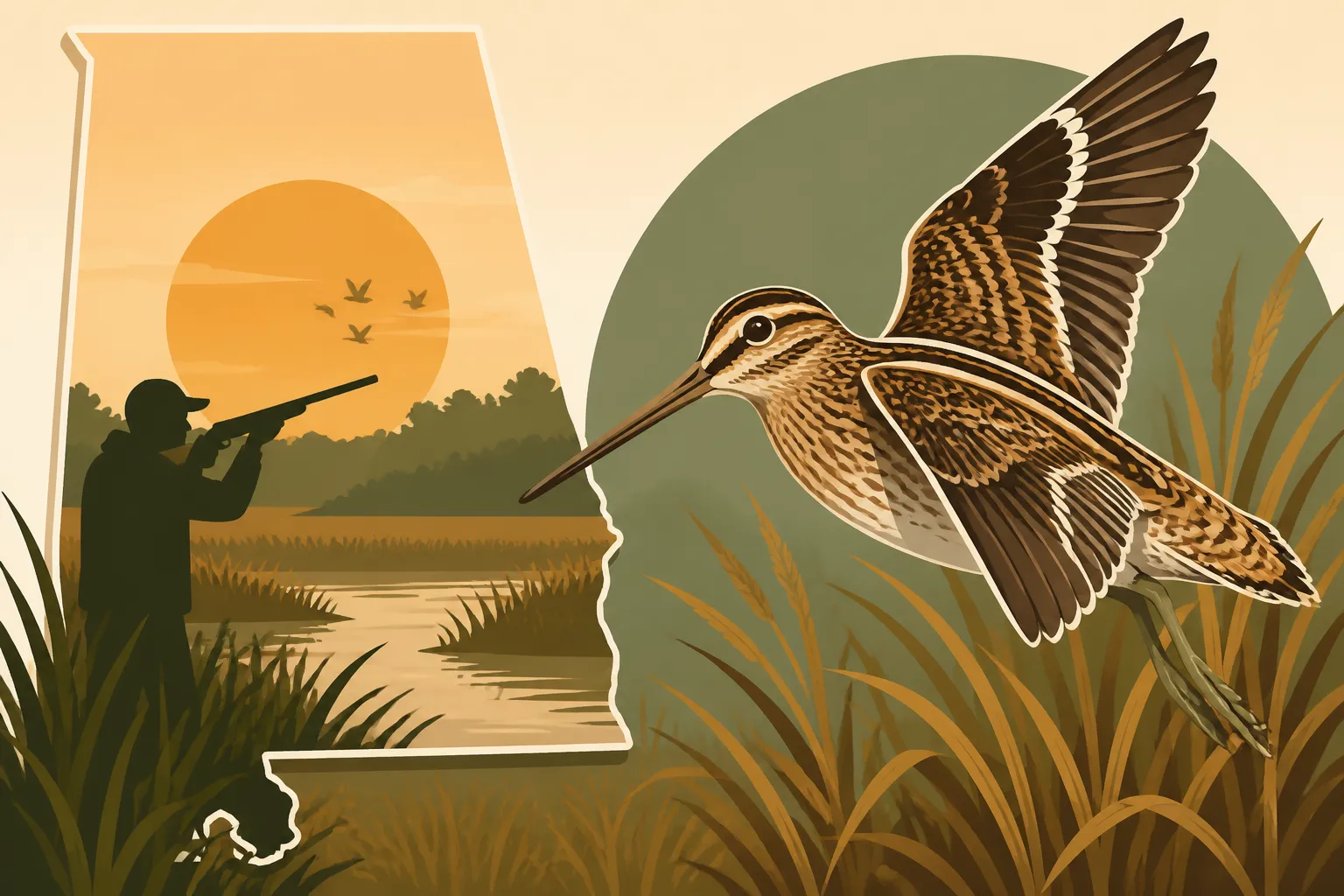
The common snipe ( Gallinago gallinago ) is a small, shorebird-like bird, roughly the size of a robin or a bit larger. They are characterized by their incredibly long, straight bill, which they use to probe for invertebrates in soft mud. Their plumage is a complex pattern of brown, black, and buff streaks, providing excellent camouflage in their typical grassy, muddy surroundings. When flushed, they often emit a distinctive "scaipe!" call and fly in an erratic, zig-zag pattern, making them notoriously difficult targets. Their flight is often described as "winnowing" due to the sound their wings make, adding to the challenge of tracking them in the air.
It's important not to confuse snipe with American Woodcock (Scolopax minor), another migratory game bird often found in similar habitats, though woodcock prefer slightly drier, brushier cover. Woodcock have a shorter, more stout body, larger eyes, and a more direct flight path, though still quick. Both offer a thrilling wing-shooting experience, but recognizing your target is part of responsible hunting.
Prime Snipe Habitat in the Yellowhammer State
Snipe are drawn to specific types of wet, open habitats, and once you learn to recognize these, you're well on your way to finding birds. The key words here are wet, soft soil, and short vegetation.
Think about areas that drain slowly or retain moisture:
- Wet fields and pastures: Especially those that have been recently grazed or mowed, leaving short grass and exposed mud. Cattle pastures, particularly where water collects in depressions, can be snipe magnets.
- Ditches and canal banks: The edges of irrigation ditches, drainage canals, and small streams with muddy banks and sparse grass are ideal.
- Shallow marshes and edges of ponds: Areas where water levels fluctuate, leaving exposed mudflats or very shallow water with emergent vegetation.
- Flooded timber or agricultural fields: After heavy rains, low-lying areas in agricultural fields or even lightly flooded timber can draw snipe seeking soft ground to probe.
- Borrow pits and sloughs: These often overlooked pockets of stagnant or slow-moving water and mud can hold surprising numbers of snipe.
In Alabama, many parts of the state offer suitable snipe habitat. The Black Belt region, with its expansive agricultural lands and slow-draining soils, can be fantastic. River bottomlands, especially along the Tennessee River or the Mobile-Tensaw Delta, also provide ample opportunities. Even smaller pockets of suitable habitat near suburban areas might hold snipe, if they offer the right conditions and aren't heavily disturbed. When scouting for promising spots, look for areas where you see other shorebirds, or even tracks in the mud that indicate recent bird activity. An application like GoHunt can be invaluable here, allowing you to study satellite imagery for suitable habitat types and potential access points on public or private land.
Essential Gear and Tactics for Alabama Snipe Hunting
Once you know when and where to find snipe, it's time to talk about how to hunt them. Snipe hunting is a high-energy, fast-paced pursuit that requires quick reflexes and the right equipment to be successful. You're often covering a lot of ground in wet conditions, so being prepared is crucial.
Shotguns, Ammunition, and Other Essentials
For snipe, a fast-handling shotgun is paramount. Given their erratic flight and small size, quick mounting and swinging are key. Most hunters opt for a 12-gauge or 20-gauge shotgun, though some even use a 28-gauge for its light weight and quick maneuverability. A semi-automatic or over/under shotgun with an open choke, like Improved Cylinder or Skeet, is generally preferred. This allows for a wider shot pattern at close range, increasing your chances of connecting with a rapidly departing bird.
When it comes to ammunition, small shot sizes are the way to go. Lead shot sizes 7 1/2 or 8 are ideal for snipe. These small pellets create a dense pattern, which is necessary for reliably hitting a small, fast-moving target without excessive pellet count that can damage the meat. Since snipe are migratory birds, remember that if you are hunting in an area that requires non-toxic shot (like some federal refuges or specific WMA areas also used for waterfowl), you'll need to use steel shot in equivalent sizes, typically 6 or 7. Always check local regulations for specific areas.
Beyond your firearm and ammo, consider these essentials:
- Waterproof boots or waders: You will be in wet, muddy conditions. Good waterproof footwear is non-negotiable.
- Comfortable, durable clothing: Dress in layers appropriate for the season, as you'll be walking a lot.
- Bird vest or strap vest: Something to comfortably carry shells, water, and any harvested birds.
- Water: Staying hydrated is important.
- Navigation tools: A GPS or a hunting app like GoHunt to mark promising spots and navigate unfamiliar territory.
- Insect repellent: Especially during warmer early season days.
Walking Up Snipe: The Classic Method
The most common and often most effective method for hunting snipe is simply walking them up. This involves systematically covering suitable habitat, flushing birds as you go. It's a method that rewards persistence and careful observation.
Here’s how it generally works:
- Walk slowly and deliberately: Don't rush. Snipe will hold tight, often until you're almost on top of them. A slow, steady pace allows you to be ready when a bird erupts.
- Hunt into the wind: This can make a subtle difference. When flushed, snipe often fly into the wind, which can make their flight path slightly more predictable and potentially slow them down a hair.
- Zig-zag pattern: Instead of walking in a straight line, employ a slight zig-zag pattern. This covers more ground effectively and can cause snipe to flush slightly to the side, giving you a better shot angle than if they flush directly in front of you and fly straight away.
- Be ready for the flush: This is the most critical part. Snipe rarely give you a warning. They simply explode from the grass, often with their distinctive "scaipe!" call, and immediately begin their evasive flight. Keep your gun at the ready, ideally in a low-ready position, so you can quickly shoulder it.
- Focus on the first shot: Their flight is fast and erratic. Get on the bird quickly, swing, and take your shot. A second shot might be possible if you're fast, but the initial flush is often your best opportunity.
A good bird dog can be an invaluable asset for snipe hunting, especially one trained for flushing or retrieving. A dog can cover ground more efficiently, locate birds you might otherwise miss, and most importantly, help find downed birds in dense cover or mud. Snipe are small, and a muddy field can swallow a downed bird quickly, making a retriever a true game-changer. If you're interested in using a dog, be sure to brush up on Squirrel and Small Game Hunting in Alabama regulations, as some public lands have specific rules regarding dog use.
Where to Hunt Snipe in Alabama
While snipe can turn up in unexpected places, knowing where to focus your efforts in Alabama is crucial for consistent success. Both public and private lands offer opportunities, but understanding the nuances of each can make a big difference.
Public Land Opportunities for Snipe
Alabama has a good amount of public hunting land, including Wildlife Management Areas (WMAs) and National Forests. Many of these areas, particularly those with a mix of wetlands, agricultural fields, or low-lying areas, can offer snipe hunting.
- Wildlife Management Areas (WMAs): Many WMAs across the state, especially those managed for waterfowl or dove hunting, often have ideal snipe habitat. Areas with agricultural components or extensive wetland restoration projects are prime candidates. Before heading out, always check the specific WMA regulations for the area you plan to hunt. Some WMAs might have different season dates, shot requirements, or access rules. A resource like Public Hunting Land in Alabama can help you find suitable WMAs.
- National Forests: The National Forests in Alabama, such as the Talladega or Bankhead, while primarily known for deer and turkey, also contain numerous creek bottoms, logging roads with wet ditches, and occasionally small open areas that might hold snipe after heavy rains. These areas require more dedicated scouting to find those specific pockets of ideal habitat. It's not usually a "walk-anywhere-and-find-them" scenario in the forests, but targeted searching can pay off.
When hunting public land, be prepared for other hunters, especially during overlapping seasons. Be courteous, and always maintain safe shooting distances from others. Utilizing mapping applications to scout remote areas and understand land boundaries, as mentioned with GoHunt, can help you find less pressured spots.
Accessing Private Land for Snipe
For many small game and migratory bird hunters, private land can offer some of the best opportunities, often with less pressure than public areas. If you have permission to hunt on private agricultural land, especially properties with active farming or cattle operations, you might have a snipe goldmine.
- Farm Fields: Recently harvested crop fields, particularly corn or soybeans, that have standing stubble and are wet or muddy after rain, are excellent. Ditches and low spots within or surrounding these fields are also prime.
- Pastures: Cattle pastures with low-lying, wet sections are consistently good. The grazing animals keep the vegetation short, and their hoof prints can create ideal probing grounds for snipe.
- Permission is Key: Always secure explicit permission from landowners before stepping foot on private property. A simple conversation can often open up opportunities you wouldn't find otherwise. Be respectful of their land, leave no trash, and offer to share some of your harvest. Many landowners are happy to allow snipe hunting, especially if they understand the benefits of managing migratory bird populations or simply enjoy seeing people utilize the resource responsibly.
Remember, regardless of whether you're on public or private land, safety is paramount. Always be aware of your surroundings, identify your target positively, and know where your shot is going.
The Unique Appeal of Snipe Hunting
For many hunters, snipe might seem like an afterthought compared to big game or popular waterfowl. However, for those who embrace the pursuit, snipe hunting offers a truly unique and deeply rewarding experience that stands apart. It's not just about filling a bag; it's about the challenge, the environment, and the skill involved.
Why Hunters Love the "Impossible" Bird
Calling snipe "the impossible bird" isn't an exaggeration for newcomers. Their sudden flush and acrobatic flight can be incredibly frustrating at first. You'll likely miss more than you hit, and that's perfectly normal! But that's precisely where the appeal lies for many seasoned wing-shooters.
- Extreme Challenge: Snipe demand excellent shotgunning skills, quick reflexes, and mental fortitude. Every bird you bag feels like a hard-earned victory. It's fantastic practice for other fast-flying game like Dove Hunting Alabama Opening Weekend or even some duck species when you're working a tight spot.
- Physical Activity: Unlike sitting in a deer stand or a duck blind, snipe hunting involves a lot of walking, often through demanding terrain. It's a great way to stay active during the colder months and enjoy the outdoors.
- Under-Utilized Resource: Because they're less popular, you often find less hunting pressure in snipe habitats. This can lead to more solitude and a feeling of discovering hidden gems.
- Delicious Table Fare: Despite their small size, snipe are surprisingly delicious. Their dark, rich meat is a delicacy for many gourmands and a rewarding treat after a challenging hunt. They’re often prepared roasted or pan-seared, and one bird makes a perfect appetizer.
Connecting with Alabama's Lesser-Known Game
While Alabama is renowned for its deer and turkey populations, species like the snipe remind us of the incredible diversity of game available in the state. Pursuing snipe allows you to explore different types of habitat, hone your wing-shooting skills, and appreciate a different facet of the natural world. It's an opportunity to connect with the landscape in a new way, focusing on the subtle signs of life in wetlands and field edges that you might otherwise overlook.
It’s also a chance to extend your hunting season well into the late winter, long after most other seasons have closed, offering continued outdoor adventure. For those interested in Alabama Small Game Season Rules, snipe hunting fits right in with the spirit of exploring all the state has to offer beyond just the popular big game. The thrill of a quick flush, the smell of damp earth, and the challenge of a fast-flying target make snipe hunting a truly unique and memorable experience in Alabama.
Disclaimer
Hunting regulations, seasons, and licensing requirements can change. Always consult the most current Alabama Department of Conservation and Natural Resources (ADCNR) regulations or visit the Outdoor Alabama website before planning any hunting trip. This guide is for informational purposes only and does not replace official legal documentation.