Treestand Setups in Talladega National Forest
Hunting Alabama's sprawling public lands, especially vast tracts like the Talladega National Forest, can feel like trying to find a needle in a haystack, especially when you're trying to figure out where to hang your treestand. The sheer scale, varied terrain, and ever-present hunting pressure often leave folks scratching their heads. This guide is all about cutting through that confusion, helping you master the art of treestand placement to dramatically improve your chances of encountering deer in this beautiful but challenging environment.
Understanding Talladega National Forest's Unique Terrain
Talladega National Forest isn't just one big patch of woods; it's a dynamic landscape with distinct features that dictate where deer live, travel, and feel secure. Grasping these nuances is the first step to setting up a successful treestand.
Piedmont Ridges and Creek Bottoms
If you've spent any time in Talladega, you know it's a place of rolling hills, steep ridges, and winding creek bottoms. This topography isn't just pretty to look at; it's the highway system for deer. They often use these natural contours to their advantage, traveling along the spines of ridges to get from one area to another while maintaining elevation and avoiding thick brush. These ridges can create natural funnels, especially where they narrow into saddles or lead down to water sources.
Creek bottoms, on the other hand, offer dense cover, water, and sometimes different food sources. Deer will bed in these areas, especially during warmer weather, and use the cover to move undetected between feeding and bedding locations. Identifying where a well-used ridge descends into a thick creek bottom, or where a series of small drainages converge, can reveal prime travel corridors. These spots are essentially nature's choke points, forcing deer movement into predictable patterns that you can anticipate with a well-placed stand. Think about how deer might navigate a specific slope to get to a preferred feeding area, or how they might drop into a creek bed to avoid the wind on a blustery day.
Timber Types and Undergrowth
Talladega National Forest is a patchwork of different timber types, from mature hardwoods brimming with acorn-producing oaks to dense pine plantations and regenerating clear-cuts. Each type offers something different for deer and, consequently, demands a different treestand strategy. Mature hardwoods are food magnets when acorns drop, drawing deer in from surrounding areas. Setting up on a ridge overlooking a scattered oak flat or a particularly productive persimmon tree can be deadly during the early to mid-season.
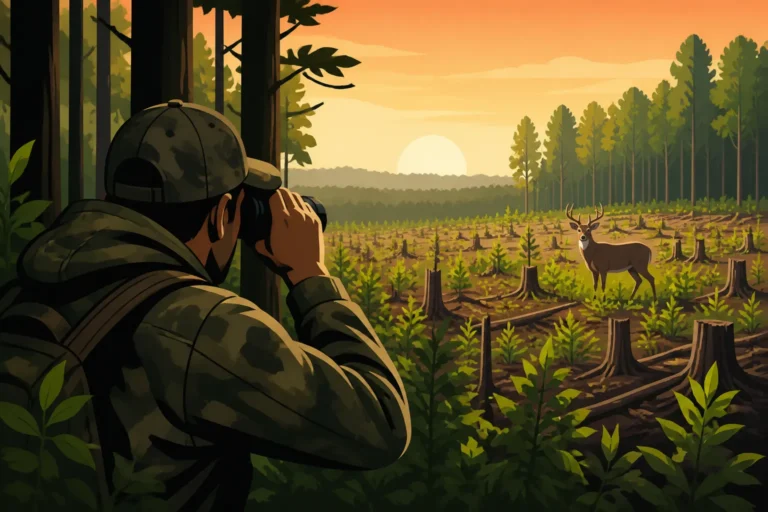
Pine plantations, especially younger ones, often provide incredible bedding and security cover. While it might seem counterintuitive to hunt inside them due to limited visibility, understanding how deer navigate these thickets is key. They'll use sparse lanes, old logging roads, or the edges where pines meet hardwoods to move through. Regenerating clear-cuts are essentially giant browse buffets for deer, offering a multitude of young plants to eat. The edges of these clear-cuts, where deer feel safe transitioning into the open to feed, are excellent places for a stand. The challenge here, though, is the sheer density of the vegetation; you might only have a small window to shoot. This often requires a stand that allows for quick adjustments or a wider field of view.
Seasonal Changes and Food Sources
Deer patterns in Talladega, like anywhere else, are heavily influenced by the availability of food and water, which change throughout the season. Early season might see deer hitting soft mast like persimmons or muscadines, while the mid-season is all about the acorn drop. White oaks drop first, then red oaks, drawing deer to different parts of the forest as the season progresses. You might find a stand that was hot in October is cold by November if the primary food source has been depleted or shifted.
Later in the season, as natural forage dwindles, deer will gravitate towards any remaining hard mast or persistent green browse. In some areas, food plots planted by private landowners adjacent to public land can also draw deer. While you can't hunt those plots, you can certainly hunt the travel routes leading to and from them on the public side. Even prescribed burns, a common management practice in Talladega, can impact deer movement. Fresh burns often stimulate new growth, creating attractive forage in subsequent seasons. Keeping an eye on these cycles, perhaps by checking the ADCNR website for burn schedules or using an app like GoHunt to track past burn areas, can give you a significant advantage in predicting where deer will be feeding. Understanding these dynamics is crucial for Hunting After a Poor Acorn Year or finding good late-season food sources.
Scouting for the Perfect Treestand Location
You can’t just walk into Talladega and blindly hang a stand. Success here is built on diligent scouting, both from your armchair and with your boots on the ground. This meticulous approach helps you identify those hidden gems where deer feel comfortable and vulnerable.
Utilizing Maps and Technology
Before you even step foot in the woods, the best scouting often starts from home with maps and technology. Satellite imagery, topographical maps, and dedicated hunting apps are invaluable tools for dissecting the vastness of Talladega. Programs like GoHunt or similar mapping platforms allow you to zoom in and identify key terrain features that might concentrate deer movement. Look for saddles—those dips in a ridge line that deer often use to cross from one side to another with minimal elevation change. Identify pinch points, which could be anything from a narrow strip of timber between two clear-cuts to a point where a creek bends sharply, forcing deer to use a specific crossing.
Creek crossings are another major hot spot; look for subtle dips in the bank or shallow areas where deer regularly cross. Even changes in timber type, such as where a dense pine thicket transitions into an open hardwood bottom, can create natural travel corridors that are visible on a good aerial map. By digitally marking these potential hotspots, you create a game plan for your physical scouting trips, focusing your efforts on the most promising areas rather than aimlessly wandering. This pre-season digital reconnaissance is a non-negotiable step for Scouting Alabama Public Land Before Season.
Boots-on-the-Ground Reconnaissance
Digital scouting will get you in the ballpark, but nothing beats actual boots-on-the-ground reconnaissance. You need to physically walk the areas you've identified, confirming those digital hunches with real-world evidence. Look for fresh deer sign: tracks in mud, fresh droppings, and active rub lines or scrape lines. Rubs on trees indicate bucks are in the area, claiming territory and working out aggression. Scrapes are communication hubs, telling you bucks and does are visiting. The fresher the sign, the more active the area.
Pay close attention to bedding areas. These are often in thick cover, on leeward sides of ridges, or in dense pine plantations. While you want to be careful not to disturb them, knowing their location helps you plan your stand access and exit routes to avoid bumping deer. Follow subtle deer trails, paying attention to how they weave through cover, cross drainages, or connect different food sources. Sometimes the most heavily used trails are barely visible, a mere depression in the leaves. Confirming these travel routes and understanding the direction of travel will tell you exactly where to intercept deer on their daily patterns. This is where you might find a perfect spot to hang a stand, perhaps where a main trail intersects with a smaller secondary trail, or where deer filter around a specific obstacle.
Wind Direction and Thermals
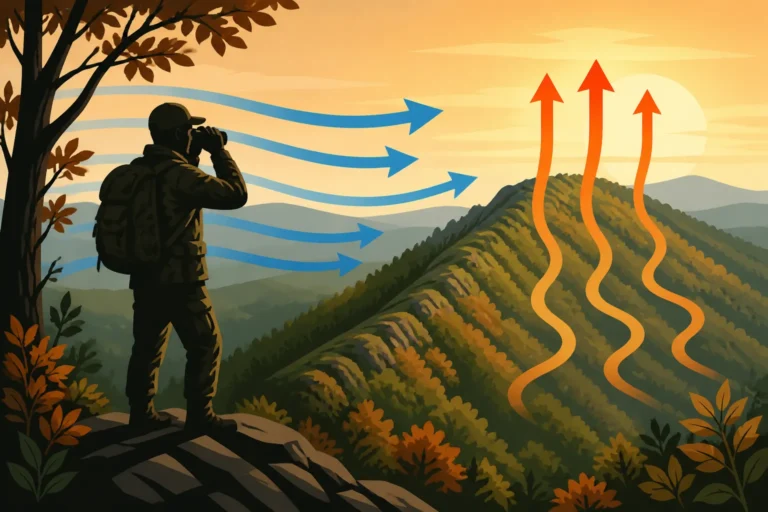
Understanding wind and thermals is paramount, especially in the hilly terrain of Talladega. Your scent is your biggest giveaway, and without proper consideration for air currents, even the best stand location is worthless. In the mornings, as the sun rises and warms the earth, thermals generally rise, carrying your scent uphill. This means if you're set up on a ridge, your scent will likely drift over the top. In the evenings, as the air cools, thermals reverse, carrying scent downhill into the bottoms.
Wind, of course, is the dominant factor. Always set up so your scent is blowing away from where you expect deer to approach or pass. However, in creek bottoms and hilly areas, wind can swirl unpredictably, making scent control even more challenging. You might need to have multiple stand locations for different wind directions, or choose a stand that offers a more consistent wind pattern, such as on a high point where the wind is less disturbed by terrain. Before you even think about setting up, check the prevailing wind forecast, and then make micro-adjustments based on what the leaves and tree branches are telling you on the ground. Ignoring these invisible currents is a surefire way to educate deer and end your hunt early. For more on this, check out Wind and Thermals on a Piedmont Ridge.
Types of Treestands Best Suited for Talladega
Choosing the right treestand for Talladega National Forest isn't a one-size-fits-all decision. The diverse landscape, from straight pines to gnarly hardwoods, dictates which stand will serve you best.
Climber Stands for Mobility
Climber stands are often the go-to for hunters who value mobility and versatility, and they can be fantastic in certain areas of Talladega. The main advantage is their portability and ease of setup if you have the right tree. A good climber allows you to move quickly, adapting to changing deer patterns or hunting different spots throughout the season. This is crucial on public land where deer may shift due to pressure or food availability. If you scout a hot new area, you can pack in your climber, find a suitable tree, and be hunting within an hour.
However, climbers have their limitations. They require a relatively straight, limbless tree, preferably a pine or a straight oak, to ascend safely and efficiently. Talladega certainly has these trees, especially in its pine plantations, but many of the older hardwood bottoms or transitional zones have crooked, low-limbed trees that are simply unsuitable for a climber. Carrying a climber through thick undergrowth or up steep hills can also be a workout, as they tend to be bulkier than a hang-on stand with sticks. When scouting, always keep an eye out for "climber trees" in promising locations. If you find a patch of straight pines with good deer sign, a climber might be your best bet for a quick, adaptable setup.
Hang-On Stands and Sticks for Versatility
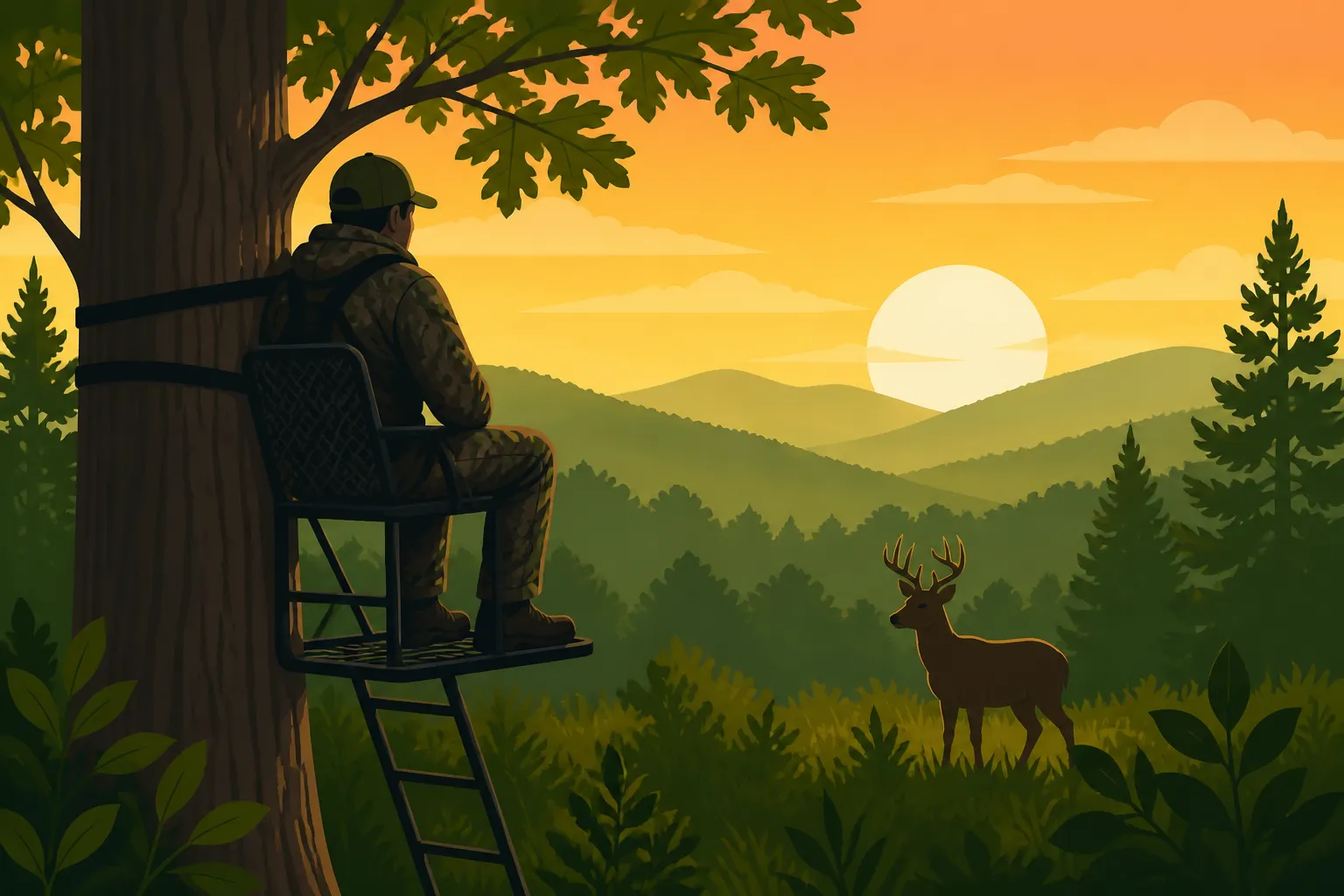
Hang-on stands, often used in conjunction with climbing sticks or sections of a climbing ladder, offer unparalleled versatility in Talladega's varied terrain. Unlike climbers, hang-ons can be affixed to virtually any tree, regardless of its straightness or limb structure. This means you can get into those specific, hard-to-reach trees that are perfectly positioned over a rub line, overlooking a small funnel, or tucked into thick cover that a climber just couldn't access.
The trade-off is often more gear and a slightly longer setup time, especially if you're not pre-setting stands. You'll carry the hang-on stand itself, plus multiple climbing sticks, which can add up in weight and bulk. Many public land hunters will carry a lightweight hang-on and three to four sticks, allowing them to get 15-20 feet up. Some hunters will even pre-set a few hang-on stands with sticks on private land or less-trafficked public spots, leaving them for quick hunts. This strategy gives you the flexibility to choose the perfect tree for the exact situation, rather than being limited by what a climber can climb. Brands like Lone Wolf or X-Stand offer lightweight options popular with mobile public land hunters. This setup excels for Hanging a Stand on a Talladega Ridge where the trees might be less uniform.
Ground Blinds as a Stealthy Alternative
While not strictly "treestands," ground blinds are a viable and often overlooked alternative, especially in Talladega's dense cover. They shine in situations where suitable trees are scarce, in thick clear-cuts, or for hunters who prefer to stay on the ground or have mobility limitations. A well-brushed-in ground blind can offer incredible concealment, allowing you to move around a bit more, stay warmer, and even shoot with more stability than from a treestand.
Imagine a situation where you've found a heavily used deer trail running along the edge of a thick clear-cut, but every tree along that edge is too small, too crooked, or has too many low limbs for a treestand. A pop-up ground blind, strategically placed and camouflaged with natural vegetation, can be a perfect solution. They are also excellent for hunting during adverse weather, providing shelter from rain, wind, or cold. However, ground blinds do have their drawbacks. Your scent is much closer to the ground, requiring even more stringent scent control. Your field of view can be restricted, and you might miss deer approaching from unexpected angles. Furthermore, on some WMAs or national forest lands, there might be specific rules about leaving ground blinds unattended or for extended periods. Always check the regulations for the specific area you're hunting. Sometimes, simple natural cover is enough, and you can achieve excellent concealment by Brushing In a Blind on a Field Edge.
| Treestand Type | Ideal Terrain/Trees | Pros | Cons |
|---|---|---|---|
| Climber Stand | Straight, limbless trees (pines, straight oaks) | Highly mobile, quick setup/takedown (ideal trees), generally lighter than hang-on + sticks combo | Limited to specific tree types, can be bulky to carry, harder to shoot around trunk |
| Hang-On Stand | Any tree with a stable trunk (with climbing sticks) | Ultimate versatility, can place in exact sweet spot, lightweight stand | Requires climbing sticks (more gear), slightly longer setup, less mobile than climber (unless pre-set) |
| Ground Blind | Thick cover, clear-cut edges, areas with no suitable trees | Excellent concealment, comfortable, good for adverse weather, accommodates multiple hunters | Limited visibility, lower scent cone, may require more setup time (brushing in), public land rules vary |
Strategic Treestand Placement for Success
Once you've chosen your treestand type, where you actually place it is the next big puzzle piece. This isn't just about finding a tree; it's about optimizing every aspect of the setup for minimal disturbance and maximum opportunity.
Access and Egress Routes
You can find the absolute best deer sign in Talladega, but if your access and egress routes spook every deer in the county, your stand is useless. The goal is to get in and out undetected. This means planning your route carefully, often using terrain features, creek beds, or dense cover to conceal your approach in the pre-dawn darkness or your exit after dusk. Avoid walking through known bedding areas or across open fields. Instead, stick to draws, creek banks, or the low points on ridges where you're less likely to be seen or heard.
Consider the prevailing wind for your access route as well. You don't want your scent blowing directly into the area you plan to hunt as you walk in. Many experienced public land hunters will walk much further than necessary, taking a circuitous route to get downwind of their stand and minimize their impact. Think about parking further away from your desired hunting spot and making a quiet, stealthy walk in. Using a staging area a few hundred yards from your stand, where you can quietly put on your harness and retrieve your bow or rifle from a backpack, can also help reduce noise directly under your stand. Every rustle and crunch on the way in can alert deer, so slow down, listen, and tread lightly. This meticulous planning is vital for Hunting Into the Late February Either-Sex Window when deer might be more wary.
Shot Lane Clearance and Concealment
Finding the perfect balance between clear shooting lanes and natural concealment is an art form. You need to be able to make an ethical shot, but you also need to remain hidden from sharp-eyed deer. Before the season, or during your setup, take the time to trim shooting lanes. This isn't about clear-cutting the forest around your stand; it's about carefully removing small branches that would deflect an arrow or bullet. Focus on the most likely travel corridors and angles you expect deer to approach from.
Equally important is utilizing natural cover. Don't pick the cleanest, most open tree in the woods. Instead, look for a tree with some branches, vines, or surrounding vegetation that can help break up your outline. Deer are constantly looking for unnatural shapes, and a silhouette against the sky is a dead giveaway. Consider the sun's position throughout the day; you don't want to be backlit at prime hunting times. The height of your stand is also a factor. While 20-25 feet is a good general rule for getting above a deer's normal line of sight and scent cone, some situations might call for lower or higher placements depending on terrain and cover. The key is to disappear into the tree, not just perch in it.
Hunting Pressure Considerations
Talladega National Forest, being a public land gem, naturally sees hunting pressure. This pressure dramatically impacts deer behavior and movement patterns. Deer quickly learn to avoid areas with heavy human activity, often retreating to thicker, less accessible cover or becoming nocturnal in heavily trafficked zones. Your treestand placement needs to account for this. Don't just set up on the first well-worn trail you find close to a parking lot; chances are, other hunters have the same idea.
Instead, think about finding those overlooked pockets. This often means walking further, penetrating deeper into the timber than most hunters are willing to go. Look for small, unnoticeable funnels tucked away, or thick bedding areas that seem impenetrable. Deer use these sanctuaries to escape pressure, and a stand placed on the edge of such an area, intercepting deer as they move in or out, can be incredibly productive. Consider also how pressure might push deer. If there's a popular WMA or a busy public road on one side of a ridge, deer might naturally funnel towards a quieter, less disturbed section. You might need to adjust your strategy throughout the season as pressure mounts, moving to a new spot if your initial location becomes too hot with human activity. Knowing how to Find Ground Others Walk Past is a crucial skill for public land success in Talladega.
Overcoming Common Treestand Challenges in Talladega
Even with the best planning, Talladega National Forest will throw curveballs. Dealing with difficult trees, managing scent in humid conditions, and prioritizing safety are all part of the public land hunting experience.
Dealing with Difficult Trees
It's a familiar scenario: you've pinpointed the perfect spot, you're standing on the exact deer trail you want to hunt, and then you look up. The only trees nearby are either too small, too crooked, or covered in grapevines and low limbs. This is where adaptability comes in. If a climber won't work, this is precisely when a hang-on stand with climbing sticks shines. You can navigate around those low limbs, secure sticks to an angled trunk, and ultimately get into the tree that offers the best shot opportunity and concealment.
Sometimes, the "perfect" tree just isn't there. In these situations, you have to be willing to settle for the best available tree within a reasonable distance of your target area, even if it's not ideal. This might mean being slightly off the primary trail, or a few yards deeper in the cover. It might also mean adjusting your expectations for shooting lanes and being more mindful of your movements. Don't be afraid to utilize a ground blind in these situations, especially if the cover is incredibly thick. Talladega is a wild place, and sometimes the wilderness dictates your setup, not the other way around. Learning to adapt your equipment to the environment is a skill honed over many seasons of public land hunting.
Managing Scent in Diverse Conditions
Alabama's weather is notoriously fickle, and the diverse conditions in Talladega National Forest – from chilly, dry mornings to warm, humid afternoons – make scent management a constant battle. A crisp autumn morning might allow your scent to dissipate fairly quickly, but a warm, damp day in early archery season will hold your scent close to the ground, spreading it through the woods like an invisible cloud. This is why a multi-faceted approach to scent control is absolutely essential.
Start with your clothing: wash it in scent-free detergent, store it in airtight containers, and only put it on when you arrive at your hunting location. Avoid wearing your hunting clothes in the truck or at gas stations. Next, address your body odor: shower with scent-free soap, use scent-free deodorant, and be mindful of what you eat or drink before a hunt. Finally, utilize scent-eliminating sprays or even ozone generators (if you're comfortable with them) to treat your clothes and gear before you head out. Most importantly, always, always play the wind. Even with the best scent control, a deer downwind will eventually bust you. Have multiple stand locations for different wind directions, or be prepared to change your plans if the wind shifts unexpectedly. Relying solely on products without understanding how wind and thermals carry your scent is a rookie mistake. For more details on hunting in these conditions, consider strategies for Warm-Weather Sitting Strategy in Alabama.
Safety First: Harnesses and Lines
This isn't just a suggestion; it's a non-negotiable rule. Every year, hunters are seriously injured or killed in treestand accidents, and almost all of these could be prevented by simply wearing a full-body harness and using a lifeline. It doesn't matter if you're only going up 10 feet or 30 feet, or if you're "just quickly adjusting" something. Accidents happen in a split second, and gravity doesn't care how experienced you are.
Before you even leave the truck, ensure your harness is properly fitted and free of damage. When you get to your stand, immediately install your lifeline. This allows you to be connected to the tree from the moment your feet leave the ground until they touch back down. Practice setting up your harness and lifeline at home, at ground level, so it becomes second nature. Check all straps, buckles, and ropes for wear and tear before each season. Invest in a quality harness that is comfortable and easy to use. No deer is worth a broken bone, a life-altering injury, or worse. Your family and friends want you to come home safely, so make treestand safety your absolute top priority every single time you hunt from elevated positions in Talladega or anywhere else.
Disclaimer
Hunting is an inherently dangerous activity. The information provided in this guide is for informational purposes only and should not replace proper training, safety precautions, or adherence to all local, state, and federal hunting regulations. Always prioritize safety, respect wildlife, and obtain all necessary licenses and permits before engaging in any hunting activity. Consult the Alabama Department of Conservation and Natural Resources (ADCNR) for the most current regulations and safety guidelines.