Hunting a Clear-Cut Regrowth Edge
Hunting clear-cuts can feel like staring at an impenetrable jungle, overwhelming you with questions about where to even begin. Many hunters get frustrated, thinking deer only pass through these areas at night or never come out of the thick stuff. But these seemingly chaotic landscapes are actually prime habitat for Alabama whitetails, offering unparalleled cover and food. This comprehensive guide will walk you through the nuances of hunting these vital regrowth edges, turning frustration into productive hunting strategies.
The Allure and Challenge of Clear-Cuts for Deer Hunters
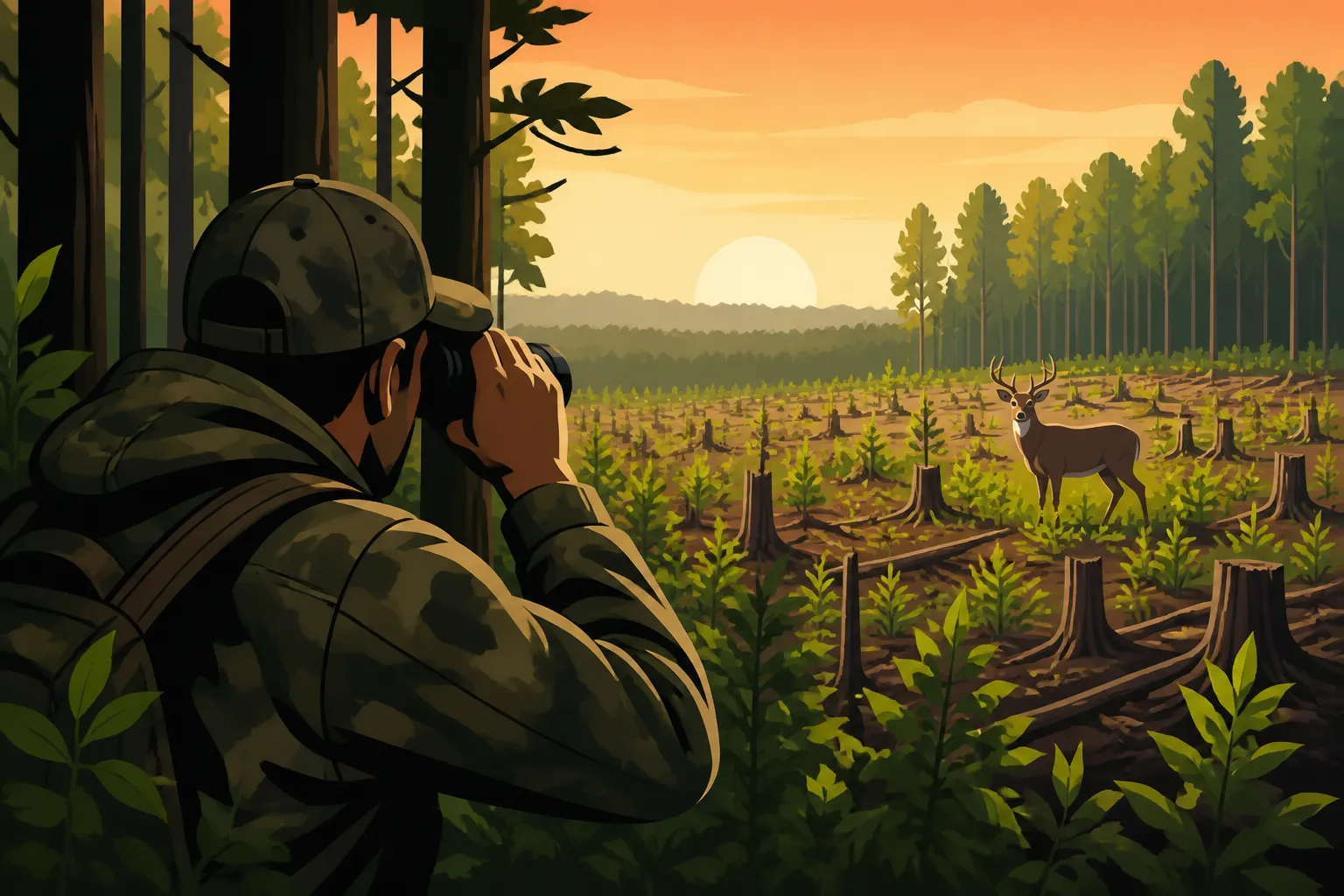
Clear-cuts, for all their initial ugliness to the human eye, quickly transform into wildlife havens, particularly for white-tailed deer. When a section of timber is harvested, the sudden influx of sunlight to the forest floor triggers an explosion of new growth. This isn't just random weeds; it's a buffet of browse, from tender briar shoots and honeysuckle to young saplings and forbs that deer absolutely crave. This dense, multi-layered vegetation also provides incredible thermal and escape cover, making deer feel safe and secure. They literally live in these places.
However, the very density that attracts deer also presents a significant challenge to hunters. Visibility can be measured in mere yards, making traditional still-hunting or long-range shooting impractical. The sheer scale of some clear-cuts can be daunting, leaving hunters unsure where to even start looking for deer sign, let alone setting up a stand. It's easy to feel lost in the thicket, thinking your efforts are futile against such impenetrable cover. But with the right mindset and strategic approach, these challenging areas can become some of your most reliable hunting spots, especially as the season progresses. Understanding that deer don't just pass through these areas but live in them is the first step to unlocking their potential.
Why Deer Thrive in Regrowth
Deer are creatures of cover and convenience. A fresh clear-cut, once the initial logging disturbance subsides, starts growing back with incredible vigor. You'll see a mix of early successional plants like blackberry, sumac, wild grape, and countless young trees – pines, oaks, sweetgums – all pushing up from the soil. This diverse plant community provides not only an abundance of nutritious forage but also critical concealment from predators and harsh weather. Think of it like a natural fortress where fawns can hide, does can browse safely, and bucks can retreat to bed without fear of detection. They'll spend their days bedded down deep inside the thickest parts, only emerging to feed or breed when conditions are right.
Moreover, these regrowth areas are often adjacent to mature timber, agricultural fields, or water sources, creating an ideal mosaic of habitat. Deer can browse on tender shoots within the clear-cut, then easily slip into an older pine stand for bedding during colder weather, or access a nearby creek for water. The edges, where the dense clear-cut meets these other habitat types, become superhighways for deer movement. This dynamic environment changes year after year, offering different food and cover as the plants mature, making them consistently attractive to deer over a long period.
Common Frustrations and Misconceptions
One of the biggest frustrations for hunters is simply the lack of visibility. You might hear or even smell deer, but seeing them through the tangled mess of briars and saplings feels impossible. This leads to the misconception that deer are only in there when it's dark, or that they only use these areas to escape pressure. In reality, deer use clear-cuts actively throughout the day, often moving within the thickets or along internal trails. Another common complaint is the noise involved in navigating such dense terrain; every step seems to crunch on fallen leaves or snap a twig, making a stealthy approach feel impossible.
Many hunters also underestimate the size and complexity of these areas. They might hunt just the very edge and assume that's all there is to it, missing the extensive network of deer trails, rubs, and beds deeper inside. It's easy to get discouraged after a few tough hunts where you see no deer and hear only squirrels. But these challenges are precisely why clear-cuts can be so rewarding; they deter casual hunters, meaning if you put in the effort to understand and hunt them effectively, you might find yourself in untouched pockets of prime deer habitat. It’s about adapting your tactics to the terrain, not expecting the terrain to conform to your usual hunting methods.
Deciphering the Regrowth Edge: Scouting and Sign
Effective hunting of clear-cut regrowth edges starts long before you ever bring your bow or rifle into the woods. It begins with meticulous scouting. You need to understand not just that there's a clear-cut, but how deer are using it. What are their entry and exit points? Where are they bedding? What are they feeding on? This isn't just about finding a fresh track; it's about piecing together the entire puzzle of deer movement within and around these challenging areas. Aerial maps are your best friend here, allowing you to identify potential funnels, pinch points, and the intersection of different habitat types. Using a tool like GoHunt's mapping features can be incredibly beneficial for this initial analysis, allowing you to overlay topo maps with satellite imagery to get a clearer picture of the terrain.
Remember, the goal isn't necessarily to hunt deep inside the clear-cut, but to intercept deer as they move along or in and out of its edges. This requires patience, keen observation, and an understanding of how deer use these linear features to their advantage.
Identifying Key Travel Corridors
Deer often don't just burst out of a clear-cut at random. They utilize specific travel corridors that offer the path of least resistance or the most cover. Look for distinct trails that lead from the dense clear-cut interior to adjacent timber, food plots, water sources, or even logging roads. These trails might be heavily worn, indicating consistent use. Pay close attention to where these trails intersect with terrain features like subtle rises, creek bottoms, or natural funnels created by small stands of mature trees left within or on the edge of the clear-cut. These are your primary interception points.
Another crucial corridor type is the "hard edge" where the clear-cut meets older timber. Deer often walk just inside the mature woods, using the taller trees for cover while being able to quickly duck back into the clear-cut if alarmed. Conversely, they might walk just inside the clear-cut, staying within the dense brush but still paralleling the timber line. Identifying these dual lanes of travel is key. Consider how a buck might approach an area from higher ground to scent check for danger, or use a creek bed for a quiet approach, as detailed in Hunting a Funnel Between Two Creek Bottoms. Always consider the direction of the prevailing wind when looking for these corridors, as deer will almost always travel into or across the wind to detect threats.
Interpreting Deer Sign on the Edge
Once you've identified potential travel corridors, it's time to get on the ground and look for fresh deer sign. This is where the real detective work begins.
Tracks: Look for fresh tracks, especially larger ones, indicating a buck. Pay attention to the direction of travel and how frequently they appear. Are they consistently leading in and out of the clear-cut at specific points?
Scrapes and Rubs: While scrapes might be harder to find in the dense regrowth, look for them along the more open clear-cut edges, especially where a buck might feel comfortable scent-checking. Rubs will be on smaller saplings or larger trees on the edge, indicating a buck's presence and territorial marking. During the rut, these signs become even more pronounced, as explained in Hunting the Alabama Rut by Zone.
Droppings and Browsing: Fresh deer droppings are a clear indicator of recent activity. Observe the size and consistency. Also, look for browse lines on young trees and shrubs within the clear-cut or along its immediate edge. Deer are selective eaters, and knowing what they are actively feeding on can help you pinpoint specific areas of interest.
Beds: Finding actual beds within the clear-cut can be challenging due to the density, but look for disturbed vegetation or flattened areas just inside the thick stuff, particularly on south-facing slopes for warmth in colder weather, or near benches that offer good visibility and scent control. If you find a fresh bed, it tells you deer are actively spending time there during daylight hours.
Remember to utilize mapping applications, even basic ones on your phone, to mark every piece of significant sign you find. This allows you to build a comprehensive picture of deer movement over time. Services like GoHunt can offer detailed satellite imagery and property line information, helping you distinguish between public and private land and focus your scouting efforts where they'll be most effective. This kind of detailed Scouting Alabama Public Land Before Season is invaluable.
| Sign Type | What it Indicates | Best Location to Find on Clear-Cut Edge | Seasonal Relevance |
|---|---|---|---|
| Fresh Tracks | Recent deer movement, size/gender possible | Heavily used trails, creek crossings, logging roads | Year-round, best after rain |
| Rubs (fresh) | Buck activity, territorial marking, pre-rut/rut | Smaller trees on edge, inside clear-cut near travel | Late Summer – Winter |
| Scrapes (fresh) | Buck communication, primary rutting sign | More open spots on edge, under low-hanging branches | Pre-rut – Rut |
| Droppings | Recent feeding/bedding activity, deer presence | Near browse, on trails, bedding areas | Year-round |
| Browse Line | What deer are actively eating, food preferences | Inside clear-cut, young saplings on edge | Year-round, prominent in winter |
| Beds | Daylight resting/hiding spots, security | Dense thickets just inside clear-cut, subtle rises | Year-round, especially colder days |
Tactical Approaches to Hunting Clear-Cut Edges
Once you’ve done your homework and identified promising clear-cut edges and travel corridors, it’s time to think about how you’re going to actually hunt them. Hunting these areas successfully requires a departure from traditional "open timber" tactics. You'll need to embrace stealth, consider your entry and exit strategies meticulously, and choose your stand or blind locations with an understanding of the deer's behavior within this dense habitat. It's about being patient and letting the deer come to you, rather than trying to push through the impenetrable cover.
The key to clear-cut hunting success is minimizing your disturbance and maximizing your chances of intercepting a deer without it knowing you're there. This means paying extra attention to wind direction, scent control, and having a clear shooting lane, even if it's a small one.
Optimal Stand and Blind Placement
Choosing the right location for your stand or blind is paramount. Given the limited visibility, you need to be positioned to capitalize on the deer's predictable movements along the edge.
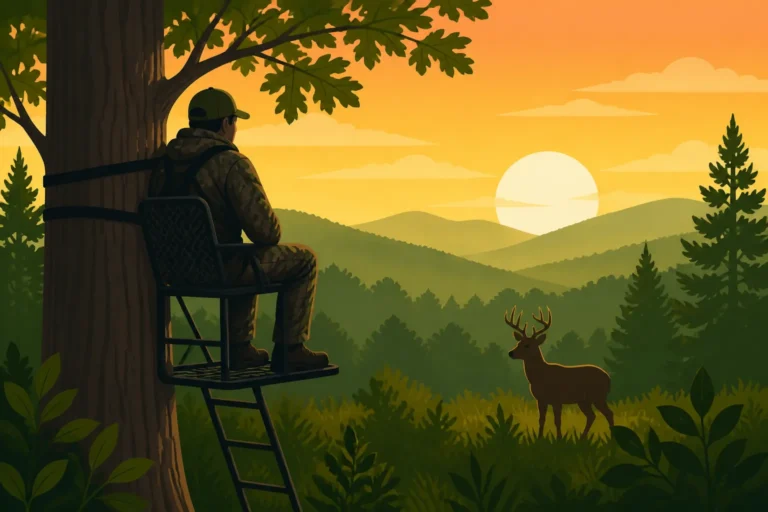
Tree Stands: If you're using a tree stand, look for a mature tree (often an oak or pine that was too small or undesirable for timbering) situated just inside the older timber, overlooking a clear-cut edge. You want to be high enough to see over some of the initial regrowth and allow for a downward shot angle, but not so high that you silhouette yourself against the sky. Focus on placing your stand to cover a primary deer trail or a pinch point where deer are funneled. Consider a spot where you can see a natural "gap" or a slightly less dense area within the clear-cut itself, as deer will often utilize these. When Hanging a Stand on a Talladega Ridge, similar principles of elevation and cover apply. Always ensure you have clear shooting lanes to your identified travel corridors.
Ground Blinds: Ground blinds are often an excellent choice for hunting clear-cuts. They offer superior concealment, allow for more movement, and can be easily brushed in to blend seamlessly with the thick surroundings. Place your ground blind within the clear-cut itself, but strategically positioned on a well-used trail or overlooking a small "pocket" of browse. Alternatively, place it just inside the mature timber line, facing into the clear-cut. The goal is to be hidden within the cover, not standing out from it. For tips on effective use, consult Using a Ground Blind on Alabama Public Land. Ensure your shooting lanes are cleared before the season, as noisy clearing efforts on the day of the hunt will alert deer.
Regardless of your choice, always consider your wind direction. With such dense cover, deer will often rely heavily on their nose. Set up so your scent is carried away from the expected travel routes.
Mastering Entry and Exit Strategies
Your approach to and departure from your hunting spot in a clear-cut edge area are almost as important as your stand placement. Careless entry or exit can quickly educate deer and render your spot useless.
Stealth is Key:
- Approach with the wind: Always try to approach your stand with the wind in your face or quartering, so your scent is not blowing into the bedding or feeding areas.
- Utilize natural cover: Walk along old logging roads, creek beds, or through the densest parts of the mature timber adjacent to the clear-cut to mask your movement and scent.
- Time your entry/exit: For morning hunts, arrive well before daylight. For evening hunts, stay until well after dark, allowing deer to move off naturally before you descend.
- Minimize noise: Every rustle and crunch is amplified in a still forest. Wear quiet clothing and watch your step.
Specific Pathways:
- Identify a low-impact entry route that avoids known bedding or heavy travel areas. This might involve walking a longer distance or navigating difficult terrain, but it’s worth it. Using a mapping app like GoHunt can help you pinpoint these quiet routes on aerial imagery.
- For example, if deer are using a specific trail along the clear-cut edge, make sure your entry route comes in from a different direction, ideally from behind your stand and away from the deer's likely approach.
- Exiting is often the trickiest. If you've been sitting over an evening food source, deer will likely be moving into that area. Waiting an extra 30-45 minutes after legal shooting light can make all the difference, allowing deer to disperse before you disturb them. This careful planning is crucial, particularly if you're hunting on public land where Hunting Pressure on Alabama Public Land might be higher.
Timing Your Hunts for Maximum Success
Hunting clear-cut regrowth edges isn't just about finding the right spot; it's also about being there at the right time. Deer behavior is heavily influenced by the time of day, seasonal changes, and weather patterns. Understanding these dynamics can significantly increase your odds of success. You're trying to predict when and why deer will move from the security of the clear-cut's interior to its more open edges, or from the edges into adjacent areas. This requires a nuanced approach and an awareness of the broader Alabama Deer Season Structure Explained.
Best Times of Day to Hunt the Edge
Deer typically exhibit crepuscular behavior, meaning they are most active during dawn and dusk. This holds especially true for clear-cut edges.
Early Morning: As daylight breaks, deer will often be finishing their nocturnal feeding and moving back into the thick cover of the clear-cut for bedding. Setting up on an edge that intercepts these inbound deer can be highly productive. You want to be in your stand or blind well before first light, allowing the woods to settle around you as the deer make their way back to their daytime sanctuaries. The deer will often linger on the edge, browsing as they slowly filter back into the dense cover, providing a shooting opportunity.
Late Afternoon/Evening: Conversely, the late afternoon and evening offer excellent opportunities as deer emerge from their beds to begin feeding. They will often use the clear-cut's edge as a staging area, browsing on succulent regrowth before venturing into adjacent fields or mature timber. This is particularly effective during the late season when other food sources might be depleted, and deer are relying heavily on the browse available in these regrowth areas, as highlighted in Late-Season Food Sources for Alabama Whitetails. Position yourself to intercept deer as they leave the clear-cut or as they simply move along its perimeter during the golden hour.
Midday hunting can be tough in clear-cuts due to the deer being bedded down, but don't rule it out entirely, especially during the rut. A seeking buck might be on its feet at any time, scent-checking edges for does.
Seasonal and Weather Considerations
Different times of the season and varying weather conditions will influence how deer use clear-cut edges.
Early Season (Archery): During Alabama's long archery season, which runs well into February, deer are often still in summer patterns, focused heavily on food sources. Clear-cut edges, with their abundant browse, can be excellent. However, warm weather means deer may move primarily at night, making dawn and dusk more critical. Focus on edges near water or dense bedding areas.
Rut Season: When the rut heats up, clear-cut edges become hotspots. Bucks will cruise these edges, scent-checking for does that are feeding or bedding inside. Does will also use the edges to try and evade persistent bucks. This is a time when activity can be more consistent throughout the day, as bucks are actively seeking. A mature buck might just pop out of the thick stuff, checking the wind and looking for a hot doe. During the peak of the rut, these areas can offer incredible opportunities to catch a cruising buck. Understanding The Alabama Rut Peaks by Zone is crucial here.
Late Season: As winter sets in, the importance of clear-cut browse only increases. Other food sources like acorns might be gone, and the tender shoots in the clear-cut become a vital food source. Additionally, the dense cover provides excellent thermal protection from cold winds and rain. Deer will often bed deep in the thickest part of the clear-cut and move out to browse the edges, especially on sunny, warmer days following a cold front. Focus on clear-cuts with plenty of evergreen browse or protected, sunny edges.
Weather:
- Cold Fronts: Following a cold front, deer often become more active, moving to feed and replenish energy. These are prime times to hunt clear-cut edges.
- Rain/Snow: Light rain or drizzle can mask a hunter's sound and scent, making for stealthier approaches. Heavy rain will often keep deer bedded, but they may move immediately after it stops. Snow (rare in most of Alabama) can make tracks incredibly easy to read and push deer to specific thermal cover areas within the clear-cut.
- Windy Days: High winds can make deer nervous and reduce their reliance on hearing. They may stick to thicker cover, but also might move more cautiously, using the wind to their advantage. Look for edges protected from the strongest winds.
By combining your understanding of deer behavior, meticulous scouting, strategic setup, and smart timing, you can transform intimidating clear-cut regrowth edges into some of your most productive hunting grounds. The deer are there; it's just a matter of uncovering their secrets.
Disclaimer
Please ensure you are familiar with and adhere to all current Alabama hunting regulations, seasons, and bag limits. Always obtain proper licenses and landowner permission when hunting private land. Safety should be your top priority in the field.