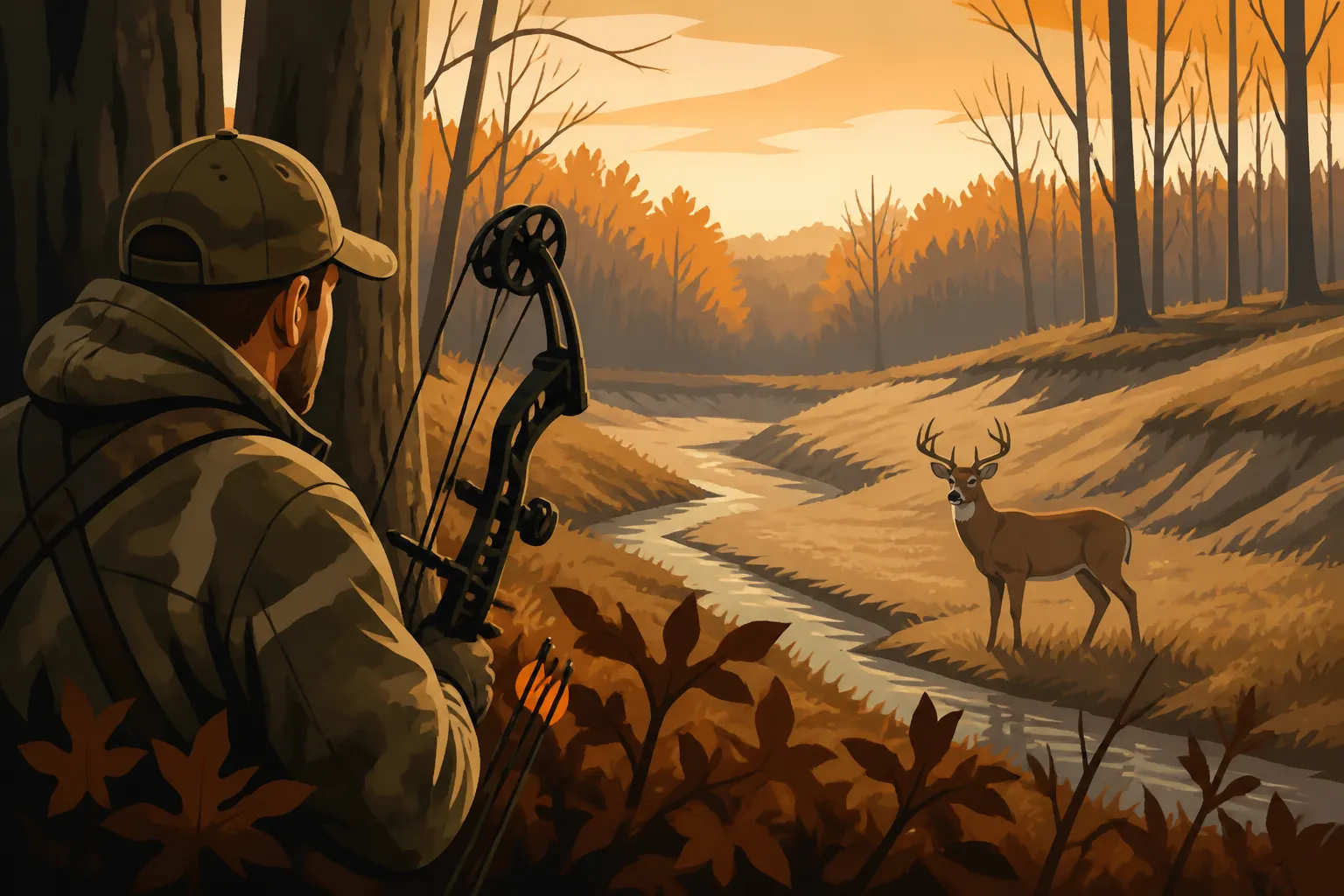
Working a Creek Bottom for Late-Season Deer
As the late season grinds on in Alabama, many deer hunters find themselves staring at empty food plots or barren timber stands, wondering where all the deer went. The chill winds blow through once-active areas, and deer seem to vanish into thin air. But often, they haven't vanished at all – they've simply shifted their patterns, seeking refuge and sustenance in the often-overlooked havens of creek bottoms. This comprehensive guide will equip you with the knowledge and tactics to successfully pursue those elusive whitetails when they're hiding deep in Alabama's winding creek beds.
Why Creek Bottoms Become Late-Season Deer Magnets
When the temperatures drop and the pressure from hunters mounts, deer in Alabama don't just disappear; they adapt. Creek bottoms, those often-tangled, dense corridors of vegetation that crisscross our landscape, become prime real estate for whitetails seeking survival and comfort. Understanding why they gravitate to these areas is the first step in learning how to hunt them effectively.
Thermal Advantage and Cover
One of the most significant draws of a creek bottom in the late season is the thermal advantage it offers. Imagine a brisk north wind cutting through a pine plantation or an open hardwood ridge. Deer, much like us, seek shelter from the elements. Creek bottoms, with their lower elevation and often steep banks, naturally block these biting winds. The dense canopy of deciduous trees that might have lost their leaves still offers some windbreak, and the evergreen understory – think honeysuckle, greenbriar, and thickets of cedars – provides critical thermal cover.
This dense cover isn't just about warmth; it's about security. After months of hunting pressure, deer become incredibly wary. They're looking for places where they can move, feed, and bed without constantly feeling exposed. A sprawling creek bottom, especially one with significant changes in elevation or choked with thick vegetation, offers a labyrinth of safe zones. Bucks that have survived the initial gun seasons are particularly prone to seeking out these impenetrable havens, often bedding just a few yards from trails they use to access food.
Furthermore, the topography itself creates microclimates. The bottomland can hold pockets of warmer air, especially during those frigid pre-dawn hours. This slight difference in temperature, combined with the visual security, makes a creek bottom an irresistible sanctuary for a deer simply trying to conserve energy and stay hidden.
Consistent Food and Water Sources
Late-season food sources can be sparse, but creek bottoms often retain a surprising amount of forage. The consistent moisture from the creek itself, even if it's just a trickle, allows for certain plants to stay greener longer. You'll often find persistent greenbriar, honeysuckle, and privet that offer palatable browse when everything else has turned brown and crunchy. These are high-value food items for deer trying to pack on calories during the leanest part of the year.
Beyond persistent browse, creek bottoms are natural funnels for hard mast. Even if the primary acorn drop is long gone, pockets of white oak or red oak acorns might still be found, especially in depressions where water carries them or where they’ve been covered by leaves, preserving them longer. Deer will meticulously work these areas, rooting around for any remaining mast. These spots are also often overlooked by hunters who are focused on traditional food plots, making them even more appealing to wary whitetails.
And, of course, there's the water itself. While deer can go without drinking for a while by getting moisture from their food, easy access to fresh water is always a draw. If other water sources have frozen over or dried up, a flowing creek becomes an undeniable necessity. This means deer will visit these areas not just for food and cover, but to quench their thirst, often during midday lulls when they feel safest. Understanding how these factors combine reveals why a creek bottom isn't just a place deer pass through but a place they live in during the late season. For more insights on deer behavior, check out our guide on Hunting the Rut in the Northern Zones.
Escape and Travel Corridors
Creek bottoms aren't just bedding and feeding areas; they are superhighways and escape routes for deer. The dense cover allows deer to move almost undetected from one area to another. A buck might bed in a thicket on one side of a creek, cross to a hidden food source on the other, and then use the creek bed itself to travel a considerable distance, staying out of sight of roads, fields, and human activity.
These corridors are especially vital when hunting pressure is high. If a deer is bumped from a bedding area, its natural instinct is often to drop into the nearest creek bottom and follow it, using the cover and topography to quickly put distance between itself and the perceived threat. This makes them ideal places for still-hunting or setting up ambushes, especially if you can anticipate their direction of travel. You can learn more about how deer use these pathways by reading about Hunting a Funnel Between Two Creek Bottoms.
They also serve as natural barriers, defining travel patterns. Deer will often follow the path of least resistance along the banks or through the less-tangled parts of the bottom, creating distinct trails that become more pronounced as the season progresses. Identifying these primary travel routes within the creek system is paramount to successful late-season hunting.
Scouting and Interpreting Creek Bottom Sign
Successfully hunting a creek bottom in the late season isn't just about showing up; it's about smart scouting. Deer sign tells a story, and in these complex environments, reading that story accurately is crucial. You need to differentiate between old, irrelevant sign and fresh activity that indicates current deer patterns.
Identifying Key Funnels and Crossings
Before you even step foot in the woods, use mapping tools like GoHunt to analyze the topography. Look for pinch points where the creek bottom narrows, or where steep banks force deer into specific crossing locations. These natural funnels are high-traffic areas and ideal ambush points. Pay attention to how the creek interacts with surrounding terrain – does a ridge drop down to meet the creek at a particular spot? That's a likely crossing.
Once on the ground, confirm these suspected funnels and crossings. Look for worn trails leading up and down banks, or distinct paths through the vegetation where deer are entering and exiting the bottom. A muddy bank will often reveal fresh tracks, even if other areas are too dry to show clear sign. Look for "jump-across" points where the creek is narrowest, or where fallen logs create natural bridges. These are key locations where deer feel safe crossing.
Understanding the why behind these crossings is also important. Are they connecting a bedding area to a persistent food source? Are they leading to a secluded water hole? The more you can piece together the deer's daily routine, the better your chances of intercepting them. Take notes and mark these spots on your mapping app, noting factors like wind direction suitability for future hunts.
Reading Fresh Sign: Rubs, Scrapes, and Trails
While rubs and scrapes are often associated with the rut, you can still find activity in the late season, especially in creek bottoms. Bucks will continue to rub small saplings, particularly if they're feeling a late urge to express dominance or simply working off energy. These rubs might not be as aggressive as rut rubs, but fresh sap running or bark peeling indicates recent activity.
Scrapes, too, can still be found, though they might not be as frequently visited as earlier in the season. Look for secondary scrapes along travel corridors, usually smaller and less prominent. The key is freshness: a pawed-out patch of bare earth with wet leaves kicked to the side, or an overhanging branch with fresh chewing or broken twigs, suggests a deer was there recently. Pay close attention to these smaller, subtle signs in the dense cover of a creek bottom.
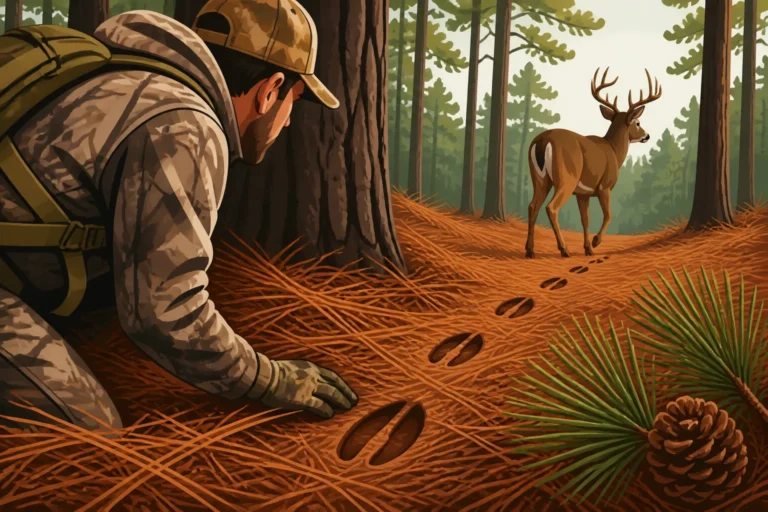
The most reliable sign in the late season will be fresh tracks and droppings on trails. Soft earth near the creek, or even damp leaf litter, can hold clear tracks. Pay attention to the size and freshness. If you find warm, moist droppings, you know a deer has been through very recently. These clues are critical for understanding current deer movement, especially as patterns shift dramatically from the early season. For more on tracking, check out our piece on Tracking a Deer Through Alabama Pine Straw.
Water Levels and Their Impact
The water level in the creek can dramatically alter deer behavior. After heavy rains, the creek might swell, making certain crossing points impassable or forcing deer to take higher ground. This can condense their movement into fewer, more reliable crossing areas. Conversely, during a dry spell, the creek might shrink to a series of isolated pools, making these water sources even more critical to deer.
Always check local rainfall. A recent deluge might mean deer are sticking to the higher, drier banks and seeking alternative routes. A prolonged dry spell will make those remaining pools of water irresistible. This means your scouting isn't a one-and-done event; it's an ongoing process that needs to account for dynamic environmental factors.
Using a mapping app to note areas prone to flooding or areas that hold water even in dry conditions can be a huge asset. These insights will help you predict where deer will concentrate their movement and activity based on current conditions. A deer's need for water, like its need for food and cover, is a constant that you can exploit.
Effective Strategies for Hunting Alabama Creek Bottoms
Once you've done your scouting homework and understand the lay of the land within a creek bottom, it's time to implement effective hunting strategies. The dense cover and unique thermal dynamics of these areas demand a different approach than hunting an open field or a pine plantation.
Stand Placement for Different Wind Directions
Wind is king in deer hunting, and in creek bottoms, it becomes even more complex due to thermals. Hot air rises, cold air sinks. In the mornings, cooler air will settle into the creek bottom, meaning your scent will likely drift down into the bottom. In the evenings, as the air cools, your scent will likely rise up out of the bottom. This means a stand location that's perfect in the morning might be terrible in the evening.
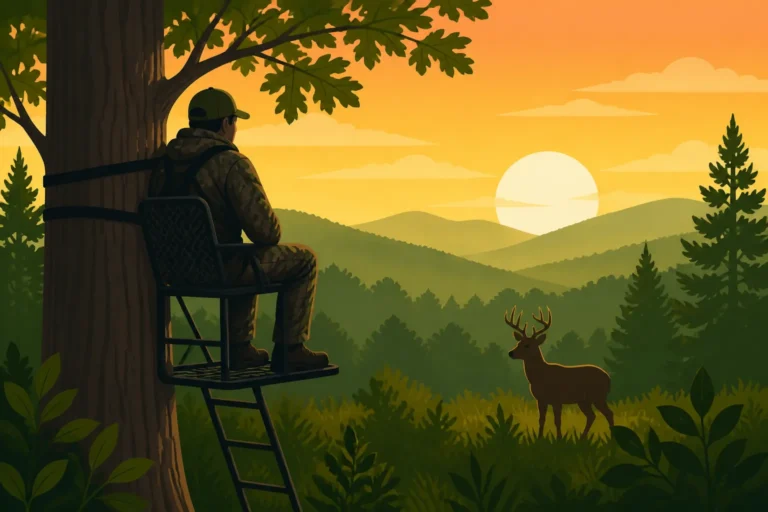
When placing a treestand, look for points where you can gain elevation without being silhouetted, ideally overlooking a well-used trail or crossing. Consider prevailing winds, but also account for those thermal shifts. It's often beneficial to have multiple stand locations or at least different setup options to account for changing conditions. A stand perched on a bench just above the creek, allowing your scent to blow over the primary travel route, can be deadly. Learn more about optimal stand placement by reading Hanging a Stand on a Talladega Ridge.
If the wind is swirling badly, or if you can't get above the deer's primary travel route, a ground blind might be a better option. However, always prioritize keeping the wind in your favor. A deer's nose is its primary defense, and a swirling wind in a creek bottom can quickly betray your presence.
Still-Hunting and Stalking Tactics
Creek bottoms are tailor-made for still-hunting. The dense cover and winding terrain allow you to move slowly, deliberately, and often undetected. The key is patience: take one or two steps, then pause for several minutes, scanning every shadow and listening intently. Deer often bed in the thickest cover along creek banks, and a slow, quiet approach can often catch them off guard.
When still-hunting, use the natural contours and cover to your advantage. Walk on the edge of the bank, using the creek itself to mask your sound. Move into the wind or with a quartering wind, always thinking about where your scent is going. Look for subtle movements: a flick of an ear, the horizontal line of a deer's back in a tangled thicket. Your eyes should be constantly searching for parts of a deer, not just the whole animal.
This method is physically demanding and requires immense focus. You might cover only a few hundred yards in an hour, but those few hundred yards could put you on a late-season buck that's holed up and refusing to move. It's about hunting where the deer are, not where you expect them to be. For more on this method, consider our guide on Still-Hunting Bankhead Forest Ridges.
Using Ground Blinds and Natural Cover
Sometimes, a treestand just isn't feasible or practical in a creek bottom. The trees might be too small, too sparse, or the terrain too steep. This is where ground blinds, either manufactured or built from natural cover, shine. A well-placed ground blind can offer excellent concealment, especially in the thickest parts of the bottom where deer feel safest. You can learn more about this by checking out Using a Ground Blind on Alabama Public Land.
When using a ground blind, brush it in thoroughly. Don't just set it up and hope for the best. Gather deadfall, branches, and leaves to break up its outline, making it blend seamlessly into the environment. Consider setting it up several days or even a week before you hunt it, allowing deer to get accustomed to its presence. This also allows the human scent to dissipate.
Natural cover can also be highly effective. A downed tree, a thick honeysuckle patch, or a large root wad can provide enough concealment for a successful ambush. Just remember to position yourself so you have a clear shooting lane and, crucially, to account for the wind. The advantage of natural cover is that it's already part of the environment, so deer are less likely to notice anything new. It's about becoming part of the landscape.
Gear Considerations for Creek Bottom Success
Hunting creek bottoms in the late season isn't just about strategy; it's about being prepared for the environment. These areas can be wet, cold, and challenging. Having the right gear can make the difference between a miserable, unproductive hunt and a successful, comfortable one.
Apparel for Wet and Cold Conditions
Alabama's late season can throw a lot at you: freezing mornings, damp conditions, and sometimes even torrential rain. Creek bottoms are inherently damp environments, so waterproof and insulating layers are non-negotiable. Start with a good base layer that wicks moisture away from your body, preventing that clammy, chilled feeling. Merino wool is often a fantastic choice for its warmth-to-weight ratio and odor-fighting properties.
Over your base layers, add insulating layers appropriate for the temperature. A good fleece or puffy jacket for warmth. On the outer layer, invest in truly waterproof and breathable rain gear. Not just water-resistant, but fully waterproof. Your pants should also be waterproof, especially if you're still-hunting or walking through dew-covered or muddy banks. Waterproof boots are absolutely essential, preferably with good ankle support for navigating uneven terrain.
Don't forget warm gloves, a good stocking cap, and neck gaiter. Much of your body heat escapes from your head and neck. Even if it feels warm during the day, those creek bottoms can get chilly quickly, especially if you're sitting still. Being warm and dry allows you to stay focused and comfortable, increasing your patience and ultimately your chances of success.
Optic and Navigation Tools
Good optics are crucial when hunting dense creek bottoms. Binoculars (10×42 or 8×42 are excellent choices) allow you to pick apart thick cover, identifying a flick of an ear or the subtle outline of a deer that you might miss with the naked eye. A rangefinder is also important, as the broken terrain can make judging distances tricky. Knowing your exact yardage is key for an ethical shot.
For navigation, a GPS unit or a reliable smartphone app like GoHunt is invaluable. Creek bottoms can be disorienting, with winding paths and dense vegetation. Being able to pinpoint your exact location, track your movements, and identify potential escape routes or crossing points on a detailed topographical map is incredibly helpful. These apps often have satellite imagery that can reveal hidden clearings or thicker patches you might miss from the ground. Many hunters find using the GoHunt app for Scouting With the Outdoor Alabama App to be invaluable.
Always carry a power bank for your phone, especially if you're relying on it for navigation. The cold can drain batteries quickly, and getting lost in a creek bottom after dark is a situation you definitely want to avoid. Mark your stand locations, truck, and any key sign you find on your app to build a comprehensive picture of the area.
Scent Control and Thermals
Scent control is always important in deer hunting, but it takes on a heightened level of criticality in creek bottoms due to the tricky thermal currents. As mentioned, thermals can carry your scent in unpredictable ways. This means going above and beyond your usual scent control routine. Wash your hunting clothes in scent-free detergent, store them in airtight containers, and dress in the field to minimize contamination.
Using scent-eliminating sprays on your outer layers and boots before heading in is a good practice. However, don't rely solely on products; the best scent control is always playing the wind. If the wind is wrong for a particular setup, don't hunt it. Be patient and wait for the right conditions.
Consider using natural attractants or cover scents if legal in your area, but these are secondary to proper wind management. The primary goal is to minimize human odor, which is the ultimate alarm signal for a wary, late-season whitetail. You can learn more about using calls and scents in our guide on Rattling and Grunting in Alabama.
Creek Bottom Hunting Strategies At-a-Glance
| Strategy | Pros | Cons | Best Conditions |
|---|---|---|---|
| Treestand Hunt | Elevated view, scent dispersal (if thermals cooperate) | Limited mobility, noisy setup, wind dependent | Clear, consistent wind; established deer trails/crossings |
| Ground Blind | Excellent concealment, comfortable, less visible | Limited view, scent can be tricky, needs thorough brushing | Thick cover, swirling winds, cold/wet weather |
| Still-Hunting | Highly mobile, actively seeking deer, adaptable | Requires immense patience and quietness, physically taxing | Dense cover, light rain (masks sound), favorable wind |
Disclaimer
Hunting is an inherently dangerous activity. Always prioritize safety, follow all local and state regulations, and obtain proper landowner permission if hunting private land. Wear appropriate safety gear, including a safety harness when hunting from an elevated position. Always be sure of your target and what lies beyond it.