When the Alabama Rut Peaks by Zone
One of the biggest head-scratchers for deer hunters in Alabama is figuring out exactly when the rut hits. Unlike states with a uniform, predictable breeding season, Alabama's deer rut is a complex, sprawling affair that can leave you scratching your head, wondering if you've missed it or if it's still yet to come. This guide will break down the peak rut periods across Alabama's diverse deer zones, helping you understand when bucks are most active and vulnerable in your hunting area.
Understanding Alabama's Varied Rut Phenomenon
It's no secret that Alabama's deer rut is legendary for its inconsistency, and that can be incredibly frustrating for hunters who pour their time and energy into scouting. You might hear tales of bucks chasing does in late December in one county, only for your buddy to report nothing but bachelor groups well into February just an hour or two away. This isn't just anecdotal chatter; it's a scientific reality rooted in historical deer stocking efforts and varied habitat conditions across the state. While the ADCNR has established five distinct deer zones (A, B, C, D, and E) primarily for season length and bag limits, the rut itself doesn't always align perfectly with these lines. Instead, it's often more helpful to think of the state in broader geographical terms when considering the peak breeding activity.
Historically, Alabama's deer herd was nearly wiped out by unregulated hunting in the early 20th century. To bring deer back, state agencies embarked on ambitious restocking programs, often moving deer from different parts of the country where their genetics carried distinct breeding timelines. This means that a pocket of deer stocked from, say, Wisconsin, might retain an earlier rut influence compared to native deer or those stocked from areas with a later breeding cycle. Over decades, these different genetic lines have intermingled, but their original rut tendencies have persisted, creating the patchwork we see today. This also means that even within a single zone, local factors like herd health, nutrition, and even hunting pressure can slightly shift the exact peak. Understanding these historical underpinnings can help us appreciate why there's no "one size fits all" answer to the question of Alabama's rut. It truly is a unique challenge that requires local knowledge and keen observation.
Another factor contributing to the rut's variability is the sheer diversity of Alabama's landscape. From the rolling hills and pine plantations of the Piedmont to the rich agricultural lands of the Black Belt and the swampy river bottoms of the Mobile-Tensaw Delta, each region offers different food sources and cover. These environmental factors, combined with historical stocking patterns, influence the timing and intensity of breeding activity. For instance, areas with consistently rich forage might see does come into estrus earlier or more synchronously. It’s a complex dance between genetics and environment, and that's precisely why pinpointing the exact peak can feel like hitting a moving target. Many hunters now utilize resources like the Outdoor Alabama App, which offers mapping tools and harvest data, to get a more localized understanding of deer activity trends.
The Northern Zone Rut Window
When we talk about the northern reaches of Alabama, we're generally looking at areas that overlap significantly with Deer Zone C and parts of Zone B, particularly counties like Lauderdale, Colbert, Limestone, Madison, Morgan, Lawrence, Winston, and sometimes stretching down into Blount or Cullman. These areas tend to experience the earliest rut in the state, offering hunters a distinct window of opportunity before other regions. This earlier rut is largely attributed to the historical stocking efforts in these areas, bringing in deer with genetic predispositions for an earlier breeding cycle.
Early December: The Initial Push
For many hunters in Alabama's northern counties, the first signs of serious rutting activity begin to show in early December, often peaking around the second or third week of the month. This is when the pre-rut intensity truly ramps up, and mature bucks, which might have been nocturnal for weeks, suddenly become much more visible during daylight hours. You'll start seeing scrapes opening up, fresh rubs appearing daily on saplings and small trees, and younger bucks sparring as they test their dominance. This period is often characterized by bucks scent-checking food plots and thickets where does are known to frequent.
During this time, focusing your efforts on established travel corridors between bedding areas and food sources can be highly effective. Bucks are on the move, actively seeking the first does to come into estrus. It's a fantastic time to use rattling and grunting in Alabama to pique a buck's curiosity, as their testosterone levels are high, and they’re eager to assert themselves or investigate potential rivals. Keep an eye on weather patterns; a cold snap can often kick the rut into an even higher gear, as deer move more comfortably in cooler temperatures.
Mid-December to Early January: Peak Breeding Activity
The true peak of the northern rut, where most of the breeding occurs, typically falls from mid-December through the first week or two of January. This is the period when bucks are actively chasing, breeding, and running does, often with little regard for caution. Hunters in counties like Lauderdale, which is also part of the CWD Management Zone, will witness this intense activity. The woods can feel alive with the sound of hooves crunching leaves, and you might even catch glimpses of bucks pushing does across open fields in broad daylight.
Hunting during this core breeding phase requires patience and an understanding of buck behavior. Bucks might be locked down with a doe for a day or two, making them harder to find, but once that doe is bred, they're back on the prowl for the next receptive female. This is a great time to implement tactics like still-hunting Bankhead Forest ridges or sitting over pinch points and funnels that does use to move between different cover types. When the rut is on like this, deer are less patternable around food and more driven by scent and the presence of does. Pay close attention to subtle changes in buck activity and be ready to move your stand if you're not seeing the action.
The Central Zone Rut Progression
Moving south into the central parts of Alabama, the rut timing shifts noticeably. This area generally encompasses the majority of Zone A, the southern parts of Zone B, and all of Zone D, covering a vast array of habitats from the Black Belt's fertile farmlands to the more mountainous terrains of the Piedmont. Here, the rut typically unfolds later than in the north, stretching from mid-January into early February, presenting a different challenge and opportunity for hunters.
Mid-January: The Rut Begins to Flare
In central Alabama, you'll often start to see significant rutting activity pick up around the second or third week of January. This is the pre-rut period for this region, marked by increasing buck sign and bucks beginning to cruise larger areas looking for does. Hunters targeting zones like the Black Belt Prairie Farmland Deer might notice scrapes and rubs becoming more numerous, and bucks starting to show aggression. This mid-January window often catches hunters off guard who are used to an earlier rut, but it's prime time for those who understand the local biology.
During this period, focus on areas where does congregate, as bucks will be checking these locations frequently. Green fields, acorn flats (if any are still dropping), or thick cover patches providing sanctuary for does are excellent choices. Many hunters report success by sitting on field edges in the Black Belt, observing how deer move into and out of these open areas, especially in the mornings and late afternoons. While the intensity isn't quite at the peak, bucks are definitely on the move and becoming less wary.
Late January to Early February: The Heart of the Rut
The peak of the rut in central Alabama typically falls from the last week of January through the first two weeks of February. This is when the primary breeding occurs, and bucks are fully engaged in chasing and breeding. This later rut timing allows hunters who might have been busy during the holidays to still experience intense rut activity. The sheer excitement of seeing multiple bucks chasing a single doe can make all those cold mornings worthwhile. It's a time when you might find yourself hunting a funnel between two creek bottoms, patiently waiting for a hot doe to pull a big buck right past your stand.
This is a fantastic period to be in the woods, especially as the season winds down and other hunters have packed up. Bucks are often running does ragged, meaning they might be seen in unexpected places or at unusual times of day. Persistence is key during this peak. You might need to adjust your strategy from purely food-focused to cover and travel-route focused. Consider the article on Hunting the Rut in the Southern Zones for more specific insights into this later-season hunting, as parts of Zone A in central Alabama share similar challenges. Remember to check Alabama’s deer season structure explained to confirm season end dates in your specific zone, as they can sometimes overlap with the peak rut activity.
The Southern Zone's Unique Rut
The rut in Alabama's southernmost regions, primarily encompassing the lower portions of Zone A and all of Zone E (the Gulf Coast counties), presents another fascinating and often challenging scenario for hunters. This is typically the latest rut in the state, sometimes stretching well into February and even touching on March in extreme cases. This extended and later rut is a direct result of distinct historical stocking patterns and the warmer climate, which can influence food availability and deer metabolism.
Mid-February: The Late-Season Frenzy
For hunters along the Gulf Coast and the deep south parts of Alabama, the most intense rutting activity often doesn't kick off until mid-February. This period can be a real gift for those who enjoy late-season hunting, but it also demands a different approach due to the typically warmer weather. Bucks, often having shed considerable weight by this point, are in full breeding mode, desperate to find the last receptive does of the season. This late timing can also coincide with the very end of the hunting season in some zones, making every day precious.
Hunting during this late-season frenzy means being mindful of warm weather sitting strategy in Alabama. Deer, especially bucks, will be seeking shade and water during the warmer parts of the day, moving more actively at dawn and dusk. Focus on thick cover, especially near water sources. Using a ground blind on Alabama public land in dense areas can provide both concealment and a cooler hunting environment. The deer may be less wary, but they are also more sensitive to heat.
Late February to Early March: The Last Gasp
In some extreme southern pockets, particularly near the Mobile-Tensaw Delta or in areas closer to the Gulf, the rut can actually extend into late February and occasionally even graze the first week of March, right up against the season's closing. This "last gasp" of the rut often involves the remaining unbred does coming into estrus, and exhausted bucks making their final pushes. While not as widespread or intense as the mid-February peak, it can still offer a chance at a weary, mature buck.
This is truly an opportunity to take advantage of the very end of the season. Deer might be focused on late-season food sources for Alabama whitetails, trying to regain energy while still breeding. Pay attention to any remaining green browse, clover plots, or even agricultural fields that might still have forage. Understanding How Alabama's Archery Season Runs Into February is crucial, as archers often get a crack at these late-rutting deer when gun seasons have already closed. This final push requires patience and persistence, but it can sometimes reward the most dedicated hunters with a memorable late-season encounter.
Strategies for Hunting Alabama's Rut by Zone
Knowing when the rut should peak in your zone is only half the battle. The other half is adapting your hunting strategies to capitalize on those precious few weeks of intense deer activity. Since Alabama's rut is so varied, a one-size-fits-all approach simply won't cut it. You need to be flexible and observant, letting the deer tell you what they're doing.
Scouting and Adaptability are Key
Even with general peak dates, local conditions can shift things. That's why consistent scouting, both before and during the season, is absolutely critical. Pre-season scouting helps you identify bedding areas, travel corridors, and primary food sources. During the season, look for fresh buck sign – new scrapes, rub lines, and especially "chase trails" where does have been run. If you're seeing a sudden increase in buck activity, regardless of what the calendar says, that's your cue that the rut is on or rapidly approaching. Tools like GoHunt can provide valuable insights by allowing you to mark observations and track historical data in your specific areas, helping you identify micro-rut patterns within broader zones.
Your setup needs to be adaptable. What worked for a food-source oriented hunt in early season might not be effective when bucks are solely focused on does. Consider moving your stand or setting up ground blinds in bottlenecks, saddles, or creek bottoms that act as natural funnels for deer movement. If you're in the northern zones during their earlier rut, you might be focused on Hunting the Rut in the Northern Zones while your buddies further south are still seeing only casual buck movement. It’s all about staying current with what the deer in your immediate area are doing.
Using Calls and Decoys Wisely
Calling and decoying can be incredibly effective during the rut, but timing is everything. During the pre-rut phase, when bucks are eager and searching, grunt tubes and rattling antlers can be fantastic for drawing in curious or aggressive deer. A good sequence of rattling and grunting can often bring a buck right into your shooting lane, especially if you're targeting areas where bucks are known to roam. However, once the rut hits its absolute peak and bucks are locked down with does, they might be less responsive to calls, or even wary of them.
Decoys also have their place, but again, timing is crucial. A buck decoy or a doe decoy can be very attractive to a rutting buck, but Alabama has a specific Alabama's Ten-Day Decoy Restriction for turkey hunting, so always double-check the current regulations for deer hunting to ensure you're in compliance. Generally, during the peak chase phase, a single doe decoy can draw in a cruising buck looking for a receptive female. If you use a buck decoy, ensure it conveys dominance but isn't overly aggressive, especially if you're trying to appeal to a non-dominant buck.
Public Land vs. Private Land Rut Dynamics
The rut can play out differently on public lands compared to private, managed tracts. On public lands, especially those with higher hunting pressure, bucks can become more nocturnal or move through thicker cover during daylight hours, even during the rut. This means you might need to work harder, penetrating deeper into public land or focusing on areas that other hunters overlook. For example, learning Where Bankhead Forest Bucks Bed can give you an edge by identifying sanctuary areas close to where rutting activity might occur.
On private lands with lower pressure, bucks might be more visible and move more freely. This is where a clear understanding of the local deer herd size and age structure becomes incredibly beneficial. For non-residents or those without private land access, understanding Nonresident Access to Alabama Public Land is vital. Regardless of where you hunt, the core principle remains: pay attention to the deer's behavior and let their actions guide your strategy.
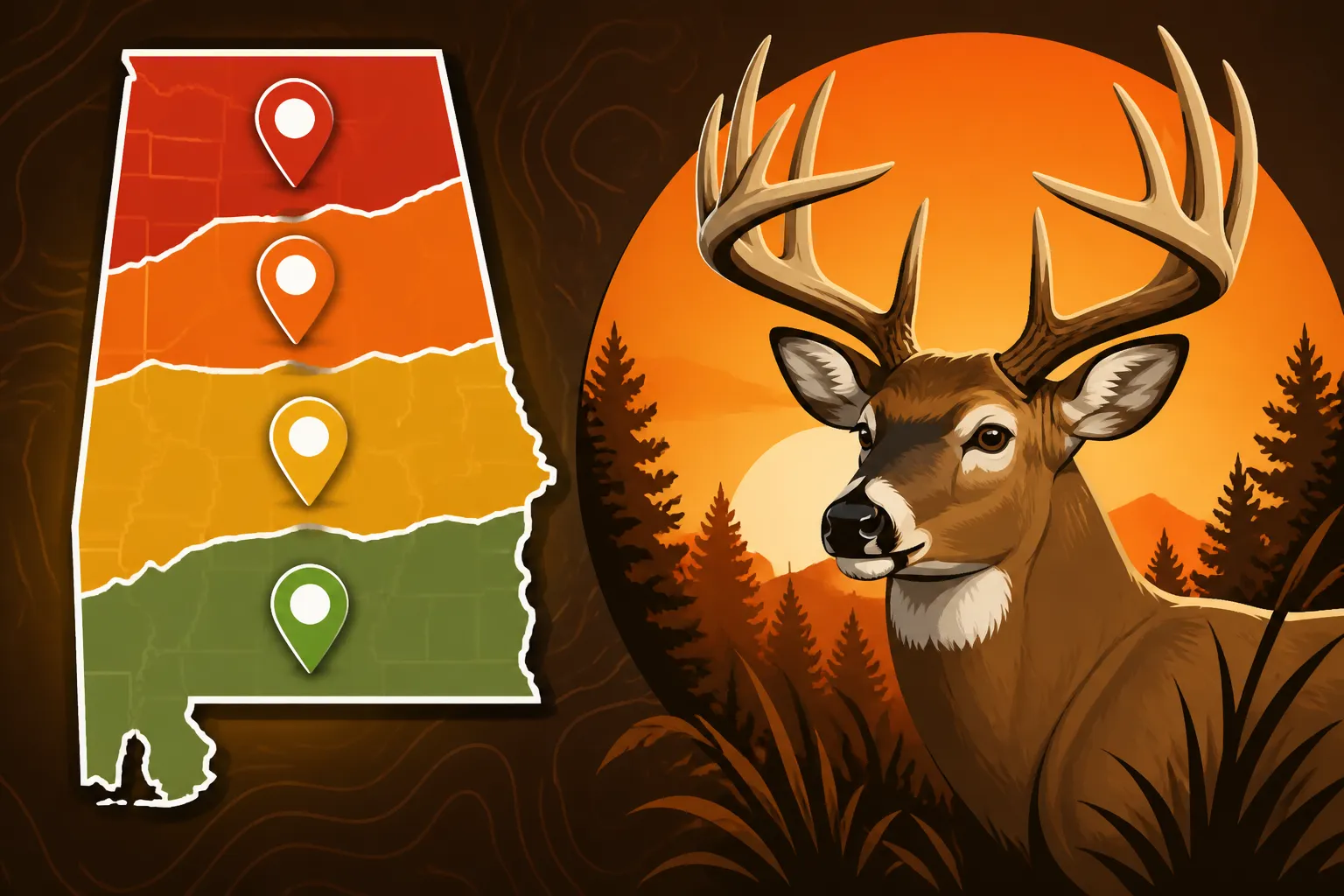
Table: Alabama Deer Rut Peaks by General Zone
To help visualize the broad timelines, here's a general guide to when the rut tends to peak across Alabama. Remember, these are approximations and can shift based on local factors.
| General Geographic Region | ADCNR Deer Zones Often Included | Approximate Peak Rut (Breeding Activity) | Typical Buck Behavior | Best Hunting Strategy Focus |
|---|---|---|---|---|
| Northern Alabama | Zone C, Upper Zone B | Mid-December to Early January | Aggressive chasing, seeking does, actively making sign | Funnels, travel corridors, rattling, grunt calls, food sources for cruising bucks |
| Central Alabama | Zone A, Lower Zone B, Zone D | Late January to Mid-February | Intense seeking & chasing, bucks locked down with does | Bedding areas, pinch points, cover, patience, calls |
| Southern Alabama | Lower Zone A, Zone E | Mid-February to Early March | Exhausted bucks making final pushes for does | Thick cover, water sources, subtle calling, late-season food plots |
This table provides a quick reference, but always defer to fresh sign and observed deer activity in your specific hunting area. Tools like GoHunt can also aid in analyzing past harvest data and mapping out potential hotspots within these general timelines, helping you fine-tune your approach for that particular season.
Conclusion: Embrace the Alabama Rut Challenge
The Alabama rut is less of a single event and more of a prolonged, staggered celebration of nature. While it might be frustrating at times not to have a clear-cut "peak week" like in some northern states, this extended breeding season actually offers a unique advantage: more opportunities to catch bucks off guard, whether you're hunting in December, January, or even February. Understanding Alabama's Five Deer Zones and their general rut trends is your first step.
The key to success is patience, adaptability, and an unshakeable commitment to observation. Pay attention to what the deer in your specific area are doing. Look for fresh rubs and scrapes, watch for chasing activity, and listen to the sounds of the woods. Whether you're hunting the earliest northern rut or the latest southern push, embracing the nuanced nature of Alabama's deer season will make you a more versatile and ultimately, a more successful hunter. Don't be afraid to experiment with tactics, and remember that every season offers new lessons about this wild, beautiful state and its incredible deer herd.
Disclaimer
This article is for general informational purposes only and does not constitute professional advice. Laws, prices and regulations vary by location and change over time. Consult a qualified professional for guidance on your specific situation.