Where Alabama Turkeys Are Densest
It can feel like a real challenge to locate those elusive wild turkeys in Alabama, especially when you're dreaming of hearing that booming gobble reverberating through the timber. Sometimes, it seems like they're everywhere, and other times, you can walk for miles without hearing a peep. This guide is dedicated to helping you understand where Alabama's wild turkeys are densest, breaking down the regions and factors that contribute to healthy, thriving turkey populations, so you can increase your odds of success in the spring woods.
Understanding Alabama's Diverse Turkey Landscape
Alabama is a truly diverse state when it comes to terrain and habitat, and this variety directly impacts where you'll find concentrations of wild turkeys. From the rolling hills of the north to the sprawling pine forests of the south and the rich agricultural lands in between, each region offers different advantages and challenges for these magnificent birds. Understanding this broader landscape is key to narrowing down your search for the best turkey hunting spots.
Historical Context of Turkey Restoration
It's easy to take for granted the incredible turkey hunting we have in Alabama today, but it wasn't always like this. Believe it or not, wild turkeys were nearly extirpated from much of the state by the early 20th century due to unregulated hunting and massive habitat loss from logging and agriculture. The comeback story of the wild turkey in Alabama is a testament to dedicated conservation efforts, primarily through trap-and-transfer programs that relocated birds from strongholds to areas where they had been wiped out. These efforts, combined with better land management and regulated hunting seasons, allowed populations to explode.
Today, thanks to decades of hard work by wildlife agencies and private landowners, wild turkeys can be found in all 67 counties. This successful restoration means that while some areas clearly hold higher densities, you generally have a chance to encounter turkeys almost anywhere there's suitable habitat. This widespread distribution is a huge win for hunters and a reflection of a resilient species.
General Habitat Preferences Across the State
Wild turkeys, specifically the Eastern subspecies we have in Alabama, thrive in a mix of habitat types. They need mature hardwood forests for roosting and foraging for acorns and other mast crops. Think big, tall pines and oaks that provide safe elevated perches at night. But they also need open, grassy areas with good ground cover for nesting, brooding poults, and finding insects, which are crucial protein for growing birds. Pine plantations, especially those managed with controlled burns that promote herbaceous growth, can be excellent if interspersed with hardwoods.
River bottoms and creek drainages often create fantastic corridors, offering a rich diversity of food sources, water, and dense cover. Field edges, particularly those bordering timber, are also prime spots where turkeys can feed in the open and quickly retreat to safety. The ideal landscape isn't just one type of forest; it's a mosaic of different cover types that provides everything a turkey needs throughout its life cycle.
Pinpointing Alabama's High-Density Turkey Zones
While turkeys are widespread, certain regions of Alabama consistently report higher populations and better hunting success. These are the areas where the habitat, land use, and management practices align perfectly to create ideal conditions for wild turkeys to flourish. Knowing these general hotspots can help you focus your scouting and hunting efforts.
The Black Belt Region: A Turkey Paradise
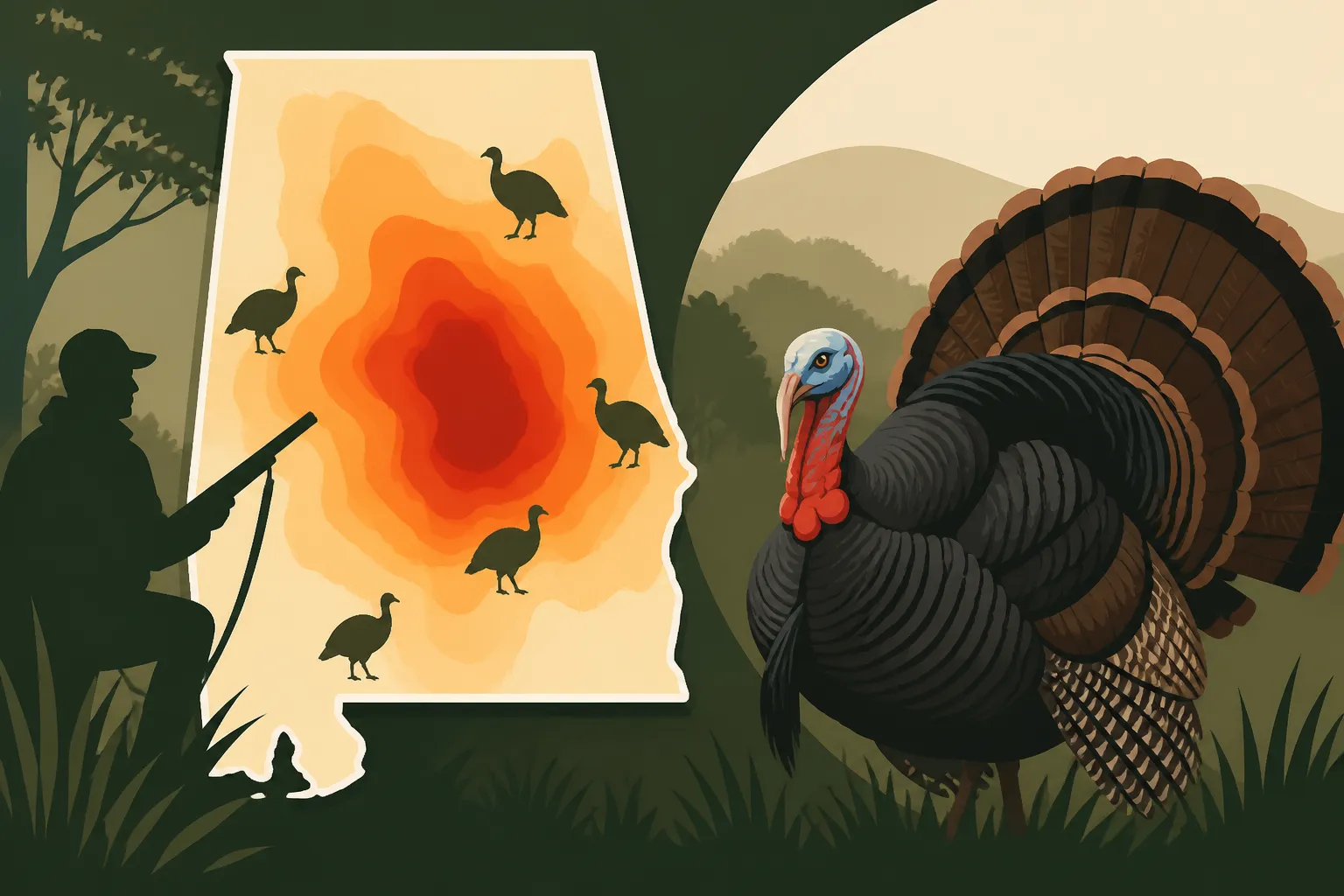
Without a doubt, the Black Belt region of Alabama stands out as a premier destination for wild turkeys. This crescent-shaped band running across the central part of the state, known for its rich, dark soil, also boasts some of the most productive turkey habitat. The fertile soil supports lush vegetation, including abundant hardwoods like oaks and hickories that produce heavy mast crops, as well as dense undergrowth and agricultural fields that provide diverse food sources.
Historically, this area was prime for turkey restoration, and the birds truly took hold. Many large private land holdings in the Black Belt are intensively managed for timber and wildlife, including turkeys, often leading to very high densities. These large tracts allow birds to roam freely with less disturbance, and the presence of numerous private hunting clubs means consistent habitat improvement efforts. If you're looking for where the birds are thickest and often have excellent age structures, the Black Belt is hard to beat. You'll find many guides and outfitters specializing in these areas, and hunters often discuss Turkey Tactics for Black Belt Field Edges as a prime hunting strategy.
Northern and Eastern Alabama: Mountain and Piedmont Strongholds
Moving north and east, the mountainous and piedmont regions also offer fantastic turkey hunting opportunities with significant densities in localized areas. The Appalachian foothills, with their rugged terrain, mixed pine-hardwood forests, and numerous creek drainages, provide excellent cover and food. Areas like the Talladega National Forest and certain Wildlife Management Areas (WMAs) in this part of the state are known for healthy turkey populations.
The Piedmont, characterized by rolling hills and mixed forests, also supports strong numbers. While perhaps not as universally dense as the Black Belt, specific pockets within these regions, particularly those with good mast production and fewer predatory pressures, can be incredibly productive. Hunters in these areas often employ Run-and-Gun Turkey Tactics on Public Land to cover ground and locate vocal gobblers. The key here is often identifying those undisturbed areas with mature timber and good understory.
Southern Alabama: Pine Forests and River Bottoms
While much of southern Alabama is dominated by vast pine plantations, the turkeys here are often found concentrated in the richer river bottoms, creek drainages, and areas where hardwoods are more prevalent. The longleaf pine ecosystem, when properly managed with fire, can provide excellent bugging and nesting habitat for turkeys, especially in the wiregrass region. However, these areas often need to be interspersed with more mature hardwoods for roosting and mast crops to hold high densities consistently.
The Mobile-Tensaw Delta and other major river systems in South Alabama provide dense, diverse habitat with abundant food and cover. These fertile lowlands, with their mix of cypress, tupelo, and various hardwoods, can be turkey goldmines. The trick in these areas is often gaining access to the prime riverine habitats, as large tracts are often privately owned or managed for timber. Still, if you can find a spot along these water corridors, you're likely to find turkeys.
Here's a quick overview of Alabama's primary turkey regions and their typical characteristics:
| Region | Primary Habitat Types | General Turkey Density | Hunting Style Often Favored | Key Features for Turkeys |
|---|---|---|---|---|
| Black Belt | Mixed hardwoods, agricultural fields, bottomlands | Very High | Setup, calling, field edges | Fertile soil, abundant mast, large private tracts |
| Northern/Eastern | Mountainous, mixed pine-hardwood, foothills | High (localized pockets) | Run-and-gun, ridge hunting | Rugged terrain, diverse food, some public land |
| Southern | Pine forests, river swamps, creek bottoms | Medium-High (localized) | River bottom ambushes, scouting | Water sources, dense cover, scattered hardwoods, managed pine |
Key Factors Influencing Local Turkey Numbers
Beyond broad regional definitions, several specific factors contribute to why turkeys thrive in one area and are scarce in another, even within the same general region. Understanding these elements can help you evaluate a potential hunting spot's real potential.
Habitat Quality and Food Sources
The cornerstone of any healthy turkey population is high-quality habitat that consistently provides essential resources throughout the year. This isn't just about having trees; it's about having the right mix of trees and understory. Turkeys need a consistent food supply. In the fall and winter, acorns, pecans, and other hard mast are critical. In spring and summer, they rely heavily on insects, soft mast like berries, and green vegetation found in open areas.
Areas with a diverse food base, where mast crops are reliable year after year, will naturally hold more birds. This often means older, mixed hardwood stands interspersed with early successional habitats created by timber harvest or controlled burning. Healthy understory provides cover for nesting hens and an abundance of insects for poults. Without this diversity, a turkey population will struggle, no matter how much timber is present.
Land Management Practices
How land is managed plays an enormous role in turkey density. On private lands, proactive management for wildlife, such as selective timber harvests, creating food plots, and implementing controlled burns, can dramatically boost turkey numbers. Controlled burns, in particular, are incredibly beneficial for Eastern wild turkeys, as they clear out dense underbrush, promote fresh green growth, and make insects more accessible, creating ideal brooding habitat. Many private landowners specifically manage for these factors, leading to some of the highest turkey densities in the state.
Even on public lands, the state's wildlife agencies often engage in similar practices. Knowing which Wildlife Management Areas (WMAs) have active habitat management programs can be a game-changer. You might want to research Public Hunting Land in Alabama and how WMAs are managed to find those with optimal turkey habitat. Areas with less active management, or those with highly fragmented habitat due to clear-cutting without thought to regeneration, tend to have lower turkey populations.
Hunting Pressure and Refuge Areas
Turkey populations can also be affected by hunting pressure. While Alabama has a generous Alabama Turkey Bag Limit Rules and a long Spring Turkey Hunting in Alabama season, excessive pressure, especially on smaller public tracts, can make birds warier and harder to locate. Areas that offer turkeys some form of refuge, whether it's unhuntable private land bordering public ground, dense thickets, or simply areas less frequented by hunters, often hold more consistent numbers of birds throughout the season.
The Why Alabama Splits the State Into Turkey Zones and staggering of season openers can also influence where birds are densest at different times, as areas that open later might hold more undisturbed birds initially. Scouting to identify areas with less human disturbance, even on public land, can often lead you to higher turkey concentrations. Think about the spots that require a little more effort to reach – often, those are the ones where birds feel safest.
Scouting Strategies for Finding Turkey Hotspots
Knowing where turkeys are densest broadly is one thing, but finding the exact spots on the ground requires dedicated scouting. Modern tools and old-school woodsman skills combine to give you the best chance of locating those prime turkey hotspots.
Utilizing Digital Mapping Tools
In today's hunting world, digital mapping applications are indispensable for turkey scouting. Platforms like GoHunt allow you to scrutinize aerial and topographic maps to identify promising habitat features from your couch. You can look for the intersection of mature hardwoods (often darker green on aerials) with open fields, clear-cuts, or food plots. Identify creek drainages, ridge lines, and potential roosting areas – often the tallest trees near water.
Use layers to identify property boundaries, especially if you're hunting public land. An area that's difficult to access or bordered by large, unhuntable private tracts might act as a natural turkey sanctuary. Mark potential roost sites, feeding areas, and travel corridors. This virtual scouting saves countless hours and directs your boots-on-the-ground efforts to the most promising locations. You can even use these tools to help you with Scouting Alabama Public Land Before Season.
Boots-on-the-Ground Reconnaissance
As helpful as digital maps are, there's no substitute for putting boots on the ground. Once you've identified potential hotspots on your map, it's time to physically walk the terrain. Look for fresh turkey sign: tracks in soft dirt, scat, shed feathers, and dusting bowls. Listen for gobblers in the early morning or late evening – a shock gobble from a locator call can tell you a lot about turkey presence.
Pay close attention to food sources. Are the oaks producing acorns? Are there fresh green shoots in burned areas? Identify strut zones (often open, flat areas near cover) and nesting cover. Knowing where birds prefer to Roost Hunting Alabama Gobblers can give you a huge advantage for morning setups. Understanding the terrain, especially for Setting Up Against a Big Oak or other prominent trees, is crucial for successful setups. Your in-person observations will confirm or deny what your maps suggest and give you invaluable insight into current turkey activity.
Understanding Seasonal Movement
Turkey densities aren't static; they shift throughout the season based on food availability, breeding activity, and hunting pressure. In the early spring, gobblers are often focused on breeding, and hens may still be in larger flocks. As the season progresses, hens begin nesting, and gobblers might become more solitary or seek out smaller groups of remaining receptive hens. Late-season birds might be found in different areas than the early-season rush.
For example, an area that's hot during the first few weeks of Alabama Spring Turkey Zones and Dates might cool off as hens go to nest, but then another area with abundant green forage or insects might become active later on. Paying attention to these seasonal patterns and adjusting your scouting and hunting locations accordingly is vital. Always be aware of the Alabama Legal Turkey Hunting Hours to maximize your time in the woods during prime activity periods. Regularly check aerial photos and even services like GoHunt for current conditions if possible, and adapt your approach to what the birds are doing now, not what they were doing a month ago.
Disclaimer
This article is for general informational purposes only and does not constitute professional advice. Laws, prices and regulations vary by location and change over time. Consult a qualified professional for guidance on your specific situation.