How Managed Pine Restored Black Belt Quail
It's heartbreaking to think back to a time when the rhythmic call of the bobwhite quail was a common sound across Alabama's Black Belt, only for it to become a rarity for so many years. Many hunters and conservationists watched with dismay as these iconic birds dwindled, a frustrating symptom of changing landscapes. This guide will take a deep dive into how dedicated land management, particularly focusing on managed pine ecosystems, has been instrumental in bringing back the beloved bobwhite quail to parts of their historic range.
The Fading Whistle: Why Alabama's Quail Disappeared
For generations, the bobwhite quail was synonymous with hunting in Alabama. Hunters recall walking fields and flushing coveys with regularity, a tradition deeply woven into the fabric of the state's outdoor heritage. However, beginning in the mid-20th century, that familiar whistle started to fade, and the covey flushes became fewer and farther between. This wasn't just a regional issue; it was a widespread decline that left many wondering if they'd ever hear the robust calls of a thriving quail population again. The reasons for this decline were complex, rooted deeply in how we managed our land and forests.
From Abundance to Scarcity: The Pre-1960s Landscape
Before the widespread changes of modern agriculture and forestry, much of Alabama, especially the Black Belt, offered a mosaic of prime quail habitat. Imagine vast expanses of open pine savannahs, often dominated by longleaf pine, interspersed with agricultural fields, fallow ground, and natural woodlands. Frequent, low-intensity fires, both natural and set by early settlers and landowners, kept the understory open, promoting a diverse array of grasses and forbs that provided abundant food and easily accessible cover for quail. These were the days of abundant quail, where hunters could literally walk out their back door and find birds. This historical context is vital to understanding Alabama's Historic Quail Decline.
The farming practices of yesteryear also played a significant role. Smaller farms, less intensive cropping, and abundant fence rows, hedgerows, and field borders provided critical nesting sites and escape cover. Think of family farms where fields weren't tilled right up to the tree line, leaving crucial strips of natural vegetation. These "weedy" areas, often seen as unproductive by modern standards, were lifeblood for quail, offering a safe haven from predators and a bounty of insects and seeds. It was a landscape that naturally sustained high densities of bobwhite, a stark contrast to what would emerge later.
The Impact of Modern Forestry and Agriculture
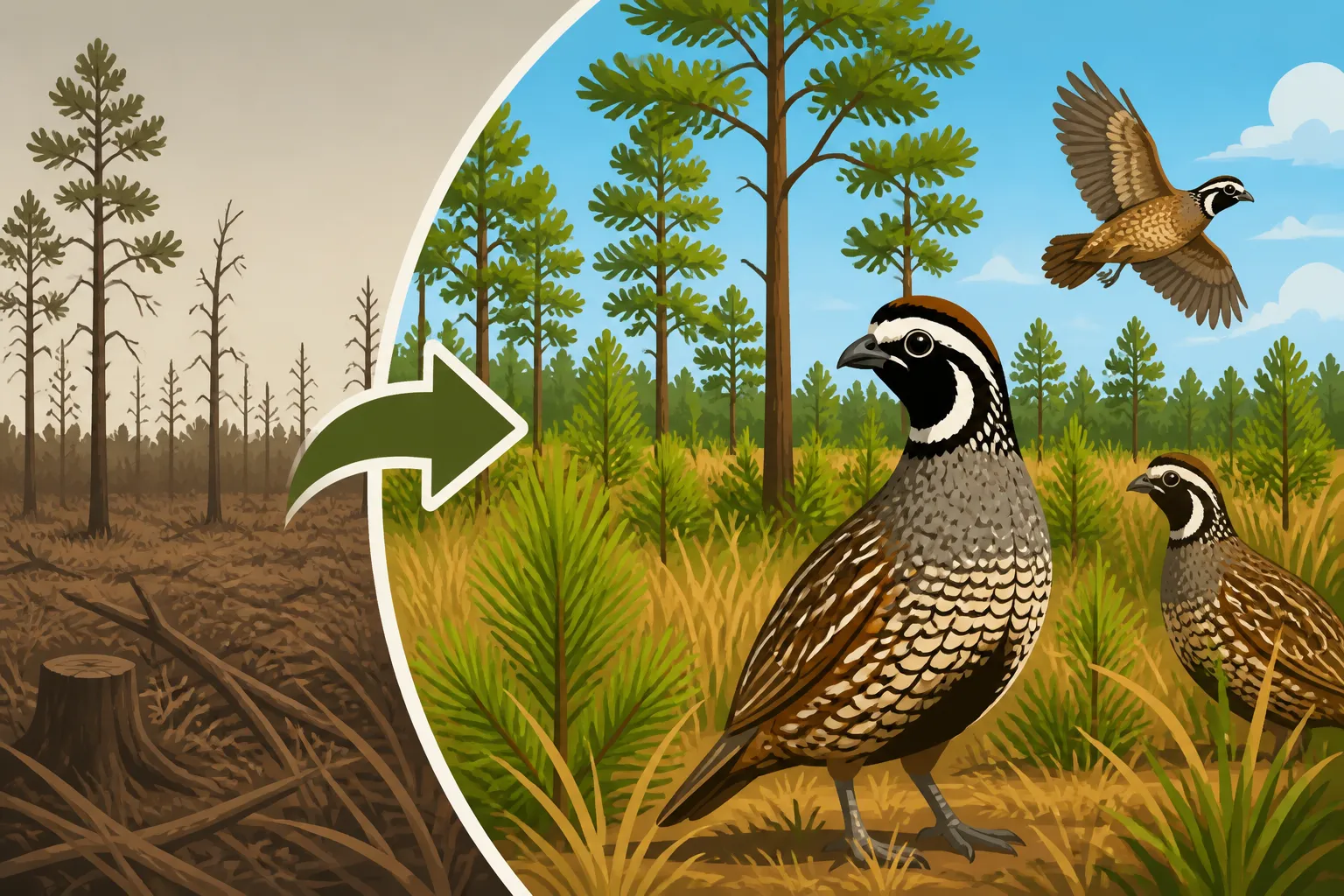
The post-World War II era brought about dramatic shifts in land use that proved detrimental to quail. Forestry practices moved towards dense, fast-growing pine plantations, often planted in rows so tight they created a "pine desert" for ground-dwelling birds. Without fire or thinning, the canopy closed quickly, shading out the diverse understory plants that quail depend on for food and cover. These dense stands, while economically efficient for timber production, offered little to no suitable habitat for bobwhites, effectively cutting off their travel corridors and food sources.
Simultaneously, agricultural practices intensified. Farms grew larger, and the push for maximum yield led to cleaner fields, the removal of fencerows, and widespread use of herbicides and pesticides. What was once a patchwork of different crops, idle fields, and natural buffers became monoculture fields stretched to the horizon, leaving no room for quail. The "clean farming" mentality, combined with the dense pine plantations, created a landscape where quail simply couldn't find the diverse, open habitat they needed to survive, let alone thrive. The cumulative effect was a devastating drop in quail numbers across the state.
Understanding the Ideal Bobwhite Habitat
To reverse the trend of declining quail populations, conservationists and landowners first had to truly understand what makes a bobwhite tick. It's not enough to just plant some trees or leave a field fallow; it requires a deep appreciation for the intricate needs of these birds throughout their life cycle. The ideal bobwhite habitat is a dynamic, ever-changing environment that provides everything they need, from nesting to feeding to escape from predators.
The Critical Role of Open Understory
The single most crucial element for bobwhite quail habitat is an open, grassy, forby understory. Quail are ground-dwelling birds; they nest on the ground, feed on the ground, and escape predators by running or flying from the ground. If the ground layer is choked with dense, woody brush or completely devoid of vegetation due to heavy shade, they simply cannot exist. They need plenty of bare ground for dusting, easy movement, and finding seeds and insects, interspersed with clumps of grasses and forbs for cover.
This open understory acts as their supermarket, nursery, and fortress all in one. It provides the crucial insects that chicks need for protein in their early weeks, the seeds and berries for adults, and the dense, waist-high cover that hides nests from predators like snakes and raccoons. When you walk through a truly managed quail property, you'll notice you can see through the trees to some extent, and the ground is a rich tapestry of native grasses and wildflowers, not a sterile mat of pine needles or thick briars.
Food, Cover, and Nesting Requirements
Beyond just an open understory, quail require a diverse array of resources throughout the year. Their diet is incredibly varied, shifting with the seasons. In spring and summer, insects are vital for growing chicks, while adults will consume seeds, berries, and green vegetation. Fall and winter require abundant seeds from native grasses and forbs, as well as some agricultural crops if available. This means a rich variety of plants is essential.
For cover, quail need both nesting cover (clumps of tall, sturdy grasses for concealment) and escape cover (dense, thorny thickets like plum, blackberry, or sumac patches that offer immediate refuge from hawks and other aerial predators). They also need thermal cover to protect them from extreme heat in summer and cold in winter. This complex matrix of different cover types, all easily accessible, is non-negotiable. Without it, quail simply cannot evade the myriad predators that call Alabama home. Understanding these needs is key to establishing Alabama Longleaf Pine and Quail Habitat.
The Comeback Kid: Longleaf Pine and Prescribed Fire
The realization that dense timber and clean farming were the culprits led to a renewed focus on historical management techniques, with longleaf pine and prescribed fire emerging as the undisputed heroes of quail restoration in the Black Belt. These two elements, when properly applied, recreate the conditions that historically supported robust bobwhite populations.
Why Longleaf Pine is a Quail Haven
Longleaf pine forests, especially when managed with fire, are truly special ecosystems, and they are a cornerstone of quail recovery. Unlike other pine species that quickly shade out the understory, longleaf grows relatively slowly in its early years, spending several years in a "grass stage" where it looks like a tuft of grass. This allows sunlight to reach the forest floor, fostering the growth of diverse grasses, legumes, and forbs that are essential for quail. Even as it grows taller, longleaf has a more open canopy than other pines, continuing to allow sunlight penetration.
The structure of a mature longleaf forest is also ideal: widely spaced trees, creating an open, park-like appearance that allows easy movement for quail and hunters alike. The needles from longleaf pine, when they fall, are also less prone to forming a dense, suffocating mat than loblolly or slash pine, allowing native grasses to flourish. This specific characteristic of longleaf pine, combined with its resistance to fire, makes it the perfect foundation for recreating the historical savannahs that once teemed with bobwhites.
The Power of Prescribed Burns
If longleaf pine is the foundation, then prescribed fire is the constant architect, shaping and maintaining the perfect quail habitat. Fire has always been a natural and critical component of southern pine ecosystems. Regular, controlled burns, typically every 1-3 years depending on the specific habitat and objectives, achieve several vital things for quail. Firstly, fire removes leaf litter and woody debris, preventing the buildup of fuel that could lead to catastrophic wildfires. More importantly for quail, it sets back woody vegetation, preventing it from overrunning the open understory.
The immediate effect of a burn is the clearing of the undergrowth, but the magic happens in the months following. Fire stimulates the germination of native seeds, encourages new, succulent growth of grasses and forbs, and makes seeds and insects more accessible to quail. It also controls ticks and other parasites, and creates patches of bare ground essential for dusting and grit. It's a cyclical process that keeps the habitat fresh, diverse, and productive, ensuring a continuous supply of the food and cover that quail require. Without fire, even a longleaf stand will eventually become too thick and unsuitable for bobwhites.
Active Management for Sustainable Populations
Quail restoration is not a one-and-done project; it's a commitment to active, ongoing management. Planting longleaf and initiating prescribed fire is a fantastic start, but it's part of a larger, integrated approach. This continuous effort involves regular monitoring of habitat conditions and quail populations, adjusting burn rotations, and sometimes implementing supplemental practices. Landowners and managers, often with the guidance of organizations like the Alabama Department of Conservation and Natural Resources (ADCNR) or private consultants, develop long-term plans to ensure the sustainability of their efforts.
For example, on a large property, a manager might establish a burn rotation that ensures a variety of habitat conditions are present at any given time – some freshly burned, some a year out from a burn, and some two years out. This mosaic approach caters to the different seasonal needs of quail, ensuring a consistent supply of quality habitat. It's a testament to the idea that nature, when given the right tools and a little human guidance, can rebound in spectacular fashion. Those managing properties might consult resources like GoHunt for detailed mapping and planning tools to optimize their burn strategies and track habitat changes.
Beyond the Burn: Other Key Management Practices
While longleaf pine and prescribed fire are foundational, a truly holistic approach to quail restoration in Alabama's Black Belt incorporates several other critical management practices. These complementary efforts work in tandem with fire to create an even more robust and resilient habitat for bobwhites, acknowledging that a healthy ecosystem is made up of many moving parts.
The Importance of Edge Habitat and Food Plots
Even the most perfectly burned longleaf forest can benefit from diverse edge habitats. Quail are edge creatures; they thrive where different habitat types meet. This can include the border between a pine stand and a fallow field, a brushy hedgerow bordering a native grass field, or the transition zone along a creek bottom. These edges provide a natural blend of open space for feeding and dense cover for escape, creating ideal travel corridors and foraging areas. Landowners often manage these areas specifically, perhaps by disking strips to encourage herbaceous growth or planting specific cover crops.
While primarily insect and seed eaters, supplemental food plots can play a role, especially during harsh winter months when natural forage is scarce. These aren't your typical deer food plots; quail plots are usually small, linear strips planted with specific seeds like milo, partridge pea, Egyptian wheat, or various legumes. These provide a high-energy food source when birds need it most, helping them maintain condition through tough periods. However, it's crucial that these plots are integrated into a larger, fire-managed native habitat, not used as a substitute for it. Many resources for creating effective food plots for quail can be found on platforms like GoHunt.
Predator Management and Population Dynamics
It's a tough world out there for a quail, and they face a constant threat from a wide array of predators. While a healthy, well-managed habitat is the best defense, some form of predator management can be a crucial component of increasing quail populations, especially in the early stages of a restoration project. Common quail predators in Alabama include raccoons, opossums, skunks, foxes, coyotes, snakes, and various raptors. Managing these populations doesn't mean eradication, but rather reducing their numbers to a level that allows quail to establish stable breeding populations.
This can involve trapping nuisance animals, controlling feral cats and dogs, and even managing brushy cover to reduce ambush points for mammalian predators. It's a sensitive topic, but one that dedicated quail managers often address with careful consideration. Ultimately, the goal is to create an ecological balance where quail have a fighting chance. Combined with robust habitat, effective predator management can significantly improve nest success and adult survival rates, leading to more birds in the covey.
Reaping the Rewards: Hunting the Restored Quail Fields
The ultimate reward for all the hard work and dedication involved in quail habitat restoration is, for many, the opportunity to hunt these incredible birds. There's a magic to a covey rise, a thrill that’s hard to replicate, and experiencing it in the Black Belt, knowing the effort that went into bringing those birds back, makes it all the more special. Hunting, in this context, isn't just about the harvest; it's about connecting with a revitalized landscape and supporting ongoing conservation efforts.
The Thrill of a Covey Rise
If you've ever had a pointing dog lock up on scent, tail rigid, nose twitching, you know the anticipation that builds. The gentle rustle of tall grasses, the hushed whispers of the hunters, the beating heart in your chest – it all culminates in that explosive moment when a covey of bobwhites bursts from cover, wings thrumming, scattering in every direction. It's a symphony of sound and motion, a pure adrenaline rush that no video game can replicate. This is the experience that dedicated landowners and conservation groups are working so hard to bring back.
For those new to the experience, or even seasoned veterans, it's an unparalleled moment in wingshooting. The challenge of picking a single bird from the whirring chaos, the satisfying thud of a successful shot, and then watching a well-trained bird dog make the retrieve – it's all part of the tradition. This revival of the covey rise is a direct result of effective habitat management, demonstrating that human intervention can indeed heal past ecological wounds and bring back a cherished wild game species. For guidance, many look to articles like Working Pointing Dogs on Black Belt Quail.
Finding Opportunity on Private and Managed Lands
Most of the significant quail restoration successes in Alabama's Black Belt are occurring on private lands. These are often large tracts, frequently family-owned, where generations of landowners have committed to intensive habitat management programs. Many of these properties operate as managed hunting plantations, offering guided hunts where visitors can experience the fruits of their labor firsthand. These operations are often staffed by experienced guides and well-trained dogs, providing an authentic, high-quality quail hunting experience.
For hunters looking for such an experience, options abound in counties across the Black Belt, renowned for Bobwhite Quail in Alabama's Black Belt. While these hunts come with a cost, it's important to remember that a portion of that cost directly funds the ongoing habitat management that makes such hunting possible. It’s a conservation model that works, where hunting dollars contribute directly to the health of the resource. These managed lands are often the best bet for finding consistent quail action in Alabama today. You can explore opportunities for Hunting a Managed Quail Plantation.
Supporting Quail Conservation Through Hunting
Hunting for quail on managed properties isn't just a recreational activity; it's a direct contribution to conservation. The fees paid by hunters directly support the ongoing costs of prescribed burning, planting, equipment maintenance, and personnel needed to maintain high-quality quail habitat. Without this economic incentive, it would be much harder for private landowners to justify the significant investment required for habitat restoration.
Furthermore, hunters often become passionate advocates for quail conservation, spreading awareness about the importance of habitat management and inspiring others to take action on their own properties. It creates a virtuous cycle where recreational pursuits fund ecological restoration, leading to more birds and more opportunities for future generations. It’s a powerful example of how sustainable hunting can be a force for good in the natural world.
Challenges and Future Outlook for Alabama Quail
Despite the incredible successes seen in specific areas of the Black Belt, the journey to fully restore bobwhite quail across Alabama is far from over. Significant challenges remain, from economic realities to ecological hurdles, but there is also a great deal of hope, fueled by dedicated individuals and organizations. The future of Alabama's quail lies in our continued commitment to smart land stewardship and adaptable management strategies.
The Economic Realities of Habitat Management
Let's be real: managing land for quail isn't cheap. Prescribed burning requires specialized knowledge, equipment, and sometimes even professional contractors. Longleaf pine seedlings, while incredibly beneficial, are an investment. Implementing mechanical treatments like disking, mowing, or brush hogging requires machinery and fuel. And let's not forget the labor involved. For many landowners, especially those without large tracts or commercial hunting operations, the financial commitment can be daunting. This is why incentive programs and cost-share opportunities from state and federal agencies like the Natural Resources Conservation Service (NRCS) are so vital.
These programs help offset some of the costs, making quail habitat management more accessible to a wider range of landowners. Without these financial cushions, the pace of restoration would undoubtedly slow. Therefore, securing continued funding and support for these initiatives is crucial for expanding quail recovery efforts beyond the current strongholds. It’s a recognition that while the ecological benefits are clear, the economic burden needs to be shared.
The Role of Organizations and Technology
The good news is that there's a strong network of organizations dedicated to quail conservation in Alabama. Groups like Quail Forever, Tall Timbers Research Station, and state agencies such as the ADCNR are at the forefront of research, education, and implementation. They provide technical assistance to landowners, conduct vital research into quail ecology, and advocate for policies that support habitat restoration. Their expertise is invaluable, helping to refine management techniques and ensure efforts are scientifically sound.
Moreover, advancements in technology are playing an increasingly important role. Geographic Information Systems (GIS) and remote sensing allow land managers to map habitat, plan burn units, and monitor changes over time with incredible precision. Tools like GoHunt provide hunters and landowners with detailed satellite imagery and property line information, aiding in scouting and management planning. These technological aids, combined with traditional knowledge and dedicated fieldwork, offer exciting possibilities for accelerating quail recovery. For those interested in deeper insights, exploring Alabama Quail Restoration Research Sites can provide valuable context on ongoing efforts. The collective efforts of these organizations, empowered by modern tools, paint a hopeful picture for the future of bobwhite quail in Alabama.
| Habitat Feature | Ideal Quail Habitat (Managed Pine) | Poor Quail Habitat (Unmanaged Pine/Agriculture) |
|---|---|---|
| Pine Density | Widely spaced (50-100 trees/acre), longleaf dominant | Densely planted (300+ trees/acre), loblolly/slash dominant |
| Understory | Open, diverse native grasses & forbs, some bare ground, low woody brush | Thick, dense woody brush or choked with pine needles, little sunlight on floor |
| Fire Regime | Frequent (1-3 year rotation) prescribed burns | No fire or infrequent, uncontrolled wildfires |
| Food Sources | Abundant native seeds, insects, legumes, occasional small food plots | Limited native seeds, few insects, monoculture crops (if present) |
| Cover | Diverse: grassy clumps (nesting), brushy thickets (escape), open canopy (thermal) | Sparse, uniform cover, often too thick to move through or too open for protection |
| Edge Habitat | Well-defined, diverse transitions between forest/fields | Absent or sharp, sterile edges |
Disclaimer
The information provided in this guide is for general informational purposes only and does not constitute professional advice. Hunting regulations and land management practices can change. Always consult the Alabama Department of Conservation and Natural Resources (ADCNR) and local authorities for the most current and accurate information regarding licenses, seasons, bag limits, and land use regulations before engaging in any hunting activities or land management practices.