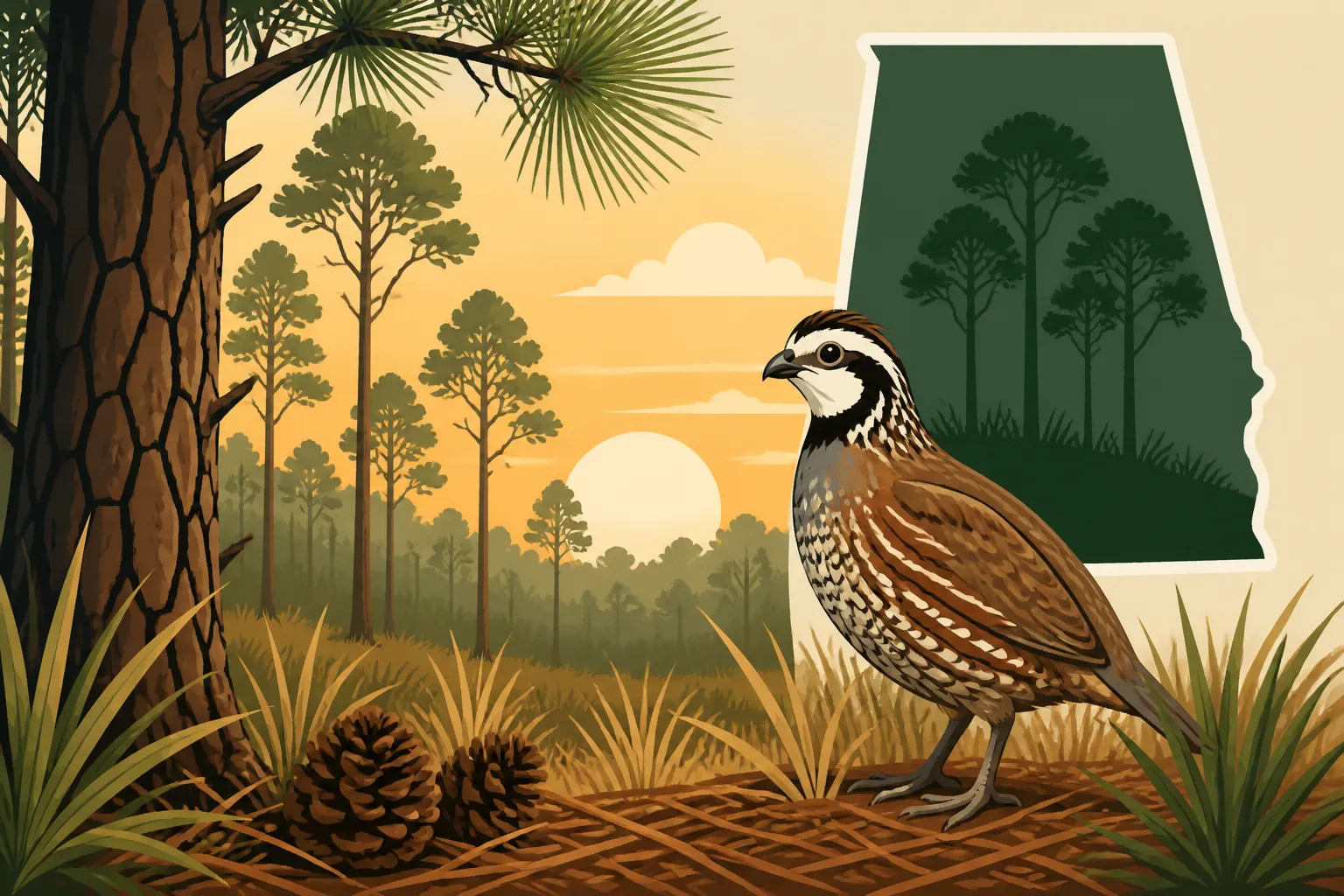
Alabama Longleaf Pine and Quail Habitat
It's a familiar story for many of us who grew up hunting Alabama. You remember hearing that distinctive "bob-WHITE!" call from the fencerows and seeing coveys explode from broom sedge in fields that are now silent. The decline of wild bobwhite quail has been a heartbreaking reality for generations, leaving many to wonder if those classic hunts are a thing of the past. But there's a beacon of hope, deeply rooted in Alabama's natural history: the longleaf pine ecosystem. This guide is all about understanding why longleaf is so crucial to quail and how we can work to bring back those thunderous flushes.
The Historical Connection: Longleaf Pine and Bobwhite Quail
To truly appreciate the comeback potential of the bobwhite quail, we have to look back at the landscape that once dominated much of Alabama. Longleaf pine wasn't just another tree; it was the foundation of a unique, fire-dependent ecosystem that provided everything a quail needed to thrive.
A Landscape Lost: Why Quail Numbers Plummeted
Imagine vast, open forests stretching across millions of acres, from the coastal plains right up into the rolling hills of the Piedmont. That was the longleaf pine empire. These majestic trees, with their grassy understory, were perfectly adapted to frequent, low-intensity fires that swept through the landscape every few years. These fires kept hardwood competition at bay, promoted a diverse array of grasses and forbs, and maintained the open ground cover that bobwhite quail absolutely need. But then came the era of widespread timbering, followed by decades of fire suppression.
As sawmills devoured the old-growth longleaf, the land was often converted to agriculture or replanted with dense stands of loblolly and slash pines, species that grow faster but create a thick, shaded canopy. Without the natural fires, hardwoods began to encroach, and the once-open understory became choked with shrubs and dense saplings. This wasn't just a cosmetic change; it was a fundamental alteration of the very habitat quail relied upon. The ground became too thick for them to move through, the diverse seed and insect sources dwindled, and predator access, especially from avian predators like hawks, became easier in the broken cover. Many hunters still lament Alabama's Historic Quail Decline, a direct consequence of these habitat changes.
The Ideal Habitat: What Longleaf Provides
So, what exactly made the longleaf ecosystem such a bobwhite paradise? It boils down to a few key elements: an open, park-like overstory, a rich and diverse understory, and the constant renewal provided by fire.
The widely spaced longleaf pines allowed ample sunlight to reach the forest floor, promoting the growth of a staggering variety of native grasses and forbs. This wasn't just pretty scenery; it was a buffet for quail. These plants produced seeds that were vital winter food, and their lush growth in spring and summer supported an explosion of insects—the primary protein source for growing chicks. Think of plants like partridge pea, lespedeza, beggar's lice, and various native legumes. This botanical diversity ensured a consistent food supply throughout the year, even when other crops or natural mast might fail.
Beyond food, the structure of the longleaf forest provided crucial escape and brooding cover. The open ground made it easy for quail chicks to navigate and forage, while the scattered clumps of taller grasses and low shrubs offered perfect hiding spots from predators. These areas also provided vital thermal cover, protecting birds from both the summer heat and winter cold. The classic longleaf forest provided a mosaic of open foraging areas interspersed with dense, low cover—a perfect blend for a species that lives its entire life within a relatively small home range. It's a stark contrast to the dense, dark pine plantations that often replaced them, which offer little to no benefit for quail.
Restoring the Ecosystem: Longleaf Pine Management for Quail
Bringing back the longleaf ecosystem isn't just about planting trees; it's about restoring a dynamic, living system. This means actively managing the land with fire, thoughtful timber practices, and a focus on native plant communities. It's truly seeing the forest for the quail, not just the timber.
The Role of Prescribed Fire
If longleaf pine is the king of quail habitat, then prescribed fire is its loyal knight. Fire is not just beneficial; it's absolutely essential to maintain a healthy longleaf ecosystem and, by extension, robust quail populations. Without it, the understory quickly becomes overgrown, choking out the native grasses and forbs that quail depend on for food and cover.
Regular, low-intensity fires, typically on a one-to-three-year rotation, remove accumulated leaf litter, control competing hardwoods, and stimulate the growth of desirable herbaceous plants. This process creates the open ground conditions that bobwhites need to move, forage, and raise their broods. It also helps control parasites by burning off habitat where ticks and chiggers might overwinter. The difference in a quail population on a regularly burned longleaf tract versus an unburned one is often dramatic. Landowners and managers across the state are increasingly understanding this, implementing burns that mimic the natural fire cycles. These burns are carefully planned and executed, often involving fire breaks and specific weather conditions to ensure safety and effectiveness. You can learn more about Why Alabama Foresters Burn Longleaf Pine and its benefits.
Thinning and Timber Management
While fire is crucial for the understory, how the longleaf trees themselves are managed also profoundly impacts quail habitat. Dense stands of any pine species, including longleaf, create too much shade, suppressing the ground cover. Proper thinning is therefore critical.
Longleaf stands managed for quail should be thinned to a relatively low basal area, typically aiming for wide spacing between trees. This allows maximum sunlight penetration to the forest floor, fueling the growth of those vital native grasses and forbs. Thinning also promotes tree health, making the remaining longleaf more resilient to disease and windthrow. It’s a delicate balance: you want enough canopy to provide some overhead protection and needle drop for ground litter, but not so much that it shades out the understory. Many landowners work with foresters who specialize in wildlife habitat management, ensuring that thinning operations align with quail goals, not just timber production. This often means multiple thinning events over the life of the stand, creating a diverse age structure within the timber itself, which further benefits a variety of wildlife. How Managed Pine Restored Black Belt Quail offers further insight into these practices.
Enhancing the Understory: Native Plants and Forage
Even with perfect fire and thinning regimes, sometimes the understory needs a little extra help to truly flourish for quail. Historical land uses, like intense farming or cattle grazing, might have depleted the native seed bank. In these cases, active restoration of native plants can dramatically accelerate habitat recovery.
This involves identifying desirable species like native lespedezas, partridge pea, tick trefoil, and various native grasses, and often planting them directly into prepared sites. These plants are chosen not just for their seed production but also for their structure, providing cover and attracting the insects crucial for chick survival. The goal is to create a diverse, native plant community that offers food and cover year-round. It's important to use local ecotypes of native plants whenever possible to ensure they are well-adapted to the specific soil and climate conditions. This focused approach on enhancing the understory is what truly transforms a merely "thinned" forest into a vibrant quail haven. For those using mapping tools like GoHunt, identifying areas for specific native plant restoration can be planned with precision, marking zones for planting or areas to encourage natural regeneration.
Practical Steps for Landowners and Conservationists
Whether you own a large tract or are part of a conservation group, there are concrete steps you can take to contribute to longleaf and quail restoration. It requires commitment, but the rewards are well worth the effort.
Assessing Your Land for Longleaf Potential
Before you start planting, it's crucial to understand your land's potential for longleaf pine. Not all soils are ideal, though longleaf is surprisingly adaptable. Look at historical maps and soil surveys. Longleaf historically thrived on well-drained, acidic soils, often with a sandy component, but it can also do well on heavier soils if drainage is adequate.
An on-the-ground assessment involves walking your property, noting existing vegetation, and looking for remnants of past longleaf presence, such as old stumps. Consulting with a professional forester or wildlife biologist specializing in longleaf restoration can provide invaluable guidance. They can help you interpret soil reports, understand microclimates, and assess existing vegetation to determine the best approach. Tools like GoHunt can be invaluable here, allowing you to overlay historical maps, soil data, and current aerial imagery to gain a comprehensive understanding of your property's longleaf potential and plan your efforts effectively. This initial assessment saves time and resources by ensuring you're working with, rather than against, your land's natural characteristics.
Planting and Reforestation Strategies
Once you've determined your land is suitable, planting longleaf seedlings is the next critical step. This isn't like planting typical loblolly; longleaf has a unique "grass stage" where it puts down a deep taproot for several years before shooting up. This makes initial site preparation and planting technique paramount.
Longleaf seedlings, particularly containerized stock, have a much higher survival rate than bare-root if planted correctly. Site preparation might involve disking to reduce competition, or chemical applications to clear competing vegetation. Proper spacing is key—wider spacing (e.g., 8×10 feet or more) is generally preferred for quail habitat to ensure ample sunlight for the understory. Timing the planting for cooler, wetter months (typically late fall to early spring in Alabama) gives the seedlings the best chance to establish before the summer heat. Following planting, diligent weed control for the first couple of years is vital to prevent young longleaf from being smothered. This initial investment in proper planting techniques will pay dividends in the long-term health and productivity of your longleaf stand. You might use detailed maps from GoHunt to plan out planting grids and track progress across your property.
Long-Term Maintenance and Monitoring
Planting is just the beginning. Long-term success for longleaf and quail habitat hinges on ongoing maintenance, primarily through prescribed fire and invasive species control. Once your longleaf seedlings are out of the grass stage and about 3-5 feet tall, usually after 3-5 years, you can typically introduce your first prescribed fire.
Establishing a regular fire rotation (every 1-3 years) is fundamental. This keeps hardwoods in check, cycles nutrients, and promotes the herbaceous growth quail need. You'll also need to be vigilant about invasive species like cogongrass, privet, or mimosa, which can quickly outcompete native plants and degrade habitat. Early detection and aggressive control are crucial. Beyond habitat work, consider monitoring your quail population. This can involve conducting annual call counts, walking transects with dogs, or using trail cameras to get an idea of presence and recruitment. Monitoring helps you understand the impact of your management efforts and adjust strategies as needed. It's a continuous cycle of care and observation, but the sight and sound of thriving quail on your land are unparalleled rewards. For those really diving deep, apps like GoHunt can help track fire breaks, burn dates, and even log quail sightings or calls over time, providing a comprehensive view of your management efforts.
The Broader Impact: Beyond Just Quail
While restoring bobwhite quail is a powerful motivator for longleaf pine efforts, the benefits of this ecosystem stretch far beyond a single species. It’s a holistic approach that enriches the entire landscape.
Biodiversity Benefits
The longleaf pine ecosystem isn't just tailor-made for quail; it's a biodiversity hotspot. Literally hundreds of plant and animal species rely on healthy longleaf forests, many of which are rare or endangered. Think of the gopher tortoise, whose burrows provide shelter for dozens of other species, or the red-cockaded woodpecker, a federally endangered bird that excavates its nesting cavities in older, living longleaf pines.
By restoring longleaf, we're not just creating a home for quail; we're rebuilding a crucial habitat for everything from rare orchids and insect species to white-tailed deer and wild turkeys. The open understory and diverse plant life support a complex food web. Migratory birds find crucial stopover and wintering grounds, and pollinators thrive on the abundant wildflowers. It's a testament to how interconnected ecosystems are: improve one keystone element, and the positive effects ripple throughout the entire natural community. You'll find many of these species, like White-Tailed Deer Across Alabama and Wild Turkeys in Alabama, benefit immensely from well-managed longleaf.
Economic and Recreational Value
Beyond its ecological significance, a healthy longleaf ecosystem provides tangible economic and recreational benefits for landowners and communities alike. Longleaf pine itself is a valuable timber species, known for its strong, durable wood. While it grows slower than some other pines, its premium quality often commands higher prices. Furthermore, its resilience to pests, diseases, and fire makes it a sound long-term investment.
For the hunting community, restored quail populations bring back highly sought-after recreational opportunities. A property with strong wild quail numbers becomes incredibly desirable, whether for private hunting, leasing, or even guided hunts on managed plantations. The return of quail also often signifies a healthier deer herd and better turkey habitat, increasing the overall recreational value of the land. This can lead to increased tourism, local spending on supplies, and a revitalization of rural economies tied to hunting and outdoor recreation. A well-managed longleaf forest, offering a diverse hunting experience, is a powerful draw. You might even find opportunities for Booking a Black Belt Quail Plantation Hunt on land specifically managed for this habitat.
Challenges and Future Outlook
Despite the growing understanding and efforts, restoring longleaf pine and bobwhite quail habitat is not without its challenges. The sheer scale of historical loss, combined with ongoing land development pressures and the complexities of fire management in increasingly populated areas, means it's an uphill battle.
Funding for large-scale restoration projects can be limited, and convincing private landowners to commit to long-term management plans, especially those involving prescribed fire, requires significant education and support. There's also the challenge of invasive species constantly threatening to undermine restoration efforts. However, the future isn't without hope. Strong partnerships between state agencies like the Alabama Department of Conservation and Natural Resources, federal programs, non-profits, and private landowners are making significant inroads. Educational initiatives and incentive programs are encouraging more landowners to embrace longleaf and fire. The passionate commitment of hunters, birdwatchers, and conservationists remains a driving force. The outlook for bobwhite quail in Alabama, while still challenging, is brighter than it has been in decades, thanks to these dedicated efforts to bring back the longleaf pine. Organizations are actively working on Alabama Quail Restoration Research Sites to find the best methods to tackle these challenges.
| Feature | Longleaf Pine Ecosystem (Ideal for Quail) | Dense Loblolly Pine Plantation | Hardwood Bottomland |
|---|---|---|---|
| Overstory | Open, widely spaced trees | Dense, tightly spaced trees | Closed canopy, mixed hardwoods |
| Understory | Diverse native grasses & forbs, sparse shrubs | Shaded, sparse, limited diversity | Dense shrubs, vines, few grasses |
| Sunlight to Ground | High | Very low | Low to moderate |
| Primary Forage | Seeds, insects from diverse herbaceous plants | Limited seeds, few insects | Acorns, some soft mast, limited insects |
| Escape/Brooding Cover | Open ground with scattered low cover | Too dense, difficult to navigate | Very dense, tangled |
| Fire Regime | Essential, frequent (1-3 year cycle) | Detrimental to timber, fire suppression | Natural component, but less frequent for quails |
| Quail Suitability | Excellent | Poor to Non-existent | Poor to Moderate (depending on open areas) |
Disclaimer
This article is for general informational purposes only and does not constitute professional advice. Laws, prices and regulations vary by location and change over time. Consult a qualified professional for guidance on your specific situation.