Why Alabama Foresters Burn Longleaf Pine
You're out in the woods, scouting your favorite spot in late winter or early spring, and suddenly you see it: smoke rising from the horizon, or perhaps you stumble upon a section of forest floor that looks like a charred wasteland. It’s natural to feel a pang of concern, or even confusion, wondering if a valuable hunting ground has been damaged. But what many folks don’t realize is that these prescribed fires, especially in areas dominated by longleaf pine, are not just accidental blazes. They are a deliberate, scientific, and incredibly beneficial tool used by Alabama foresters to create healthier ecosystems for all kinds of wildlife, including the deer, turkeys, and quail we love to pursue. This guide will walk you through the essential role prescribed burning plays in our state's longleaf pine forests, explaining why it's a vital practice for habitat management and ultimately, better hunting.
Understanding Longleaf Pine Ecosystems in Alabama
To truly appreciate why fire is so important, we first need to understand the unique characteristics of longleaf pine forests and their historical significance in Alabama. These aren't just any pine trees; they represent a distinct ecosystem that once defined much of the Southeast.
The Historical Landscape of Longleaf Pine
Imagine Alabama before widespread logging and development. What you'd see stretching for miles across the coastal plain, the Black Belt, and even into parts of the Piedmont, would be vast, open woodlands dominated by towering longleaf pines. This majestic tree, with its long needles and distinctive "bottlebrush" appearance in younger stages, was once the ecological king. It wasn't a dense, dark forest; rather, it was an open savanna-like environment with widely spaced trees and a rich, diverse understory of grasses, forbs, and wildflowers.
This historical landscape wasn't static. It was shaped by frequent, low-intensity fires ignited by lightning strikes or by Native American practices. These fires were natural disturbances that prevented hardwoods from taking over and kept the understory clear and vibrant. Many of our native wildlife species, from bobwhite quail to white-tailed deer, evolved in sync with this fire-maintained ecosystem. The decline of longleaf pine, driven by timber harvesting and fire suppression over the last century, drastically altered these habitats, leading to a cascade of negative impacts on the species that called them home. Restoring this critical habitat is a huge part of modern forestry and wildlife management.
Why Longleaf Pine is So Special for Wildlife
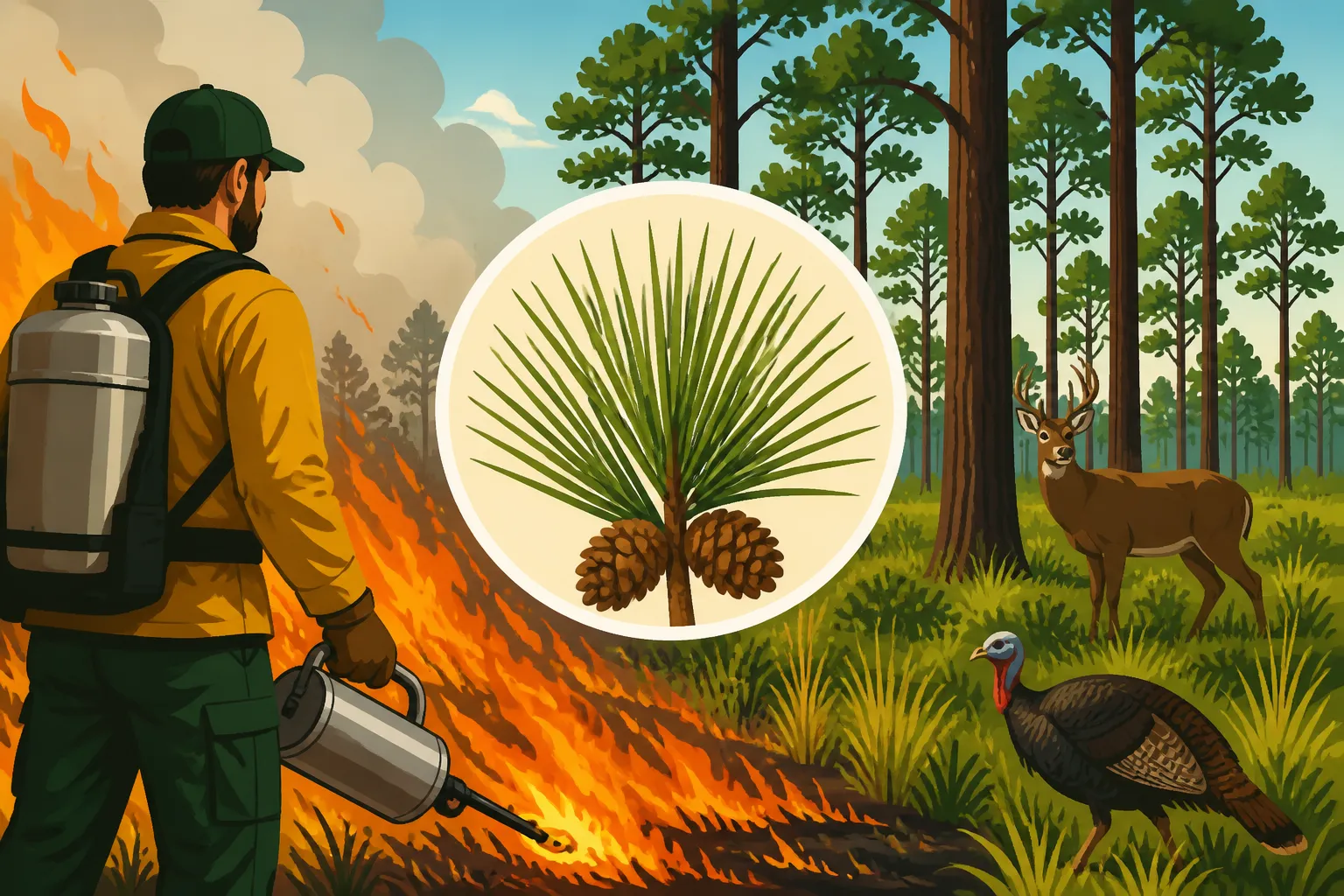
Longleaf pine stands out because it thrives on something most trees can't tolerate: fire. Its unique life cycle, particularly the "grass stage" where young seedlings resemble tufts of grass and direct fire around their growing bud, makes it incredibly fire-resistant. This adaptation is key to its survival and the health of the ecosystem it supports.
For wildlife, the benefits are numerous. The open nature of a healthy longleaf forest means sunlight can reach the forest floor, promoting the growth of a diverse array of native grasses and forbs. These plants are crucial forage for deer, providing highly nutritious browse. For turkeys, the open understory allows for easy travel, foraging for insects and seeds, and better visibility for predator detection. Wild Turkeys in Alabama thrive in these conditions. But perhaps no species benefits more than the bobwhite quail. Quail need open ground with ample bare dirt for dusting, interspersed with clumps of grasses for nesting and escape cover, and a rich insect population for their chicks. The dense, shrubby undergrowth found in unburned forests simply doesn't provide this, making longleaf restoration, often combined with practices like those detailed in How Managed Pine Restored Black Belt Quail, a cornerstone of quail recovery efforts.
The Role of Fire: Why Prescribed Burning is Essential
Given the special relationship between longleaf pine and fire, it becomes clear why prescribed burning isn't just an option—it's a necessity for maintaining these valuable habitats.
Mimicking Nature's Cycle
Historically, lightning strikes during dry seasons or deliberate burns by indigenous peoples kept the longleaf pine ecosystem in a state of natural balance. These were typically low-intensity surface fires that moved quickly, consuming leaf litter, fallen branches, and small shrubs without damaging the mature, fire-resistant longleaf trees. When widespread fire suppression efforts began, driven by fears of destructive wildfires, this natural cycle was broken.
Without fire, other, less fire-tolerant tree species, particularly hardwoods, began to invade the longleaf stands. The forest floor became choked with dense underbrush and a thick layer of flammable duff. This created a dangerous situation where, if a fire did occur, it would be much hotter and more destructive, harming the very longleaf pines it once helped. Prescribed burning is our way of reintroducing that essential natural process in a controlled, safe manner. It's about letting the ecosystem "breathe" again, just as it did for millennia.
Controlling Competing Vegetation
One of the most immediate and visible impacts of prescribed fire is its ability to control competing vegetation. In many unmanaged pine forests, you'll find a thick mid-story of sweetgum, red maple, oaks, and other hardwoods growing up underneath the pines. While oaks provide acorns, too many can create an overly shaded, dense environment that outcompetes the valuable understory plants, making it difficult for ground-nesting birds like quail or even deer to navigate and find food.
Prescribed fire, applied strategically, knocks back these undesirable hardwoods. Young hardwood saplings, with their thinner bark and shallower root systems, are much more susceptible to fire than the mature, thick-barked longleaf pines. This "top-killing" of hardwoods allows sunlight to once again reach the forest floor, stimulating the growth of native grasses, legumes, and forbs. These are the plants that provide critical forage and cover for a wide array of wildlife. It's a fundamental step in making a forest productive for game.
Enhancing Forage and Visibility for Game
Beyond controlling woody competition, fire directly benefits game by improving the quality and quantity of their food sources. After a prescribed burn, the ashes release nutrients into the soil, and the removal of dense litter allows sunlight to hit the ground. This combination creates an explosion of fresh, tender, and highly nutritious new growth. Deer, in particular, are drawn to these recently burned areas for the succulent forbs and tender shoots that emerge. It's like a natural buffet line, providing essential nutrition at a time when other food sources might be scarce. White-Tailed Deer Across Alabama rely on these diverse food sources.
For hunters, a burned understory means significantly improved visibility. Trying to still-hunt or track game through a dense thicket of briars and privet can be nearly impossible. After a burn, the woods open up. You can see further, spot movement more easily, and hear game approaching with greater clarity. This also makes it easier for game to move freely, improving the effectiveness of tactics like rattling or grunting, as discussed in Rattling and Grunting in Alabama. The combination of better forage and increased visibility makes burned areas prime spots for scouting and hunting. Using mapping tools like onX Hunt, you can often identify areas that have been recently burned by changes in vegetation layers, allowing you to focus your scouting efforts.
Benefits of Prescribed Fire for Alabama Hunters
It's clear that prescribed fire is good for the ecosystem, but let's talk about what that means specifically for those of us who love to hunt in Alabama's woods.
Improved Deer and Turkey Habitat
For deer, a regularly burned longleaf pine forest is a game-changer. The increased diversity of palatable forage, like legumes and tender sprouts, provides a consistent, high-quality food source throughout the year. This improved nutrition can lead to healthier deer, better fawn survival rates, and even improved antler development in bucks. Instead of foraging on less nutritious, mature browse in overgrown areas, deer have access to a smorgasbord of fresh growth. The open understory also facilitates easier movement for deer, allowing them to travel between bedding areas and food plots with less resistance, and making them more predictable for hunters.
Wild turkeys also benefit immensely. The open forest floor makes it easier for hens and poults to navigate and find the insects, seeds, and berries they need. Poults, in particular, rely heavily on insects for protein during their critical early growth stages, and a diverse understory spurred by fire supports a thriving insect population. Mature gobblers appreciate the clear lines of sight, making them feel more secure while strutting and allowing them to detect predators more easily. Roosting in tall longleaf pines and then having an open, easy drop to the ground is ideal, providing good opportunities for hunters who know how to Call an Alabama Gobbler Off the Roost.
Restoring Bobwhite Quail Habitat
While deer and turkeys certainly thrive, prescribed fire is perhaps most crucial for the recovery of bobwhite quail. Quail are often referred to as a "fire-dependent" species because their survival hinges on the specific habitat structure that only frequent fire can create. They need a mosaic of open, grassy areas for foraging and travel, alongside patches of denser cover for nesting and escape from predators.
Without fire, longleaf pine understories quickly become choked with dense, woody brush and a thick layer of pine straw. This makes it impossible for quail to move, forage for insects, or raise their broods. Chicks need open ground to chase insects and avoid getting bogged down in thick vegetation. Prescribed burning removes this dense litter, encourages the growth of crucial "bugging habitat," and fosters the native bunch grasses that quail use for nesting. If you're passionate about Bobwhite Quail in Alabama's Black Belt, understanding and appreciating prescribed fire is paramount, as it's the primary tool for creating and maintaining the habitat these birds need.
Safer Hunting Environments
Beyond directly improving game habitat, prescribed fire also contributes to safer hunting experiences. By periodically reducing the accumulation of flammable fuels on the forest floor, prescribed burns drastically lower the risk and intensity of destructive wildfires. An unburned forest with years of accumulated pine needles, dead leaves, and dense underbrush is a tinderbox, and if a wildfire ignites, it can spread rapidly and become extremely dangerous.
Controlled burns, by contrast, consume these fuels under controlled conditions, minimizing the risk of a widespread, out-of-control blaze during hunting season. This means less worry about forest closures due to fire danger and a generally safer environment for hunters in the woods. Furthermore, the cleared understory in burned areas means less chance of tripping over unseen obstacles, and it's easier to track game after the shot. When you're blood trailing after dark, or trying to recover a deer from a river bottom, an open forest floor is a significant advantage. This can also make areas more accessible, helping to balance Hunting Pressure on Alabama Public Land by opening up new ground.
Addressing Common Concerns and Misconceptions
Despite the overwhelming benefits, it’s not uncommon for people to have reservations or misunderstandings about prescribed fire. Let’s clear up a few of those.
"Isn't Burning Bad for the Woods?"
This is perhaps the most common question, and it's understandable. Most people associate forest fires with destruction—uncontrolled wildfires that devastate landscapes, destroy property, and kill wildlife. However, it's crucial to differentiate between a destructive wildfire and a carefully planned, low-intensity prescribed burn.
Wildfires are often hot, fast-moving, and climb into the canopy, killing mature trees and sterilizing the soil. They are chaotic and unpredictable. Prescribed fires, on the other hand, are executed by trained professionals under specific weather conditions (wind, humidity, temperature) to achieve ecological goals. They are typically slow-moving surface fires that consume only the ground-level vegetation, leaving mature trees unharmed. Think of it less like a destructive inferno and more like a necessary reset button for the ecosystem, clearing out the old to make way for the new. The longleaf ecosystem needs fire to be healthy; without it, the woods suffer.
Timing and Planning: It's Not Random
Prescribed burning is far from a random act. It's a highly skilled and scientifically-driven practice. Foresters and wildlife biologists spend considerable time planning each burn. This includes:
- Weather Conditions: Specific wind speeds and directions, humidity levels, and air temperatures are critical to ensure the fire stays within its designated boundaries and achieves the desired intensity.
- Fuel Loads: Assessing the amount and type of flammable material on the ground to predict fire behavior.
- Burn Blocks: Carefully mapping out the areas to be burned, often creating firebreaks (roads, plowed lines, natural barriers) to contain the fire.
- Permits and Notifications: Obtaining necessary permits from the Alabama Forestry Commission and often notifying local authorities and nearby residents about the planned burn.
It's a complex dance with nature, executed with precision and a deep understanding of fire ecology. Companies like GoHunt and onX Hunt provide mapping tools that can help visualize landscape changes and potential fire breaks, giving land managers and hunters alike a better understanding of the terrain.
What Hunters Should Expect Post-Burn
When you first see a recently burned area, it might look stark and a little barren. The ground might be blackened, and some smaller shrubs might appear singed or dead. But don't despair! This initial appearance is temporary, and the recovery is often remarkably swift.
Within weeks, and sometimes even days, especially after spring rains, you'll start to see a vibrant green flush emerge from the forest floor. These are the tender new grasses and forbs, rich in nutrients, that wildlife crave. The longleaf pines themselves, unless they were very young, will be largely unaffected, with only their lower trunks showing a black char. The forest will feel more open, easier to walk through, and full of new life.
Understanding this cycle allows hunters to capitalize on these areas. Fresh burns can be deer magnets as soon as new growth appears. Turkeys will move into these areas to scratch for seeds and hunt for insects. Scouting recently burned areas, which you can often do by observing satellite imagery updates on apps like onX Hunt, can be incredibly productive for finding game movement patterns.
Here's a quick look at what changes you might observe:
| Feature | Unburned, Overgrown Forest | Recently Burned Longleaf Forest |
|---|---|---|
| Understory Vegetation | Dense, often woody, low diversity of species | Open, diverse native grasses and forbs, tender shoots |
| Forage Quality | Lower nutritional value, mature browse | High nutritional value, fresh growth |
| Visibility for Hunters | Poor, thick cover limits sightlines | Excellent, clear view of the forest floor |
| Game Movement | Can be restricted by dense thickets | Easier, more fluid movement for deer & turkeys |
| Quail Habitat | Unsuitable, too dense, lack of bare ground | Ideal, open ground, insect-rich, good cover |
| Wildfire Risk | High accumulation of fuel, intense fires | Low fuel load, reduced risk of destructive fire |
| Access for Hunters | Difficult, requires pushing through heavy cover | Easy to walk, less physical exertion |
Ultimately, while seeing smoke or charred ground might initially raise questions, understanding "Why Alabama Foresters Burn Longleaf Pine" reveals a profound truth: fire is not just a tool for control, but a vital force for renewal, creating the vibrant, productive habitats that make Alabama such a special place for hunters and wildlife enthusiasts alike.
Disclaimer
This article is for general informational purposes only and does not constitute professional advice. Laws, prices and regulations vary by location and change over time. Consult a qualified professional for guidance on your specific situation.