White-Tailed Deer Across Alabama
Hunting white-tailed deer in Alabama can be an incredibly rewarding experience, but let's be honest, it's not always easy. From understanding complex zone regulations and bag limits to figuring out where the deer are actually holding on public land, many hunters feel overwhelmed and frustrated. This comprehensive guide is designed to cut through the confusion, offering a deep dive into Alabama's whitetail deer population, their habits, habitat, and the best strategies to pursue them across the diverse landscapes of our great state.
The Enduring Legacy of Alabama's White-Tailed Deer Herd
For many of us, the sight of a whitetail buck slipping through the timber or a doe cautiously leading her fawns across a field edge is what truly defines the Alabama outdoors. These animals are more than just game; they are a vital part of our natural heritage and an economic driver for rural communities. Understanding their history and current status is the first step to becoming a more effective and responsible hunter.
From Scarcity to Abundance: A Brief History
It's hard to imagine now, but there was a time when white-tailed deer were incredibly scarce in Alabama. By the early 20th century, uncontrolled market hunting and rampant habitat destruction had pushed deer populations to critically low levels, bordering on extirpation in many areas. Our grandparents and great-grandparents remembered a time when seeing a deer was truly a rare event.
Thankfully, through incredible conservation efforts, spearheaded by state wildlife agencies and dedicated sportsmen, deer restoration programs began in earnest in the mid-20th century. This involved restocking deer from areas with healthy populations into suitable habitats across Alabama. Combined with stricter hunting regulations, the creation of wildlife management areas, and improved forest management practices, the deer herd made a remarkable comeback. Today, Alabama boasts a thriving deer population, a testament to what focused conservation can achieve. This rebound has made deer hunting a cornerstone of our outdoor traditions, providing ample opportunities for hunters across the state.
Alabama's Current Deer Population and Health
Today, Alabama's deer herd is robust, with an estimated population that provides excellent hunting opportunities. While numbers fluctuate regionally and annually due to factors like EHD outbreaks, hunting pressure, and habitat changes, the overall health of the herd is generally good. The Alabama Wildlife and Freshwater Fisheries Division (ADWFF) monitors population trends through various methods, including harvest data from mandatory reporting. This data helps biologists manage deer populations sustainably, ensuring that we have deer to hunt for generations to come.
However, a healthy population doesn't mean an easy hunt. Deer densities vary significantly across the state, from the fertile farmlands of the Black Belt to the rugged mountains of the Ridge and Valley. Hunters need to understand these regional differences to set realistic expectations and adapt their strategies. Overall, Alabama’s deer herd is a success story, but it requires ongoing management and informed hunting practices to maintain its vitality. You can always get the latest information on the Alabama Deer Population Estimate from official sources.
Understanding Deer Genetics and Antler Growth
The antlers on a buck's head are often the focus of much discussion among hunters, but what really drives their growth? It's a complex interplay of three main factors: age, nutrition, and genetics. While genetics provide the blueprint for antler potential, age and nutrition are the true sculptors. A young buck, even with good genetics, won't produce impressive antlers because his body is prioritizing growth and development over bone production for his rack.
As a buck matures, his body dedicates more resources to antler development. Nutrition is paramount; a deer that consistently has access to high-quality forage rich in protein, minerals, and vitamins will always grow larger antlers than a deer with poor nutrition, regardless of genetics. This is why areas with rich soils and abundant food sources, like the Black Belt, often produce bigger-antlered bucks. Genetics certainly play a role, influencing antler shape, mass, and tine length, but they can only express their full potential when combined with sufficient age and excellent nutrition. Understanding this helps us realize that managing for quality deer isn't just about passing young bucks, but also about improving habitat.
Navigating Alabama's Diverse Deer Regions
Alabama is a state of incredible ecological diversity, and this variety is reflected in our deer populations and hunting opportunities. From the fertile fields of the Black Belt to the rugged pine forests of the Wiregrass, each region presents its own unique landscape, challenges, and rewards for the dedicated deer hunter.
The Black Belt: Trophy Heaven and Farmland Deer
When most hunters dream of trophy whitetails in Alabama, they're often picturing the Black Belt region. This crescent-shaped band across central Alabama, named for its dark, fertile soils, is renowned for producing larger-bodied deer with impressive antlers. The secret lies in the rich agricultural landscape. Miles of row crops like corn, soybeans, and peanuts provide a consistent, high-protein diet that fuels rapid growth and supports a robust deer herd.
Hunting in the Black Belt often involves focusing on field edges, pinch points between timber blocks and agricultural fields, and travel corridors along creek bottoms. Deer here tend to be concentrated where food sources are plentiful, leading to higher deer densities in many areas. Private land dominates the Black Belt, and access is highly sought after, often through leases or by obtaining permission from landowners. If you're looking for an opportunity to hunt some of Alabama's most impressive bucks, this region is a prime destination, though it comes with its own set of challenges, including high hunting pressure on accessible tracts. For specific tactics in these areas, check out Hunting Black Belt Prairie Farmland Deer.
Piedmont and Ridge and Valley: Public Land Opportunities
Moving into the northern and eastern parts of the state, we encounter the Piedmont and Ridge and Valley regions. These areas are characterized by rolling hills, rocky ridges, and extensive tracts of pine and hardwood forests. Unlike the Black Belt, public land hunting opportunities are much more prevalent here, with national forests like the Talladega and Bankhead, along with numerous Wildlife Management Areas (WMAs), offering vast expanses for hunters to explore.
Deer in these regions tend to be smaller-bodied than their Black Belt counterparts, and antler development may not be as dramatic, primarily due to less fertile soils and a diet more reliant on natural browse and acorns. However, don't let that deter you; these areas offer incredible hunting experiences for those willing to put in the effort. Still-hunting, scouting remote ridges, and understanding how deer use topography are key to success. Hunting pressure can be high near access points, but if you're willing to walk a few miles, you can often find solitude and untouched pockets of deer. Remember to check specific WMA regulations, as they can differ from statewide rules. For tips on specific setups, consider Treestand Setups in Talladega National Forest.
Coastal Plain and Wiregrass: Unique Challenges and Rewards
In southern Alabama, the Coastal Plain and Wiregrass regions offer a different kind of deer hunting experience. This landscape is typically flatter, dominated by pine plantations, vast swamps, river bottoms, and scattered agricultural fields. The deer here are often smaller, adapted to the dense cover and the more varied diet found in these habitats.
Hunting the Coastal Plain and Wiregrass often means dealing with thick cover, often requiring more patience and reliance on dog-hunting traditions in some areas, or still-hunting through dense pine thickets. Food sources can be more dispersed, making scouting for natural browse and mast crops even more critical. River bottoms and swamps provide crucial thermal cover and escape routes for deer, especially during warmer periods or high-pressure situations. While trophy bucks might be less common here compared to the Black Belt, the experience of hunting these unique ecosystems, with their abundant wild hogs and diverse wildlife, is a reward in itself. These areas provide a rugged, immersive hunting experience for those who appreciate the challenge.
The Crucial Role of Habitat and Food Sources
Deer are intrinsically linked to their habitat. The availability of quality food, water, and cover dictates where they live, how healthy they are, and ultimately, their numbers. Understanding these elements is fundamental to successful deer hunting and effective land management.
Natural Forage: Acorns, Browse, and Mast Crops
For much of Alabama's deer herd, especially on public lands and less intensively managed private tracts, natural forage forms the backbone of their diet. Hardwood forests, particularly those with mature oak trees, are goldmines when acorns drop in the fall. White oak acorns are preferred by deer due to their lower tannin content, but red oak acorns become a critical food source later in the season as white oaks are depleted. A good acorn crop can concentrate deer activity, while a poor one forces them to disperse widely in search of alternative foods, making hunting more challenging.
Beyond acorns, deer browse extensively on the leaves, twigs, and buds of a wide variety of plants. This includes briars, young hardwood saplings, and various forbs (broad-leafed plants). Deer are browsers, not grazers, meaning they prefer to pick and choose from many different plants rather than just eating grass. Understanding the types of browse available in your hunting area – and how deer are utilizing it – can be a huge advantage. They also seek out various mast crops beyond acorns, like wild persimmons, muscadines, and various berries, which provide important seasonal nutrition.
Agricultural Impact: Fields, Food Plots, and Deer Movement
In agricultural areas, crop fields significantly influence deer distribution and behavior. Planted fields like corn, soybeans, peanuts, and wheat offer high-energy food sources that can draw deer from miles around. During crop growth, deer will often bed in or adjacent to these fields, emerging to feed in the evenings and mornings. Once crops are harvested, the remaining waste grain becomes a crucial late-season food source, especially in colder weather.
On private lands, food plots are intentionally planted to supplement natural forage and attract deer. Common food plot crops in Alabama include clover, chicory, winter wheat, oats, rye, and various brassicas. These plots can be magnets for deer, providing a consistent, high-quality food source during specific times of the year. Understanding the timing of these food sources – when crops are ripe, when waste grain is available, or when a food plot is most attractive – is vital for patterning deer movement. Hunters often key in on the freshest growth or the most preferred food source to maximize their chances. As the season progresses, knowing where Late-Season Food Sources for Alabama Whitetails are located becomes key.
Water Sources and Bedding Areas
While often overlooked, access to water is just as critical for deer as food. Deer get much of their water from the vegetation they consume, but direct access to standing or flowing water is still essential, especially during hot, dry periods. Ponds, creeks, streams, and even damp depressions can serve as vital water sources. Hunting near these areas, particularly during dry spells, can be highly effective.
Bedding areas are where deer spend most of their inactive time, resting and digesting. These are typically characterized by thick cover that offers security from predators and the elements. This might include dense pine thickets, impenetrable briar patches, regenerating clear-cuts, or secluded creek bottoms. Understanding where deer prefer to bed – often on leeward sides of ridges, in thick swamps, or dense stands of young timber – and how they travel between these bedding areas and food sources is the essence of deer hunting. Identifying these core areas through scouting, even during the off-season, can dramatically improve your success rates.
Decoding Alabama's Deer Season and Regulations
Navigating hunting regulations can sometimes feel like a puzzle, but understanding Alabama's deer season structure is crucial for every hunter. Our state uses a zone system to account for regional differences in deer biology and hunting pressure, making it important to know which zone you're hunting in.
Understanding the Five Deer Zones and Their Calendars
Alabama is divided into five distinct deer zones (A, B, C, D, and E), each with its own specific season dates for archery, gun, and muzzleloader hunting. This zonal system allows wildlife managers to tailor seasons to local conditions, such as rut timing and habitat characteristics. For instance, the rut (breeding season) typically occurs later in southern Alabama compared to the northern parts of the state, and the season dates reflect this.
Before you ever head to the woods, it is absolutely essential to consult the latest Alabama Deer Season Structure Explained regulations and confirm the dates for the specific county or WMA you plan to hunt. A quick check of the ADWFF website or the printed regulations digest will show you the Alabama's Five Deer Zones map and corresponding dates. Ignorance of the law is never an excuse, and knowing your zone and its unique calendar is fundamental to hunting legally and effectively. This also plays into understanding Hunting the Alabama Rut by Zone which can make a huge difference in your success.
Antlered and Unantlered Deer Limits: A Closer Look
Beyond season dates, Alabama has specific bag limits for both antlered and unantlered deer. For antlered bucks, the statewide limit is generally three per hunter per season, but there are often specific rules regarding antler points. For example, in many areas, a hunter may only harvest one buck per day, and often, only one of your three bucks can be less than four points on one side. These rules are designed to help pass younger bucks and improve the overall age structure of the herd.
Unantlered (doe) limits are even more variable and often differ significantly between zones and even specific WMAs. Some zones may have liberal daily or seasonal limits for does, particularly in areas with high deer densities, while others may be very restrictive. The purpose of doe harvest is critical for managing the herd's population size and maintaining a healthy buck-to-doe ratio. Always verify the current unantlered deer limits for your specific hunting location, as these can change annually based on biological data and management goals.
The Importance of Game Check and Deer Reporting
Alabama mandates that all harvested deer (and turkeys) be reported through the Game Check system. This is not just a suggestion; it's a legal requirement and a critical tool for wildlife management. Hunters can report their harvest online via the Outdoor Alabama website or app, or by phone. This data provides invaluable information to biologists, allowing them to track harvest trends, monitor population health, and make informed decisions about future regulations.
Reporting your deer promptly, typically within 48 hours, is essential. The Alabama Deer Reporting Rules are clear, and accurate data helps ensure the long-term sustainability of our deer herd. Think of it as your direct contribution to conservation – every reported deer helps paint a clearer picture of the state of Alabama's whitetails. It allows the state to see how many deer are being harvested, where they are being harvested, and what age classes are being taken. Don't miss The Alabama Deer Reporting Deadline to ensure your hunt is fully legal and contributing to conservation efforts.
Strategies for Hunting Alabama Whitetails
Alabama offers a long deer season that spans multiple months, presenting diverse conditions and opportunities. Adapting your hunting strategy to the specific time of year and the methods allowed is key to consistent success.
Archery: The Challenge of Early Season
Alabama's archery season often kicks off in mid-October, well before the peak rut in many areas and while temperatures can still be quite warm. This early season presents unique challenges, as deer are still primarily focused on food and security, often sticking to nocturnal patterns, especially in pressured areas. Your focus during this time should be on identifying primary food sources, whether it's dropping acorns, lush green fields, or active agricultural fields.
Success in early archery season often hinges on stealth, scent control, and precise stand placement. Deer are less tolerant of mistakes when leaves are still on the trees and cover is dense. Scouting prior to the season and using trail cameras to pattern individual deer or groups can be incredibly effective. Consider using ground blinds in areas where natural cover is abundant or where trees aren't suitable for stands. The challenge of getting close to an alert, unpressured deer with a bow is what draws many hunters to this demanding, yet rewarding, phase of the season. For details on how long the archery season runs, check out How Alabama's Archery Season Runs Into February.
Gun Hunting: Capitalizing on the Peak Rut
When gun season opens, often coinciding with the pre-rut and peak rut in many zones, the dynamics of deer hunting shift dramatically. Bucks become more active, abandoning their nocturnal habits in search of does, making them more visible during daylight hours. This is the time when rattling, grunting, and doe bleats can be highly effective in drawing a buck into range. The specific timing of the rut varies across Alabama's zones, so knowing your zone's peak breeding period is vital.
During gun season, mobility and strategic placement become even more critical. Setting up stands overlooking travel corridors, funnel points, and pinch points where deer are likely to move between bedding and feeding areas, or where bucks will cruise for does, can pay off big. While the rifle provides a longer range, understanding shot placement and practicing with your chosen firearm are paramount for ethical harvesting. This period is often the most exciting for many hunters, offering the best chance to encounter an mature buck.
Late Season Tactics: Finding Reluctant Bucks
As the season wears on, especially into January and February, deer behavior changes again. The rut is typically over, and deer, particularly bucks, are often exhausted and focused on recovering body condition. Food sources may be depleted, and hunting pressure will have pushed deer into thicker, more secluded cover. This is when patience and adaptability become your greatest assets.
Late season often means concentrating on remaining high-energy food sources, such as persistent acorns, unharvested agricultural fields, or late-season food plots. Deer will also seek out thermal cover to escape cold weather, often found in dense pine thickets, river bottoms, or sunny, south-facing slopes. Still-hunting slowly through these thick cover areas, paying close attention to fresh sign, can be effective. Don't overlook water sources, as deer still need to drink, especially if natural forage is dry. The late season can be tough, but for those willing to brave the colder temperatures and adjust their tactics, it can yield unexpected success.
Modern Scouting and Preparation
In today's fast-paced world, deer hunting has evolved beyond just walking into the woods and hoping for the best. Modern scouting tools and rigorous preparation are non-negotiable for consistent success, especially when hunting pressured public lands or trying to pattern elusive bucks on private ground.
E-Scouting with Mapping Tools like GoHunt
Gone are the days when a paper map and compass were your only scouting aids. Now, sophisticated e-scouting tools are indispensable. Platforms like GoHunt allow hunters to virtually explore vast tracts of land from the comfort of their home. You can analyze topography, identify potential bedding areas, pinpoint travel corridors, locate food sources (like clear-cuts, mature hardwoods, or agricultural fields), and even predict wind direction impacts on specific stand locations.
E-scouting saves countless hours of on-the-ground legwork and minimizes disturbance in your hunting area. By studying aerial imagery, topo maps, and property boundaries, you can develop a comprehensive plan before you ever set foot in the woods. This includes identifying potential access points, figuring out the best entry and exit routes to avoid spooking deer, and even marking specific trees for potential stand setups. Many hunters use these tools to find areas others overlook, making them incredibly valuable for Scouting Alabama Public Land Before Season.
Trail Cameras: Your Eyes in the Woods
Trail cameras have revolutionized deer hunting, providing hunters with invaluable intelligence about deer activity, patterns, and individual animals. Placed strategically along trails, near food sources, or at rub lines and scrapes, cameras capture photos and videos of deer without human presence, giving you a glimpse into their nocturnal and diurnal movements.
When using trail cameras, focus on fresh sign and areas you suspect deer are using frequently. Consider using a cellular trail camera system if permitted, as this allows you to monitor activity in real-time without having to visit the camera site and risk leaving scent or disturbing the area. Cameras help you determine the best times to hunt a particular spot, identify specific bucks, and understand their travel patterns. Remember to check local regulations regarding trail camera use, especially on public lands, as rules can vary. They are an unparalleled tool for understanding current deer behavior.
Reading Sign and Understanding Deer Behavior
Despite all the technology, nothing replaces the ability to read the sign deer leave behind. Every rub, scrape, track, and droppings pile tells a story about deer movement, size, and activity. Fresh rubs on small saplings indicate a young buck, while larger, deeper rubs on stout trees signal a more mature deer. Active scrapes, particularly during the pre-rut and rut, are key communication hubs for deer.
Understanding the difference between fresh and old sign is critical. Deep, fresh tracks in mud or soft earth, shiny rubs, or moist, dark droppings indicate very recent deer activity. By connecting the dots of these various signs, you can start to piece together a picture of deer behavior in your area. This might include identifying bedding areas, preferred feeding spots, and the travel routes connecting them. Combine this ground knowledge with your e-scouting, and you'll build a powerful understanding of the deer you're pursuing.
Managing Your Deer Herd for Future Generations
Deer hunting isn't just about the immediate harvest; it's also about responsible stewardship. Implementing quality deer management (QDM) principles and actively participating in conservation efforts helps ensure that Alabama's deer herd remains healthy and robust for years to come.
Quality Deer Management Principles in Alabama
Quality Deer Management (QDM) is a holistic approach to deer management that emphasizes balancing the deer herd with the habitat and producing healthy, older-aged bucks. It moves beyond simply maximizing deer numbers and focuses on improving the overall health and age structure of the herd. Key tenets of QDM include:
- Protecting Young Bucks: This often involves voluntarily passing up young, antlered bucks to allow them to mature and express their full antler potential. Alabama's three-buck limit with antler restrictions helps encourage this.
- Adequate Doe Harvest: Harvesting enough does is crucial to keep the population in balance with the available food supply. Too many does can lead to overbrowsing, habitat degradation, and stunted antler growth in bucks.
- Habitat Improvement: Actively working to improve food sources, cover, and water through practices like prescribed burning, timber stand improvement, and planting beneficial forage.
- Data Collection: Utilizing harvest data, trail camera surveys, and observation logs to monitor herd health and make informed management decisions.
Implementing QDM on private land can dramatically improve the quality of your deer herd over time, benefiting all hunters in the long run.
Harvest Strategies for Balanced Herds
Effective harvest strategies are at the heart of QDM. On many private land tracts, this often means targeting older does and allowing younger bucks to walk. An appropriate doe harvest ensures that the deer population doesn't outstrip the habitat's carrying capacity. When deer numbers are too high, all deer suffer from malnutrition, leading to smaller body sizes, reduced antler growth, and lower fawn survival rates.
For bucks, the strategy involves resisting the urge to shoot the first legal buck you see. By allowing young bucks to age for another year or two, they can grow into truly impressive animals. This requires discipline and a commitment to the long-term health of the herd. Of course, individual hunters have different goals, and the beauty of Alabama's regulations is that they allow flexibility. However, understanding the biological benefits of selective harvest is crucial for anyone serious about making a positive impact on the deer population.
Addressing Chronic Wasting Disease CWD Concerns
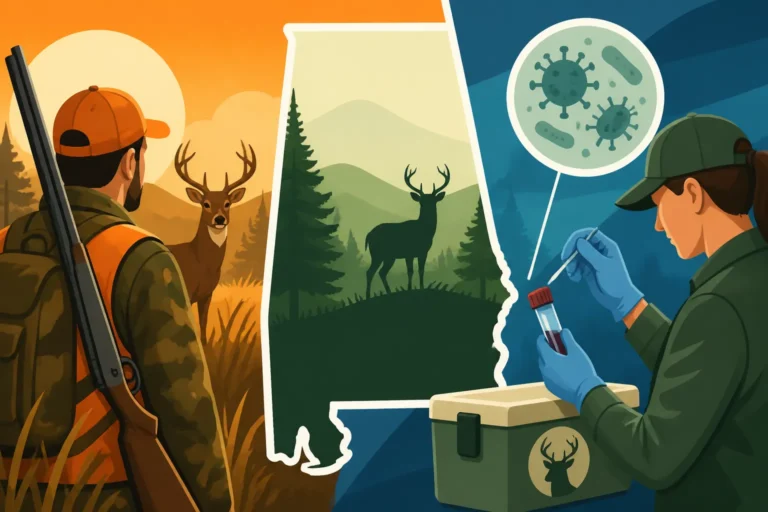
Chronic Wasting Disease (CWD) is a serious, fatal neurological disease affecting deer, elk, and moose. While Alabama has been fortunate to have avoided widespread CWD for a long time, the disease was detected in Lauderdale County in February 2024. This discovery has significant implications for deer management and hunting in the affected areas.
The Alabama Department of Conservation and Natural Resources (ADCNR) has implemented specific regulations for the Chronic Wasting Disease Risk in Alabama to help prevent its spread. These include restrictions on carcass movement out of the CWD Management Zone, mandatory CWD testing weekends, and specific rules for handling deer harvested in the affected area. Hunters in and around the CWD zone have a critical role to play by understanding and complying with these regulations. Responsible hunters should stay informed about the latest CWD updates, submit samples for testing when requested, and properly dispose of carcasses to minimize any potential spread. Protecting our deer herd from CWD is a collective effort that requires vigilance from every hunter.
Challenges and Opportunities in Alabama Deer Hunting
Hunting white-tailed deer in Alabama is a rich tradition, but it's not without its challenges. Understanding these hurdles and the opportunities they present can help you become a more resilient and successful hunter, while also contributing to the future of the sport.
Hunting Pressure and Public Land Tactics
One of the biggest realities for many Alabama deer hunters, especially those relying on public land, is hunting pressure. With a healthy deer population and a long season, popular WMAs and national forests can see significant hunter numbers, particularly on opening weekends and during prime rut periods. This pressure can alter deer behavior, pushing them into more nocturnal patterns or into the thickest, most inaccessible cover.
To succeed on pressured public land, you often need to think differently. This might mean walking further than others are willing to go, hunting mid-week when crowds are thinner, or focusing on overlooked pockets of habitat. Developing entry and exit routes that minimize disturbance is critical. Hunting small parcels of public land adjacent to private property, where deer may seek refuge, can also be a viable tactic. GoHunt's mapping features can be a tremendous asset here, helping identify terrain features, isolated pockets, or thicker cover that other hunters might bypass. Finding How Many Acres of Public Land Alabama Has is the first step, then figuring out how to navigate it effectively is the next.
Weather Extremes and Their Impact on Deer
Alabama's weather can be notoriously unpredictable, ranging from sweltering early-season heat to late-season freezes, often within the same week. These weather extremes profoundly impact deer behavior. High temperatures can make deer more nocturnal, while a sudden cold front can trigger increased daytime movement as deer seek to feed and build energy reserves. Heavy rains can wash out deer trails, making tracking difficult, but also create new funnel points.
Hunters must be prepared to adapt to these changes. During warm spells, focus on hunting early mornings and late evenings, and consider areas with dense shade and access to water. After a cold front, deer often become more active, making mid-day hunts more productive. Always check the forecast and adjust your gear, clothing, and hunting times accordingly. Being flexible with your strategy based on the weather can significantly increase your chances of success.
Conservation Efforts and Hunter Involvement
The future of Alabama deer hunting rests squarely on the shoulders of conservation efforts and the active involvement of hunters. State agencies like ADWFF rely on harvest data (from Game Check), research, and public input to manage the deer herd. Hunters contribute directly through license sales, which fund wildlife management programs, and indirectly by advocating for sound conservation policies.
Beyond financial contributions, hunters can get involved by participating in volunteer projects, joining conservation organizations like the Alabama Wildlife Federation or National Wild Turkey Federation, or simply by being ethical and responsible afield. This includes practicing good hunter etiquette, adhering to all regulations, and fostering a strong conservation ethic in the next generation. By understanding the challenges, embracing opportunities, and actively participating in conservation, we can all help ensure that the tradition of white-tailed deer hunting thrives in Alabama for countless years to come.
Disclaimer
This guide is intended for informational purposes only and does not supersede official regulations. All hunters are responsible for reviewing and complying with the most current Alabama Department of Conservation and Natural Resources (ADCNR) hunting regulations, which can be found on the Outdoor Alabama website or in the annual Hunting and Fishing Digest. Regulations, season dates, and bag limits are subject to change. Always prioritize safety and ethical hunting practices.