How ADCNR Counts the Alabama Deer Herd
It’s a question that keeps many Alabama hunters up at night: exactly how does the Alabama Department of Conservation and Natural Resources (ADCNR) get a handle on how many deer roam our woods? With millions of acres of diverse habitat and deer that are masters of stealth, it feels like an impossible task. This guide will pull back the curtain on the sophisticated and multi-faceted approach the ADCNR uses to estimate, monitor, and ultimately manage our state's incredible white-tailed deer herd, ensuring healthy populations for future generations of hunters.
The Challenge of Counting Whitetails in Alabama
Let's be honest, you're not alone if you've ever stood in the woods, not seen a single deer all day, and wondered, "Are there even any deer left?" It's a common thought, especially on a slow day! But the truth is, counting every single white-tailed deer in a state as vast and wild as Alabama is simply impossible. It's not like counting cattle in a pasture. Our deer are camouflaged, often nocturnal, and incredibly adept at vanishing into the thickest cover the moment they sense your presence.
Why a Direct Count Just Isn't Feasible
Imagine trying to count every squirrel in the William B. Bankhead National Forest, let alone every deer. The sheer scale of Alabama's deer habitat—from the dense pine plantations of the Wiregrass Region to the sprawling hardwood bottoms of the Black Belt and the rugged mountains of North Alabama—makes a direct, nose-to-tail census an unachievable dream. Deer live across both private and public lands, in habitats that range from easily accessible fields to impenetrable swamps. The cost and manpower required would be astronomical, and even then, the results would be highly inaccurate due to the inherent elusiveness of the animals. Trying to literally count every single deer would be a waste of precious conservation dollars and resources that are better spent on more effective management techniques.
The Importance of Reliable Estimates
So, if we can't count them all, why bother trying to estimate? Because having reliable population estimates, even if they're not exact figures, is absolutely critical for sound wildlife management. Without these estimates, the ADCNR would be flying blind when it comes to setting hunting seasons, bag limits, and making decisions about habitat improvements. These numbers help biologists understand if the herd is growing, stable, or declining in different regions. This knowledge allows them to proactively manage the herd to prevent overpopulation, which can lead to habitat degradation, increased disease transmission like Chronic Wasting Disease (CWD), and more deer-vehicle collisions. Conversely, if a population is struggling, estimates can signal the need for more restrictive harvest regulations or targeted habitat work. It's all about finding that delicate balance to sustain a healthy, huntable deer population.
Indirect Methods: The ADCNR's Toolkit
Since a direct count is out, the ADCNR employs a clever suite of indirect methods, piecing together a comprehensive picture of the deer herd like a giant puzzle. Each piece of data, from hunter reports to specific research projects, contributes to a robust understanding of deer dynamics across the state.
Hunter Harvest Data: The Cornerstone
One of the most valuable, and often underappreciated, sources of information comes directly from us, the hunters! Alabama has a mandatory harvest reporting system known as Game Check, and every time you successfully tag a deer, you're contributing vital data to the ADCNR's efforts.
When you report your harvest, you're usually asked for information such as the county and zone where the deer was taken, the date, and most importantly, the sex of the deer. For antlered bucks, sometimes additional details like antler points might be collected. This massive dataset, compiled annually, provides incredible insights into the overall health and population trends of the deer herd. Biologists can track the buck-to-doe ratio in the harvest, understand hunting pressure in specific areas, and observe long-term trends in harvest numbers. For example, if harvest numbers are consistently declining in a certain county despite liberal regulations, it might signal a localized population dip that warrants further investigation. Conversely, consistently high harvest numbers might indicate a robust, healthy population that can sustain continued hunting pressure. Hunters often use tools like GoHunt to track their own harvests and see state-wide data trends that ADCNR compiles, which can inform their scouting strategies for next season. Understanding the Alabama Deer Reporting Rules and adhering to The Alabama Deer Reporting Deadline are crucial for every hunter to do their part in this vital data collection.
Deer Management Assistance Program (DMAP) Data
For landowners and hunting clubs serious about managing their deer herd, the Deer Management Assistance Program (DMAP) is a powerful tool. This program involves a close partnership between private landowners and ADCNR biologists. Participating landowners agree to collect detailed data on the deer harvested on their property, which includes things like age, weight, and antler measurements for bucks. They also conduct prescribed spotlight counts and sometimes even camera surveys.
This intensely localized and detailed data is invaluable. While Game Check gives a broad brushstroke, DMAP provides the fine details. By analyzing the age structure of harvested deer on a DMAP property, biologists can determine if bucks are reaching older age classes, indicating a more balanced herd. Weight and antler data can signal the nutritional health of the herd and the carrying capacity of the land. When aggregated across many participating properties within a region, DMAP data helps the ADCNR establish benchmarks and understand specific regional deer herd characteristics, such as average deer weights or fawn recruitment rates, that might not be evident from broader harvest reports alone.
Roadside Surveys and Spotlight Counts
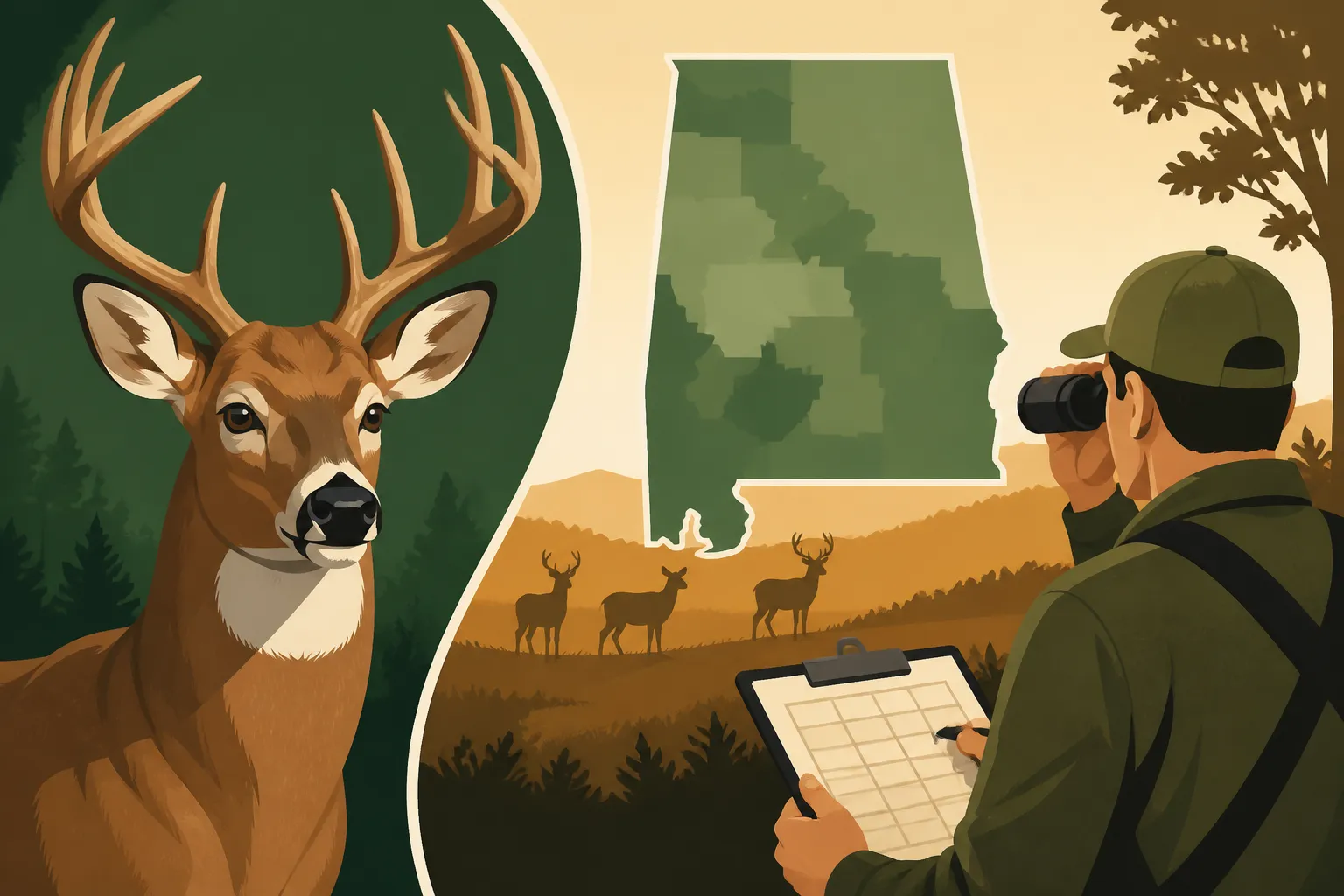
Think of roadside surveys and spotlight counts as quick check-ups on the deer herd's pulse in specific areas. These aren't designed to give an exact number, but rather to show trends in relative abundance over time. ADCNR biologists and technicians drive predetermined routes, usually at night, shining spotlights into fields and along roadsides to count the number of deer observed.
These surveys are conducted consistently year after year, often at the same time and along the same routes, which allows for year-to-year comparisons. If they consistently see more deer along a particular route over several years, it suggests an increasing population in that general area. Conversely, a noticeable drop could indicate a decline. While these counts are subject to factors like weather, vegetation density, and observer variability, their strength lies in their consistency, providing valuable trend data. They can highlight areas where deer populations might be burgeoning or where they might be facing pressure, guiding further investigation or management actions.
Advanced Techniques and Modern Approaches
As technology advances, so do the methods used by wildlife biologists to understand and manage deer. The ADCNR, like many state agencies, is always exploring and implementing new ways to gather more precise data, often leveraging cutting-edge science to complement traditional techniques.
Camera Trap Surveys and Statistical Modeling
Trail cameras aren't just for scouting your next big buck; they've become a critical tool for wildlife biologists too. Camera trap surveys involve setting up a grid of trail cameras across a specific study area and leaving them to capture images and videos over a set period. Unlike simply counting deer, these surveys often employ sophisticated statistical modeling, similar to mark-recapture techniques used for other animals.
In essence, individual deer are "marked" by unique antler patterns, scars, or body characteristics captured in the photos. By repeatedly "recapturing" these marked individuals and noting the proportion of unmarked deer, biologists can estimate the density of deer within that specific area. The beauty of camera traps is that they are non-invasive, operate 24/7, and provide objective, verifiable data. This allows the ADCNR to get more localized density estimates, especially in areas with challenging terrain or dense cover where direct observation is difficult. This data is invaluable for fine-tuning management strategies for different habitat types within Alabama's diverse landscape.
Fawn Survival and Recruitment Studies
Understanding how many fawns survive their first few months of life and successfully join the adult breeding population (known as recruitment) is vital for predicting future deer numbers. If fawn survival is low, even a healthy adult population might struggle to grow. The ADCNR, often in partnership with universities, conducts specific research projects focused on fawn survival.
These studies often involve capturing newborn fawns and fitting them with tiny radio collars. Biologists then track these fawns, monitoring their movements and survival rates over time. This research provides critical insights into the primary causes of fawn mortality, which can include predation, disease, or even natural accidents. For instance, data from these studies can inform understanding of Alabama Predator Impact on Fawn Recruitment, helping biologists gauge if coyote populations are significantly suppressing deer numbers in certain areas. This kind of detailed demographic data is a cornerstone for accurate population modeling and ensures that management strategies are truly effective. You can learn more about specific research findings on Alabama Fawn Survival Rates through the ADCNR's publications.
Habitat Assessment and Carrying Capacity
Counting deer isn't just about the animals themselves; it's also about the land they live on. A key part of deer herd estimation and management involves ongoing habitat assessment. Biologists regularly evaluate the quality and quantity of food sources, cover, and water available in different regions.
The concept of "carrying capacity" is central here. This refers to the maximum number of deer that a particular habitat can sustainably support without degrading the habitat itself. If deer numbers exceed the carrying capacity, you'll start to see signs of overbrowsing, poor deer health (lower body weights, smaller antlers for age), and increased disease susceptibility. For example, after Hunting After a Poor Acorn Year, biologists will be especially keen on assessing other food sources available to gauge the potential impact on deer health and reproduction. By understanding the carrying capacity of different Alabama habitats, the ADCNR can make informed decisions about antlerless deer harvest recommendations, ensuring the herd remains in balance with its environment and stays healthy.
Putting It All Together: The Holistic View
No single method provides the complete picture. Instead, the ADCNR integrates all these different data streams – from hunter reports and DMAP records to camera surveys and habitat assessments – to build a comprehensive, holistic understanding of the Alabama deer herd. It's like combining dozens of different weather instruments to forecast the weather; each provides a piece of the puzzle.
Regional Differences and Zone Management
Alabama isn't a monolithic deer habitat; it's incredibly diverse, from the rich soils of the Black Belt to the rugged Appalachian foothills. This means deer populations and their health can vary significantly across the state. The ADCNR recognizes this by dividing the state into five distinct deer zones, each with its own specific season dates and regulations.
The data collected from all the methods discussed above is analyzed regionally to identify these differences. For instance, deer in the Black Belt might exhibit different population densities, age structures, and body conditions compared to deer in the mountains of Zone C. This regional analysis allows the ADCNR to tailor management strategies to local conditions, rather than applying a one-size-fits-all approach. Understanding Alabama's Five Deer Zones and the rationale behind Alabama Deer Season Structure Explained helps hunters appreciate the science behind the regulations that aim to optimize herd health and hunting opportunities in their specific area.
Challenges and Future Outlook
Managing a dynamic wildlife population like white-tailed deer is never without its challenges. New threats emerge, like the spread of Alabama's Chronic Wasting Disease Management Zone, which requires intensive monitoring and adaptive management strategies. Habitat fragmentation due to development, climate shifts, and changing agricultural practices also constantly influence deer populations.
The ADCNR is continually researching and adopting new technologies and methodologies to enhance its ability to count and manage the deer herd. This includes exploring advanced genetic analysis, wider deployment of thermal drones for surveys in specific situations, and refining statistical models to extract even more insights from collected data. While a true "count" of every deer will likely remain elusive, the commitment to robust scientific estimation and management ensures that Alabama's deer herd remains a thriving resource. Hunters can stay informed about these trends and even contribute their observations through various platforms. For instance, many hunters consult resources like GoHunt to understand general deer movement patterns and population health as reported by state agencies, helping them align their hunting strategies with overall herd dynamics. The future of deer management in Alabama is a continuous evolution, always striving for better data and more effective strategies.
Deer Herd Counting Methods Overview
Here's a quick look at the primary methods the ADCNR uses to estimate Alabama's deer herd, along with their key advantages and limitations:
| Method | Description | Primary Data Provided | Advantages | Limitations |
|---|---|---|---|---|
| Hunter Harvest Data (Game Check) | Mandatory reporting of harvested deer by hunters (sex, date, location). | Harvest trends, sex ratios, regional pressure. | Large sample size, cost-effective, direct hunter participation. | Relies on accurate reporting, biased towards successful hunters/areas. |
| DMAP Data | Landowner/club detailed harvest and observation data on specific properties. | Age structure, body condition, localized recruitment. | High-quality, detailed data, strong local representation. | Limited to participating properties, not state-wide representative. |
| Roadside/Spotlight Surveys | Nighttime counts of deer along established routes. | Relative abundance, population trends (indices). | Cost-effective, consistent long-term trend monitoring. | Influenced by visibility, weather, not an absolute count, observer bias. |
| Camera Trap Surveys | Grids of trail cameras capturing deer, analyzed with statistical models. | Density estimates, buck-to-doe ratios, activity patterns. | Non-invasive, objective, covers remote areas, verifiable data. | Labor-intensive setup/analysis, individual deer identification can be tough. |
| Fawn Survival Studies | Radio-tagging fawns to monitor survival rates and causes of mortality. | Recruitment rates, causes of mortality. | Direct measurement of critical demographic factor. | Labor-intensive, expensive, typically small sample sizes, localized. |
| Habitat Assessment | Evaluating food sources, cover, and overall habitat quality. | Carrying capacity, habitat health, potential for growth. | Understands environmental limits, guides habitat improvement. | Indirect, qualitative aspects can be subjective. |
Disclaimer
This article is for general informational purposes only and does not constitute professional advice. Laws, prices and regulations vary by location and change over time. Consult a qualified professional for guidance on your specific situation.