Alabama Opossum and Skunk Trapping
It's incredibly frustrating to deal with nuisance animals like opossums and skunks. One day your trash is perfectly secure, the next it's strewn across the yard, or worse, you get that unmistakable, pungent odor around your chicken coop or under the house. This guide is here to walk you through the proper, legal, and effective ways to trap opossums and skunks in Alabama, helping you reclaim your peace of mind and protect your property.
Understanding Alabama's Regulations for Opossums and Skunks
Before you even think about setting a trap, it's crucial to understand the rules. Alabama has specific regulations for trapping, even for common nuisance animals like opossums and skunks. You don't want to solve one problem only to create a legal one for yourself. These aren't just suggestions; they're the law, designed to manage wildlife responsibly and ensure public safety.
Legal Status and Seasonality
Both opossums and skunks fall under the category of furbearers in Alabama. Now, don't let that term make you think you suddenly need to become a commercial trapper to deal with a pest. While there are specific furbearer seasons for those looking to harvest pelts, generally, when these animals are causing damage to your property – think raiding your garbage, preying on chickens, or digging up your lawn – you can take action outside of those strict furbearer seasons. This is often referred to as nuisance animal removal.
However, it's not a free-for-all. The ability to remove a nuisance animal often comes with certain caveats, like needing to be on your own private property or having permission from the landowner. If you're considering trapping for commercial purposes or planning to harvest pelts, then you absolutely need to abide by the furbearer season dates and associated regulations, which are typically much stricter. Always check the most current Alabama hunting and trapping regulations, as these can be updated by the Alabama Department of Conservation and Natural Resources (ADCNR) each year. They make a clear distinction between a landowner protecting their property and someone actively engaged in commercial trapping for profit.
Required Licenses and Permits
This is where many people get tripped up. You might think, "It's my property, I can do what I want." While there's some truth to that for some nuisance animals, furbearers like opossums and skunks usually require a general hunting or trapping license even if you're just removing a nuisance. This isn't just about revenue for the state; it's about ensuring individuals have at least a basic understanding of wildlife laws and ethical practices.
For Alabama residents, an Alabama Resident Hunting License Options or an Alabama Trapping License Requirements is typically what you'll need. Non-residents will need to purchase an Alabama Nonresident Hunting License Options or a non-resident trapping license. There's a big difference between holding a license to trap a couple of nuisance animals in your backyard and engaging in large-scale trapping operations, so be sure to understand which category you fall into. On public lands, such as Wildlife Management Areas (WMAs), the rules are even more stringent, often requiring a WMA license or permit in addition to your state license, and you might be restricted to specific seasons. Always confirm the specific requirements for your situation. Sometimes, especially with severe or persistent issues, you might contact a licensed pest control operator or a professional nuisance wildlife trapper who already holds all the necessary commercial licenses and permits. They're often well-versed in local ordinances that might restrict trapping near residential areas or public spaces.
Trap Types and Setback Rules
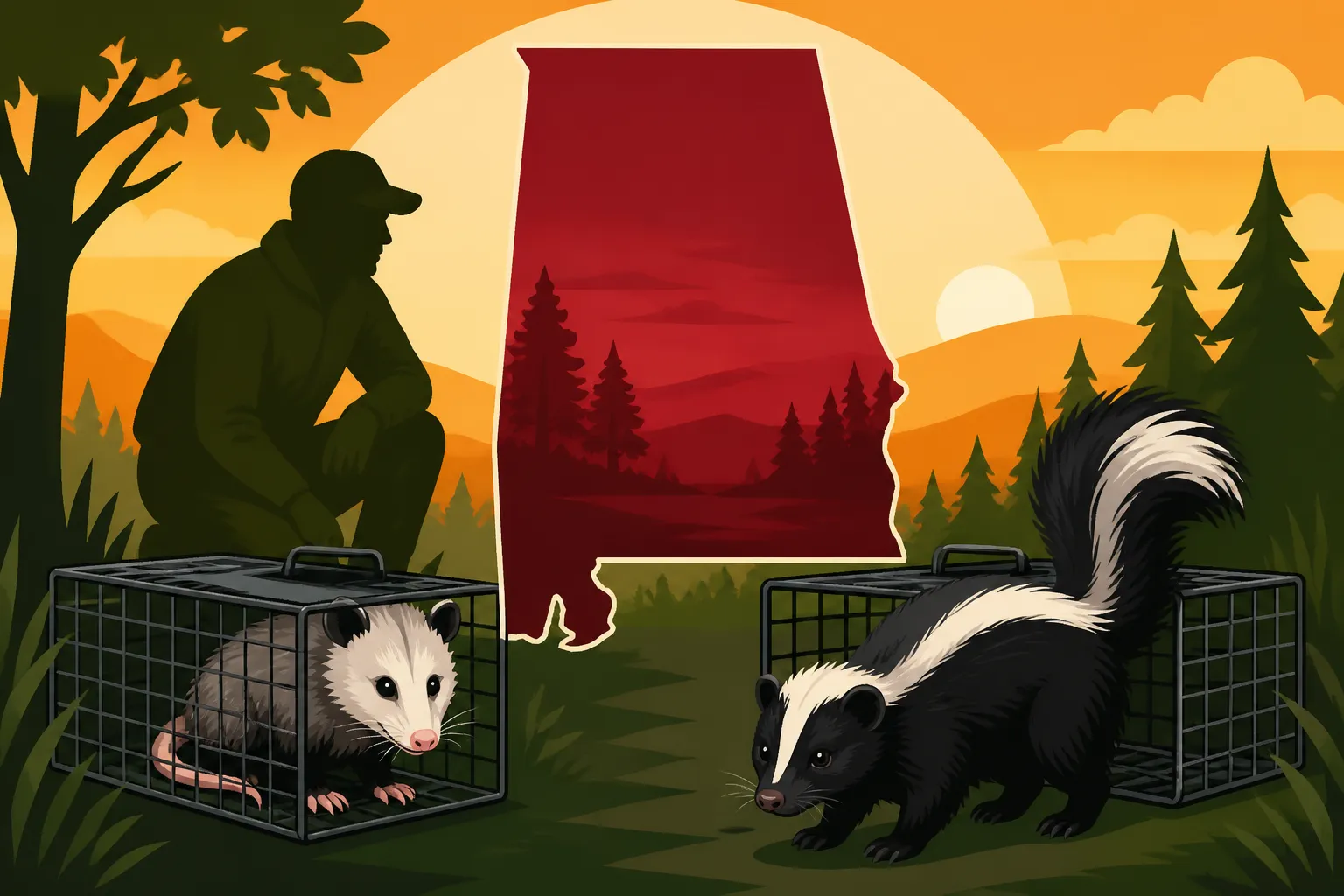
Alabama regulations dictate not only if you can trap but how you can trap. The types of traps you can use are specified, and there are rules about where you can place them. For nuisance opossums and skunks, live traps are often the safest and most recommended option, especially in residential areas. These are the box-style traps that capture the animal without harming it, allowing for relocation (if legal and safe) or humane euthanasia.
When it comes to other trap types, things get a bit more complex. Foothold traps, which hold an animal by the foot, must have smooth jaws or padded jaws to minimize injury. There are also restrictions on the size of the trap and how often they must be checked. For example, traps are generally required to be checked at least once every 24 hours. Conibear-style traps, which are kill traps, have very specific size restrictions and placement rules, especially near public roads, trails, or residential areas. You need to be incredibly careful with these, as they are powerful and can easily injure non-target animals or even pets. Never set a trap where it could endanger children, pets, or other unintended wildlife. Always consider what other animals might be in the area – you don't want to accidentally catch the neighbor's cat or a curious bird. The best advice is to review the current ADCNR trapping regulations thoroughly before purchasing or setting any trap, especially if you're venturing beyond simple live traps. Ignoring these rules can lead to significant Alabama Wildlife Violation Penalties.
Effective Strategies for Trapping Opossums
Opossums are common across Alabama, and while generally harmless, they can certainly become a persistent nuisance, especially around homes and farms. They're opportunistic omnivores, meaning they'll eat just about anything, which makes them both easy to bait and a challenge to keep away.
Identifying Opossum Activity and Damage
Spotting opossums themselves can be tricky since they're primarily nocturnal. However, their destructive habits often leave clear calling cards. The most common sign of an opossum's unwelcome visit is an overturned garbage can, with trash scattered far and wide. They're not particular about what they eat, so kitchen scraps, pet food, and even compost piles are fair game. You might also notice tracks – their hind feet have a unique, opposable thumb-like toe that leaves a distinctive print, often resembling a tiny human hand. Their droppings, usually dark and cylindrical, will also appear in areas they frequent.
On a farm or in a garden, opossums can be devastating. They're notorious for raiding chicken coops, not just for eggs but sometimes even for chicks or smaller adult birds. You might find evidence of torn-up gardens, with fruit and vegetables showing chew marks. Beyond foraging, they're excellent at finding shelter. They'll often den under sheds, decks, porches, or even inside abandoned outbuildings. A persistent musky odor around these structures, combined with visible entry points, can indicate an opossum has set up a semi-permanent residence. Being able to pinpoint these regular activity zones is key to effective trapping, and tools like GoHunt's mapping features can sometimes help you visualize potential travel corridors or den sites on your property, giving you a strategic advantage for trap placement.
Best Baits and Lure Placements for Opossums
Because opossums are scavengers and not picky eaters, they're relatively easy to bait. The key is to use something pungent and attractive that will draw them into the trap. High-quality wet cat food is often a winner, as its strong smell carries well. Other effective baits include canned tuna, sardines, overripe fruit (like bananas or apples), marshmallows, or even bits of fried chicken. The smellier, the better!
When placing your bait, don't just put it in the back of the trap. Create a "bait trail" leading into the trap. Place a small amount of bait just outside the entrance, then a little more a few inches inside, and finally, a larger, more appealing portion at the very back of the trap, behind the trigger plate. This encourages the opossum to fully enter the trap to get to the most desirable food. Place your traps in areas where you've seen the most activity – near overturned trash cans, along garden edges, or close to where they might be denning under a structure. Make sure the trap is on a level, stable surface. For optimal results, you might even consider setting up a few traps in different locations if you suspect multiple animals or are unsure of their primary travel paths.
Trap Setup and Handling Captured Opossums
Setting up a live trap for an opossum is straightforward, but attention to detail makes all the difference. First, choose a sturdy, appropriately sized live trap. A trap roughly 30-32 inches long, 10-12 inches wide, and 10-12 inches high is usually ideal for adult opossums. Place the trap on a flat, stable surface in the area of observed activity. You can lightly camouflage the trap with natural debris like leaves or small branches to make it less obvious, but ensure it doesn't impede the trap's mechanism. Carefully set the trigger plate according to the manufacturer's instructions. Once baited and set, check your traps frequently, ideally early in the morning, as opossums are nocturnal. You want to minimize the time an animal spends stressed in a trap.
When you've captured an opossum, approach the trap calmly and slowly. They may hiss or bare their teeth, which is a defensive behavior, but they're typically more afraid of you than aggressive. Always wear heavy-duty gloves to protect yourself, as any wild animal can bite. If relocation is legal in your area (always verify this with ADCNR, as state regulations can change and sometimes forbid relocating nuisance animals to prevent the spread of disease), transport the covered trap several miles away to a suitable, unpopulated habitat, well away from other residences. Slowly open the trap door, stand back, and allow the opossum to leave on its own. If relocation isn't an option or is restricted, you must humanely euthanize the animal according to Alabama regulations. It's a tough decision, but a necessary part of responsible wildlife management, especially if the animal is sick or severely injured. Remember, a cornered animal is a scared animal, so giving it space and calm is key to safe handling.
Effective Strategies for Trapping Skunks
Skunks, much like opossums, are common nuisance animals in Alabama, but they come with an added, highly potent complication: their defensive spray. Dealing with a skunk requires an extra layer of caution and preparation to avoid a truly memorable, and smelly, encounter.
Recognizing Skunk Presence and Damage
While opossums might leave a mess, a skunk's presence is usually announced by its unmistakable odor. That strong, musky smell is the primary, undeniable sign of a skunk nearby. Beyond the odor, skunks often leave small, cone-shaped holes in lawns or gardens as they dig for grubs, insects, and roots. These holes are usually shallow, only a few inches deep, distinct from the larger, more destructive digging of hogs or armadillos.
Like opossums, skunks love to den in sheltered, dark places. They'll often set up residence under sheds, decks, porches, rock piles, or even in crawl spaces beneath homes. Finding these entry points, combined with the telltale smell, is a strong indicator. While not typically aggressive, skunks can carry diseases like rabies, making any direct interaction or bite a serious health concern. This potential health risk adds another layer of urgency and caution when dealing with skunk problems. Knowing where they're active is vital for placing your traps, and advanced scouting, perhaps using insights from GoHunt to identify potential denning areas or likely food sources on your property, can really help you set your traps in the most opportune locations.
Recommended Baits and Odor Control for Skunks
Skunks, being omnivores, are attracted to many of the same baits as opossums. Strong-smelling foods like peanut butter, wet cat food, canned fish (sardines or tuna), and chicken scraps are highly effective. The key difference when baiting for skunks isn't just what you use, but how you prepare the trap to prevent them from spraying once captured. This is where "odor control" comes into play before the capture.
The absolute best strategy to avoid being sprayed is to cover your live trap before you even set it. Drape a tarp, heavy blanket, or a large piece of cardboard over the trap, leaving just the entrance uncovered. This creates a dark, den-like environment that makes the skunk feel more secure once inside. When a skunk can't see its surroundings or you, it's far less likely to feel threatened enough to spray. Place the bait at the very back of the trap, behind the trigger plate, just like with opossums. This ensures the skunk fully enters the covered trap. Having GoHunt's detailed property maps can be invaluable here, allowing you to choose secluded, low-traffic areas for trap placement, minimizing the chance of an accidental encounter before the skunk is safely covered.
Trap Deployment and Safe Skunk Removal
Trapping a skunk safely is all about minimizing stress and movement. Once you've set your pre-covered live trap with your chosen bait, place it in an area where you've noticed skunk activity, ideally away from high-traffic zones. Check your traps diligently, preferably at dawn, to ensure any captured animal isn't left in the trap for long.
Upon discovering a captured skunk, resist the urge to peek or make sudden movements. The skunk should already be inside the covered trap. Approach the covered trap very slowly and quietly. Avoid making direct eye contact, which can be interpreted as a threat. Once you're close enough, you can slowly lift the trap by its handle (if it has one) or by the edges of the cover, keeping it as level as possible. The goal is to keep the trap covered and the skunk calm.
Transport the covered trap in the back of a truck or another open-air vehicle – definitely not inside your car! Drive slowly and carefully to prevent jarring the trap. Similar to opossums, relocation of skunks is often restricted by state law due to rabies concerns. If relocation is permitted, find a remote, suitable habitat far from human habitation. If not, or if the skunk appears sick or aggressive, humane euthanasia according to Alabama regulations is the responsible course of action. If you're uncomfortable with this, contacting local animal control or a licensed wildlife removal service is highly recommended for skunks due to the rabies risk and the spray factor. Remember, the less you agitate the skunk, the less likely you are to be sprayed.
General Trapping Best Practices and Considerations
Trapping is a responsibility, not just a task. It requires diligence, ethical considerations, and a commitment to safety – for yourself, your family, your pets, and the wildlife you're trying to manage. Doing it right means more than just catching an animal; it means doing so responsibly and sustainably.
Trap Maintenance and Safety
A well-maintained trap is a successful and safe trap. After each capture, thoroughly clean your traps. This not only removes odors that might deter future animals but also prevents the spread of diseases. A simple hose-down with soap and water, followed by a good drying, is usually sufficient. Regularly inspect your traps for any damage – bent wires, broken springs, or faulty triggers can lead to escapes or, worse, injure an animal.
Personal safety is paramount. Always wear thick, heavy-duty gloves when handling traps, bait, or captured animals. This protects you from bites, scratches, and potential disease transmission. Store your traps securely when not in use, preferably in a shed or garage, out of reach of children and pets. This also prevents them from being stolen or tampered with. If you're using foothold or conibear traps, understanding their mechanisms fully and practicing setting them before going into the field is critical. Familiarity reduces the risk of accidental injury to yourself.
Preventing Future Encounters
Trapping is often a reactive solution, but the best approach to nuisance wildlife is prevention. Once you've removed the immediate problem, take steps to ensure they don't come back.
- Secure Food Sources: This is probably the biggest preventative measure. Keep all garbage in secure, animal-proof containers with tight-fitting lids. Bring pet food bowls inside overnight. If you have fruit trees, pick up fallen fruit regularly. Compost piles should be enclosed.
- Seal Entry Points: Opossums and skunks are excellent at finding their way into sheltered spaces. Inspect your home, sheds, and outbuildings for any openings larger than a golf ball. Seal off crawl spaces, gaps under decks and porches, and any holes in foundations. Use heavy-gauge wire mesh or concrete to block these access points.
- Remove Shelter: Clear away brush piles, old tires, and any debris that could offer a hiding spot. Stack firewood neatly and off the ground. Trim low-hanging branches that might give animals access to your roof.
- Fencing: For gardens or chicken coops, sturdy fencing can be highly effective. For skunks and opossums, make sure the fence is buried several inches into the ground (or has an outward-facing skirt) to prevent them from digging underneath.
- Understanding Your Property: Tools like GoHunt can aid in prevention by helping you map your property, identify potential den locations, and visualize travel routes. This understanding allows you to strategically place deterrents or fortify vulnerable areas before a problem arises, shifting from reactive trapping to proactive habitat modification.
By making your property less attractive and accessible, you significantly reduce the chances of these nuisance animals returning.
Ethical Considerations and Humane Practices
As hunters and outdoors enthusiasts, we have a responsibility to treat all wildlife with respect, even those we deem nuisances. Ethical trapping means prioritizing humane practices whenever possible.
- Frequent Trap Checks: This is non-negotiable. Traps should be checked at least once every 24 hours, and ideally more frequently, especially in extreme weather. This prevents undue suffering, dehydration, or injury to the captured animal.
- Minimize Stress: When approaching a captured animal, do so calmly and quietly. Excessive noise or sudden movements will only stress the animal further.
- Humane Dispatch: If relocation isn't an option or is restricted by law, and you must euthanize the animal, ensure it's done humanely and quickly. This means using methods that cause minimal pain and suffering, as prescribed by wildlife agencies or veterinarian guidelines. If you are unsure, it is always best to contact a professional.
- Non-Target Animals: Be mindful of where you place traps to avoid catching non-target animals, including pets or protected species. If you do catch a non-target animal, release it immediately and unharmed. If it's injured, contact a local wildlife rehabilitator or game warden for advice.
Adhering to these ethical guidelines ensures that while you're solving a problem, you're doing so responsibly and with respect for the creatures involved.
| Feature | Opossum Trapping | Skunk Trapping |
|---|---|---|
| Primary Motivation | Nuisance (trash, gardens, poultry), occasional fur | Nuisance (odor, digging, rabies risk), occasional fur |
| Recommended Trap | Live trap (Havahart style) | Live trap (Havahart style), often pre-covered |
| Effective Baits | Cat food, marshmallows, fruit, fish, chicken | Peanut butter, cat food, chicken, strong-smelling foods |
| Odor Risk | Low (except when very stressed) | High (primary concern, especially if startled) |
| Handling Captured | Wear gloves, approach cautiously, minimal direct contact | Always keep trap covered, approach slowly, avoid sudden movements |
| Rabies Concern | Present, but less common than skunks | Higher concern, exercise extreme caution and wear gloves |
| Prevention Focus | Food source removal, securing entry points | Den site sealing, food source removal, perimeter checks |
| Legal Season | Generally year-round for nuisance, specific furbearer season | Generally year-round for nuisance, specific furbearer season |
Disclaimer
This article is for general informational purposes only and does not constitute professional advice. Laws, prices and regulations vary by location and change over time. Consult a qualified professional for guidance on your specific situation.