Alabama’s Historic Quail Decline
For many of us who grew up in Alabama, the sound of a bobwhite quail covey bursting from cover was as synonymous with autumn as falling leaves and cool mornings. Sadly, that familiar sound has become a rarity, leaving many hunters and conservationists wondering what happened to our beloved birds. This guide delves deep into the heartbreaking history of Alabama's quail decline, exploring the complex web of factors that led to their disappearance and the ongoing, passionate efforts to bring them back to our fields and forests.
The Golden Age: A Look Back at Alabama's Abundant Quail
It's hard to imagine now, but there was a time, not so long ago, when Alabama was a quail hunter's paradise. Grandparents and old-timers still speak with a wistful look in their eyes about hunting dozens of coveys in a single morning, bringing home limits seemingly effortlessly. This wasn't just folklore; it was a reality sustained by a landscape that was, perhaps inadvertently, perfectly suited for bobwhites.
Historical Accounts and Hunter Nostalgia
Imagine a time when the rural landscape was a patchwork quilt of small farms, each surrounded by weedy field borders, brushy fencerows, and fallow fields left to regenerate naturally. Farmers weren't spraying herbicides with the same intensity, and agricultural practices often left plenty of "waste grain" after harvest. These conditions created an almost ideal buffet and shelter system for quail. Hunters from the early to mid-20th century recount days spent in wide-open pine savannas dotted with broom sedge and sparse undergrowth, perfect for pointing dogs to work and birds to thrive. The recollections aren't just about the sheer numbers of birds, but the culture that grew around it – the camaraderie, the incredible work of a good bird dog, and the feeling of endless possibility that came with every covey flush.
The stories passed down often paint a picture of a more forgiving landscape, one where a bird could find everything it needed within a small, accessible home range. You didn't have to search for "habitat"; it was just there, a natural consequence of how people lived off the land. These narratives highlight a stark contrast to today's hunting challenges, where finding even a single covey can feel like a monumental victory, often requiring extensive travel and specialized habitat.
The Habitat That Sustained Millions
What made this landscape so perfect for quail? It was a mosaic, plain and simple. Imagine vast expanses of longleaf pine savannas, maintained by frequent natural and prescribed fires, creating an open understory rich in native grasses and forbs. This type of habitat provided excellent nesting cover, abundant insects (crucial for chick survival), and a bounty of seeds. Adjacent to these forests were small agricultural fields—corn, peanuts, soybeans—often bordered by unkempt hedgerows, briar patches, and strips of natural vegetation. These "edge habitats" were critical, offering escape cover from predators and food sources.
The farming practices themselves were less intensive. Crop rotations, smaller fields, and less potent pesticides meant less disturbance and more residual food and cover. This diverse, interconnected landscape provided the three essential components for quail survival in close proximity: nesting cover (dense clumps of grass), brooding cover (open understory with insects), and escape cover (dense shrubs and briars). This natural bounty allowed quail populations to explode and persist, truly defining Alabama as a bobwhite stronghold for generations.
Tracing the Decline: Major Factors Behind the Collapse
The decline of the bobwhite quail in Alabama isn't a simple tale; it's a complex, multi-faceted tragedy that unfolded over decades. It wasn't one single event, but a confluence of profound ecological shifts that systematically eroded the very foundations of quail survival.
The Swiftness of the Drop
While the "golden age" might evoke images of leisurely decline, the truth is, for many, the disappearance felt startlingly swift. The 1960s and 70s marked a significant turning point, and by the 80s, the writing was on the wall. What was once abundant became scarce, almost overnight in ecological terms. Hunters who routinely harvested dozens of birds found themselves struggling to locate a single covey. This wasn't just a decrease in numbers; it was a fundamental shift in distribution and accessibility. Suddenly, entire regions that once held strong quail populations became virtual deserts, leaving hunters bewildered and disheartened.
This rapid decline caught many by surprise, as changes in land use often creep up slowly before their cumulative impact becomes undeniable. It's akin to watching a slow leak drain a pond; at first, you hardly notice, but then one day, the water is gone, and the impact is dramatic. The speed of the loss underscored how finely tuned quail populations are to specific habitat conditions and how vulnerable they are to widespread, systematic changes across the landscape.
Scientific Data and Population Trends
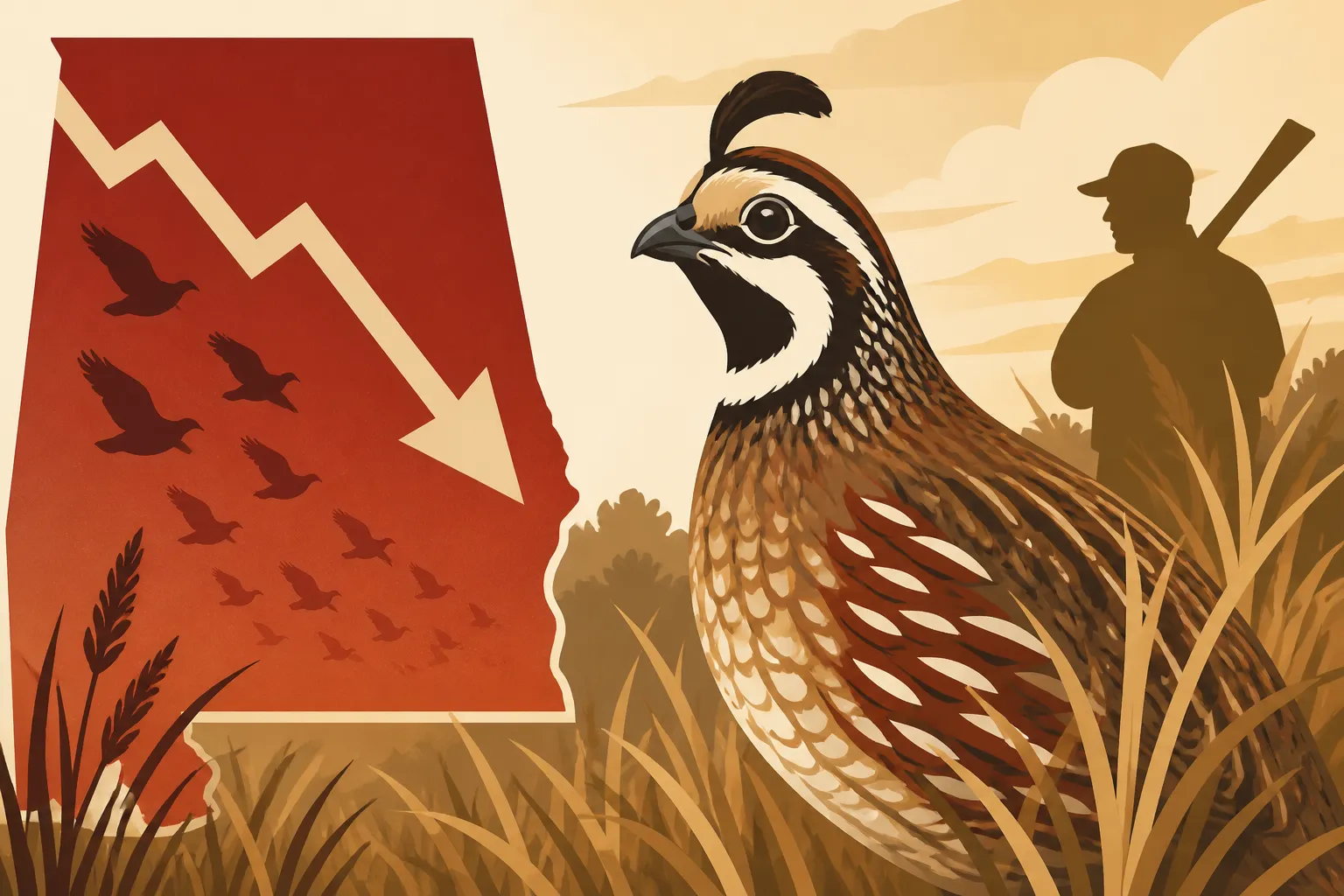
Ecological studies and hunter harvest data paint a grim picture, confirming the anecdotal evidence. From the mid-20th century, annual quail harvest numbers began a steep and consistent descent. While exact historical population figures are difficult to pinpoint, long-term surveys, such as those conducted by the Alabama Department of Conservation and Natural Resources (ADCNR) and organizations like the National Bobwhite Conservation Initiative, show a dramatic statewide reduction, often estimated at 80-90% or more from historical highs. In some areas, the decline is even more severe, with local extinctions being common.
For instance, the breeding bird surveys and fall covey counts, which measure population indices, have consistently shown downward trends across most of Alabama for decades. This data highlights a continuous, rather than cyclical, decline, strongly indicating systemic issues rather than natural fluctuations. The numbers confirm that this isn't just "bad hunting luck" or localized issues; it's a profound, widespread ecological problem that demands sustained and strategic intervention.
Habitat Loss: The Primary Culprit
When you talk about quail decline, habitat loss isn't just a factor; it's the foundational problem. Without suitable habitat, all other pressures become insurmountable. The way Alabama's land has been managed and developed over the last 70 years has systematically dismantled the very environment quail need to survive and thrive.
Industrial Forestry and Monoculture Plantations
One of the most significant blows to quail habitat came from the dramatic shift in forestry practices. The traditional, open longleaf pine ecosystems that were historically maintained by frequent, low-intensity fires gave way to dense, fast-growing monoculture pine plantations, primarily loblolly and slash pines. These industrial forests are often planted in tightly packed rows, grown quickly, and harvested in clear-cuts, with little to no understory management in between.
The result is a landscape that is simply uninhabitable for quail. Dense, shaded pine stands, especially those past the initial sapling stage, offer no sunlight to grow the native grasses and forbs that quail rely on for food and nesting cover. The dense canopy creates a "biological desert" on the forest floor. While initial clear-cuts might provide temporary, flush regrowth that benefits quail for a year or two, the lack of consistent fire management, combined with the rapid canopy closure, quickly renders these areas useless. This widespread conversion to industrial pine has fragmented and degraded vast tracts of historical quail country, particularly in the central and southern parts of the state. These changes are evident in areas that once supported thriving quail populations, now largely devoid of birds, despite appearing "green" from a distance.
Agricultural Practices and Land Use Changes
Changes in agriculture have been equally devastating. The rise of large-scale, industrial farming replaced the diverse small farms that characterized much of Alabama's past. This meant bigger fields, fewer hedgerows, and the widespread adoption of "clean farming" practices. Modern machinery can farm right up to the property line, eliminating those crucial, weedy field borders and fencerows that provided both food and cover. Herbicides and pesticides, while effective for crop production, eliminate the native weeds and insects that are vital food sources for adult quail and, critically, for their chicks.
Furthermore, the shift from diverse crop rotations to monoculture row crops, often corn and soybeans, reduces habitat diversity. These fields offer little sustenance or cover once harvested, and even less during the growing season compared to historically diverse small farms. The practice of "fall tillage," where fields are plowed shortly after harvest, leaves no residual grain or cover for wintering birds. This relentless intensification and simplification of agricultural landscapes have directly removed millions of acres of prime quail habitat, turning formerly rich hunting grounds into biological vacuums for bobwhites. You can see this firsthand if you drive through many parts of the Black Belt, where once-diverse farmlands are now vast, unbroken fields.
Urban Sprawl and Fragmentation
It's not just forestry and agriculture; urban and suburban sprawl also plays a significant role in habitat loss and fragmentation. As Alabama's population grows, development expands into formerly rural areas, gobbling up small farms, woodlots, and natural areas. Housing developments, shopping centers, roads, and infrastructure all contribute to the permanent loss of habitat. Even if an individual development seems small, the cumulative effect across the state is immense.
Beyond the direct loss of land, sprawl also leads to habitat fragmentation. Quail need relatively large, interconnected patches of suitable habitat to thrive. When their habitat is broken up into smaller, isolated islands surrounded by development, it makes them more vulnerable. It becomes harder for birds to move between suitable areas, find mates, or escape predators. Small, isolated populations are also more susceptible to local extinction due to random events, disease, or predation pressure. This fragmentation, often seen on the edges of cities like Birmingham or Montgomery, creates significant barriers to any potential recovery efforts.
| Habitat Feature | Pre-1960s Alabama (Quail Rich) | Modern Alabama (Quail Scarce) | Impact on Quail |
|---|---|---|---|
| Forest Type | Open Longleaf Pine Savannas | Dense Loblolly Plantations | Lack of understory, no food/cover |
| Fire Regime | Frequent, Low-Intensity Fires | Suppressed or Infrequent Fires | No new growth, dense canopy |
| Agriculture | Small, Diverse Farms w/ Edges | Large-Scale Monoculture Fields | "Clean farming," no edge habitat |
| Field Borders | Brushy Fencerows, Weedy Strips | Clean-Cut, Sprayed Borders | No escape cover or winter food |
| Pesticides | Limited, Less Potent | Widespread, Stronger Chemicals | Kills insects (chick food), seeds |
| Land Use | Rural, Interconnected Patches | Fragmented by Development | Isolation, reduced mobility |
Predation and Other Pressures: A Complex Web
While habitat loss is the undeniable Goliath in the quail decline story, it's crucial to understand that other factors contribute to the problem, acting as relentless pressures on already struggling populations. These elements, often exacerbated by degraded habitat, create a complex web of challenges for bobwhite survival.
Increased Predator Populations
Many experts believe that increased predator populations, particularly mesopredators like raccoons, opossums, and skunks, have played a role in the quail decline. These generalist predators thrive in fragmented landscapes and often benefit from human development, finding easy food sources and den sites. They are highly efficient nest and chick predators. Additionally, populations of coyotes and bobcats, while more natural predators, can also exert pressure, especially on adult birds, when quail numbers are low and habitat provides inadequate escape cover.
The issue isn't necessarily that there are "too many" predators in an absolute sense, but rather that the habitat can no longer effectively protect quail from them. A quail covey in a dense, diverse fencerow with overhead cover and a clear escape route is much better equipped to evade a hawk or a coyote than a covey trying to hide in a sparse, open field edge. When the natural protective measures of robust habitat are gone, even "normal" predation levels can become unsustainable for a struggling quail population. This is why efforts in Predator Hunting in Alabama are sometimes discussed in the context of quail management, though it's rarely a standalone solution.
Disease and Parasites
Like all wildlife, quail are susceptible to various diseases and parasites that can impact their health and survival. Diseases such as ulcerative enteritis (quail disease) or parasites like eyeworms and gapeworms can weaken birds, reduce their reproductive success, or lead to direct mortality. While natural disease cycles occur, degraded habitat can make quail more vulnerable. For instance, birds concentrated in smaller, less suitable habitat patches might experience higher stress levels, making them more susceptible to illness and facilitating easier transmission of parasites.
Poor nutrition due to a lack of diverse food sources in monoculture landscapes can also compromise a quail's immune system. While not typically the primary cause of widespread decline, disease and parasites act as chronic stressors, further reducing the resilience of already stressed populations and hindering any potential for recovery. Tracking wildlife diseases, like those managed by ADCNR, is an ongoing effort to understand these pressures.
Weather Extremes and Their Impact
Alabama's weather can be volatile, and extreme conditions—whether prolonged drought, unusually cold winters, or excessive rainfall during nesting season—can have significant impacts on quail populations. For example, a severe drought can reduce insect availability (critical for chicks) and stunt the growth of native plants that provide food and cover. Conversely, heavy, persistent rainfall during the spring nesting season can flood nests, drown chicks, and reduce the success of initial nesting attempts.
Even moderate weather patterns can be problematic if habitat is poor. Quail need dense, overhead cover to protect them from both scorching summer sun and bitter winter winds. Without adequate thermal cover, birds expend more energy regulating their body temperature, leaving less for reproduction and survival. While weather is a natural, unavoidable force, a healthy, resilient quail population in ideal habitat can often weather these extremes much better than a population already struggling in degraded conditions.
Conservation Efforts: Bringing Back the Bobwhite
The story of Alabama's quail isn't entirely one of loss; it's also a testament to the passionate dedication of conservationists, landowners, and hunters striving to reverse the trend. There's a growing understanding that bringing back the bobwhite requires intensive, thoughtful habitat management.
Managed Pine and Prescribed Burning
One of the most promising and effective strategies for quail restoration revolves around recreating and maintaining proper pine savanna habitat through prescribed burning. Controlled burns, mimicking natural fire regimes, are essential for managing the understory of pine forests. Fire reduces dense mid-story brush, promotes the growth of native grasses and forbs (like partridge pea, lespedeza, and beggar's-lice) that provide food and cover, and makes the habitat more open and accessible for quail and their broods. This is a key component of why How Managed Pine Restored Black Belt Quail has seen success in localized areas.
Landowners are increasingly recognizing the value of actively managing their timberlands for wildlife, moving away from purely industrial forestry models. This includes thinning pine stands to allow more sunlight to reach the forest floor, planting native warm-season grasses, and implementing rotational burning schedules. The goal is to create that diverse, open understory that defines prime quail habitat. These practices don't just benefit quail; they also improve habitat for deer, turkeys, and other ground-nesting birds.
Restoration Programs and Partnerships
Numerous organizations and agencies are working tirelessly to restore quail habitat across Alabama. The Alabama Wildlife and Freshwater Fisheries Division (ADWFF), the National Wild Turkey Federation (NWTF), Quail Forever, and the National Bobwhite Conservation Initiative (NBCI) are just a few examples. These groups provide technical assistance to private landowners, offer cost-share programs for habitat improvements, and conduct vital research. They understand that restoring bobwhites is a landscape-level challenge requiring collaboration.
These partnerships aim to educate landowners on best management practices, from prescribed fire and timber thinning to establishing native food plots and enhancing field borders. Tools and resources from organizations like GoHunt can help land managers identify areas on their property with restoration potential and track the success of their efforts. By working together, these groups are slowly but surely rebuilding the habitat foundations that quail need. You can often find opportunities to learn about these programs at local conservation events or through your county extension office.
Public and Private Land Initiatives
Conservation efforts aren't limited to private lands; public hunting lands also play a crucial role. Many of Alabama's Wildlife Management Areas (WMAs) and National Forests are actively managing sections for quail habitat, though the scale of these efforts can vary. These public lands often serve as demonstration areas, showcasing successful techniques and providing some of the limited opportunities for Quail Hunting Alabama's Black Belt.
However, due to the sheer amount of private land in Alabama, private landowners are the ultimate key to widespread quail recovery. Incentivizing and supporting these individuals through programs that offer financial assistance or technical guidance for habitat improvements is paramount. This includes establishing beneficial cover crops, creating brushy escape cover, and managing hedgerows. Many hunters are also realizing that improving habitat on their own leased or owned land is the most direct way to contribute to quail conservation, often creating small pockets where birds can thrive, even if statewide numbers remain low. Organizations are increasingly using data from tools like GoHunt to target specific regions for habitat improvement projects, allowing them to maximize impact.
What the Future Holds: Hope for Alabama's Quail
The road to recovery for Alabama's bobwhite quail is long and steep, but it's not without hope. The increased understanding of quail ecology, combined with dedicated conservation efforts, provides a glimmer that these iconic birds might one day reclaim more of their historical range.
The Long Road to Recovery
It's important to be realistic: bringing quail back to historical numbers across all of Alabama is an immense undertaking that will take decades, if not generations. The scale of habitat loss is so vast, and the underlying economic drivers that led to it (industrial agriculture, fast-growth timber) are still largely in place. However, localized successes demonstrate what's possible. Where landowners commit to intensive, science-based habitat management, quail populations can rebound. These localized efforts serve as vital blueprints and inspiring examples for broader initiatives.
The recovery isn't just about restoring acreage; it's about restoring quality habitat in a connected way across the landscape. This means not just scattered patches of good cover, but corridors and larger blocks that allow birds to disperse and maintain genetic diversity. The challenge lies in scaling these successes and fostering a widespread conservation ethic that prioritizes diverse ecosystems over monoculture landscapes. Learning more about Alabama Quail Restoration Research Sites offers insight into the dedicated scientific work underway to understand this complex recovery.
The Role of Hunters and Landowners
The future of Alabama's quail rests squarely on the shoulders of hunters and landowners. Hunters, as passionate advocates for wildlife and often the first to notice declines, have a critical role to play in funding conservation through license purchases and donations to organizations like Quail Forever. More importantly, they can become active participants in habitat restoration on lands they own or lease. This involves implementing prescribed fire, thinning timber, planting native grasses, and leaving unkempt field edges.
Landowners, whether they hunt or not, hold the key to the majority of Alabama's land. Educating them about the benefits of quail-friendly habitat—which often also benefits other wildlife and improves soil health—is vital. Programs that offer incentives for these practices are crucial. Using tools from organizations like GoHunt can empower landowners with the data and mapping capabilities to plan and execute effective habitat projects. Ultimately, a cultural shift towards valuing biodiversity and sustainable land management over short-term economic gains will be necessary for any significant, long-term quail recovery. It's a journey of stewardship, patience, and unwavering dedication to a cherished Southern tradition.
Disclaimer
The information provided in this guide is for general informational purposes only and does not constitute professional advice. Hunting regulations, land management practices, and wildlife populations are subject to change. Always consult the latest regulations from the Alabama Department of Conservation and Natural Resources (ADCNR) and seek expert advice for specific land management or hunting decisions.