Alabama Quail Restoration Research Sites
Many of us remember a time when the distinctive whistle of a bobwhite quail was a common and cherished sound echoing across Alabama's fields and pine stands. For many, that sound is increasingly rare, a stark reminder of the challenges these beloved game birds face. This guide dives deep into the dedicated research sites across our state, uncovering the tireless efforts and scientific approaches being employed to understand, protect, and ultimately restore Alabama's iconic bobwhite quail populations.
The Fading Whistle: Understanding Alabama's Quail Decline
For generations of Alabama hunters and nature enthusiasts, the bobwhite quail was a cornerstone of our natural landscape. Yet, over the last several decades, their numbers have seen a dramatic decline. It's a frustrating reality for anyone who cherishes these birds, and it’s not due to any single factor, but rather a complex web of environmental changes. Understanding this decline is the first crucial step toward effective restoration.
Habitat Loss and Fragmentation
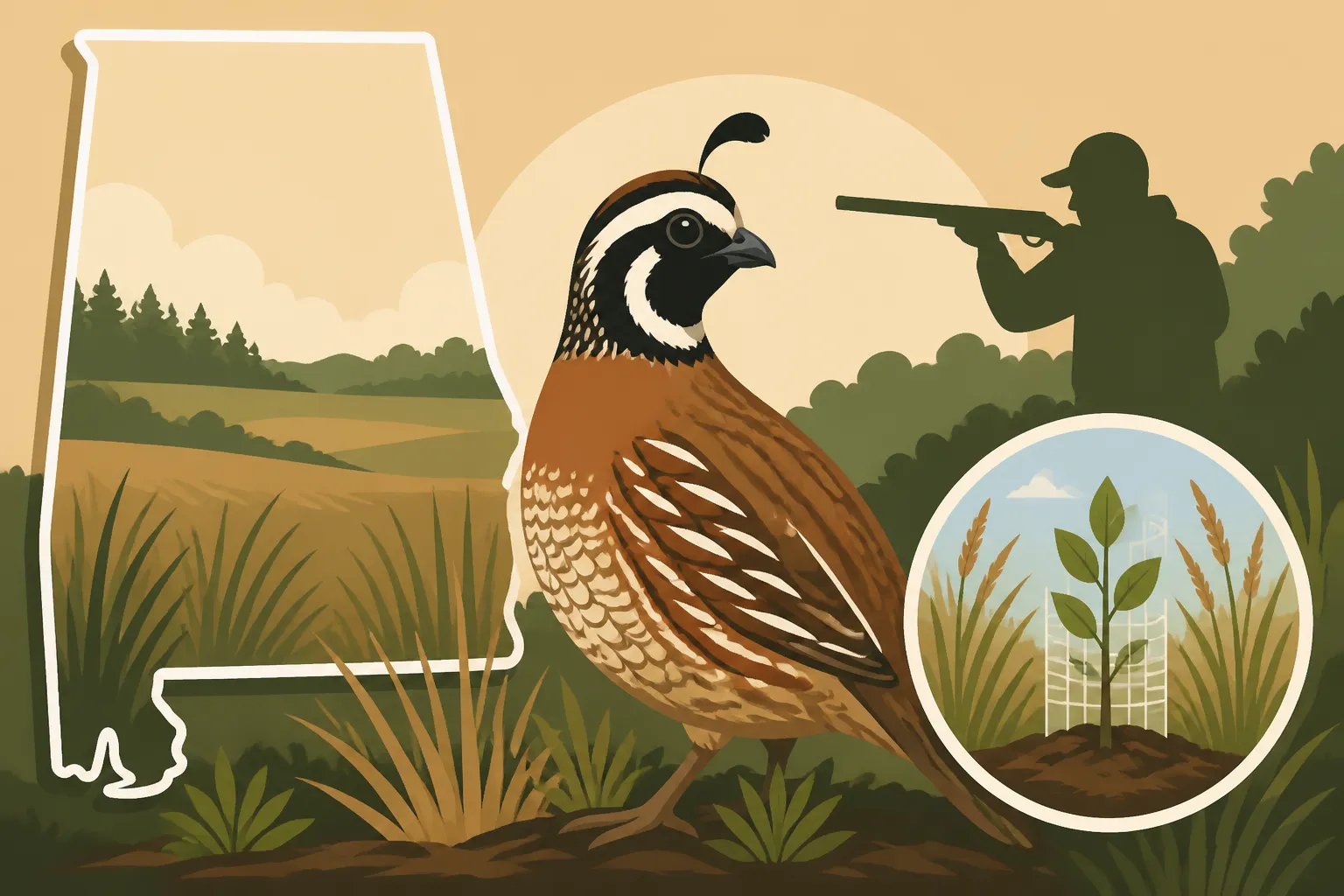
The biggest culprit in the bobwhite's vanishing act is undoubtedly habitat loss and fragmentation. Quail need a very specific type of habitat: a mosaic of open pine woodlands, native grasslands, shrubby fencerows, and agricultural edges. This isn't just about having some trees or some fields; it's about having the right mix, with plenty of diverse cover for nesting, brood-rearing, feeding, and escaping predators.
Think about how much Alabama's landscape has changed. Vast tracts of diverse pine-hardwood forests have been converted into dense, monoculture pine plantations that offer little in the way of understory cover or food. Agricultural practices have also shifted dramatically, with larger fields, fewer hedgerows, and more intensive cultivation removing vital edge habitat. Suburban sprawl, while perhaps less obvious in direct impact, also carves up and isolates what little suitable habitat remains. When quail habitat becomes isolated patches, populations become fragmented, making it harder for birds to find mates, move safely between areas, and recover from local disturbances. This isolation is a silent killer for many ground-nesting birds.
Changes in Agricultural Practices
Historically, many quail thrived on the edges of small farms. Imagine row crops like corn or cotton, bordered by brushy fencerows, weedy field borders, and fallow plots. These areas provided abundant insects for chicks, seeds for adults, and crucial cover from hawks and other predators. Modern agriculture, while incredibly efficient, often leaves little room for this kind of "messy" habitat.
Today's larger, cleaner fields often lack those weedy borders and brushy draws. Herbicides eliminate much of the diverse plant life that provides food and cover, and larger equipment means fields are worked right up to the property line. Even seemingly beneficial practices like clean hay production can remove essential nesting cover. The drive for efficiency, while understandable from an economic perspective, has inadvertently stripped away much of the varied landscape that bobwhites need to survive. It's a tough balance to strike between productive farming and wildlife needs, but it's a critical component of the quail's struggle. Alabama's Historic Quail Decline goes into more detail on how these changes have impacted populations.
Ground Zero for Recovery: Key Research Sites and Their Missions
To reverse the trend of declining quail populations, dedicated research sites across Alabama are working diligently, acting as living laboratories. These aren't just pretty places; they're strategically managed landscapes where scientists and land managers collaborate to develop and refine the best restoration practices. Their mission is clear: understand the intricate ecological needs of bobwhite quail and implement techniques that can bring them back, often in partnership with private landowners.
University and Government-Affiliated Research Areas
Many of Alabama's most significant quail research sites are found on properties managed by universities or state and federal agencies. These include specific Wildlife Management Areas (WMAs) under the Alabama Department of Conservation and Natural Resources (ADCNR), as well as lands managed by universities like Auburn University or the Warnell School of Forestry and Natural Resources, which often have dedicated wildlife research programs. These sites provide the stable, long-term environments necessary for rigorous scientific study.
At these locations, researchers conduct extensive studies on everything from nesting success rates to chick survival, predator impacts, and the effectiveness of different habitat management techniques. For example, some WMAs might be sectioned off to compare the results of aggressive prescribed burning schedules against areas with less frequent burns. Others might focus on specific food plot mixes or the impact of supplemental feeding. The data gathered here forms the foundation for broader conservation strategies, informing best practices for private landowners and other public lands. These sites allow for controlled experiments that would be difficult, if not impossible, to replicate on typical hunting lands.
Private Landowner Partnerships and Demonstrations
While public lands offer crucial research opportunities, the vast majority of Alabama's potential quail habitat lies on private property. Recognizing this, many restoration efforts involve strong partnerships with landowners. These partnerships often manifest as demonstration sites, where proven management techniques are applied and monitored, providing real-world examples of successful habitat improvement.
These private land initiatives are vital because they bridge the gap between scientific theory and practical application. Landowners might receive technical assistance, guidance on prescribed fire, native grass plantings, or brush control, with researchers monitoring the quail response. A property owner who wants to see more quail on their land, for example, might partner with a biologist to implement a specific burning regime and plant native forbs, then track the quail response with acoustic monitoring or covey counts. These collaborations not only expand the footprint of restored habitat but also educate and empower landowners to become active participants in conservation, demonstrating that productive land use and thriving quail populations can coexist. Hunting Small Private Tracts in Alabama often hinges on these kinds of proactive habitat efforts.
Science in the Field: Research Methods and Habitat Management
Quail restoration is far from a guessing game. It's a science-driven endeavor, employing a range of sophisticated methods to understand quail behavior and the effectiveness of habitat interventions. From meticulously managing vegetation to understanding the role of predators, every action at a research site is carefully planned and monitored.
Prescribed Fire and Native Grassland Restoration
One of the most powerful tools in a quail manager's arsenal is prescribed fire. Historically, natural fires, often started by lightning, helped maintain the open, diverse understory that bobwhites thrive in. Without fire, many Alabama woodlands become dense with mid-story hardwoods and thick leaf litter, choking out the native grasses and forbs that provide essential food and cover. Research sites actively use prescribed fire to mimic these natural processes.
The burning schedules and intensities are carefully planned to achieve specific habitat goals: reducing woody encroachment, stimulating native seed germination, and creating bare ground for dusting and foraging. Simultaneously, many sites focus on restoring native grasslands, replacing invasive fescue or Bermuda grass with beneficial species like bluestem, switchgrass, and indiangrass. These native grasses provide excellent nesting cover, produce vital seeds, and host a wealth of insects – a critical food source for growing chicks. For instance, at a research site, sections might be burned every one, two, or three years to compare the impact on insect abundance and quail usage, providing hard data on optimal fire return intervals. Why Alabama Foresters Burn Longleaf Pine is an important read for understanding the role of fire.
Predator Management and Food Plot Strategies
While habitat is king, managing predator populations can also be a critical component of restoration, especially in areas with very low quail numbers. Research sites often study the impact of predators like raccoons, opossums, and skunks, which are notorious nest predators, and mesopredators like coyotes and bobcats that can prey on adult quail. This isn't about eradication, but rather about understanding population dynamics and how various predator control methods might temporarily reduce pressure on quail during sensitive nesting or brooding periods.
Alongside predator management, strategic food plot planting is also researched. While wild quail rely heavily on native seeds and insects, supplemental food plots can provide crucial nutrition during lean times, particularly winter. Research explores different seed mixes – like various native legumes, millets, or chufas – to see which are most attractive to quail, provide the best nutritional value, and blend effectively into the overall habitat plan. The goal is to integrate these plots seamlessly into a larger diverse habitat, rather than relying on them as a sole food source. Mapping out these diverse habitat features is critical, and tools often found on platforms like GoHunt can help visualize the different cover and food sources available across a landscape.
Tracking and Monitoring Quail Populations
The success of any restoration effort hinges on rigorous monitoring. Research sites employ a variety of methods to track quail populations, providing essential data on whether management techniques are working. This includes traditional methods like covey call counts at dawn or dusk, where trained observers listen for and record the number of distinct coveys whistling. Roadside counts, where observers drive established routes and tally quail sightings, are also common.
More advanced techniques include trapping and banding birds, allowing researchers to track individual movements, survival rates, and reproductive success. Telemetry, where small transmitters are attached to birds, provides invaluable real-time data on habitat use, nesting locations, and predation events. These methods allow scientists to understand, for example, how far a covey typically ranges, what specific types of cover they prefer for nesting, or where predation is most likely to occur. All this data is fed back into the management plan, creating a continuous loop of scientific inquiry and adaptive management. Understanding Poult-to-Hen Ratios and What They Mean is a key part of this monitoring process.
| Research Component | Primary Goal | Common Methods | Expected Outcome for Quail |
|---|---|---|---|
| Habitat Restoration | Re-establish diverse food & cover | Prescribed fire, native grass planting, timber thinning | Increased carrying capacity, better survival |
| Predator Management | Reduce localized pressure on quail | Trapping, exclusion fencing (limited use) | Improved nesting success, higher chick survival |
| Food Plot Research | Supplement diet, provide winter forage | Diverse seed mixes, placement studies | Better overwinter survival, healthier birds |
| Population Monitoring | Track response to management | Covey counts, telemetry, banding | Data-driven decisions, measurable recovery |
| Disease & Parasite Studies | Identify health threats | Sample collection, necropsies, blood work | Healthier populations, targeted interventions |
Beyond the Fence Line: The Future of Quail Restoration
While the work at dedicated research sites is foundational, the future of bobwhite quail in Alabama ultimately depends on expanding these successful strategies beyond the boundaries of controlled environments. It requires a collaborative, statewide effort, integrating science with practical application on a much larger scale.
The Role of Private Landowners and Conservation Programs
As mentioned earlier, private land accounts for the vast majority of Alabama's landscape. This means that engaging and empowering private landowners is paramount to widespread quail recovery. Conservation programs, often led by state agencies and non-profits, provide technical and financial assistance to landowners willing to implement quail-friendly practices. These programs can help fund prescribed burns, assist with native plant establishment, or offer guidance on selective timber harvesting that benefits quail.
Landowners are often passionate about wildlife, but need accessible information and support to make habitat improvements a reality. The success of research sites in demonstrating effective techniques is key here, providing tangible proof that these efforts work. By fostering a network of informed and engaged private landowners, Alabama can create vast corridors of suitable habitat, allowing quail populations to not just survive, but to truly thrive and expand their range. These efforts are often supported by the ADCNR's Private Lands Program, which helps bridge the gap between scientific knowledge and landowner action. For those using mapping tools like GoHunt, understanding how to identify and implement these practices on their own land becomes much clearer.
Long-Term Monitoring and Adaptive Management
Quail restoration is not a "set it and forget it" endeavor. It requires a long-term commitment to monitoring and an adaptive management approach. This means continuously evaluating the effectiveness of restoration strategies, adjusting them as new information becomes available, and responding to changing environmental conditions. Research sites play an ongoing role in this, as they can quickly test new hypotheses or respond to emerging challenges like disease outbreaks or shifts in climate.
For example, if monitoring data consistently shows low chick survival despite excellent nesting cover, researchers might investigate potential changes in insect populations or increased predation pressure on broods. The adaptive cycle of "plan, do, observe, adjust" is critical. This dynamic approach ensures that restoration efforts remain effective and resilient, maximizing the chances for bobwhite quail to once again become a common sight and sound across Alabama's diverse and beautiful landscape. It's a journey, not a destination, but with continued dedication, the future for Alabama's bobwhite quail can be brighter.
Disclaimer
This article is for general informational purposes only and does not constitute professional advice. Laws, prices and regulations vary by location and change over time. Consult a qualified professional for guidance on your specific situation.