Alabama Hog Trapping Success Rates
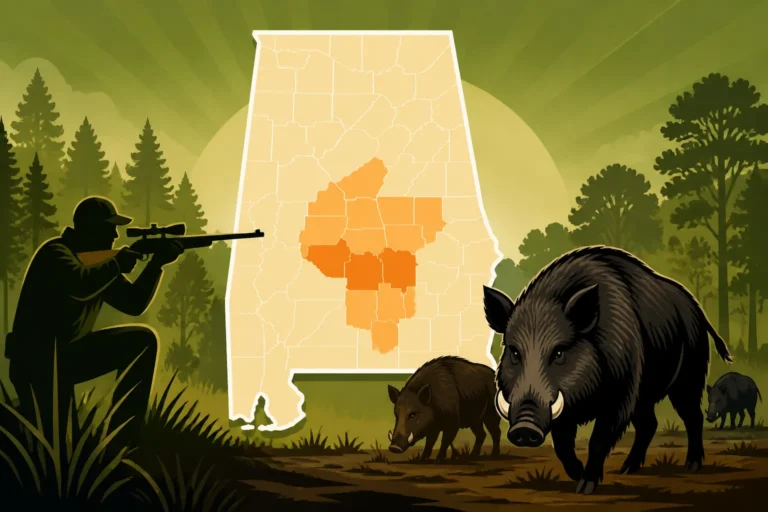
Feral hogs are a relentless challenge for landowners and hunters across Alabama. If you've ever dealt with the destruction they leave behind in fields, food plots, or even your backyard, you know the frustration is real. Trapping offers one of the most effective long-term solutions, but knowing what constitutes a "successful" hog trapping effort, and more importantly, how to actually achieve it, can feel like a moving target. This guide is here to demystify hog trapping success rates in Alabama, helping you understand the variables, avoid common mistakes, and maximize your chances of significantly reducing hog numbers on your property.
Understanding What "Success" Means in Hog Trapping
When we talk about "success" in hog trapping, it's not always a straightforward number. It's easy to think of success as simply catching a hog, but for effective management in Alabama, it really needs to be more comprehensive.
Beyond Just Catching Hogs
True success in hog trapping goes far beyond just one or two catches. For many, it means significantly reducing the local hog population causing damage, to the point where their destructive impact is minimized. This isn't just about the number of animals removed, but also the consistency of those removals and the long-term impact on the sounder (a group of hogs). Are you catching the mature sows that are key to reproduction? Are you catching most of the sounder, or just a few stragglers?
For instance, catching a single boar might feel like a win, but if there's a sounder of ten sows still out there, your success might only be superficial. On the other hand, a trap that consistently catches two or three hogs every week could be considered highly successful in maintaining control, even if it never yields a "big" haul. Farmers might measure success by the reduction in crop damage, while land managers might look at the health of native plant communities. It's a holistic view, considering the total number of hogs removed, the sustained reduction in activity, and the cost-effectiveness of your efforts over time.
The Elusive "Average Success Rate"
You might be wondering, "What's the average success rate for hog trapping in Alabama?" The honest answer is that a single, universally applicable number is incredibly elusive. There are simply too many variables at play. Think about it: the type of trap, the size of the sounder, the availability of natural food sources, the weather, the amount of pressure the hogs have experienced, and even your own consistency and patience all drastically impact the outcome.
A trapper using a sophisticated drop trap with cellular monitoring, consistently pre-baiting for weeks in a high-traffic area, will likely have a much higher success rate than someone who throws out a small box trap with a handful of corn in a random spot. Therefore, instead of chasing an "average," it's far more productive to focus on the factors you can control to improve your personal success rate. Resources like mapping tools, such as those often found on platforms like GoHunt, can help you visualize the terrain and potential hog traffic patterns, giving you an edge in understanding the local environment and thus improving your trap placement and overall strategy.
Key Factors Influencing Alabama Hog Trapping Success
There are several critical components that, when managed effectively, significantly increase your chances of successful hog trapping in Alabama. Ignoring any one of these can drastically reduce your take.
Trap Type and Size
Choosing the right trap for your situation is paramount. You wouldn't use a mouse trap for a rat, and the same principle applies to hogs. For general hog control, a small, single-entry box trap might catch a young hog or two, but it's largely ineffective against an entire sounder. Large corral traps or drop traps are often considered the gold standard for catching multiple hogs at once, including the trap-shy older sows that are crucial for population control.
Corral traps, often constructed with multiple panels, allow for a larger capture area and can be configured with various trigger mechanisms, including rooter gates or remote-activated drop gates. These larger traps give hogs more space, reducing their initial fear of entering a confined area. You need a trap large enough to encompass an entire sounder if your goal is significant population reduction. A good place to start your research on trap designs and materials is our guide on What Hog Trappers Use in Alabama, which dives into the specifics of different trap types and their applications.
Baiting Strategy and Consistency
Bait is your primary lure, and how you use it can make or break your trapping efforts. Hogs are opportunists, but they can also be wary. A haphazard baiting approach often yields haphazard results. The cornerstone of effective baiting is pre-baiting: getting hogs accustomed to feeding at the trap site, ideally even entering the trap, before it's actually set to catch them. This builds trust and reduces wariness.
Regular, generous baiting with attractive feed is essential. Soured corn, often mixed with a commercial hog attractant, is a perennial favorite for its strong odor and palatability. Sweet feeds, spilled sodas, or even stale pastries can also work. The key is to commit to a consistent schedule and sufficient quantity. Start by broadcasting bait around the open trap, then gradually move it inside the trap as hogs become comfortable. This habituation process might take days, or even weeks, depending on the hogs' pressure history and local food sources. For a deeper dive into optimizing your bait site, check out Building and Freshening a Hog Bait Site.
Trap Placement and Site Selection
Putting a trap in the wrong spot is like trying to catch fish in a bathtub – it simply won't work. Successful trap placement relies heavily on scouting and understanding hog movement patterns. Look for fresh signs of hog activity: rooted areas, tracks, wallows, rubs on trees, and well-worn trails leading to food sources, water, or bedding cover. Hogs are creatures of habit, and they often follow the path of least resistance.
Prime locations often include natural funnels, along the edges of dense cover, near water sources (especially in drier periods), or at the intersections of multiple trails. Consider how you'll access the trap and remove hogs without leaving excessive human scent or creating disturbance. Utilizing mapping technology, perhaps through a platform like GoHunt, can be incredibly beneficial here. You can identify potential travel corridors, pinch points, and areas of dense cover where hogs might feel secure, allowing you to strategically place your traps for maximum effectiveness.
Persistence and Monitoring
Hog trapping is rarely a "set it and forget it" endeavor. Success requires persistence, patience, and diligent monitoring. Hogs are highly intelligent and can quickly learn to avoid traps if they have a bad experience, such as a trap being sprung prematurely or one of their sounder members being caught while others escape. It's not uncommon for a sounder to avoid a trap for days or weeks, even after extensive pre-baiting, just to test your resolve.
Remote monitoring systems, such as cellular trail cameras, are game-changers here. They allow you to observe hog activity at your trap site without introducing human scent or disturbing the area. You can see when and how many hogs are visiting, if they're entering the trap, and when they're most comfortable. This information is invaluable for deciding when to set the trigger. Being able to adapt your strategy based on real-time observations, whether it's adjusting bait, moving the trap slightly, or simply waiting longer, is a hallmark of a successful trapper.
Boosting Your Odds: Practical Steps for Higher Success Rates
Now that we've covered the core factors, let's talk about some actionable steps you can take to move the needle and see better results with your Alabama hog trapping efforts.
Scouting and Intelligence Gathering
You wouldn't go to war without reconnaissance, and you shouldn't go hog trapping without some serious scouting. This means more than just a quick walk through the woods. Dedicate time to truly understand the hogs on your property. What are their main travel routes? Where do they feed? Where do they bed down during the day? What are their preferred water sources?
Look for the subtle clues: fresh tracks in soft soil or mud, overturned earth from rooting, rubs on trees where they scratch themselves, and even droppings. Pay attention to their habits based on seasonal changes – what they eat in the spring might be different from what they forage in the fall. Game cameras are your best friends in this phase. Place them on trails, near water, and around potential trap sites. They'll tell you not only if hogs are present, but when they're most active, how many are in the sounder, and even their general size. This intelligence is invaluable for setting your trap at the optimal time and location. Again, digital mapping tools, especially those that include satellite imagery and topographical maps like GoHunt's resources, can help you interpret the land and predict hog movement patterns more accurately.
Pre-Baiting and Habituation
This step is often skipped by impatient trappers, and it's a huge mistake. Pre-baiting is about desensitizing hogs to your trap. Instead of setting the trap immediately, secure the gate in an open position and start baiting heavily. The goal is to make the hogs feel completely safe and comfortable entering and exiting the trap to feed. You want them to view your trap as a reliable, easy food source, not a threat.
Scatter bait generously inside the trap, and even a little outside the entrance to draw them in. Continue this for several days, or even a couple of weeks, depending on how wary the hogs seem. You should see multiple hogs, including the older sows, regularly entering and feeding freely. Only when you're confident that the entire sounder is comfortably using the trap should you consider setting the trigger. This patience pays off exponentially, as it dramatically increases the likelihood of catching the whole sounder at once.
Trap Setup and Maintenance
The physical condition and setup of your trap are just as important as where you place it and what you bait it with. A flimsy, noisy, or poorly maintained trap will alert wary hogs immediately. Ensure your trap is sturdy and secure. Check for any sharp edges or protruding wires that could injure an animal, as this might cause them to avoid the trap or even damage it in an attempt to escape.
The trigger mechanism must be smooth and reliable. A sticky gate or a trigger that's too sensitive or not sensitive enough can lead to missed opportunities or educate hogs. Regularly check your trap for any damage, especially after heavy rains or high winds, and clear away any encroaching vegetation that could impede the gate's function or make the trap look unnatural. Camouflaging the trap with natural materials like branches, leaves, or even strategically placed brush can also help it blend into the environment, reducing suspicion. For more in-depth advice on what to look for in trap construction, refer to our article on What Hog Trappers Use in Alabama.
Common Pitfalls and How to Avoid Them
Even with the best intentions, trappers can fall into common traps (pun intended!) that severely hamper their success rates. Being aware of these missteps can save you time, effort, and frustration.
Impatience and Premature Setting
This is probably the single biggest reason for low hog trapping success. The moment you see hogs on your trail camera, or even just fresh sign near your trap, it's incredibly tempting to set that trigger right away. But resisting this urge is critical. If you set the trap too early, before the entire sounder, especially the older, wiser matriarchs, is comfortable entering the trap repeatedly, you're almost guaranteeing a partial catch.
Catching only a few hogs from a sounder often educates the rest. They learn that the trap is dangerous, and it can become exponentially harder to catch them again in that spot, or sometimes anywhere on your property. Think of it as investing time upfront for a much bigger payoff later. Let those hogs feed freely in the open trap until you're absolutely certain they are relaxed and accustomed to it. This patience is a virtue in hog trapping, especially for removing large groups of animals.
Insufficient Baiting or Poor Bait Choice
Another common pitfall is skimping on bait or using bait that isn't highly attractive to the local hog population. Hogs can be particular, and their preferences might even shift with the seasons based on natural food availability. If acorns are raining down, a small handful of plain corn might not be enough to draw them away from a natural feast.
Always use enough bait to make it truly worthwhile for the hogs. During pre-baiting, you want them to leave the trap full and satisfied, associating the location with an abundant food source. Experiment with different baits if your initial choice isn't getting consistent results. Soured corn, often fermented with yeast, can be very potent due to its strong odor. Commercial attractants can also boost the appeal. Just remember that whatever you use, consistency and quantity are key to keeping them coming back and building that crucial habituation.
Ignoring Local Conditions
Hog behavior isn't static; it's heavily influenced by the environment. Ignoring local conditions can lead to failed trapping attempts. For example, during a prolonged drought, hogs will be much more reliant on permanent water sources. Placing a trap near such a water source would be a smart move. Conversely, during periods of heavy rain, natural wallows might pop up everywhere, dispersing hogs and making a single trap site less effective.
Consider seasonal food availability. If there's an abundant mast crop (acorns, pecans), hogs might be less interested in your corn bait. You might need to sweeten the deal or move your trap to an area where natural food is scarcer. Also, be mindful of hunting pressure in the area. If nearby properties are heavily hunted, hogs might become more nocturnal or take refuge in denser cover, requiring you to adjust your trap placement and timing accordingly. Understanding these nuances, possibly by using mapping and scouting tools like those offered by GoHunt, allows for more adaptable and ultimately more successful trapping strategies.
Disclaimer
This article is for general informational purposes only and does not constitute professional advice. Laws, prices and regulations vary by location and change over time. Consult a qualified professional for guidance on your specific situation.