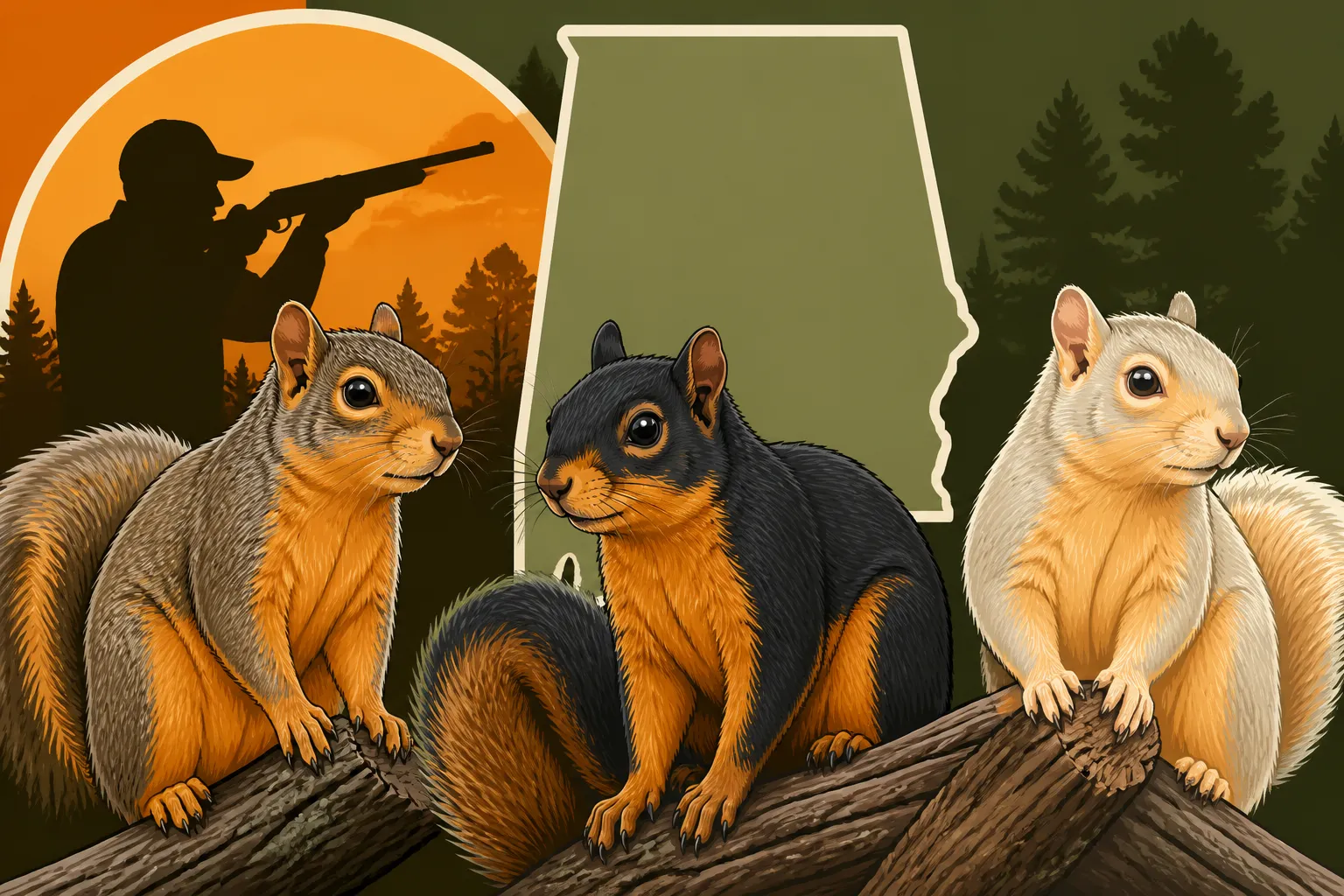
Alabama Fox Squirrel Color Variations
It's easy to spot a gray squirrel in an Alabama oak tree, but what about those big, robust squirrels that seem to come in every color of the rainbow? You're not imagining things, and it can be genuinely perplexing to tell if you're seeing different species or just wildly varied individuals of the same kind. This guide will clarify the amazing spectrum of color variations you can expect to find among Alabama's fox squirrel population, helping you better appreciate and identify these unique creatures.
The Remarkable Diversity of Alabama's Fox Squirrels
When you're out in the Alabama woods, whether it's the sprawling pine forests of the Wiregrass Region or the mixed hardwoods of the Piedmont, you're bound to encounter squirrels. While gray squirrels tend to be, well, gray, fox squirrels throw a delightful curveball. They're known for having some of the most dramatic color variations of any mammal, and it's this very diversity that often leads to confusion among hunters and wildlife enthusiasts alike. You might see a squirrel that's almost completely black one day and then a strikingly rusty red one the next, both undeniably fox squirrels.
Why So Many Colors? A Look at Genetics and Habitat
The primary reason for the extensive color variations in fox squirrels lies in their genetics. Unlike many other species where coat color is relatively uniform, fox squirrels have a wide genetic palette. This means that within the same population, and even from the same litter, you can get offspring displaying vastly different color patterns. It's a fascinating example of natural variation at play, making every encounter with a fox squirrel a unique experience. While there are some general trends, such as darker phases being more common in certain areas, it's not a hard-and-fast rule.
Habitat can also play a subtle role, or at least create the perception of it. For instance, in areas dominated by mature pine forests, you might primarily see squirrels with more reddish or even black coats. Conversely, in mixed hardwood bottomlands, you might observe more grizzled or salt-and-pepper individuals. However, it's important to understand that the habitat doesn't change their genetic predisposition; rather, certain genetic variations might be more prevalent in specific local populations due to historical factors or slight adaptive advantages. This localized prevalence can make it seem like a particular habitat is "producing" a certain color, when in reality, it's just the dominant genetic expression in that area.
Common Color Phases You'll Encounter
Alabama's fox squirrels truly showcase a spectrum. The most "classic" look, and perhaps the one that gives them their name, is the reddish or rusty-brown phase. These individuals typically have a rich, warm brown to reddish-orange coat on their back and sides, often with a paler, sometimes yellowish or orange belly. Their tail is usually a bushy blend of black and orange hairs, giving it a somewhat fiery appearance. This is the look many hunters first associate with the species, and it’s a beautiful sight when the sunlight catches their fur.
Then there's the striking black or melanistic phase. These squirrels are often a deep, glossy black all over, sometimes with a faint hint of dark brown or charcoal gray. Seeing one of these can be quite startling if you're not expecting it, as they look almost like a completely different animal. While less common than the reddish phase, they're certainly not rare in many parts of Alabama. Their dark coats can make them blend into the shadows, especially in dense timber, making them a challenging target for hunters seeking to harvest one of these unique specimens.
You might also encounter a gray or silver phase, which can sometimes lead to momentary confusion with the smaller gray squirrel. However, even these gray-phased fox squirrels retain their characteristic larger size and robust build. Their fur might be a grizzled gray, often with patches of white or light cream on their face, ears, or belly. The tail might be a mix of gray and white hairs, creating a distinct "salt and pepper" look. And then there are the mottled variations – individuals that display a mixture of these colors, perhaps a reddish-brown back with black patches, or a gray body with rusty highlights. These mixed patterns are testament to the incredible genetic diversity within the species and make every sighting an opportunity to marvel at nature's artistry.
Identifying Fox Squirrels Beyond Color
While their varied colors are fascinating, relying solely on hue can sometimes lead to misidentification, especially with the gray-phased fox squirrels. To truly know you've spotted a fox squirrel, it's crucial to look at a combination of characteristics that go beyond just their coat. These other identifiers are often more reliable and consistent, no matter what genetic hand the squirrel was dealt in the color department.
Size and Shape: A Dead Giveaway
The most immediate and reliable identifier for a fox squirrel, regardless of its color, is its sheer size. These are big squirrels, noticeably larger and bulkier than their gray squirrel cousins. Imagine the difference between a compact house cat and a more robust, long-bodied Maine Coon; that's roughly the scale of difference you're looking at. A typical fox squirrel can weigh significantly more than a gray squirrel, sometimes up to twice as much, giving them a much more substantial presence in the tree or on the ground. Their body is more elongated and muscular, reflecting their often ground-dwelling foraging habits.
Their tail is another dead giveaway. While gray squirrels have bushy tails, a fox squirrel's tail is proportionally even longer and broader, often looking like a magnificent plume or a bushy "bottle brush." It's common to see a distinct fringe or "fan" of lighter colored hair around the edges of their tail, particularly when they arch it over their back. This impressive tail serves multiple purposes, from balance and communication to providing warmth in cooler weather. Gray Versus Fox Squirrels in Alabama provides a deeper dive into these comparative features, helping you distinguish between the two common species even when color is ambiguous.
Habitat Preferences and Behavior
Beyond their physical traits, fox squirrels tend to inhabit different types of environments and exhibit distinct behaviors compared to gray squirrels. While gray squirrels are often associated with dense, mature hardwood forests, thriving in areas with abundant nut-producing trees like oaks and hickories, fox squirrels prefer a more open landscape. You're more likely to find them in mature pine forests, mixed pine-hardwood stands, or even open woodlands adjacent to agricultural fields or pastures. They appreciate a bit more space, often spending considerable time on the ground foraging for nuts, seeds, and even fungi. Using a tool like GoHunt on your phone or computer can help you scout aerial photos for these types of habitat before you even step foot in the woods, increasing your chances of finding them.
Their demeanor also sets them apart. Gray squirrels are typically quick, agile, and often seem frantic, darting up and down trees with lightning speed. Fox squirrels, on the other hand, are generally more deliberate and almost ponderous in their movements. They’re less prone to the frenetic dashes of their smaller relatives. When they do climb a tree, it's often a slower, more purposeful ascent. If you spot a large, slow-moving squirrel on the ground, methodically searching for food or casually crossing an open area, it's a strong indicator you're looking at a fox squirrel, regardless of its unique coloring. This patient behavior often allows for longer observation times, giving you ample opportunity to appreciate their beautiful variations.
| Feature | Fox Squirrel | Gray Squirrel |
|---|---|---|
| Size | Large, robust, stocky (1.5-3 lbs typically) | Smaller, slender, agile (0.75-1.5 lbs typically) |
| Tail | Long, very bushy, often with a wide, fringed appearance; can be mixed colors | Bushy but less expansive; often white-tipped |
| Common Colors | Reddish-brown, black (melanistic), gray/silver, mottled, sometimes with white patches on face/ears | Predominantly gray, sometimes with brownish tinge on flanks; white belly |
| Habitat | Open pine forests, mixed pine-hardwood, open woodlands, field edges, savanna | Dense hardwood forests, urban/suburban parks with mature trees |
| Movement | Slower, more deliberate, spends more time on ground | Quick, agile, darting, spends more time in trees |
| Vocalizations | More guttural barks and chucks | Higher-pitched chatters and squeaks |
Fox Squirrels in Alabama Hunting Culture
For many Alabama hunters, pursuing small game like squirrels is a cherished tradition, a way to spend time in the woods when deer season is closed or to introduce new hunters to the sport. Fox squirrels, with their larger size and more challenging nature, hold a special place in this tradition. They offer a different kind of hunt than their gray squirrel counterparts, appealing to those who appreciate a unique pursuit.
A Prized Game Animal for Many
The substantial size of a fox squirrel makes it a particularly rewarding game animal. When you bag one, you're not just getting a trophy for the mantel; you're harvesting a good amount of delicious meat. This larger yield is a big draw for many small game hunters. Furthermore, their more wary nature and preference for open woodlands can make them trickier to approach and hunt. They often see you coming from a greater distance than a gray squirrel might, demanding more stealth and patience. This challenge adds to the satisfaction of a successful hunt. Whether you're still-hunting slowly through a pine stand or setting up near a hickory grove, targeting these intelligent creatures requires keen observation and a quiet approach. For general information on seasons and limits, check out Alabama Squirrel and Small Game Hunting in Alabama and Alabama Squirrel Daily Bag Limit.
They are also a great species to introduce new hunters, especially youth, to the ethics and enjoyment of hunting. While they can be challenging, the slower pace of a squirrel hunt, combined with the excitement of spotting a unique color phase, can be incredibly rewarding. It teaches patience, woodsmanship, and responsible firearms handling in a less intense environment than, say, a deer hunt. Just remember to always check the Alabama Small Game Season Rules before heading out.
Conservation and Management Considerations
While fox squirrels are not considered endangered in Alabama, their populations are generally less dense than those of gray squirrels. This means that while you might see a dozen gray squirrels in a morning hunt, you might only encounter one or two fox squirrels. This lower density is part of what makes them a special quarry for some hunters. The Alabama Department of Conservation and Natural Resources (ADCNR) manages squirrel populations, like all game species, through regulated hunting seasons and bag limits, which you can find detailed information on in resources like Alabama Squirrel Season Opening Day.
Habitat management is also crucial for sustaining healthy fox squirrel populations. Because they prefer more open, mature woodlands, practices like prescribed burning in pine forests can actually benefit them by maintaining an open understory and promoting certain food sources. Conservation efforts ensure that these unique and beautiful animals continue to thrive across their Alabama range, providing hunting opportunities and wildlife viewing for generations to come. Understanding their habitat, as explored in Squirrel Hunting Alabama Hickory Groves, is key to finding them.
Using Technology to Appreciate and Locate Them
In today's world, technology offers some fantastic ways to enhance our outdoor experiences, and that certainly extends to appreciating and locating fox squirrels, especially with their incredible color variations. From scouting locations to documenting your sightings, modern tools can add a whole new dimension to your time in the Alabama woods.
Tools for Scouting and Identification
Mapping applications have revolutionized how we approach hunting and wildlife observation. Services like GoHunt allow you to pore over aerial imagery, topographic maps, and public/private land boundaries from the comfort of your home. For fox squirrels, this means you can identify potential hotspots by looking for the types of habitat they prefer: mature pine stands, open timber, and the edges of agricultural fields. You can mark these areas, plan your entry routes, and even estimate how far you might need to walk from a logging road to find less pressured ground, as discussed in Scouting Alabama Public Land Before Season. This pre-hunt scouting can significantly increase your chances of finding these specific habitats and, by extension, the fox squirrels within them.
Trail cameras are another invaluable tool. Setting up a camera near a known feeding area, a mature pine, or along a well-used game trail can give you incredible insights into the local squirrel population. Not only can you confirm the presence of fox squirrels, but you can also observe their full range of color variations without disturbing them. Imagine capturing images of a jet-black fox squirrel one day and a vibrant reddish one the next, all at the same location. This visual data can also help you differentiate between species by clearly showing their size and tail characteristics, which is far easier to do from a still image or video than a fleeting glimpse in the woods.
Documenting Your Encounters
Beyond just hunting, documenting the color variations of fox squirrels can be a fun and educational pursuit. Many hunters and nature enthusiasts enjoy keeping personal records of their sightings, noting the date, location, and the specific color phase observed. This personal data can help you understand the distribution of different color phases in your local area and deepen your appreciation for the diversity of Alabama's wildlife. Perhaps you'll notice that the melanistic phase is more common in one specific WMA, or that the reddish phase dominates a particular private tract.
Sharing these observations, perhaps through local hunting forums or conservation groups, can also contribute to a broader understanding of fox squirrel populations across the state. Every piece of information helps paint a clearer picture of these fascinating creatures. So next time you're out in the woods, keep an eye out for those big, bushy-tailed squirrels, and take a moment to appreciate the stunning array of colors they present. You never know what unique variation you might spot around the next tree.
Disclaimer
This article is for general informational purposes only and does not constitute professional advice. Laws, prices and regulations vary by location and change over time. Consult a qualified professional for guidance on your specific situation.