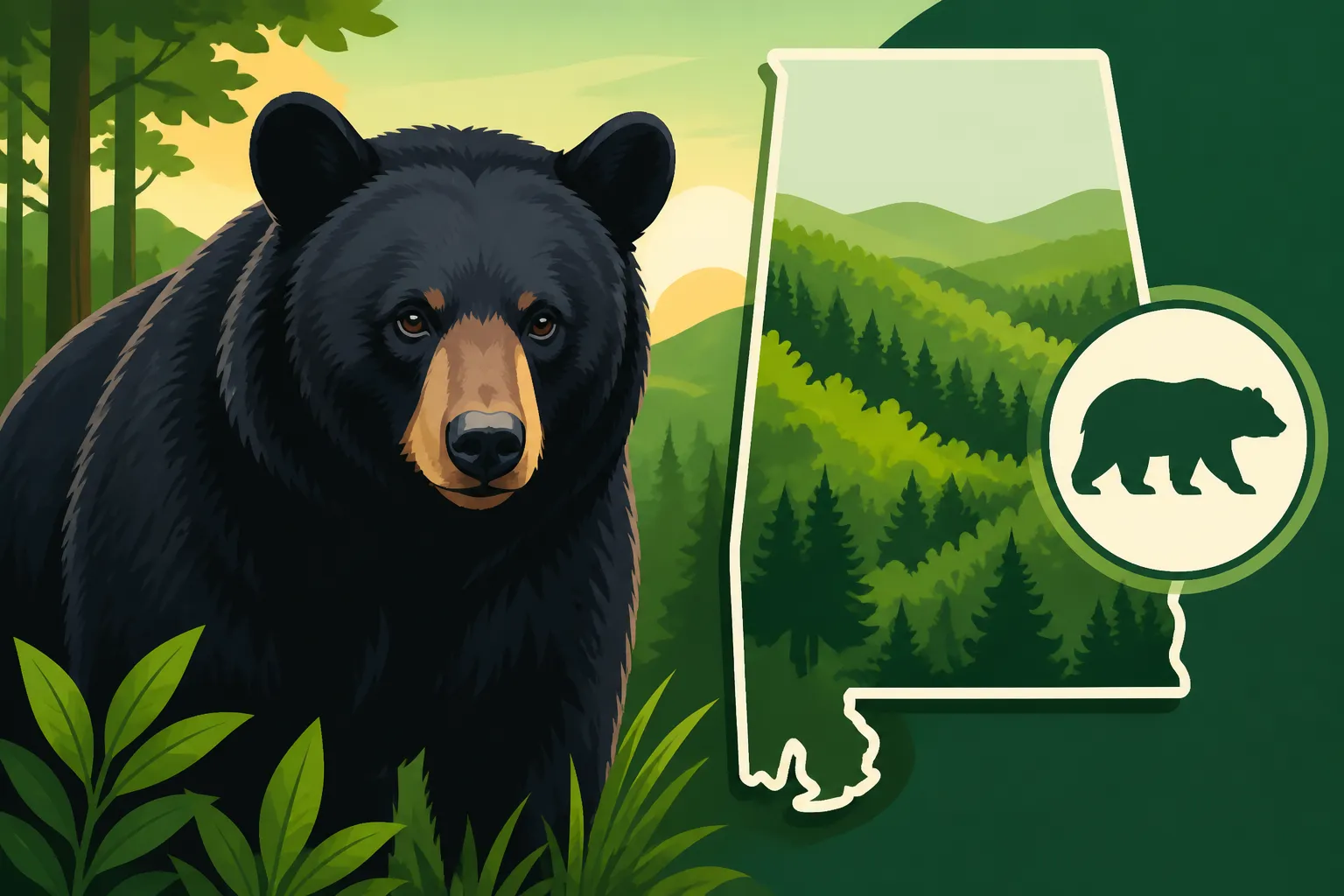
Where Alabama Black Bears Are Recovering
There’s something truly special, almost a whisper of the wild past, about encountering a black bear in Alabama. For many years, it felt like these magnificent creatures were just a memory, a story from our grandparents' time. But if you’ve been hearing more tales of sightings, or even caught a glimpse yourself, you're not imagining things. Alabama's black bears are making a quiet, yet remarkable, comeback, and understanding where they're choosing to thrive, and why, helps us appreciate this unfolding wildlife success story.
A Surprising Comeback: Understanding Alabama's Black Bear Story
For generations of Alabamians, the idea of a wild black bear roaming the woods felt like a distant dream, almost a myth. Yet, these intelligent and adaptable creatures are a vital part of our state's natural heritage, and their story here is one of both historical loss and a hopeful resurgence. It’s a journey that really makes you stop and think about the resilience of nature when given a fighting chance.
Historical Presence and Near Extirpation
Back before extensive settlement and widespread land clearing, black bears were an integral part of Alabama's ecosystems, found statewide in diverse habitats from the mountains to the coastal swamps. They played their part as significant omnivores, helping to disperse seeds and maintain the health of forest communities. But as human populations grew, so did the pressure on these bears. Their dense forest habitats were cleared for timber and agriculture, fragmenting their range into smaller, isolated pockets. Unregulated hunting, driven by both subsistence and a historical lack of understanding about wildlife management, further decimated their numbers. It’s a sad chapter in our state’s history, and by the mid-20th century, black bears were largely extirpated from much of Alabama, with only tiny, struggling remnants left in the most remote corners. For a long time, it truly felt like we had lost them forever, and many of us never expected to see them thrive again within our borders.
The Silent Recovery: Why Bears are Returning
Despite the historical decline, the last few decades have seen a remarkable, if subtle, shift. This hasn't been thanks to a formal reintroduction program, but rather a combination of natural forces and changing land management practices. As some agricultural lands reverted to forest and public lands were better managed for conservation, suitable habitat began to expand and reconnect. Crucially, neighboring states like Florida, Georgia, and Mississippi, which maintained healthier black bear populations, saw their bears naturally expanding their ranges. These intrepid individuals, often young males seeking new territories, slowly but surely began to cross state lines and re-colonize parts of Alabama. The establishment of legal protections for black bears in Alabama, coupled with increased public awareness and appreciation for wildlife, created a more hospitable environment. It’s a testament to nature's ability to heal itself when given space and protection, allowing these magnificent animals to quietly reclaim their ancestral lands, one forest block at a time.
The Two Strongholds: Alabama's Core Bear Populations
While black bears are slowly spreading, two distinct, established subpopulations serve as the anchors for their recovery in Alabama. These are the places where bears are most consistently found and where breeding populations are known to exist, providing a foundation for future expansion. Understanding these core areas is key to understanding the broader picture of bear recovery.
The Mobile River Basin Subpopulation
Down in the southwestern corner of Alabama, you'll find the state's largest and most robust black bear population, primarily centered around the vast wilderness of the Mobile River Basin. This sprawling area, encompassing counties like Mobile, Washington, Clarke, and parts of Baldwin and Escambia, is an absolute haven for bears. We're talking about extensive tracts of bottomland hardwoods, dense riverine swamps, and marshlands along the Mobile-Tensaw Delta. This incredibly rich and diverse habitat provides everything a bear needs: abundant food sources like acorns, wild berries, palmetto fruits, and insects, as well as dense cover for bedding and denning. Many of these bears are considered part of a larger population that extends into the Florida panhandle, with movement across the border being a natural part of their life cycle. If you spend time exploring the wilder parts of this region, especially during the fall when acorns are dropping, your chances of seeing bear sign, or even a bear itself, are higher than anywhere else in the state.
The Little River Canyon Subpopulation
Up in northeast Alabama, a completely different, yet equally vital, bear subpopulation makes its home around the rugged terrain of Little River Canyon National Preserve. Centered primarily in Cherokee and DeKalb counties, this area is characterized by steep canyons, dense Appalachian Plateau forests, and deep, secluded gorges. Unlike the southern swamp bears, these animals thrive in a mountainous, heavily forested environment that offers ample refuge from human disturbance. They're often considered an extension of the broader bear populations found in the Appalachian Mountains of Georgia and Tennessee. The steep topography and thick timber provide excellent denning sites in rock crevices and hollow trees, while the diverse forest understory offers a seasonal buffet of nuts, berries, and grubs. For anyone interested in the resilience of these animals, it's fascinating to see how two distinct populations have adapted to such different, yet equally wild, Alabama landscapes.
Expanding Horizons: Where Bears are Being Sighted More Frequently
While the Mobile River Basin and Little River Canyon are the undisputed strongholds, the good news is that bears aren't just staying put. They're on the move, cautiously exploring new territories, leading to increased sightings in areas where they haven't been seen in generations. This expansion is a clear indicator of a healthy, growing population that's pushing the boundaries of its traditional range.
North Alabama's Piedmont and Appalachian Foothills
Beyond the Little River Canyon core, bears are increasingly being sighted in a broader swath of North Alabama, particularly across the Piedmont and Appalachian Foothill regions. Counties like Calhoun, Cleburne, and Etowah have seen a noticeable uptick in bear reports. These sightings often involve younger, transient male bears, driven by an instinct to seek out new, unoccupied territories and potential mates. They are remarkable explorers, sometimes traveling long distances, crossing roads and even agricultural fields in their quest for suitable new homes. The challenge for these pioneering bears lies in navigating a more fragmented landscape, where dense forest blocks are interspersed with human development. However, areas with significant timberland and river corridors still offer enough cover and food to support these movements. For instance, when you're Reading Aerial Photos for Piedmont Deer, keep an eye out for those dense, unfragmented blocks of timber that might offer passage for a roaming bear. These movements into unexpected areas highlight the adaptability of black bears and raise new considerations for wildlife management in these developing regions. Understanding these expansion patterns is crucial for fostering peaceful coexistence as these magnificent animals continue to spread. The more we learn about their travel corridors and preferred habitats, the better we can prepare communities for their presence, which is an increasingly common topic in areas seeing Bears Moving Into North Alabama Suburbs.
Central and South-Central Alabama's Isolated Pockets
Further south, away from the immediate Mobile River Basin, there are also growing numbers of sporadic bear sightings in central and south-central Alabama. These aren't typically established breeding populations yet, but rather individual bears, again often young males, venturing out from the Mobile population. Counties like Butler, Conecuh, and even parts of Monroe County have reported encounters. These bears often utilize the extensive river systems—like the Alabama River and its tributaries—as natural travel corridors, moving through the forested floodplains and connecting isolated timber blocks. While these sightings are generally more transient, they signify a natural push for expansion from the Mobile River Basin population. These isolated pockets of habitat, sometimes hundreds of acres of unbroken timber within a larger agricultural or suburban landscape, can provide temporary refuge and food sources for these nomadic animals. If you're out Scouting Alabama Public Land Before Season in these areas, particularly near river bottoms or large swampy areas, you might just stumble upon fresh bear sign, a thrilling reminder of their growing presence. It's an exciting development, showing how bears are gradually testing the waters, so to speak, in areas they haven't called home in a very long time.
Living with Bears: Coexistence and Conservation in Alabama
As black bear populations continue to grow and expand their range across Alabama, the conversation shifts from celebrating their return to actively learning how to coexist with them safely and respectfully. This isn't just about protecting the bears; it's about protecting ourselves and our communities, ensuring that this success story doesn't lead to preventable conflicts.
Understanding Bear Behavior and Avoiding Conflicts
The vast majority of black bears are naturally shy and prefer to avoid humans. However, they are highly intelligent and opportunistic eaters, meaning they will absolutely take advantage of any easy food source they find. This is where most human-bear conflicts arise. It’s crucial to understand that a fed bear is a dead bear, because once they associate humans with food, they can become habituated, bold, and ultimately dangerous, leading to their removal. Simple steps can make a huge difference: secure your garbage in bear-resistant containers, avoid leaving pet food outside, and take down bird feeders when bears are active. If you encounter a bear, the key is to stay calm, never run, and make yourself look as large as possible while making noise to scare it away. Back away slowly and give the bear plenty of space. Reporting bear sightings, especially repeat visits or aggressive behavior, to the Alabama Department of Conservation and Natural Resources (ADCNR) is vital for monitoring and intervention. Remember, all black bears in Alabama are fully protected, meaning there is Why Alabama Protects Black Bears Statewide, so any direct harm to them is illegal.
The Role of Habitat and Public Support
The continued success of Alabama's black bear recovery hinges not just on avoiding conflict, but on maintaining and enhancing their habitat, especially on our precious public lands. Places like Conecuh National Forest Hunting and various Alabama Wildlife Management Areas provide essential, large tracts of contiguous forest that bears need to thrive without constantly encountering people. These areas offer deep cover, diverse food sources, and corridors for movement. However, healthy bear populations also require public support and understanding. As bears move into new areas, educating residents about bear safety and the importance of securing attractants becomes paramount. Apps like GoHunt, which can help users understand property boundaries and public land access, can also indirectly contribute by showing where large blocks of potential bear habitat exist, especially if you're exploring unfamiliar territory. This public education fosters tolerance and reduces the fear that often leads to negative outcomes for bears. Our collective commitment to responsible behavior and habitat preservation is the backbone of ensuring a future where black bears are a common, welcome sight in Alabama's wilder places.
The Future of Alabama's Black Bears
The journey for Alabama's black bears is far from over, but the current trends offer a beacon of hope. Their resurgence is a testament to the power of conservation and natural resilience, yet their continued success depends on ongoing vigilance, scientific understanding, and a shared commitment from all Alabamians.
Ongoing Monitoring and Research Efforts
The Alabama Department of Conservation and Natural Resources (ADCNR) plays a crucial role in monitoring the state's recovering black bear populations. Biologists utilize a variety of methods, from collecting scat samples for genetic analysis to setting hair snares, to get a clearer picture of bear numbers, distribution, and health. Understanding How Many Black Bears Alabama Has is a constantly evolving question, and these research efforts help provide the data needed for informed management decisions. Citizen science also plays a significant part, with the public encouraged to report credible bear sightings to ADCNR, contributing valuable data points to the larger mapping effort. These reports, combined with field research, help track population growth, identify new expansion zones, and detect potential issues like disease or habitat limitations before they become major problems. It's a collaborative effort that relies on both scientific expertise and the eyes and ears of attentive citizens across the state.
Challenges and Opportunities for Expansion
Despite the positive outlook, the road ahead for Alabama's black bears is not without its bumps. Habitat fragmentation, driven by continued development and agriculture, remains a significant challenge, creating barriers to movement and isolating populations. Road mortality is also a concern, as bears, particularly young males on the move, are vulnerable to vehicle collisions. Human-wildlife conflict, as discussed earlier, presents another hurdle, emphasizing the ongoing need for public education. However, there are also substantial opportunities. Continued efforts in sustainable forestry, strategic land acquisitions for conservation, and improving connectivity between public and private forested lands can provide critical pathways for bears to expand their range. Collaborative initiatives with private landowners, offering incentives for habitat improvements, can also play a pivotal role. The dedication of conservation organizations, along with the growing interest from the public, creates a powerful force for ensuring that these impressive animals not only survive but truly thrive across more of Alabama for generations to come.
Summary of Alabama's Black Bear Subpopulations
| Subpopulation | Primary Counties | Habitat Type | Connection to Other States | Key Characteristics |
|---|---|---|---|---|
| Mobile River Basin | Mobile, Washington, Clarke, Baldwin, Escambia | Bottomland Hardwoods, Riverine Swamps, Marshes | Florida Panhandle | Largest, most robust population; high food diversity |
| Little River Canyon | Cherokee, DeKalb | Appalachian Foothills, Steep Canyons, Dense Forests | Georgia, Tennessee | Rugged, secluded habitat; important denning sites |
| Expanding Ranges | Calhoun, Cleburne, Etowah, Butler, Conecuh, etc. | Fragmented Forests, River Corridors, Isolated Pockets | Natural dispersal from core areas | Primarily transient males; increasing sporadic sightings |
Disclaimer
The information provided in this guide is for general informational purposes only and is not intended as professional advice. Hunting regulations, wildlife behavior, and safety protocols can change. Always consult the latest regulations from the Alabama Department of Conservation and Natural Resources (ADCNR) and exercise extreme caution and good judgment when in the outdoors, especially in areas where wildlife may be present.