How Many Black Bears Alabama Has
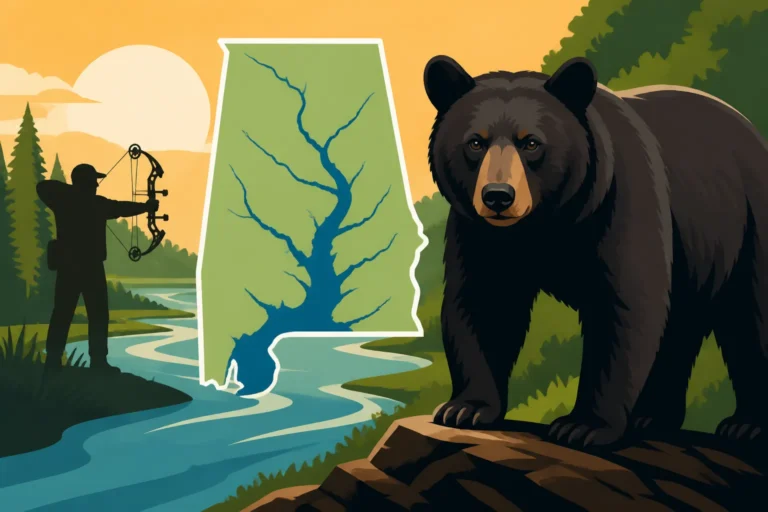
It's easy to assume that Alabama, being so far south, just doesn't have black bears. Many folks are genuinely surprised when they hear whispers of bear sightings, especially in certain parts of the state. This often leads to confusion about where they are, how many there might be, and whether they're even a "real" part of Alabama's wildlife. This comprehensive guide will shed light on Alabama's fascinating black bear population, helping you understand their numbers, distribution, and the important role they play in our wild spaces.
The Surprising Presence of Black Bears in Alabama
For a long time, the idea of black bears roaming Alabama felt like something out of a history book, a relic from a bygone era when the state was wilder and less settled. You hear stories from your grandparents about a bear wandering through their family farm way back when, and you just assume those days are long gone. But the truth is, while they might not be as common or widespread as deer or turkeys, black bears are absolutely a part of Alabama's living landscape, and their story here is one of quiet, persistent recovery.
Dispelling the Myth of "No Bears" in Alabama
It's a common misconception, isn't it? When you're out scouting for deer or calling in a gobbler, a black bear probably isn't the first animal that comes to mind. Our state's dense forests and sprawling farmlands don't immediately scream "bear country" to many. Historically, unregulated hunting and habitat loss pushed bears to the brink in Alabama, leading many to believe they had completely vanished. For generations, seeing a bear was akin to seeing a ghost – rare, almost mythical, and usually anecdotal.
This low profile, coupled with their naturally secretive nature, has contributed to the enduring myth that Alabama simply doesn't have bears. They aren't prone to hanging out in open fields during daylight, nor do they often cross busy highways like deer do. They prefer the deepest, thickest cover our state has to offer, making them incredibly elusive even to seasoned outdoorsmen. This leads to a collective underestimation of their presence, even among those who spend a lot of time in the woods. But make no mistake, these incredible animals are here, quietly thriving in the pockets of wild habitat that remain. In fact, there's a very good reason you won't find a bear season here; Alabama maintains a strict protection policy for these recovering animals. Why Alabama Has No Bear Season
Understanding Alabama's Two Distinct Bear Subpopulations
What often surprises people most is that Alabama's black bear population isn't just a scattered handful of individuals. Instead, it's generally recognized as two distinct subpopulations, each with its own unique history and geographic stronghold. Think of it like two separate, quiet communities of bears, each adapting to its own corner of the state. These aren't just random clusters; these are established groups that have managed to persist and, thankfully, even grow.
These two populations are separated by significant stretches of less-than-ideal bear habitat, primarily agricultural lands and urban development, which makes it hard for them to mix regularly. This separation means they face different challenges and have distinct genetic characteristics. Understanding these two groups is key to appreciating the overall picture of black bear numbers and conservation efforts in our state. It's a testament to their resilience and the conservation efforts that have allowed these specific areas to become bear havens once again. Alabama's Two Bear Subpopulations
Estimating Alabama's Black Bear Population
Trying to put an exact number on Alabama's black bear population is a bit like trying to count every squirrel in the Bankhead National Forest – incredibly difficult and prone to approximation. These aren't animals that stand still for roll call, and they certainly don't fill out census forms. However, wildlife biologists have developed ingenious methods to get as accurate an estimate as possible, giving us a crucial understanding of how these populations are faring.
The Challenges of Counting Elusive Animals
Imagine trying to count an animal that prefers to move under the cover of darkness, in the densest swamps and thickest pine plantations, and has a home range that can span hundreds of square miles. That's the challenge Alabama wildlife biologists face when trying to quantify our black bear numbers. Traditional counting methods, like aerial surveys or direct observation, are largely ineffective for such secretive creatures. They simply don't offer enough opportunities for reliable counts.
Instead, biologists rely on more indirect, yet highly scientific, methods. DNA sampling, often collected from hair snares or scat, provides invaluable data, allowing researchers to identify individual bears and estimate population density. Remote trail cameras are another powerful tool, capturing images of bears without disturbing them, offering insights into their presence, movement patterns, and even individual identification through unique markings. Sighting reports from the public, while not scientific counts, also contribute to a broader understanding of where bears are being seen, helping map their expansion and identify new areas of activity. Even apps like GoHunt, while primarily for game species, can help hunters visualize general wildlife patterns, which, in turn, can help us respect the spaces where these protected animals might be venturing. Alabama Bear Population Estimate
What Current Estimates Suggest About Alabama's Bear Numbers
Given the challenges, arriving at a precise, static number for Alabama's black bear population is difficult. Wildlife agencies typically provide estimates based on their ongoing research and monitoring efforts. While specific figures can fluctuate and are always considered estimates rather than hard facts, the general consensus among biologists is that Alabama's black bear population is, thankfully, recovering and showing signs of slow, but steady, growth.
The numbers are not in the thousands, as they might be in states with more established bear hunting seasons. Instead, Alabama's bear population is likely in the hundreds, with one population significantly larger than the other. This makes every bear vital to the health and future of the species in our state. The trend is positive, indicating that habitat protection and education efforts are making a difference, allowing these animals to slowly reclaim parts of their ancestral range. It's a quiet victory for conservation, one that often goes unnoticed by the casual observer but is celebrated by those working tirelessly behind the scenes. This slow but consistent rebound underscores Alabama's Recovering Black Bear Population.
Where Alabama's Black Bears Live Today
While black bears are still considered rare statewide, their presence is definitely concentrated in two primary regions that offer the dense cover, diverse food sources, and relative isolation they need to thrive. Understanding these strongholds is crucial for anyone venturing into these areas, whether you're a hunter, hiker, or just a curious nature enthusiast. These aren't just random spots; they're areas that have retained enough wild character to support these magnificent animals. Where Alabama Black Bears Live Today
The Mobile River Basin Population – A Stronghold in the South
Deep in the swampy river bottoms and dense pine forests of southwest Alabama lies the state's largest and most established black bear population: the Mobile River Basin group. This area, encompassing parts of counties like Washington, Clarke, and Mobile, provides an ideal mosaic of habitat. We're talking about those vast, impenetrable riverine forests, thickets of cane, and extensive bottomland hardwoods where a bear can truly disappear from the world.
These bears benefit from the abundant natural food sources found in these rich ecosystems, including berries, acorns, palmetto hearts, and even various insects and small animals. The sheer wildness of the Mobile River Basin, with its extensive, undeveloped tracts and limited human disturbance compared to other regions, has allowed this population to grow and become a stable, self-sustaining group. If you're going to see a black bear in Alabama, this region offers the best chance. It's a wild, beautiful, and often challenging landscape, perfectly suited for a creature that values solitude and dense cover. The Mobile River Basin Bear Population
The Little River Canyon Population – North Alabama's Bear Country
Up in northeast Alabama, a completely separate and much smaller population of black bears makes its home around the rugged terrain of the Little River Canyon. This area, spanning parts of counties like Cherokee, DeKalb, and Cleburne, offers a very different kind of habitat compared to the southern swamps. Here, bears navigate steep canyons, rocky outcrops, and mixed pine-hardwood forests, often contiguous with bear populations in neighboring Georgia.
The challenges for this northern population are unique. While the canyon itself provides excellent cover, the surrounding areas can be more fragmented by roads and development, making dispersal and population growth a bit trickier. However, the sheer wildness of the canyon system, with its deep ravines and inaccessible areas, creates crucial refuges. These bears are a testament to the adaptability of the species, thriving in a landscape that demands a different set of survival skills than their southern cousins. Though their numbers are fewer, their presence here is a vital part of Alabama's natural heritage. The Little River Canyon Bear Population
Expansion and Transient Bears in Other Areas
While the Mobile River Basin and Little River Canyon areas are the core strongholds, it's important to understand that bears are not always confined to these boundaries. As populations slowly grow, particularly with younger male bears, they often embark on exploratory journeys, looking for new territories, food sources, or mates. These transient bears can show up in unexpected places, sometimes hundreds of miles from their known birth ranges.
You might hear reports of a bear sighting in central Alabama, or even closer to more populated areas. These instances, while rare, are usually these wandering individuals. They highlight the bear's incredible ability to travel and their inherent drive to expand their range when conditions allow. While such sightings don't necessarily indicate a new, established population, they are a hopeful sign that Alabama's black bears are exploring new frontiers. It also means that even if you're not in a known bear hotbed, staying bear-aware, especially when enjoying our more remote public lands or hunting areas, is always a good idea. Sometimes, these wanderers even make their way closer to human habitation, leading to Bears Moving Into North Alabama Suburbs.
Conservation and Coexistence with Alabama's Bears
The story of black bears in Alabama is a conservation success, a quiet testament to the resilience of wildlife and the importance of habitat protection. But with a recovering population comes the responsibility of learning to coexist. These are not animals to be feared, but respected, and understanding their needs helps us ensure their continued recovery. Every hunter, hiker, and landowner in Alabama has a role to play in this ongoing success story.
Why Black Bears Remain Fully Protected in Alabama
Unlike game species such as deer or turkey, black bears in Alabama are fully protected, meaning there is no hunting season for them whatsoever. This isn't an arbitrary rule; it's a critical component of their recovery strategy. Our bear populations, particularly the Little River Canyon group, are still quite small and vulnerable. Allowing hunting at this stage would likely jeopardize the progress made in stabilizing and slowly increasing their numbers.
The Alabama Wildlife and Freshwater Fisheries Division continuously monitors the bear populations, collecting data on births, deaths, and range expansion. This protection status ensures that every bear has the best chance to contribute to the population's growth, helping to secure a stronger future for the species in Alabama. It's a long-term investment in our state's biodiversity, prioritizing recovery over recreational harvest. This strict protection means that Why Alabama Bears Stay Fully Protected is a foundational element of bear management here.
Living Alongside Bears: Minimizing Conflicts
As black bear numbers slowly increase and transient bears roam more widely, the potential for human-bear encounters also rises, particularly in areas adjacent to their core habitats. The vast majority of bears are shy and will avoid humans if given the chance. However, bears are highly intelligent and opportunistic, and if they find easy food sources near human habitation, they can quickly become habituated, leading to conflicts. This is where active coexistence comes into play.
For homeowners in or near bear country, securing potential food attractants is paramount. This means using bear-resistant garbage cans, bringing pet food indoors, removing bird feeders, and managing compost piles carefully. For hunters and other outdoors enthusiasts, it's about practicing good backcountry hygiene: storing food properly, packing out all trash, and being aware of your surroundings. While GoHunt might typically be used for game animals, its features can still indirectly help you be aware of general wildlife activity patterns, encouraging you to keep a clean camp or be mindful of food storage, especially if you know you're in an area where bears might roam. If you do encounter a bear, remember to stay calm, make yourself look large, make noise, and slowly back away. Never run. Knowing What to Do If You See an Alabama Black Bear can make all the difference. Additionally, reporting any unusual bear activity or signs of illness to the ADCNR can help with Alabama Wildlife Disease Monitoring and overall population health.
Alabama's Black Bear Subpopulations: A Comparison
To help visualize the distinct characteristics and locations of Alabama's two recognized black bear subpopulations, here's a quick overview:
| Feature | Mobile River Basin Population | Little River Canyon Population |
|---|---|---|
| Primary Location | Southwest Alabama (Washington, Clarke, Mobile, etc.) | Northeast Alabama (Cherokee, DeKalb, Cleburne, etc.) |
| Habitat Type | Extensive bottomland hardwoods, river swamps, pine forests | Mountainous terrain, steep canyons, mixed pine-hardwood forests |
| Population Size | Larger, more established | Smaller, more vulnerable |
| Connectivity | More isolated within Alabama, less direct migration | More connected to bear populations in neighboring states (e.g., GA) |
| Recovery Status | Stable and slowly growing | Gradually recovering, but faces more fragmentation challenges |
| Primary Threats | Habitat loss due to development, vehicle collisions | Habitat fragmentation, limited dispersal, vehicle collisions |
The continued presence and slow recovery of black bears in Alabama is a testament to the resilience of wildlife and the dedication of conservationists. While their numbers may not be staggering, each bear is a vital component of our state's natural heritage. By understanding where they live, why they remain protected, and how we can responsibly coexist, we all contribute to ensuring these magnificent creatures continue to roam Alabama's wild places for generations to come.
Disclaimer
This article is for general informational purposes only and does not constitute professional advice. Laws, prices and regulations vary by location and change over time. Consult a qualified professional for guidance on your specific situation.