Turkey Tactics for Black Belt Field Edges
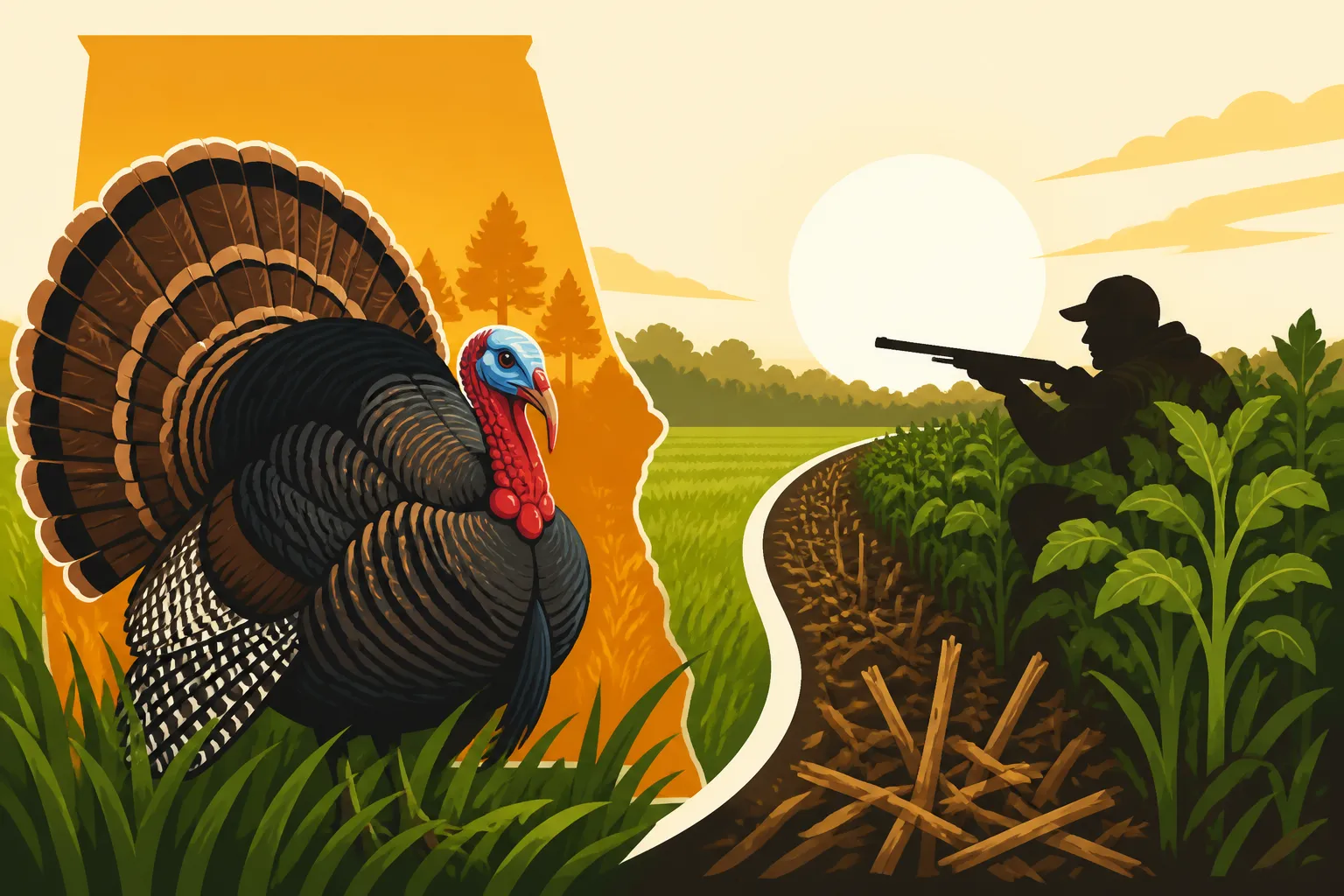
Hunting wild turkeys along the vast, open field edges of Alabama's Black Belt can be incredibly frustrating. These birds are legendary for their keen eyesight, making a successful approach or setup feel nearly impossible when they have an unobstructed view for hundreds of yards. This guide will walk you through proven tactics to outsmart those wary Black Belt gobblers, turning challenging open landscapes into successful hunting grounds.
Understanding Black Belt Field Edge Turkey Behavior
The Black Belt region of Alabama is a unique landscape, known for its rich, dark soil and a mix of agriculture, pasture, and scattered timber. This environment dictates much of how turkeys operate, especially when it comes to utilizing field edges. Unlike dense timber hunting, these birds are accustomed to wide-open spaces, making them incredibly vigilant.
Why Turkeys Use Field Edges
Turkeys, especially gobblers, are drawn to field edges for a variety of reasons that are crucial for hunters to understand. Primarily, these edges provide a transition zone between the safety of cover (woodlines, thickets, swamps) and the abundant food sources found in agricultural fields. During the spring, gobblers will often use these open spaces as strutting zones, where they can be easily seen by hens. They might feed on leftover crops, bugs, and tender green shoots, especially after spring plantings begin. Scouting is absolutely vital here; knowing if birds are consistently using a particular field for feeding, strutting, or just as a travel corridor will dramatically increase your odds. Tools like GoHunt can be invaluable for analyzing aerial maps and understanding land use patterns, helping you pinpoint these key areas.
It's not uncommon to see a dominant gobbler strutting endlessly in a field, seemingly unconcerned with anything until a hunter makes the slightest wrong move. They're often entering these fields from specific points, like creek bottoms, old logging roads, or subtle rises in the topography. Observing these entry and exit points is just as important as knowing they are in the field. These patterns often correlate with historical deer movement, too, so understanding Hunting Black Belt Prairie Farmland Deer can sometimes give clues to turkey travel.
Challenges of Hunting Open Edges
The biggest challenge, hands down, is the turkey's eyesight. In an open field environment, a gobbler can spot movement, unnatural shapes, or even a hint of shine from an incredible distance. This makes the traditional run-and-gun approach, often effective in thicker timber, much harder to pull off. Any attempt to reposition or adjust your setup while a bird is looking can blow your hunt.
Another common issue is that birds will often "hang up" just out of range. They might stand in the field, gobbling and strutting, but refuse to come closer to your calls or decoys, especially if they can't see the "hen" they expect. They're often waiting for the hen to come to them. This stubborn behavior is exacerbated by hunting pressure. Heavily hunted birds quickly learn to be wary of anything out of the ordinary along field edges. Understanding the Alabama Turkey Population Trends in your area can also give you insight into how much pressure birds might be facing.
Strategic Setup and Concealment on Field Edges
Given the challenges of open field edges, your setup and concealment become paramount. This isn't just about wearing camouflage; it's about becoming part of the landscape and controlling the turkey's approach.
Utilizing Natural Cover Effectively
When dealing with a gobbler working a field edge, your primary goal is to break up your silhouette and blend into the background. While a ground blind offers excellent concealment, sometimes natural cover is your only option. Look for thick oaks, cedars, brush piles, or even a wide fencerow that provides a solid backdrop. The key is to have something between you and the bird that allows you to move slightly without being detected. A big, mature oak, for instance, can provide phenomenal concealment, as detailed in Setting Up Against a Big Oak.
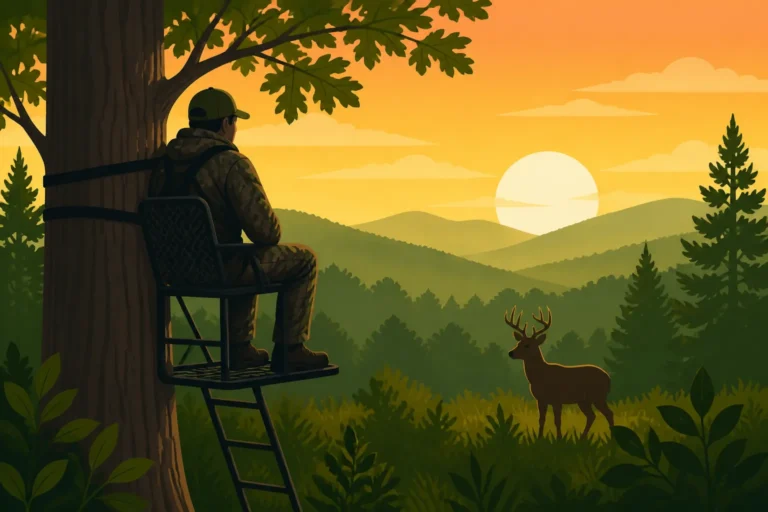
Always consider the angle of the sun. In the early morning, try to set up so the rising sun is in the turkey's eyes, not yours. This makes it harder for them to pick you out and reduces glare off your face or gun. Also, think about the turkey's likely approach. If they're coming from a roost in a creek bottom, position yourself along their expected travel path, not directly in the middle of the field. Many successful field edge setups involve finding a small rise or dip in the terrain just inside the timber line that allows you to drop out of sight while waiting. Using an app like GoHunt for its topographic map overlays can help you identify these subtle terrain features before you even step foot in the woods.
The Role of Ground Blinds
For consistent success on field edges, particularly if you're hunting the same area multiple times or dealing with extremely wary birds, a pop-up ground blind is a game-changer. It offers 360-degree concealment, protection from the elements, and allows for much more movement than sitting against a tree.
Field Edge Ground Blind Setup Considerations
| Feature | Natural Cover | Ground Blind |
|---|---|---|
| Concealment | Excellent if thick, but can be sparse | Excellent, consistent 360-degree coverage |
| Movement | Very restricted; any movement can spook birds | Highly flexible; allows significant movement |
| Setup Time | Minimal, find a spot and sit | 5-10 minutes to deploy and brush in |
| Portability | Infinite | Requires carrying a blind (can be bulky/heavy) |
| Weather Protection | Minimal | Good protection from wind, rain, and sun |
| Visibility | Often limited to small shooting lanes | Multiple windows offer wide shooting angles |
| Detection Risk | High if cover is thin or movement is made | Low if properly brushed in and positioned |
When setting up a blind, brush it in thoroughly with local vegetation – pine boughs, dead leaves, cut saplings. Make it look like a natural part of the landscape, not an alien blob. Set it up well before you plan to hunt, if possible, to allow birds to get accustomed to its presence. Position it so you have clear shooting lanes towards where you expect birds to enter the field or strut, but still maintain a solid backdrop. Remember that your eyes should be at or below the top of the blind's windows to maximize your field of view while minimizing your profile.
Calling Strategies for Field Edge Gobblers
Calling turkeys on field edges requires a nuanced approach. You're trying to entice a bird that often has hens with him or expects hens to come to him. Your calls need to be convincing and strategically delivered.
Subtle vs. Aggressive Calling
Early in the morning, especially if you're waiting for birds to pitch down from the Where Alabama Gobblers Roost, start with soft tree yelps and clucks. Mimic a hen waking up, not an excited hen screaming. Once birds are on the ground, listen more than you call. If a gobbler is in the field strutting, he knows he's visible. Your job is to make him believe a hen is close by, but not so close that he can immediately pinpoint her. A few soft yelps, clucks, and purrs can be incredibly effective. Make him work a little bit, thinking he's just around the bend in the woodline.
If a gobbler isn't responding or seems to be moving away, a more aggressive calling sequence might be warranted. This often involves louder yelps, cutts, and cackles, mimicking an excited or lost hen. The goal is to make him think another hen is getting away or challenging the hens he's with. However, use this sparingly on field edges, as aggressive calling can sometimes make a wary gobbler even more suspicious if he can't see the source.
Decoy Placement and Timing
Decoys can be incredibly effective on field edges, but placement is everything. Because turkeys have such good eyesight, they'll often spot decoys from a long way off. This can be a blessing or a curse.
- Decoy Type: A single hen decoy or a jake/hen combination often works best. If you're using a jake, make sure it's in a submissive posture (not strutting) to avoid intimidating dominant gobblers, but still providing a target for them to challenge.
- Distance: Place decoys 15-20 yards from your setup, slightly off-center from where you expect the bird to approach. This puts the gobbler in ideal shotgun range when he comes to investigate.
- Visibility: Set them where they're visible from the field but still make the gobbler feel like he needs to come closer to get a better look.
- Facing: Have your hen decoys facing away from you, simulating a content hen. This also positions the gobbler for a frontal shot as he circles to face her.
Remember to be mindful of Decoy Placement Once the Ten-Day Rule Lifts in Alabama, as there are regulations concerning their use early in the season. During the Alabama Zone 1 Spring Turkey Opening Day or Alabama's Later Spring Turkey Zone Opener, check local regulations carefully before deploying decoys.
Adapting to Mid-Day and Late-Season Field Edge Hunting
Turkey hunting isn't just about the first hour of daylight. Black Belt gobblers, especially those that are pressured or have bred most of their hens, will change their patterns throughout the day and as the season progresses.
Mid-Day Prowling and Patient Waits
Don't abandon your field edge setup just because the morning fly-down has passed. Mid-day can be surprisingly productive, especially for lonely gobblers still searching for hens. These birds might be quieter, moving through cover and periodically popping out onto field edges to look and listen. This is where patience truly pays off.
If you have a well-concealed ground blind overlooking a field edge that shows consistent sign, sitting it out for several hours can yield results. Refresh your calls every 20-30 minutes with a few soft yelps or purrs, just enough to let a passing gobbler know there's a hen in the area. Often, mid-day birds are less pressured and might be more willing to commit than the vocal birds of early morning. This is also a good time to consider a limited Run-and-Gun Turkey Tactics on Public Land if you're covering multiple field edges, moving cautiously between promising locations. Using an app like GoHunt to mark potential mid-day strut zones or travel corridors can help you plan these movements efficiently.
Late-Season Adjustments
As spring progresses into late April and May, gobbler behavior shifts dramatically. Many hens are now bred and sitting on nests, leaving gobblers often lonely and more responsive to calls, but also more wary. This is When Alabama Gobblers Go Quiet in May, becoming less vocal but still susceptible to the right tactics.
Field edges remain important, but gobblers might be more inclined to travel within the timber or along cover lines, only occasionally venturing into the open. Your calling should become more confident and persistent, as a lonely gobbler might be desperate. Decoy placement becomes even more critical; a single hen or even a breeding pair can be highly effective. Focus on those overlooked field edges, perhaps those furthest from access roads or surrounded by thicker, less disturbed habitat. These spots might hold birds that have survived early-season pressure, and a well-executed field edge setup could be the key to filling your Alabama Spring Turkey Bag Limit.
Disclaimer
Hunting is an inherently dangerous activity. Always prioritize safety, adhere to all Alabama hunting regulations, and obtain the necessary licenses and permits before heading afield. The information provided here is for educational purposes only and should not replace proper hunter education or professional guidance. Rules and seasons can change, so always check the latest regulations from the Alabama Department of Conservation and Natural Resources (ADCNR).