Setting Up Against a Big Oak
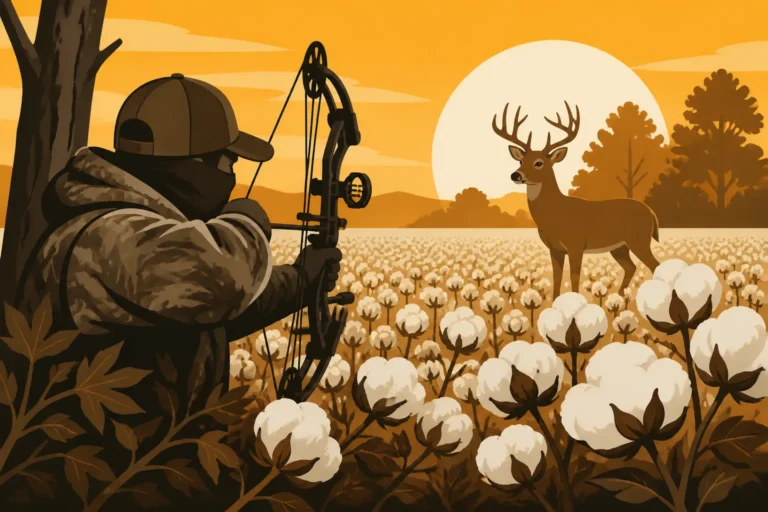
It's incredibly frustrating to spend hours scouting, find that perfect big oak dropping acorns, and then realize you've spooked every deer in the county on your way to the stand. We've all been there, and it can feel like you're constantly fighting against unseen forces. This guide is all about helping you understand how to approach, set up, and hunt these prime locations effectively, turning those big oaks into consistent producers for your deer season here in Alabama.
Why Big Oaks Are Deer Magnets in Alabama
Picture this: a crisp autumn morning, deer moving through the woods, and suddenly, they stop dead in their tracks under a towering oak, crunching on fresh acorns. For Alabama deer hunters, big oak trees, especially mature ones in prime locations, are absolute gold mines. They represent a concentrated food source that deer will travel significant distances to exploit, particularly when other food options are scarce or less appealing. Understanding why these trees are so critical is the first step in mastering how to hunt them.
The Irresistible Draw of Acorns
Acorns are a high-energy, high-fat food source that deer absolutely crave. While deer will browse on countless other plants, acorns offer a nutritional punch that makes them incredibly desirable. Not all acorns are created equal, though. Generally, white oak acorns are preferred by deer because they contain less tannin, making them sweeter and more palatable. Red oak acorns, while higher in tannins and thus more bitter, drop later in the season and can provide a vital food source when white oak acorns have already been consumed or are no longer available. This understanding of different oak groups and their fruiting cycles is crucial for proper timing.
Deer, being creatures of efficiency, will often focus heavily on an area with abundant acorn production. If you can find a cluster of productive oaks, or even a single massive tree dropping heavy, you’ve likely found a deer buffet. These areas become central hubs for deer activity, drawing them in from surrounding bedding areas and travel corridors. This is particularly true during the early and mid-archery seasons when acorns are plentiful, but also during parts of the gun season, especially if mast production was heavy.
Cover, Travel, and Bedding Connections
Beyond just food, big oaks often exist within broader habitat types that offer deer the security they need. A large oak in a mature hardwood bottom, along a creek, or on a ridge line isn't just a dining spot; it's part of a larger ecosystem where deer feel safe. The canopy of mature oaks provides excellent overhead cover, protecting deer from aerial predators and giving them a sense of security. The understory beneath and around these trees, depending on the habitat, can also offer valuable bedding cover.
Deer rarely just eat and leave; they will often bed nearby, use the cover for safe travel, and incorporate these areas into their daily routines. Look for trails converging on the oak, rubs and scrapes nearby, and even fresh droppings. These are all signs that deer are not just passing through, but actively using the area, potentially moving from a bedding thicket to the oak for feeding, and then back to another secure area. When scouting, it's not enough to just find the oak; you need to understand its relationship to the surrounding cover and how deer move through it. Using an app like GoHunt can help you visualize these connections on aerial maps, identifying potential travel routes and bedding thickets relative to your chosen oak.
Scouting for the Perfect Oak Tree Setup
Finding a big oak dropping acorns is one thing; identifying the big oak that will give you the best hunting opportunity is another entirely. Effective scouting is paramount, and it goes far beyond a quick glance. You need to become a detective, piecing together clues about deer movement, feeding patterns, and how they interact with the specific tree and its surroundings.
Identifying Productive Trees and Acorn Timing
Not every oak tree produces a heavy crop of acorns every year, and some individual trees are simply better producers than others. Before the season, or even during the summer, it's wise to start looking for oaks that are heavily laden with developing acorns. Pay attention to the canopy – a healthy, full canopy with numerous small green acorns is a good sign. Once fall arrives, a truly productive oak will have a noticeable carpet of fresh acorns on the ground, often with deer tracks and droppings clearly visible.
Different oak species drop their acorns at different times, which can dictate when a particular tree is hot. White oaks (like white oak, post oak, chestnut oak) tend to drop earlier, from late August through October, and are often the first preferred choice due to their sweeter taste. Red oaks (like red oak, pin oak, water oak, willow oak) generally drop later, from October through December, sometimes even into January. These later drops can be a lifesaver for deer (and hunters!) as other food sources diminish. Knowing your oak species and their timing can help you predict which trees will be active when.
Here’s a quick guide to some common Alabama oaks and their general acorn drop times:
| Oak Group | Common Alabama Species | Acorn Characteristics | General Drop Time | Deer Preference |
|---|---|---|---|---|
| White Oak | White Oak, Post Oak | Sweeter, less tannin, larger | Late Aug – Oct | High |
| Red Oak | Southern Red Oak, Water Oak | More bitter, higher tannin, smaller | Oct – Dec | Moderate to High |
| Willow Oak | Willow Oak | Smaller, elongated, less tannin | Late Oct – Jan | High |
| Pin Oak | Pin Oak | Small, round, often heavy producer | Nov – Jan | Moderate |
When you're out scouting, don't just find acorns; look for freshly opened acorn caps, broken shells, and actual deer actively feeding. This tells you not only that the tree is producing, but that deer are currently utilizing it. A lack of acorns on the ground could mean they've all been eaten, or the tree simply isn't producing that year. In years where acorns are scarce, knowing how to approach something like Hunting After a Poor Acorn Year becomes critical.
Reading the Sign: Trails, Rubs, and Scrapes
Once you've identified a promising oak, your detective work really begins. Deer sign around the tree can tell you volumes about how they’re using the area.
- Trails: Look for well-worn deer trails leading to and from the oak. These can indicate primary travel routes between bedding and feeding. Pay attention to the direction of these trails – where do they come from, and where do they go? Do they cross a creek, follow a ridge, or lead into a thicket? These are your highways and byways for deer movement. Understanding deer movement patterns is key to Scouting Alabama Public Land Before Season.
- Rubs: Bucks will rub their antlers on saplings and small trees, especially during the pre-rut and rut. While a single rub might be incidental, a line of fresh rubs leading toward or away from your oak suggests a buck's travel route. These can often be found along the edges of feeding areas or marking a preferred path.
- Scrapes: Scrapes are another valuable piece of the puzzle, especially those with an overhanging branch (a "licking branch"). Bucks will paw away leaves and dirt, urinate in the scrape, and rub their preorbital glands on the licking branch. Active scrapes are like deer calling cards, indicating current buck activity. If you find a fresh scrape under or very near your big oak, you've hit the jackpot. It means a buck is not only feeding there but is actively communicating and scent-marking the spot. Pay attention to how a scrape line interacts with a potential acorn drop—bucks will often check both.
When you find these signs, don't just acknowledge them; try to interpret the story they tell. Are the rubs big or small? Are the scrapes fresh or old? Is the feeding sign concentrated, or spread out? This helps you understand the quality of the deer using the area and the timing of their activity. Remember, the better you understand the deer's routine, the better you can position yourself for success.
Optimal Stand Placement and Approach
So you’ve found your perfect big oak, full of fresh acorns, surrounded by good sign. Now comes the critical part: setting up your stand. This isn't just about finding a tree with a good view; it's about minimizing your impact, maximizing your concealment, and positioning yourself for the highest probability shot, all while considering the variables Mother Nature throws your way.
Playing the Wind and Sun
The wind is your number one enemy, and your number one ally. Deer have an incredible sense of smell, and if they catch your scent, your hunt is over. Always, and I mean always, hunt with the wind in your favor. This means positioning your stand so that your scent blows away from where you expect deer to approach or pass by. If deer are typically coming from a bedding area to the west of your oak, you'll want a stand location that allows a north, south, or east wind to carry your scent away from their approach. This might mean having multiple stand locations for the same oak to accommodate different wind directions.
The sun is another crucial factor. While not as critical as the wind, having the sun at your back can be a huge advantage, especially during morning or evening hunts. A rising or setting sun in a deer's eyes can make it harder for them to spot you, while a sun in your face can obscure your vision, making it difficult to identify and track deer, particularly if you're Sitting a Field Edge in Late Season and glare is a factor. When planning your setup, consider the sun's position during the prime hunting hours for that location. GoHunt, for instance, often includes sun and moon phase details that can help you plan your approach.
Consider thermals too, especially in hilly or mountainous terrain. In the mornings, air often flows downhill, and in the evenings, it rises. If your oak is in a bottom, a morning hunt might require you to be above the deer, letting your scent rise. If it’s on a ridge, your evening hunt might dictate a different approach as scent lifts. Mastering Wind and Thermals on a Piedmont Ridge is a game-changer for consistently fooling a deer's nose.
Strategic Stand Location and Concealment
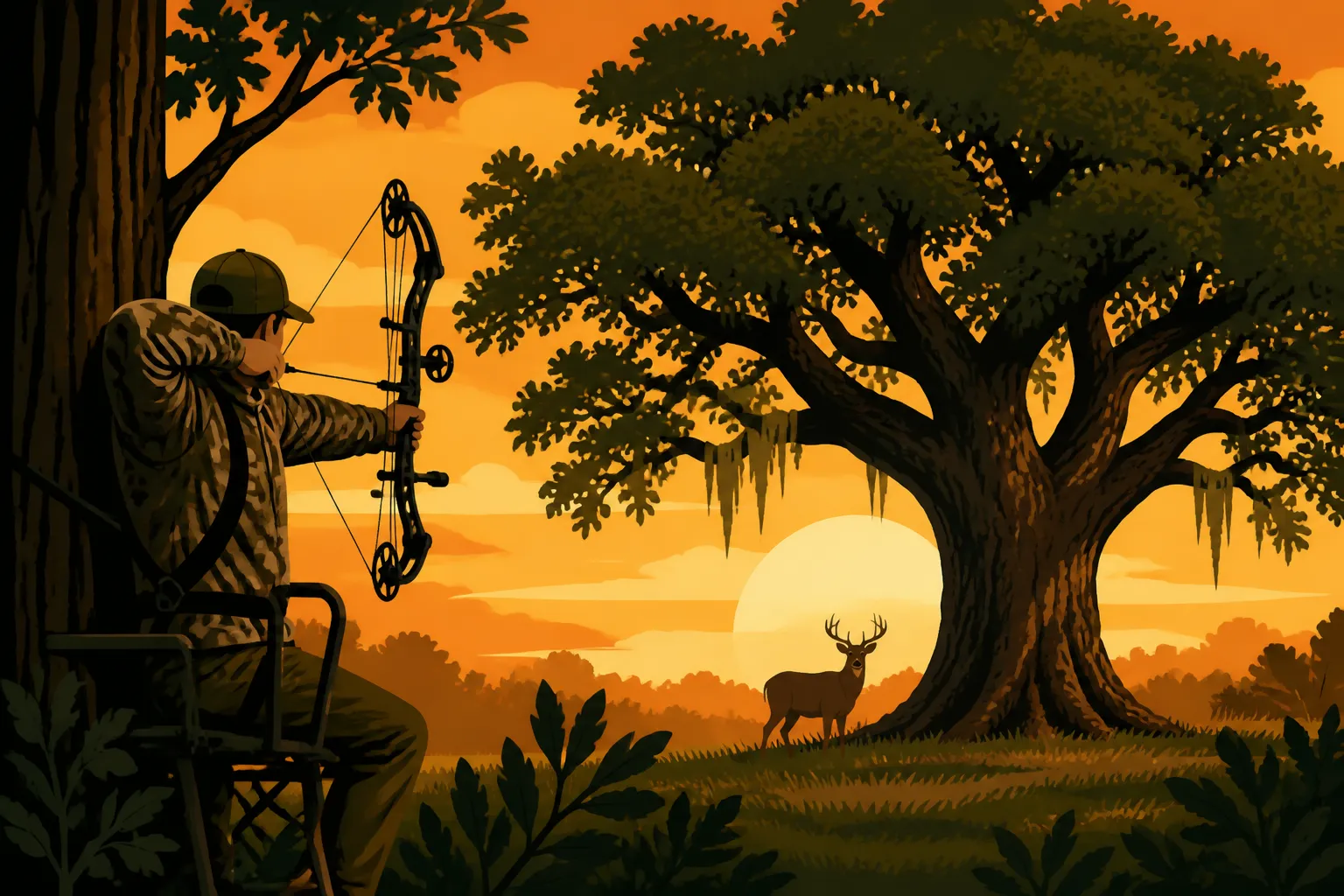
Your actual stand placement needs to offer both a good shooting lane and excellent concealment. For a big oak, you often want to be positioned downwind, 15-25 yards off the main feeding area, looking into the primary approach routes. Avoid placing your stand directly in the middle of where the deer are feeding, as this can make your entry and exit routes much more intrusive.
When selecting your tree, consider these elements:
- Backdrop: Can you position yourself against a dense backdrop of other trees or brush? This helps break up your silhouette and makes you less conspicuous.
- Height: How high do you need to be? High enough to get above their primary line of sight and minimize your scent cone, but not so high that shooting becomes difficult. Usually, 20-25 feet is a good starting point for a hang-on stand, but this can vary. For those who prefer being on the ground, learning how to effectively use a Using a Ground Blind on Alabama Public Land might be your best bet, especially if there's good natural cover.
- Shooting Lanes: Clear any necessary shooting lanes before the season, or well in advance of your hunt. Sawing a few small limbs or clipping some brush can open up critical windows, but do so minimally to avoid alerting deer to your presence.
- Multiple Options: It’s smart to have a couple of different stand options for the same hot oak, allowing you to adapt to changing winds or deer movement patterns. This flexibility can be the difference between seeing deer and not. Don't forget, Treestand Setups in Talladega National Forest often require careful consideration of natural cover.
Stealthy Entry and Exit Routes
This is where many hunts go wrong. You can have the perfect stand, the perfect wind, but if you bust deer on your way in or out, you've just educated them. Your entry and exit routes must be as quiet and scent-free as possible.
- Avoid Bedding Areas: Never walk through a known bedding area. Period.
- Use Natural Features: Utilize ditches, creeks, logging roads, or thick lines of trees to shield your movement and muffle sound.
- Time Your Movement: Arrive well before first light, giving the woods time to settle before deer begin moving. For evening hunts, leave only after dark, ensuring all deer have cleared the area.
- Check Your App: Always confirm your approach with a mapping app like GoHunt to ensure you're not walking past known bedding areas or through open fields that could expose you. Even something as simple as using Entry Routes Through Standing Peanuts or following a creek bottom can make a huge difference.
Remember, the goal is to be a ghost. Leave no trace of your presence beyond the bare minimum.
Tactics for Hunting a Big Oak Effectively
You've done the scouting, found the perfect tree, and set up your stand with precision. Now it's time to hunt. Hunting a big oak isn't just about waiting; it’s about understanding deer behavior around this critical food source and employing tactics that increase your chances of success.
Patience and Observation
This might sound simple, but patience is arguably the most important tool in your arsenal when hunting a big oak. Deer, especially mature deer, are highly cautious. They often won't waltz right into a feeding area in broad daylight. They'll stage, lingering in nearby cover, scent-checking the area, and observing before committing. This is particularly true during high-pressure times like Opening Weekend Crowds in Zone A.
You might sit for hours without seeing anything, then suddenly, deer appear. Use your time in the stand wisely.
- Scan Constantly: Don't stare at one spot. Use your binoculars to constantly scan the surrounding cover, looking for flicking ears, a horizontal line of a deer's back, or movement that breaks up the natural patterns of the woods.
- Listen Intently: Close your eyes and listen. The crunch of leaves, the snap of a twig, the rustle of a squirrel – these sounds can alert you to approaching deer before you see them. Listen for the distinct sound of acorns being crunched, which can pinpoint deer in dense cover.
- Note Patterns: Pay attention to how deer enter the area, which trails they use, and when they typically show up. Every observation helps you refine your strategy for future hunts.
Sometimes, the best tactic is simply being still, silent, and present, letting the deer feel comfortable enough to reveal themselves.
Adjusting to Changing Conditions and Deer Behavior
Deer behavior isn't static; it changes with the weather, hunting pressure, and the availability of food. Your ability to adapt is crucial.
- Weather: A cold front can often trigger increased deer activity, as they feed heavily to build up energy. Warm, rainy weather might slow things down, pushing deer to feed more during the night or during brief breaks in the weather. Knowing how to hunt Hunting Deer After a Cold Front is vital.
- Acorn Production: What if the oak you've been hunting stops dropping, or the acorns are all gone? Deer will quickly shift to another food source. You need to be aware of what other options are available in the area – maybe a different type of oak, a planted food plot, or browse in a thicket. The ability to identify Late-Season Food Sources for Alabama Whitetails can keep you in the game.
- Hunting Pressure: If other hunters are consistently bumping deer, they will become more nocturnal or shift their patterns to less pressured areas. In this case, you might need to hunt tighter to bedding cover or adjust your timing. Being aware of Hunting Pressure on Alabama Public Land helps you plan accordingly.
Always have a backup plan. If your primary oak isn't producing, or deer aren't using it, what's your next move? Having scouted multiple potential spots, or knowing where to find alternative food sources, will keep you from wasting precious hunting time. Keep checking your maps, maybe even using the GoHunt app to re-evaluate potential staging areas or alternative trails if the primary one goes cold.
Utilizing Calls and Decoys (When Appropriate)
While a big oak primarily offers a feeding opportunity, incorporating calls or even a decoy can sometimes enhance your success, especially during the rut.
- Grunt Calls: A soft grunt can often pique a buck's curiosity, making him stop or investigate. If you see a buck cruising just out of range or heading in the wrong direction, a subtle grunt might be enough to turn him your way. However, remember that less is often more with calling. Overcalling can easily spook deer. Understanding Grunt Calls in Mature Alabama Timber is a nuanced skill.
- Rattling: During the pre-rut and rut, rattling antlers can simulate a buck fight and draw in inquisitive bucks. If you know a mature buck is using the area around your oak, a short, aggressive rattling sequence might pull him in for a look. Always be ready for a quick shot, as bucks can come in fast and silently. For thick cover, you might adjust your Rattling Volume in Thick Pine Cover.
- Decoys: A deer decoy can be effective in open areas where deer can see it from a distance, but they are less practical in dense oak bottoms. If you have an open shooting lane with good visibility from your oak, a buck decoy can challenge a dominant buck, or a doe decoy might make deer feel more at ease. Always consider the wind when using a decoy – you don't want deer to scent-check the decoy and then your stand. Decoy laws, like Alabama's Ten-Day Decoy Restriction, must also be followed.
The key with any of these tactics is to use them sparingly and strategically. The primary draw of your big oak is the food, so calling and decoying should supplement that, not replace it. If deer are already comfortable feeding under the tree, sometimes the best approach is no approach at all – just let them come to you.
Disclaimer
Hunting involves inherent risks, including but not limited to those associated with firearms, archery equipment, treestands, and outdoor conditions. Always prioritize safety, follow all local, state, and federal hunting regulations, and ensure you have the appropriate licenses and permits. The information provided in this guide is for informational purposes only and should not replace professional instruction or local wildlife agency guidelines. It is your responsibility to understand and adhere to all applicable laws and safety practices.