Hunting Standing Cotton for Late Deer
The late season in Alabama can truly test a hunter's patience and strategy. When the acorns are long gone, most natural browse is picked over, and the chill of winter really sets in, finding a reliable food source that also offers good cover for deer can feel like searching for a needle in a haystack. Many hunters get discouraged, seeing fewer deer or struggling to pattern them as the landscape changes. But for those in the know, a standing cotton field can become an absolute magnet for whitetails, offering a unique opportunity to tag out when others have hung up their bows or rifles. This guide will walk you through why cotton fields are so appealing to deer late in the season, and how you can effectively scout, set up, and hunt them to fill your freezer.
Why Standing Cotton is a Late-Season Deer Magnet in Alabama
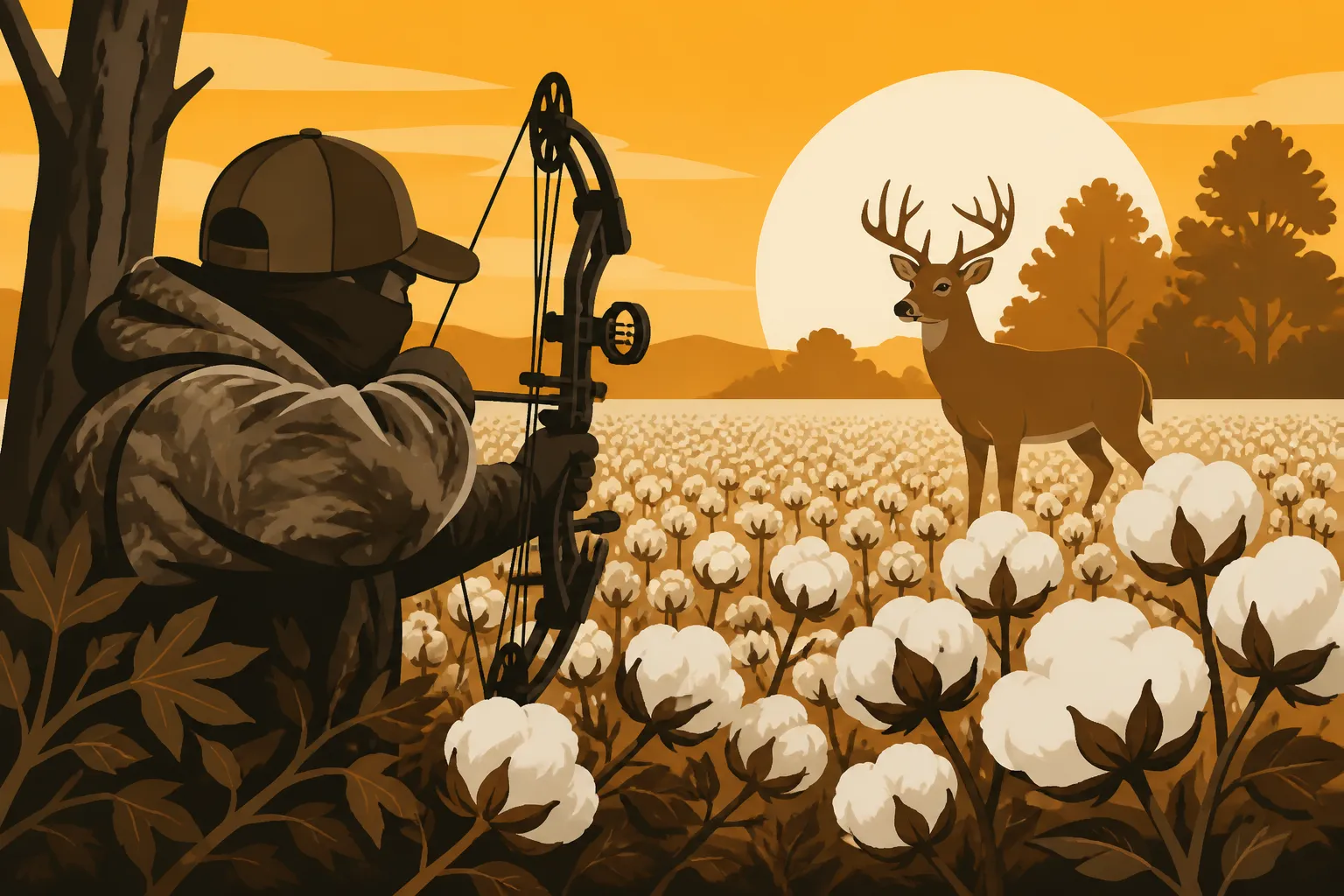
When winter tightens its grip across Alabama, and the deciduous trees have dropped their leaves, the landscape can feel pretty exposed. Deer are constantly seeking two things: food and security cover. In many agricultural areas, harvested fields offer little of either, but a standing cotton field provides a remarkable combination that makes it a prime location for late-season deer activity.
The Dual Appeal: Food and Cover in One Package
Cotton, even after it's "opened" and picked, isn't entirely stripped bare. There's often a surprising amount of residual food value left behind for deer. They'll browse on the remaining green leaves, if any, and nibble on the small seeds and fibrous bracts that didn't make it into the picker. More importantly, especially in a wetter or milder Alabama winter, you'll often find a variety of weeds and volunteer plants growing between the cotton rows or on the edges that provide critical forage. Deer are opportunistic, and these fields offer a buffet when other natural food sources like acorns are depleted.
Beyond the food, the standing cotton plants themselves provide an incredibly dense and effective form of cover. Imagine being a deer: those thick, tall cotton stalks, even after shedding some leaves, create a visual barrier that feels incredibly safe. They offer excellent thermal cover, buffering against cold winds, and are dense enough to allow deer to move, feed, and even bed down largely unseen. This is particularly true in areas where surrounding timber has been heavily logged or browsed, making the cotton field an anomaly of sanctuary in an otherwise open landscape. This dual appeal of food and cover makes standing cotton a powerhouse location for whitetails, attracting them from surrounding timber blocks and less secure feeding areas.
Understanding Deer Movement Patterns Around Cotton
Deer don't just wander aimlessly into a cotton field; their movements are often highly patterned, especially if the field is adjacent to thicker woods, creek bottoms, or bedding areas. During the day, particularly on colder, windier days, deer might bed down deep within the cotton rows, soaking up the thermal cover and feeling incredibly secure. As late afternoon approaches, or sometimes even midday if pressure is low, they will start to browse within the field itself or move towards its edges to feed more openly.
Look for defined entry and exit points. Deer will typically use the path of least resistance, often where the cotton field meets a treeline, a fencerow, or a ditch. You might find trails leading directly from a thicket into the cotton, or routes that parallel the field edge before ducks into the rows. Their movement inside the field can be surprisingly quiet as they navigate the rows, making them tough to spot. They might follow specific "lanes" or openings, or simply push through the denser areas. Understanding these patterns, like where they enter from bedding cover and where they feed, is crucial. They'll often spend time browsing on the interior before moving to the edges, especially as legal shooting light fades. The key is to intercept them along these predictable travel corridors as they transition from cover to more open feeding, or as they exit the field to head back to primary bedding.
Essential Scouting and Setup Strategies for Cotton Fields
Successfully hunting standing cotton for late-season deer in Alabama isn't about luck; it's about meticulous scouting and smart stand placement. These fields present unique challenges and opportunities that require a specific approach.
Reading the Field: Identifying Entry Points and Bedding Areas
Your boots-on-the-ground scouting is paramount here. Before you ever pick a stand site, you need to become an expert on that specific cotton field. Start by using aerial maps. Tools like GoHunt can provide invaluable satellite imagery, showing you the field's layout, adjacent timber, creek drains, and potential funnels. Look for where thick cover meets the cotton. Are there points or fingers of woods extending into the field? Are there ditches or fencerows acting as natural travel corridors? These are often primary entry points.
Once you have a general idea, it's time to walk the edges and, if possible and with landowner permission, make strategic, minimal incursions into the field itself. Look for tracks leading in and out, especially where the cotton isn't as dense, or where it's matted down by deer pushing through. Pay close attention to droppings – fresh droppings mean recent activity. Within the rows, you might find "day beds" where deer have hunkered down, or areas where the cotton has been browsed. These telltale signs will help you pinpoint exactly where deer are entering, how they are moving through the field, and even where they might be bedding down during the day. Remember, minimizing your disturbance is key. Go in, get your intel, and get out quickly.
Optimal Stand and Blind Placement
Once you've identified key travel routes and activity zones, you can strategize your setup. For standing cotton, you generally have two main options: treestands or ground blinds.
- Treestands: A treestand on the edge of the cotton field can give you an excellent vantage point, allowing you to see deer entering or exiting, or even spotting them moving within the rows if the cotton isn't too tall. Focus on trees that offer good concealment and a clear shot into potential travel lanes. Look for a tree that allows you to see down a fencerow or a natural opening in the cotton. Consider the angle of the sun at different times of day to avoid backlighting yourself.
- Ground Blinds: Ground blinds are often an exceptional choice for hunting cotton fields, especially if you're looking to capitalize on deer bedded deep within the cover or moving subtly along the edges. The dense cotton provides natural concealment for setting up a blind right on the edge or even a few yards into the field. You can Brush In a Blind on a Field Edge incredibly effectively with cotton stalks and surrounding natural vegetation. This allows you to hunt closer to the action and provides better concealment for drawing a bow or maneuvering for a gun shot without being silhouetted. Remember to place your blind well in advance to allow deer to get used to it.
Regardless of your choice, wind direction is paramount. Deer will often try to approach a feeding area with the wind in their favor, or bed in a spot where they can smell danger downwind. Always place your stand or blind where your scent will be carried away from where you expect deer to approach or be present. For more general advice on deer behavior, understanding Deer Drives With Three or Four Hunters can sometimes offer insights into how deer react to pressure and move through thick cover, even if you're not planning a drive yourself.
Effective Hunting Tactics for Standing Cotton
Once you've done your scouting and have your setup ready, it's time to put those plans into action. Hunting standing cotton demands a blend of patience, precise execution, and an understanding of how deer use this unique environment.
Still-Hunting and Drives Through the Rows
While many hunters focus on sitting, still-hunting through standing cotton can be surprisingly effective, especially on private land where you have good access and permission. This isn't about busting through; it's about slow, deliberate movement. Think of it as stalking. Move inch by agonizing inch, pausing frequently, scanning every shadow and perceived movement. The crunching of dried cotton stalks can be loud, so aim for calm, windier days when the rustling cotton helps mask your sound. Look for subtle shifts in the cotton, a flick of an ear, or a horizontal line that indicates a deer's back. This tactic is especially good for catching deer that are bedded deep inside the field during midday.
For larger groups, small, organized deer drives can also be highly successful. A couple of "drivers" slowly and quietly push through the cotton, moving parallel to the rows, while "standers" are positioned strategically on the downwind edge or at known escape routes. The key is for the drivers to move slowly, allowing deer to get up and walk, rather than blowing out of the field. This can push deer directly past your standers, creating ethical shot opportunities. Safety is paramount during any drive, so ensure clear communication and strict adherence to rules. Consider studying tactics like Deer Drives on Alabama Public Land for principles that can be adapted to private land cotton hunts, always prioritizing safety and ethical shot selection.
Leveraging the Wind and Thermal Advantage
In a standing cotton field, the wind and thermals play an even more critical role than in timber. While the cotton offers cover, it doesn't always contain your scent as effectively as dense woods might. Deer relying on the cotton for security will be hyper-alert to scent.
Wind Direction: Always approach your stand or blind with the wind in your face, especially if you suspect deer are bedded deep within the cotton. Once on stand, ensure your scent cone is blowing away from where you expect deer to emerge or pass by. A swirling wind can be your worst enemy in open areas, so be extra cautious on those days. Pay attention to how the wind might change throughout the day, especially if a cold front is coming through. Hunters often see increased activity Hunting Deer After a Cold Front, so being aware of wind shifts is crucial.
Thermals: In the morning, as the sun heats the ground, thermals will rise, carrying your scent upwards. In the evening, as temperatures drop, thermals will fall, carrying your scent down into low-lying areas. In a relatively flat cotton field, these vertical thermals might not be as pronounced as in hilly terrain, but they are still a factor, especially near adjacent ditches or creek bottoms. Position yourself to take advantage of these natural air currents, always trying to keep your scent above or away from the deer. For more detailed insights into this, check out our guide on Wind and Thermals on a Piedmont Ridge – while it focuses on ridges, the principles of air movement apply everywhere.
Patience and Persistence: The Key to Success
Hunting standing cotton for late-season deer often requires immense patience. Deer might emerge slowly, or they might be feeding subtly within the rows, making them difficult to spot. It’s not uncommon to sit for hours without seeing anything, only for a big doe or a late-rutting buck to materialize seemingly out of nowhere.
This is a time of year when deer are often less active during daylight hours unless driven by extreme hunger or cold. You might need to sit through multiple long hunts to catch them in the right window. Don't get discouraged if your first few sits are slow. Deer can be creatures of habit, but they can also be unpredictable, especially if they've been pressured. If your initial scouting indicated strong activity, trust your intel and be persistent. Sometimes, simply changing your sitting strategy, perhaps shifting from morning to evening or vice-versa, can make all the difference. Remember, the late season is all about capitalizing on limited resources, and those deer need to eat, especially Late-Season Food Sources for Alabama Whitetails. Your patience will eventually be rewarded.
Challenges and Considerations When Hunting Cotton
While standing cotton fields offer excellent late-season opportunities, they also come with their own set of unique challenges that hunters need to be prepared for. Anticipating these can make the difference between a successful hunt and a frustrating one.
Visibility and Shot Opportunities
One of the biggest hurdles when hunting standing cotton is the sheer density of the cover. It’s a double-edged sword: great for concealment, but terrible for visibility. Deer can be incredibly close, sometimes just a few yards away, and you might not see them until they're almost on top of you, or until they make a sudden move. This means shot opportunities can be fleeting and at odd angles.
You need to be prepared for quick, close-range shots. If you’re archery hunting, practice shooting from various positions and at steep angles. For rifle hunters, be absolutely sure of your target and what's beyond it before taking a shot, as a deer could easily be partially obscured. Setting up near a fencerow or a gap in the cotton can create a natural shooting lane, but always be ready for a target to appear unexpectedly. Furthermore, tracking a deer that runs into dense cotton can be extremely difficult. The stalks can make blood trailing tough, so aim for precise, ethical shots that drop the deer quickly.
Noise, Scent, and Managing Your Presence
The dry, brittle stalks of harvested cotton plants can be surprisingly noisy. Every step can produce a crunching sound, making it challenging to approach your stand quietly or to still-hunt effectively without alerting deer. Even a slight breeze can cause the stalks to rustle, but this can also work to your advantage by masking your own sounds. Plan your entry and exit routes carefully, choosing paths with minimal cotton or areas that are already matted down.
Scent control is also critical. While the cotton offers visual cover, it doesn't necessarily block your scent. In fact, on a windy day, your scent can carry far across an open field. Always wear clean hunting clothes, use scent-eliminating sprays, and play the wind religiously. Any lingering human odor can quickly alert deer that are either bedded in the field or approaching it. Minimizing your overall presence and impact, from your approach to your departure, is key. This is similar to strategies like Hunting Pressure on Alabama Public Land, where reducing your footprint helps keep game comfortable and active during daylight hours.
Respecting the Resource and Landowner Relations
Hunting private land, especially agricultural fields, comes with a tremendous responsibility. Standing cotton is a crop, and even after harvest, it represents income for the landowner. It is absolutely crucial to have explicit permission from the landowner to hunt their fields, and to understand any specific rules they might have regarding access, vehicle use, or areas to avoid.
When retrieving a deer, be mindful of damaging any remaining plants or machinery. Drive vehicles only on established paths or turn rows, and never through the cotton itself unless explicitly told it's okay. Leave gates as you found them. A good relationship with a landowner is priceless, and demonstrating respect for their property and their livelihood ensures that you'll have opportunities to hunt those fields again in the future. Don't jeopardize future hunting by being careless. Always adhere to ethical hunting practices and be a good steward of the land.
| Aspect of Hunting Standing Cotton | Pros | Cons |
|---|---|---|
| Food Source | Consistent late-season browse (seeds, bracts, weeds) when other food is scarce. | Limited actual nutritional value from cotton plant itself; relies heavily on secondary weeds and residual seeds. |
| Cover/Security | Excellent thermal and visual cover from dense stalks; deer feel secure bedding and moving within. | Extremely dense cover makes spotting deer and finding clear shot lanes very challenging. |
| Scouting | Deer often leave visible trails and beds; aerial maps are very effective for initial assessment. | Minimal disturbance is critical; over-scouting can easily push deer out. |
| Stand Placement | Ground blinds blend in perfectly; elevated stands offer good overview of edges. | Limited tree options for stands; ground blind setup needs to be done well in advance. |
| Tactics | Still-hunting can be effective for bedded deer; small drives can push deer to standers. | Loud crunching of stalks can alert deer; quick, close-range shots are common. |
| Landowner Relations | Opportunity to hunt private land when public land is crowded, if permission is granted and maintained. | High responsibility to avoid crop damage; communication and respect are paramount. |
| Visibility | Can attract deer from miles around due to unique combination of food/cover. | Deer can be practically invisible even at close range; tracking can be extremely difficult. |
| Success Potential | Can be incredibly productive for tagging deer when other hunters are struggling. | Requires significant patience and specialized tactics; not for the faint of heart. |
Remember, hunting standing cotton fields for late-season deer isn't just a strategy; it's a specific art form that, when mastered, can offer some of the most rewarding and challenging hunts Alabama has to offer. Just imagine: you've tracked the movement, braved the cold, and quietly navigated the rustling stalks, finally getting a chance at a mature buck that thought he was completely hidden. That's the kind of late-season magic that makes all the effort worthwhile.
Disclaimer
Hunting is an inherently dangerous activity. Always prioritize safety, adhere to all Alabama hunting regulations, and obtain appropriate licenses and landowner permissions before entering any hunting area. The information provided in this guide is for informational purposes only and should not replace professional guidance or personal experience regarding hunting safety and ethics.