Why Alabama Hogs Reproduce So Fast
If you've spent any time hunting or managing land in Alabama, you've probably noticed a common problem that seems to be getting worse every year: feral hogs. These incredibly destructive animals aren't just a nuisance; they're an ecological and agricultural disaster in the making, and their numbers seem to defy all efforts to control them. It feels like you shoot a few, and a dozen more pop up in their place. This guide will dive deep into the biological and environmental factors that explain why Alabama's feral hog population reproduces at such an alarming, almost unbelievable rate, offering insight into this relentless challenge.
The Biological Machine: Understanding Feral Hog Reproductive Prowess
Feral hogs are often described as biological machines, and it's not an exaggeration. Their physiology is perfectly adapted for rapid population growth, allowing them to outpace even the most aggressive control measures. It's truly a marvel of natural engineering, albeit one that causes endless headaches for landowners and wildlife managers across the state. Understanding why they breed so fast is the first step toward appreciating the scale of the challenge we face.
Early Maturation and Short Gestation Periods
One of the most significant factors contributing to the explosion of feral hog numbers is their incredibly early sexual maturity. Unlike many other large game species, a feral sow doesn't need to be years old to start producing offspring. We're talking about piglets that can breed before they've even celebrated their first birthday. Imagine a deer fawn being able to reproduce within six months—it just doesn't happen with our native whitetails, but it's a common reality with hogs. This early onset of puberty means that a female born in the spring can potentially be pregnant by the fall, adding to the population within a single calendar year.
Beyond early maturation, their gestation period is remarkably short. While a white-tailed deer carries her fawn for around 200 days, a feral sow's pregnancy lasts only about 114 to 120 days—roughly three months and three weeks. This abbreviated timeline allows them to cycle back into breeding condition much faster after farrowing. It means less downtime between litters and more opportunities to produce offspring throughout the year, especially when conditions are favorable. This quick turnaround is a major differentiator that gives them an immense advantage over other species and helps explain their relentless expansion.
Litter Size and Frequent Breeding Cycles
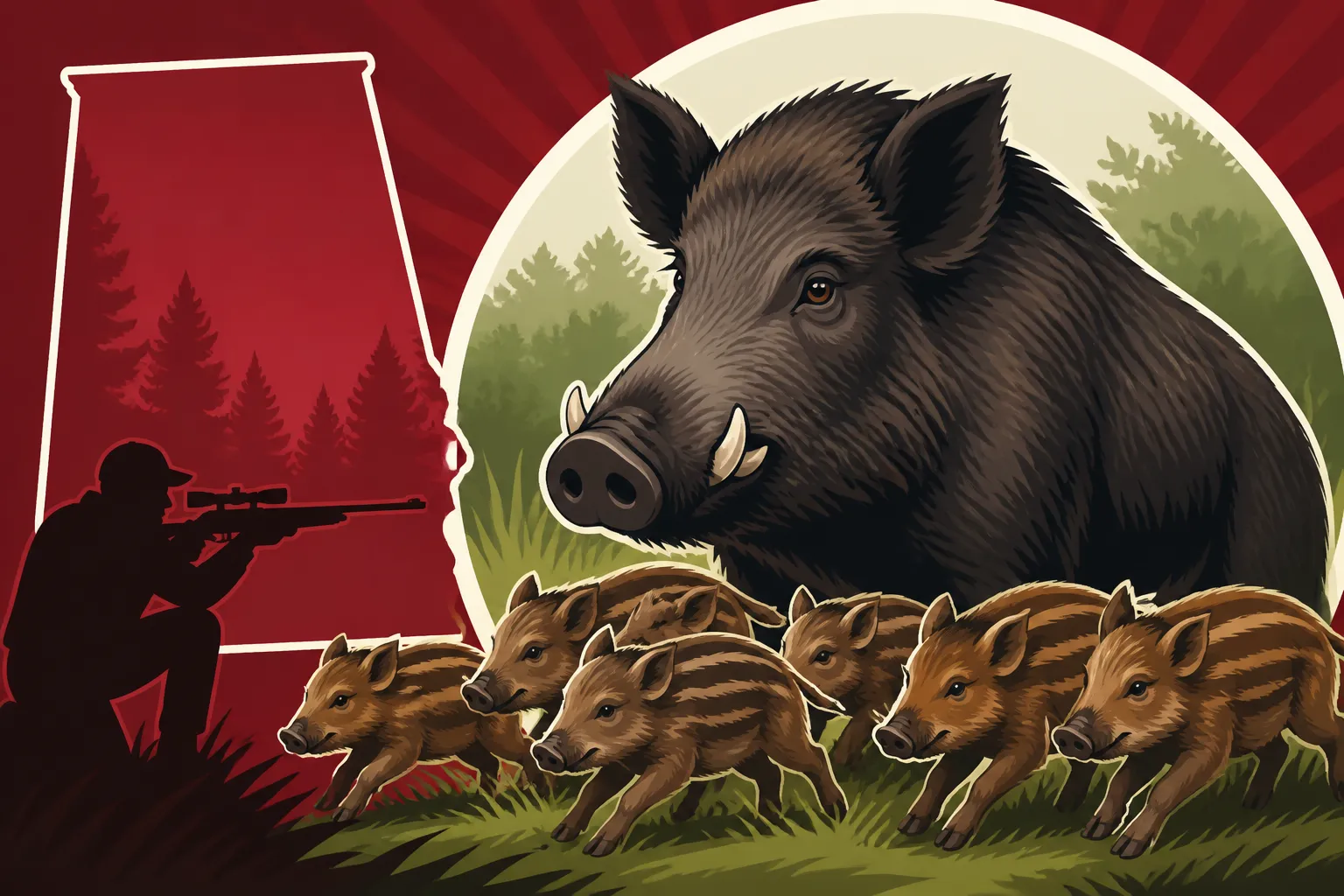
It's not just that they start early and finish fast; it's also about the sheer volume of piglets they produce in each go. A typical feral sow can give birth to an average of four to eight piglets in a single litter. While four might not sound overwhelming, remember that this is an average, and healthy, well-fed sows can easily drop litters of ten, twelve, or even more. Each of these tiny, striped bundles of potential destruction represents another future breeding machine that will soon contribute to the problem.
What truly compounds the issue is how often they can have these litters. In ideal conditions, a healthy sow can farrow two litters a year. That's right, two litters, sometimes back-to-back, especially in regions like Alabama where food and climate are often favorable. This means one sow, over the course of a single year, could potentially contribute anywhere from eight to sixteen (or even more) new individuals to the population. If she begins breeding at six months old and lives for several years, her reproductive output is staggering. This biological capability is a stark contrast to native game like deer, which typically have one fawning period per year, usually resulting in one to three fawns. It's this exponential growth that makes managing feral hogs feel like trying to empty a bathtub with a thimble while the faucet is wide open.
Environmental Factors Fueling the Population Boom
While their biological attributes are formidable, the environment in Alabama provides a near-perfect incubator for feral hog proliferation. Our state's landscape offers everything a hog needs to thrive, reproduce, and expand its territory without significant checks. This combination of intrinsic biology and extrinsic environmental support creates a perfect storm for runaway population growth.
Abundant Food Sources and Mild Climate
Alabama is an agricultural state, and this abundance of crops acts like a giant buffet for feral hogs. Fields of corn, soybeans, peanuts, and even winter wheat provide an endless supply of high-energy food that fuels rapid growth and ensures sows are in prime breeding condition. Beyond cultivated fields, our hardwood forests offer seasonal mast crops like acorns and pecans, which are highly nutritious and available for extended periods, especially during fall and winter. When acorns are plentiful, sows tend to be healthier, farrow larger litters, and experience higher piglet survival rates. Imagine having a pantry that's constantly restocked with your favorite, most calorie-dense foods; that's what Alabama's varied landscape provides for hogs.
Couple this food abundance with Alabama's generally mild climate, and you have another critical piece of the puzzle. Unlike northern states where harsh winters can lead to significant mortality among young animals or stress on pregnant females, Alabama rarely experiences prolonged periods of extreme cold or deep snow. This means piglets born in late fall or early winter have a much higher chance of survival. Reduced environmental stress translates to healthier sows who can maintain good body condition, cycle more regularly, and raise their litters with greater success. It's a year-round growing season for hogs, free from the brutal conditions that naturally regulate populations elsewhere. Hunters looking to understand game movement might use tools like GoHunt to track habitat and food source availability, though for hogs, it's often more about damage assessment.
Lack of Natural Predators
In a healthy ecosystem, natural predators play a vital role in keeping prey populations in balance. Unfortunately for Alabama, feral hogs arrived relatively recently in large numbers, and our ecosystem simply doesn't have a suite of predators equipped to handle them. Historically, areas with wild pigs would have had large predators like wolves or bears that could target both adult hogs and their young. While Alabama does have a recovering black bear population and coyotes, neither of these species exerts enough predatory pressure to significantly control a widespread feral hog population.
Coyotes, for example, will certainly prey on young piglets when they can, but they are generally not large enough or numerous enough to regularly take down adult sows, especially protective mothers. A sounder of hogs can be a formidable force, and adult hogs are tough, resilient animals with sharp tusks that can deter most predators. This absence of effective natural checks means that once a sounder establishes itself, there's very little in the natural world to thin their ranks besides disease, which typically only has a localized, temporary impact. This lack of top-down regulation allows their numbers to grow unchecked, putting immense pressure on native wildlife and habitats.
The Exponential Growth Challenge for Alabama Hunters and Landowners
The combined factors of rapid reproduction and supportive environment create an overwhelming challenge that often leaves hunters and landowners feeling defeated. It's a numbers game where the hogs constantly have the upper hand, making traditional hunting methods feel like just a drop in the bucket. Effectively managing this problem requires a deep understanding of their biology and a multi-faceted approach.
Compounding Numbers and Overwhelming the Landscape
The math of feral hog reproduction is grim. If a single sow can have two litters of 6-8 piglets per year, and those piglets can start reproducing within a year, the population grows exponentially. What starts as a small sounder of five or ten animals can swell into dozens, or even hundreds, in just a few seasons. This rapid increase means that even if hunters are successful in removing a significant number of hogs, the remaining population can quickly replenish its ranks. This is why you often hear landowners lamenting that they shot 20 hogs off their property, only to see more rooting damage a few weeks later.
This compounding effect quickly overwhelms the landscape. Feral hogs are incredibly destructive, rooting up pastures, tearing through food plots, and destroying sensitive wetland habitats. Their incessant rooting activity can devastate agricultural fields, costing farmers millions of dollars in crop damage. They compete directly with native wildlife, especially white-tailed deer and wild turkeys, for critical food resources like acorns and agricultural crops. This not only impacts game populations but can also harm ground-nesting birds and other species by destroying their nests and foraging areas. Utilizing advanced scouting tools, possibly even integrated into a platform like GoHunt, can help pinpoint areas of heavy hog damage to prioritize management efforts. When it comes to Crop Damage Hogs Cause in Alabama, the numbers are truly staggering.
Implications for Wildlife Management and Hunting Strategy
Given their incredible reproductive rate, standard hunting seasons and bag limits simply aren't effective for controlling feral hogs. This is why Alabama, like many other states, has adopted liberal regulations for hog hunting, often allowing year-round hunting on private land with no bag limit. Hunters often employ a variety of tactics beyond traditional still-hunting, including Trapping Alabama Feral Hogs, Night Hunting Hogs With Lights on Private Land, and even running dogs on them. The goal is constant, sustained pressure to try and keep numbers from spiraling further out of control.
Successful feral hog management in Alabama often involves a combination of hunting and trapping. Trapping, in particular, can be highly effective because it allows for the removal of entire sounders at once, which is crucial for making a dent in their population. Understanding What Hog Trappers Use in Alabama can make a significant difference in your success rate. Even with these aggressive strategies, the sheer reproductive capacity of feral hogs means that complete eradication is often an unrealistic goal. Instead, the focus shifts to localized control and population reduction to mitigate their damage. Hunters play an incredibly important role in this ongoing battle, as every hog removed helps protect our native ecosystems and agricultural resources from this persistent, highly prolific invader. It's a continuous effort to stay ahead of a species that truly thrives on making more of itself, faster than anything else we encounter in the Alabama outdoors.
Disclaimer
This article is for general informational purposes only and does not constitute professional advice. Laws, prices and regulations vary by location and change over time. Consult a qualified professional for guidance on your specific situation.