Finding Sign in Big Talladega Timber
Hunting big, mature timber, like what you find sprawling across the Talladega National Forest, can feel like trying to find a needle in a haystack. There's just so much ground, so many trees, and often, the deer sign isn't jumping out at you like it might in a tidy agricultural field or a fresh clear-cut. If you’ve ever trekked miles through towering pines and hardwoods, only to feel like you’re walking a deer-less desert, you know the frustration. This guide is all about helping you slow down, look closer, and understand the subtle, yet crucial, clues deer leave behind in those vast, older woods.
The Unique Challenge of Scouting Vast, Mature Forests
When you step into a massive tract of mature timber, like much of the Talladega National Forest, it’s a completely different ballgame than hunting smaller, fragmented parcels or agricultural lands. The sheer scale of it can be daunting, and the deer density often isn't as high as in areas with more varied habitat. What makes it tough is that deer don't have those obvious edges or food plots drawing them in. They move through the woods with a purpose, but their trails can be incredibly subtle, almost ghost-like.
Think about it: in a younger forest or an area with heavy farming, deer sign like rubs and scrapes might be plastered all over the place. You see clear trails, well-defined bedding areas, and obvious browsing. But in big timber, the canopy is often thick, shading out much of the undergrowth, which means less browse closer to the ground. Food sources might be more scattered, relying heavily on mast crops like acorns, which are only available seasonally. This forces deer to travel further and their movements become more spread out, making their presence harder to detect for the uninitiated hunter. You really have to train your eye to pick up on the nuanced signs that tell a story of deer activity in these vast woodlands.
Why Deer Sign Differs in Older Growth
Deer sign in big timber often tells a different story than what you might find in younger, more disturbed forests. In older growth, the trees themselves are larger, meaning rub lines will often be on bigger saplings or even small trees, and they might be less concentrated. Scrapes, too, can be more spread out, often found along subtle travel corridors rather than clustered in obvious spots. The ground cover in mature forests tends to be sparser, making it harder for deer to create heavily worn trails. Instead, you're looking for slight depressions, broken twigs, or disturbed leaves that betray their passage.
Furthermore, deer in expansive timber often have a larger home range. They aren't confined to small patches but can roam freely across thousands of acres. This means that a rub or a scrape might indicate a deer passed through, but it doesn't necessarily mean that deer lives right there. It's more about understanding travel patterns and identifying areas of consistent use over time. The key is to connect the dots between these individual signs, piecing together a larger picture of how deer are utilizing the vastness of the forest. This is where patience and persistence truly pay off.
Overcoming the "Needle in a Haystack" Feeling
The vastness of Talladega can definitely make you feel like you're searching for a needle in a haystack. The trick to overcoming this isn't to walk faster or cover more ground haphazardly. It's to slow down, pick apart the terrain with intention, and understand why a deer would be in a particular spot. Instead of just looking for a sign, you're looking for patterns of sign. Are there multiple rubs leading in a certain direction? Is there a scrape line connecting two different habitat types?
Using modern tools like the GoHunt app can be a game-changer here. Before you even step foot in the woods, you can pore over satellite imagery and topographic maps to identify potential funnels, saddles, creek bottoms, and changes in timber type that might concentrate deer movement. This kind of advanced digital scouting allows you to eliminate vast swaths of unproductive ground and focus your boots-on-the-ground efforts on areas with the highest potential. Remember, deer are creatures of efficiency; even in big timber, they'll use the path of least resistance or the most productive food sources, and your job is to find those subtle pathways and feeding zones.
Key Types of Deer Sign to Seek
When you're out in the big timber, every little detail matters. You're not just looking for a clear footprint, but a collection of subtle clues that, when put together, paint a picture of deer activity.
Identifying Subtle Trails and Travel Corridors
Forget those superhighway-like deer trails you might see bordering cornfields. In big Talladega timber, trails are often much more subtle. You're looking for faint depressions in the leaf litter, slightly disturbed pine straw, or small, broken twigs and branches at shin height. Sometimes, it's just a path where the undergrowth is slightly sparser or bent. These trails tend to follow logical routes: along ridge lines, on either side of a creek bank, or connecting different timber types.
Pay close attention where the terrain narrows, forming natural funnels. A saddle between two ridge tops, for instance, or a narrow strip of hardwoods between two pine thickets, can concentrate deer movement. These subtle travel corridors are often the best places to hang a stand or focus your still-hunting efforts. Think about where a deer would naturally walk to conserve energy or stay hidden. Look for places where multiple subtle trails converge; this indicates a more significant travel route. You might even find them along old logging roads, even if they're completely overgrown. The key is to connect the dots of these faint paths. This type of scouting is crucial for Still-Hunting Bankhead Forest Ridges, and the same principles apply to Talladega.
Decoding Scrapes and Rubs in a Mature Forest
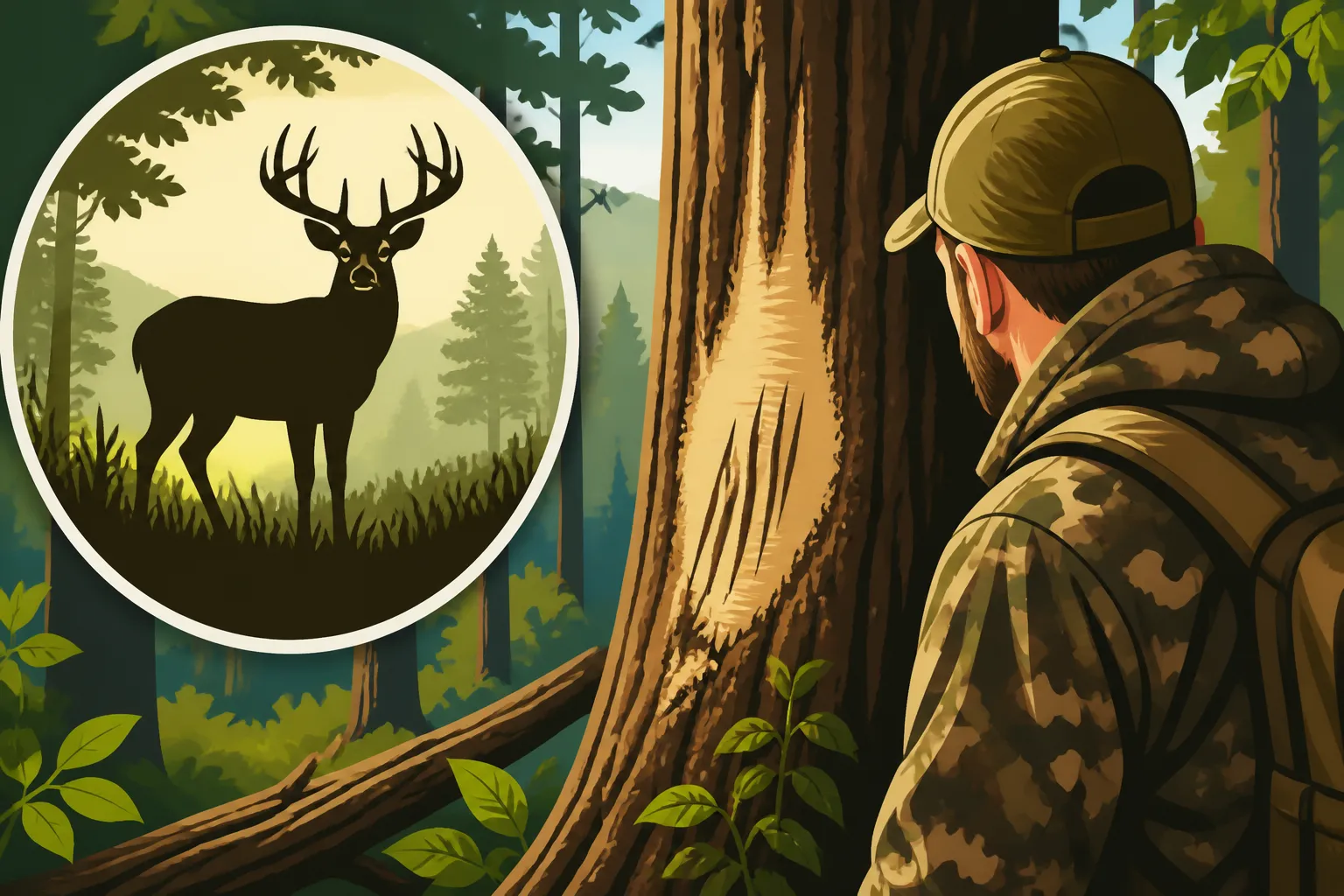
Scrapes and rubs are the billboards of the deer world, but in big timber, they might be more sparsely placed. Rubs, where a buck has polished his antlers, are often found on larger saplings or even small trees, typically 2-6 inches in diameter. Look for fresh bark peeled back, revealing lighter wood, often with dark sap. The height of the rub can give you an idea of the buck's size, but focus more on its freshness and location. Are they grouped together, forming a rub line that leads somewhere? That's a good sign of a regular travel route.
Scrapes, which are pawed-out areas of bare earth often under a licking branch, are another critical piece of the puzzle. In older timber, these can be harder to spot due to heavy leaf litter. Look for them in more open areas along ridge tops, benches, or old logging roads. The licking branch above is just as important as the scrape itself, as deer will often mouth and scent-mark it. Fresh scrapes will have moist, dark soil and a strong earthy odor. If you're seeing fresh rubs and scrapes, especially during the rut, you're in an active area. Keep an eye out for Scrape Lines Along a Logging Road in particular, as these can be highly productive.
Interpreting Droppings, Beds, and Foraging Evidence
These are the most direct signs of a deer's presence, telling you not just that they were there, but also what they were doing.
- Droppings (Scat): Fresh droppings are soft, dark, and often clumped. Older droppings will be harder, drier, and might be scattered or covered in mold. The size and shape can sometimes indicate buck or doe, but more importantly, freshness tells you current activity. Find piles of fresh droppings, and you know deer are using that area now.
- Beds: A deer bed is simply a flattened oval area where a deer has rested. In big timber, they're often found in dense thickets for cover, on the leeward side of a ridge to escape wind, or on sunny slopes during cold weather. Look for disturbed leaves, matted grass, or even shed hair. Finding multiple beds indicates a bedding area.
- Foraging Evidence: This is often the most overlooked sign. Look for browsed saplings, particularly tender shoots of hardwoods or specific plants deer favor. In acorn season, look for shelled acorn caps scattered on the forest floor, especially under red oak or white oak trees. If it’s a good mast year, deer will concentrate in these areas. Hunting After a Poor Acorn Year will require you to shift your focus to other food sources, but in a good year, acorn sign is king.
Table: Common Deer Sign in Big Timber and What It Means
| Type of Sign | Appearance in Big Timber | What It Tells You | Ideal Location to Find It |
|---|---|---|---|
| Faint Trails | Subtle depressions, disturbed leaves/pine straw, broken twigs | Regular travel routes, often for feeding or bedding | Ridge lines, creek bottoms, saddles, connecting thickets |
| Rubs | Bark peeled on 2-6 inch saplings/small trees | Buck presence, territorial marking, pre-rut/rut activity | Along travel corridors, near bedding areas, transition zones |
| Scrapes | Pawed-out bare earth, often under a licking branch | Buck communication, breeding activity (pre-rut/rut) | Old logging roads, ridge flats, power line edges |
| Droppings (Scat) | Piles of pellets, freshness varies | Recent presence, feeding activity, deer numbers | Feeding areas, bedding areas, travel routes |
| Beds | Flattened oval areas in leaf litter | Bedding/resting spots, often near cover or thermal advantage | Thick cover, leeward side of ridges, sunny slopes |
| Foraging | Browsed shoots, chewed acorn caps, disturbed soil | Current food sources, recent feeding activity | Under mast trees (oaks), areas with preferred browse |
Leveraging Topography and Habitat Features
The terrain itself is a giant map that deer instinctively read, and you should too. Understanding how deer use the lay of the land and different habitat types is paramount in big timber.
Reading Ridge Lines, Saddles, and Benches
Ridge lines are highways for deer in big timber, especially in hilly terrain like Talladega. Deer will often travel just below the crest of a ridge, using the cover provided by the topography while still having a good view or scenting advantage. Look for subtle trails running parallel to the ridge.
Saddles are depressions or low points in a ridge. These are natural funnels where deer will cross from one side of a ridge to another. They are prime ambush points because they concentrate deer movement. Think about it: why would a deer go up and over a higher point when a lower dip offers an easier path?
Benches are flat spots or shelves on the side of a ridge. These often serve as temporary resting spots, feeding areas, or even bedding locations, especially if there's thick cover nearby. Deer will also travel along these benches, using them as contour lines to navigate steep terrain more easily. Learning to Read a Ridge for North Alabama Deer is critical here, and the same wisdom applies further south. Combine this knowledge with an understanding of Wind and Thermals on a Piedmont Ridge to predict how deer will approach these features.
Understanding Creek Bottoms and Water Sources
In any forest, but especially big timber, water is life. Creek bottoms, spring heads, and even temporary seeps are magnets for deer. Deer will often travel along creek banks, using the dense cover and accessible water. These areas tend to hold more diverse vegetation due to increased moisture, providing additional food sources.
Crossings are key. Look for spots where deer naturally cross a creek or stream. These might be narrower sections, fallen logs, or areas with exposed rocks. A well-used crossing will show disturbed mud, tracks, and droppings on either side. During dry spells, active water sources become even more critical focal points for deer activity, so don't overlook them.
Analyzing Timber Type and Age for Food and Cover
The type and age of timber drastically influence deer behavior. A dense pine plantation might offer excellent bedding and thermal cover, while an old-growth hardwood bottom will provide crucial mast crops like acorns, especially during the fall.
- Hardwoods: Areas dominated by oaks, hickories, and other mast-producing trees are food hubs, particularly from late summer through winter. During acorn drops, deer will spend significant time under these trees. Knowing the difference between white oaks (early drop, preferred by deer) and red oaks (later drop, also important) can help you time your hunts.
- Pines: Dense pine stands, especially younger ones, provide excellent bedding cover. Deer will bed down in the thickest areas to feel secure. Mature pines can also offer cover, but usually less food. Look for transitions where pines meet hardwoods, as deer often use these edges for travel and feeding.
- Clear-cuts and Regenerating Areas: While this guide focuses on big timber, understanding adjacent clear-cuts is important. These areas, when regenerating, can be browse factories. Deer will often bed in the thick young growth and move into older timber for mast or other food sources. Mapping tools like GoHunt are excellent for identifying these timber type changes and planning your approach.
Advanced Scouting and Strategy for Talladega
Finding sign is just the beginning; understanding how to use that information to develop a successful hunting strategy in the vastness of Talladega National Forest is the real challenge.
Utilizing Mapping Tools for Pre-Season Scouting
Before you ever put boots on the ground, spend significant time poring over maps. Modern hunting apps like GoHunt offer incredible detail, including satellite imagery, topographic overlays, and even public land boundaries. Use these tools to identify:
- Access Points: Where can you legally park and enter the forest?
- Elevation Changes: Look for those critical ridge lines, saddles, and benches. Reading Aerial Photos for Piedmont Deer will teach you how to spot these subtle but important features.
- Water Sources: Mark all creeks, streams, and potential spring heads.
- Timber Type Transitions: Identify where hardwoods meet pines, or where older growth gives way to clear-cuts. These are often productive edges.
- Potential Bedding Areas: Look for thick, dense cover, especially on south-facing slopes in winter for thermal advantage.
- "Hidden" Areas: Identify sections of the forest that are difficult to access, far from roads, or blocked by natural barriers. These are often where deer escape Hunting Pressure on Alabama Public Land.
By marking these features on your map, you can create a detailed plan for your initial scouting trips, focusing your energy on the most promising areas rather than just wandering aimlessly.
The Importance of Boots-on-the-Ground Reconnaissance
As valuable as digital maps are, there's no substitute for walking the ground. Your pre-season scouting trips are about verifying what you saw on the map and discovering the subtle details that satellite imagery can't show. Walk slowly, quietly, and observe everything. Don't be in a rush to cover miles; focus on dissecting smaller, high-potential areas.
Look for the freshest sign: wet droppings, fresh rubs, clear tracks, and recently browsed plants. These tell you where deer are currently active. Pay attention to game trails, confirming their direction and destination. If you're setting up a camera, look for well-used trails or pinch points. When you find a promising area, spend extra time walking its perimeter and exploring its interior. The goal is to piece together how deer are moving through that specific patch of timber, where they're feeding, bedding, and traveling. This direct observation is how you Scouting Alabama Public Land Before Season truly effectively.
Adapting to Hunter Pressure and Finding Seclusion
Talladega National Forest, being public land, can experience significant hunter pressure, especially during opening weekends and peak rut. Deer are incredibly adaptable, and they quickly learn to avoid areas with high human activity. This means your strategy needs to include finding areas that others overlook or are unwilling to access.
- Walk Deeper: Many hunters don't venture far from roads or easily accessible trails. If you're willing to walk an extra mile or two, you'll often find less pressured deer and more consistent sign. This is precisely how you can excel at Finding Ground Others Walk Past.
- Utilize Rough Terrain: Steep hillsides, dense thickets, and swampy bottoms are often avoided by other hunters. Deer, however, will readily use these areas for refuge. Learning to navigate and hunt these tougher spots can give you a significant advantage.
- Hunt Mid-Week: If your schedule allows, hunting on weekdays will almost always mean less pressure than weekends.
- Observe Other Hunters: Pay attention to where other hunters park and enter the woods. This can help you identify areas they are hitting, allowing you to focus on the spots they aren't. Sometimes, hunting directly adjacent to a heavily pressured area, but on the escape routes deer might take, can be highly effective.
By combining meticulous map scouting, diligent ground reconnaissance, and a smart strategy for dealing with pressure, you'll significantly increase your chances of finding and harvesting deer in the challenging, yet rewarding, environment of Talladega's big timber.
Disclaimer
Hunting is an inherently dangerous activity. Always prioritize safety, understand and follow all Alabama hunting regulations, and obtain the necessary licenses and permits. The information provided here is for educational purposes and should not replace professional guidance or personal judgment. Be aware of your surroundings, hunt ethically, and respect the wildlife and the land.