Why the Fourth Buck Needs Four Points
Let's face it, keeping up with deer hunting regulations in Alabama can sometimes feel like trying to solve a puzzle in the dark. You've got zones, dates, bag limits, and then there are those specific antler rules that can really throw a wrench in your season planning, especially when you're thinking about that potential fourth buck. It's enough to make even the most seasoned hunter pause and second-guess themselves. This guide is here to untangle the complexities around why, exactly, that fourth antlered buck you harvest in Alabama needs to have at least four points on one side. We'll dive deep into what this rule means, why it's in place, and how it impacts your time in the woods.
Decoding Alabama's Deer Harvest Regulations
For many hunters, the excitement of deer season comes with the responsibility of understanding the rules. Alabama's deer management strategy is designed to balance hunting opportunities with maintaining a healthy, sustainable deer population. This often means specific regulations for antlered and unantlered deer, and the rules around bucks can sometimes be the trickiest to navigate.
The Standard Three-Buck Limit for Most Hunters
Generally speaking, Alabama hunters are allowed to harvest a total of three antlered bucks per deer season. This is the baseline, the number most folks plan around when they head out into the pines and hardwoods. These first three bucks can be any antlered deer, meaning they simply need to have visible antlers above the hairline. There aren't any specific point restrictions on these first three, unless you're hunting certain Wildlife Management Areas (WMAs) or specific counties that have their own, more restrictive rules. For the vast majority of private and public land, those first three bucks are fair game as long as they carry bone on their head. It simplifies things, giving hunters a straightforward goal while ensuring a reasonable harvest.
Introducing the Opportunity for a Fourth Antlered Buck
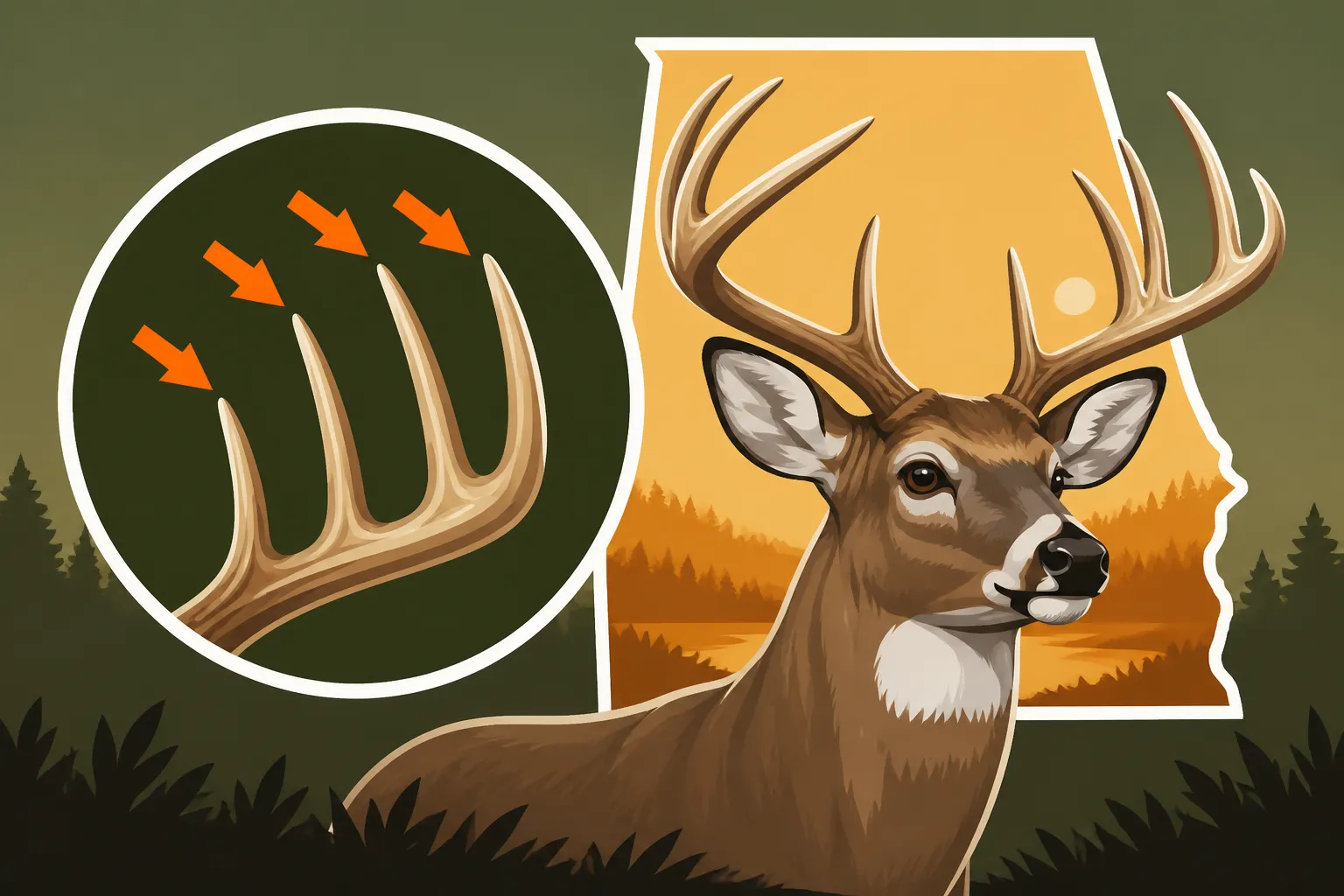
Here's where things get a bit more nuanced, and where the "four points on one side" rule comes into play. Alabama's regulations offer an additional opportunity beyond the standard three-buck limit. If you've already harvested your three regular antlered bucks and you're still looking to fill your freezer or perhaps target a truly mature animal, you can take a fourth. However, this fourth buck comes with a very specific qualification: it must have at least four points on one antler, or a main beam of at least 16 inches. This isn't a restriction on your initial three; it's an extra layer for that bonus buck, designed with particular management goals in mind that we'll explore shortly. It's important to remember this isn't about making it harder to fill your tag; it's about providing an incentive for selective harvesting if you choose to pursue an additional animal.
What "Four Points on One Side" Truly Means
When you're out in the field, heart pounding, trying to assess a buck through your scope or binoculars, counting points accurately under pressure can be a real challenge. Understanding the precise definition of a "point" is crucial to staying within the law and making ethical harvest decisions.
Precise Antler Point Measurement Guidelines
Alabama regulations are pretty clear about what constitutes an antler point. For a projection to count as a point, it must be at least one inch long from its tip to the nearest edge of the main beam or another tine. It also needs to be longer than its width at its base. This means those little bumps or blips that might feel like points when you run your hand over them after the harvest don't always count according to the law.
Imagine you're looking at a buck's rack. You'd count the brow tine, the G2, the G3, and so on. If one side has, say, a brow tine, a G2, a G3, and a small sticker point coming off the main beam, you'd measure that sticker. If it's at least an inch long and narrower at its base than its length, it counts. If you're on the fence about a small projection, it's always safer to err on the side of caution. Many hunters use apps like GoHunt to review regulations or even try to visualize antler configurations before they head into the field. It's a skill that develops with practice, but understanding the precise rule is the first step.
Beyond Points: The Alternative 16-Inch Main Beam Rule
While the "four points on one side" rule is often discussed, it's important to remember there's an alternative criterion for that fourth buck: a main beam of at least 16 inches. This provides another pathway to legally harvest that bonus buck if its antler configuration doesn't quite hit the four-point mark on one side.
The main beam is the primary shaft of the antler that grows out from the pedicle on the deer's skull. Tines and points typically grow off this main beam. Measuring the main beam requires a flexible tape measure, following the curve of the beam from the base (where it meets the skull) to its tip. A 16-inch main beam usually indicates a buck of a certain age and maturity, even if it might be a 6-point (three points on each side) or even a basket-racked 8-point with shorter tines. This alternative criterion helps ensure that hunters are still targeting mature deer for their fourth buck, regardless of their specific antler architecture. It offers flexibility while still adhering to the core management objective.
Geographical Application Across Alabama's Deer Zones
The specific rule for the fourth buck – requiring four points on one side or a 16-inch main beam – is a statewide regulation. This means it applies generally across all of Alabama's five deer zones (A, B, C, D, and E), and on most public and private lands. You don't have to worry about this rule changing dramatically as you move from, say, the Black Belt region to the Appalachian foothills.
However, it's crucial to distinguish this specific fourth-buck qualification from general antler restrictions that might apply in certain areas. For example, some Wildlife Management Areas (WMAs) may have specific antler point restrictions (APRs) that dictate what kind of antlered deer can be harvested as one of your initial three bucks. These WMA-specific rules would be more restrictive than the statewide standard. For instance, a WMA might require a buck to have at least three points on one side, or a certain spread, for any antlered buck harvested there. Always double-check the specific regulations for the WMA you plan to hunt, as these local rules supersede the general statewide guidance for your first three bucks. But for that fourth buck, the four-point-on-one-side or 16-inch main beam rule holds true across the state. This consistency helps simplify things when you're considering your overall season limit, even if the initial harvest rules might vary by location.
The Management Philosophy Behind This Specific Rule
Regulations aren't just arbitrary lines drawn in the sand; they're carefully crafted tools based on sound wildlife biology and management objectives. The rule requiring a four-point minimum on one side (or 16-inch main beam) for a fourth buck is a prime example of a regulation designed to achieve specific goals for Alabama's deer herd.
Fostering a Healthier, Older Buck Age Structure
One of the primary goals of this rule is to encourage the development of a healthier, older age structure within the buck population. When hunters are allowed to take three bucks with no specific antler restrictions, there's a tendency for many younger bucks – especially those 1.5 or 2.5 years old – to be harvested. These younger bucks often have smaller racks, perhaps 6 or 8 points that don't yet show their full potential.
By making the fourth buck a more selective harvest, requiring at least four points on one side or a longer main beam, the Alabama Wildlife and Freshwater Fisheries Division (AWFF) is subtly steering hunters towards targeting more mature animals for that bonus opportunity. Bucks that meet these criteria are generally older, often 3.5 years or older, which means they've had more time to breed and contribute to the herd's genetics. This selective pressure on older bucks, combined with protection for younger deer, helps create a better balance, where a higher percentage of bucks survive to older age classes. This can lead to more opportunities to see and harvest larger-racked deer in the long run, which is often a goal for many hunters.
Reducing Pressure on Immature Bucks
Closely tied to fostering an older age structure is the objective of reducing harvest pressure on immature bucks. Young bucks, particularly yearlings (1.5 years old), are still developing. Their antlers might not be impressive, but their bodies are still growing, and they are vital for future breeding. If a hunter has already filled their three "any antlered buck" tags, and they want to pursue another, this rule ensures they're not just taking the first small buck they see.
Instead, they're encouraged to pass on those young 6-points or small 8-points that might not meet the four-point-on-one-side requirement. This allows those younger bucks to survive another year or two, giving them time to fully mature, grow larger bodies, and develop more substantial antlers. It's a proactive measure that leverages hunter selectivity to benefit the deer population. It also helps spread out the breeding workload among more mature bucks, which can lead to healthier fawns and a more robust herd overall. Without this rule, the temptation might be to just take any buck as a fourth, potentially depleting the younger age classes too quickly.
Promoting Overall Herd Balance and Genetic Diversity
Beyond just individual buck age, this regulation contributes to the overall balance and genetic diversity of Alabama's deer herd. A herd with a good mix of age classes, including older, more dominant bucks, tends to be healthier and more resilient. Older bucks play a crucial role in breeding, often competing and ensuring that strong genetics are passed on.
If the buck population were heavily skewed towards younger animals due to high harvest rates on all age classes, it could impact breeding success and overall herd vigor. By incentivizing the harvest of mature bucks as the fourth animal, the rule helps maintain a sustainable number of younger bucks for future years and allows older, robust bucks to contribute significantly to the breeding pool. This fosters better fawn recruitment, stronger deer, and healthier antler development across the board. The goal is not just to grow bigger antlers, but to cultivate a robust and healthy deer population capable of thriving for generations of hunters to come. It's a complex ecological dance, and regulations like this are part of the choreography.
Navigating Your Hunting Season with the Fourth Buck Rule
Understanding the "why" behind the rule is one thing, but figuring out how to practically apply it during your hunting season is where the rubber meets the road. This specific regulation requires a bit more thought and planning, especially if you anticipate having a highly successful season.
Strategic Planning for Multiple Buck Harvests
If you're a hunter who typically harvests multiple bucks each season, you'll want to integrate this rule into your pre-season planning. Most hunters begin their season with the understanding that they can take three "any antlered" bucks. This gives you flexibility, especially during the early season or if you're hunting in areas with higher deer densities. You might opt to fill one or two of those tags early with a decent mature buck or even a younger buck that presents a good shot opportunity.
However, if your goal is to harvest a fourth buck, you'll need to be more selective once those first three tags are filled. Many hunters choose to be more patient during their early harvests, or they specifically allocate their first three tags to bucks that are already mature, knowing that any subsequent buck will need to meet the higher standard. This often means carefully passing on smaller bucks after your third harvest, even if they're legal for your first three. It’s a mental shift: instead of just asking "Is it legal?", you'll also ask "Does it meet the four-point-on-one-side requirement for my fourth buck?" This encourages careful observation and disciplined decision-making.
Critical Field Decisions and the Importance of ID
The moment of truth usually happens quickly. A buck steps out, and you have mere seconds to assess if it's a shooter. When you're potentially on your fourth buck, this assessment becomes even more critical. You need to quickly count points on one side, ensuring they meet the one-inch minimum, or accurately estimate main beam length.
This is where practice and good optics come into play. Spend time before the season looking at photos of deer, practicing quick antler assessment. Use quality binoculars or a spotting scope to get a clear view before deciding to raise your rifle or bow. If you're unsure, it's always best to pass. Harvesting an illegal buck, even accidentally, carries significant penalties, not to mention the ethical implications. Think of it as an extra challenge – a way to hone your field judgment. Many experienced hunters carry a small reference card or even a ruler if they’re really worried about beam length, though most learn to eyeball it over time. The key is to never feel pressured to shoot if you can't positively identify that the buck meets the specific antler requirements for your fourth harvest.
Mandatory Game Check for Every Harvest
No matter how many bucks you harvest, or whether they meet the specific four-point rule, every single deer taken in Alabama must be reported through the state's mandatory Game Check system. This is non-negotiable and a critical part of Alabama's deer management efforts. The data collected from Game Check helps wildlife biologists monitor harvest rates, track population trends, and make informed decisions about future regulations.
Reporting is straightforward. You can use the Outdoor Alabama app on your smartphone, visit the Outdoor Alabama website, or call the toll-free number provided by the state. You'll need to report your harvest within 48 hours and before the deer leaves the state. The information you provide includes the type of deer (antlered or unantlered), the date and county of harvest, and how many points the deer had. This data is essential, so don't skip it! It’s your responsibility as a hunter to contribute to accurate record-keeping, regardless of how many deer you've taken.
Utilizing Digital Tools for Compliance and Scouting
In today's age, technology can be a hunter's best friend, especially when navigating complex regulations and planning hunts. Digital tools, like the GoHunt app or the official Outdoor Alabama app, provide instant access to regulation summaries, maps, and even harvest reporting features.
Before you even step into the woods, you can use these apps to review the specific rules for your hunting zone or WMA. Many apps allow you to mark your location, record observations, and track your harvests. This can be invaluable for keeping tabs on how many bucks you've taken and which ones met specific criteria, like the four-point rule for your fourth buck. Furthermore, these platforms often integrate mapping features that show property lines, public land boundaries, and even topographical information, helping you scout new areas or plan your approach. For non-residents, being able to quickly access and understand Alabama's regulations through a trusted app can alleviate a lot of stress. Staying organized with digital tools not only helps ensure compliance but also enhances your overall hunting experience by providing a wealth of information at your fingertips.
Common Questions and Misinterpretations
It's natural for a regulation with specific criteria like the "four points on one side" rule to generate questions and sometimes lead to misunderstandings. Let's clear up some of the most common points of confusion to ensure you're hunting confidently and legally.
Clarifying Antler Restrictions Versus Antler Qualifications
One of the biggest sources of confusion is often the difference between an "antler restriction" and an "antler qualification." Many states implement antler restrictions (APRs) that limit the type of bucks a hunter can take as part of their regular bag limit. For example, a state might say all bucks harvested must have at least 8 points or an outside spread of 15 inches. These are designed to protect younger deer and manage the overall herd genetics.
Alabama's rule for the fourth buck is actually an antler qualification. It's not a restriction on your first three bucks. You can harvest any antlered buck (as long as it has visible antlers above the hairline) for your first three. The "four points on one side" rule (or 16-inch main beam) only qualifies a buck to be taken as your fourth antlered animal. It's an opportunity to take an additional buck, not a hurdle for your primary limit. This is a crucial distinction that often gets mixed up, leading some hunters to believe they can only take four-point or better bucks all season, which isn't true for the first three. It’s an incentive, not a statewide blanket restriction, offering more selective harvest options once the primary bag limit is reached.
The Difference Between Private and Public Land Application
Another area of occasional misunderstanding revolves around whether this rule applies differently to private versus public land. The short answer is: the statewide regulation for the fourth buck (four points on one side or 16-inch main beam) applies equally to both private and public lands across Alabama.
However, as mentioned earlier, the nuances come into play with local regulations, particularly on Wildlife Management Areas (WMAs). While the fourth buck rule remains consistent, specific WMAs might have additional antler restrictions for any antlered buck harvested within their boundaries, regardless of whether it's your first, second, or third. For example, a WMA might require a buck to have a minimum of three points on one side, or a certain spread, for all legal antlered deer harvested there. These WMA-specific rules are typically put in place to achieve localized management goals, such as increasing buck age structure on that particular tract of public land. So, while the fourth buck rule itself is universal, always consult the specific WMA regulations if you're hunting public land, as they can add another layer of criteria to your harvest decisions. For private land, unless the landowner has their own specific club rules, the statewide three-buck limit with the four-point qualification for the fourth buck is what you follow.
What If You Only Harvest One or Two Bucks?
This is a straightforward one, but it's a common question that pops up in conversations around this rule. If you only harvest one or two antlered bucks during the season, the four-point-on-one-side (or 16-inch main beam) rule does not apply to those animals.
You are well within your legal limits. You still have unused buck tags from your primary three-buck bag limit. For instance, if you take one 6-point buck and one 4-point buck, you've harvested two legal bucks, and you still have one "any antlered" buck tag remaining. The special qualification for the fourth buck only kicks in after you have already harvested your initial three antlered bucks. So, if you're not planning to take more than three bucks, or if your season simply doesn't yield that many opportunities, you don't need to worry about the four-point rule at all. It's simply an additional option for hunters who are successful enough to reach that higher harvest number.
Here's a quick summary table to help keep things straight:
| Buck Harvest Number | Antler Requirement | Notes |
|---|---|---|
| Bucks 1, 2, & 3 | Any antlered buck (visible antlers above hairline) | Standard statewide bag limit. No specific point or main beam length requirements, unless on a WMA with stricter local rules. |
| Buck 4 (Optional) | At least 4 points on one side OR a main beam of at least 16 inches | This is an additional opportunity after you've filled your first three buck tags. This specific rule applies statewide. |
Disclaimer
The information provided in this guide is for general informational purposes only and is not intended as legal advice. Hunting regulations can change, and specific rules may apply to certain areas, such as Wildlife Management Areas or special hunts. Always consult the official Alabama Department of Conservation and Natural Resources (ADCNR) hunting regulations and any specific WMA regulations for the most current and accurate information before you hunt. It is the hunter's responsibility to know and follow all applicable laws.