Alabama’s Gopher Tortoise Range
We all spend countless hours in the Alabama woods, usually with our eyes peeled for a flash of white tail, the subtle twitch of an ear, or the tell-tale gobble of a spring longbeard. But beneath our feet, especially in the southern half of the state, lies the quiet world of one of Alabama's most unique residents: the gopher tortoise. Understanding their habitat and behavior isn't just for biologists; it's crucial for every hunter who shares their ancient longleaf pine forests and sandy soils. This guide will help you understand where these slow-moving reptiles live, how to recognize their presence, and why protecting them is a shared responsibility for all who love the outdoors.
Understanding the Gopher Tortoise in Alabama
The gopher tortoise (Gopherus polyphemus) is an icon of the Deep South's longleaf pine ecosystem, a species deeply rooted in the very fabric of our native habitats. These aren't just any tortoises; they're ecosystem engineers, digging extensive burrows that provide shelter for hundreds of other species, earning them the title of a "keystone species." For Alabama hunters, spotting a gopher tortoise or its tell-tale burrow is a sign you're truly in a special, biologically rich area.
What Makes Gopher Tortoises Unique?
Unlike aquatic turtles or even box turtles, gopher tortoises are strictly terrestrial. They're built for digging, with shovel-like forelimbs and sturdy shells that allow them to create subterranean homes. Their burrows can extend 30 feet long and 10 feet deep, maintaining a stable temperature and humidity year-round. This is where they spend most of their lives, foraging nearby for grasses, legumes, and fruits, then retreating to safety. They are incredibly long-lived, sometimes reaching 60-80 years old, meaning some of the tortoises you might glimpse have been living on the same sandy ridge for generations. Their slow pace and preference for open, sun-drenched areas make them vulnerable, highlighting why hunter awareness is so important.
Their Role in the Ecosystem
It's hard to overstate the importance of the gopher tortoise burrow. Think of it as a natural apartment complex in the forest floor. When a wildfire sweeps through, or a cold snap hits, countless creatures — from mice and rabbits to snakes, frogs, and even juvenile bobcats – will take refuge in an active or abandoned gopher tortoise burrow. This shared habitat means that conserving gopher tortoises isn't just about saving one species; it's about safeguarding an entire community of forest inhabitants. For hunters, knowing this can change your perspective when you're glassing a powerline cut or walking a firebreak in search of game; you're not just in deer or turkey country, you're in a living, breathing ecosystem built around these gentle giants.
Key Habitats and Geographic Range
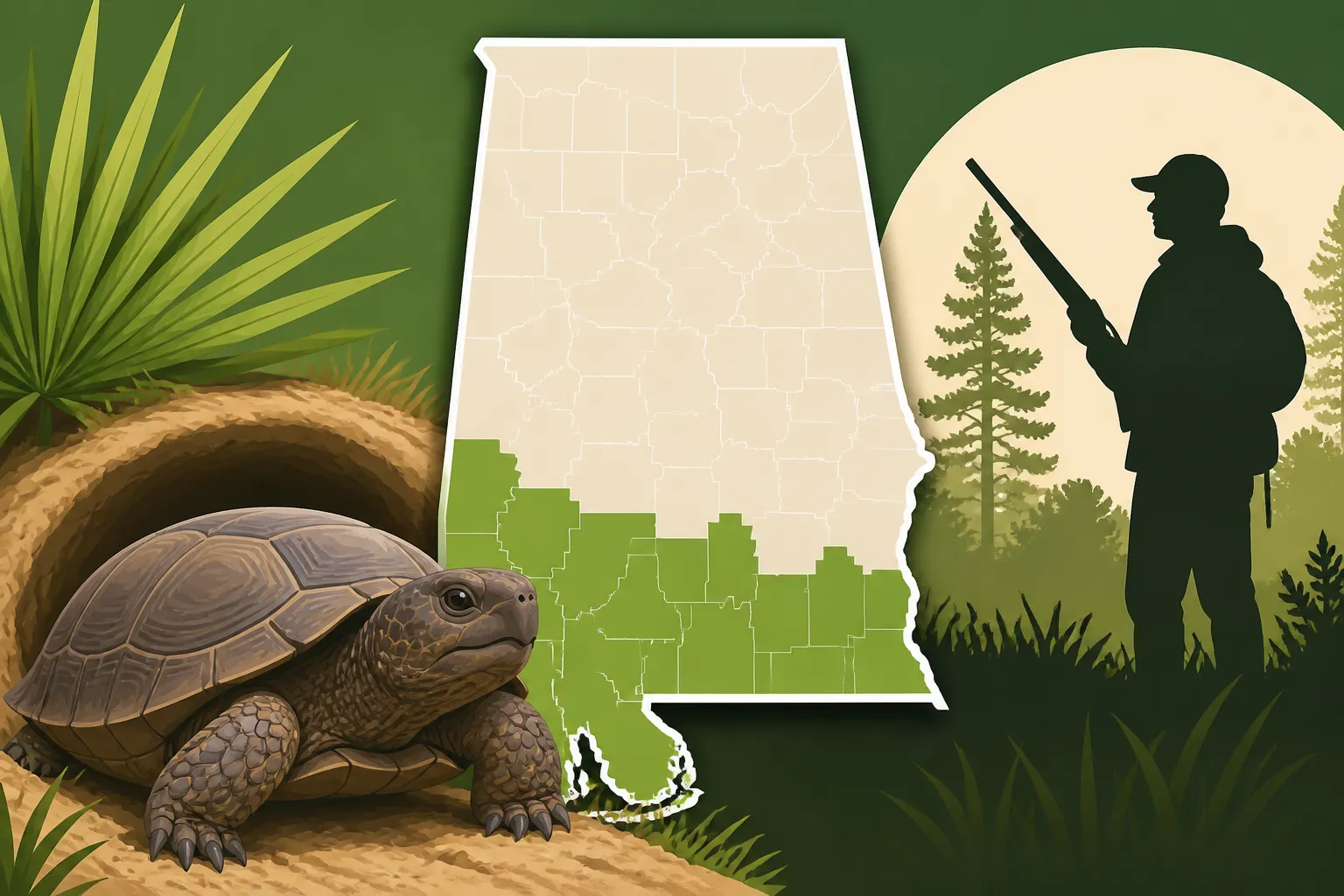
In Alabama, the gopher tortoise primarily calls the southern two-thirds of the state home. Their preferred habitat is directly tied to the presence of longleaf pine forests and the sandy, well-drained soils that characterize these regions. As hunters, many of us spend time in these exact areas, often without realizing the ancient residents we're sharing the woods with.
The Longleaf Pine Connection
The history of the gopher tortoise in Alabama is inextricably linked to the longleaf pine ecosystem. Historically, vast tracts of longleaf pine savanna covered much of the southeastern United States, shaped by frequent, low-intensity natural wildfires. These fires are crucial for gopher tortoises, as they keep the understory open, allowing sunlight to reach the ground and promoting the growth of the herbaceous plants the tortoises eat. The sandy soils found in these areas are also ideal for digging their deep burrows.
Today, while much of the original longleaf pine has been cleared, significant restoration efforts are underway, and remnants of this vital habitat still exist, particularly in our national forests and some Wildlife Management Areas. If you're hunting in a longleaf stand, especially one that shows signs of recent prescribed burns, you're in prime gopher tortoise territory. Consider areas like Conecuh National Forest Hunting or much of the Hunting South Alabama's Wiregrass Region as prime examples of where you're likely to find these creatures.
Specific Regions in Alabama
While their range is broadly the southern two-thirds, specific counties and regions stand out. You'll find the densest populations in the extreme southern and southeastern parts of the state, extending into the Wiregrass and coastal plains. Counties like Covington, Escambia, Baldwin, Mobile, Geneva, Houston, and Henry are strongholds. However, their range can extend north along sandy river terraces and ridges, sometimes popping up in unexpected places where the soil conditions are right, even as far north as parts of the Piedmont.
When you're out Scouting Alabama Public Land Before Season, especially in the southern half of the state, pay attention to soil types and vegetation. Open, grassy pine woodlands, particularly those with a history of fire management, are your biggest clue. Areas of old fields or clear-cuts that have sandy soils and are slowly regenerating can also harbor populations, as long as they provide enough forage and open ground for sunning.
| Region of Alabama | Typical Gopher Tortoise Habitat | Key Characteristics |
|---|---|---|
| Southwest Coastal Plain | Longleaf pine savannas, sandy uplands, coastal scrub | Deep sandy soils, open pine stands, diverse understory |
| South Central Hills | Sandhills, longleaf pine forests, upland hardwood mixes | Rolling terrain, sandy loam soils, fire-maintained |
| Wiregrass Region | Flatwoods, longleaf pine-wiregrass communities, agricultural edges | Broad flat expanses, deep sand, often adjacent to fields |
| Lower Coastal Plain | Pine flatwoods, dry upland hammocks | Moist but well-drained soils, often near cypress ponds |
Identifying Gopher Tortoise Burrows and Sign
Knowing where gopher tortoises might be is one thing; recognizing concrete evidence of their presence is another. As hunters, we're already skilled at reading the landscape for deer tracks, turkey scratching, or hog sign. Adding gopher tortoise sign to your repertoire of outdoor observations is a great way to deepen your connection to the woods.
The Distinctive Burrow Entrance
The most obvious sign of a gopher tortoise is its burrow. These aren't just holes in the ground; they have a very distinct, half-moon or D-shaped entrance. Imagine a perfect arch, like a small, miniature cave opening. The width of the entrance will vary depending on the size of the tortoise, from a few inches for a juvenile to over a foot for a large adult.
Crucially, you'll often see a fan-shaped mound of excavated sand extending outwards from the entrance. This "apron" of sand is a clear indicator that a tortoise has been digging. The sand is typically clean and fresh, especially if the burrow is active. If you're walking a fire break or a sandy two-track and you spot one of these, stop and take a closer look. You might even see distinct claw marks in the sand leading into the burrow. Using tools like GoHunt, you could even mark these locations on your digital map to keep track of where these unique neighbors reside.
Other Signs to Look For
While the burrow is the primary indicator, other signs can confirm their presence. Tortoise scat, which often resembles small, dark pellets, can sometimes be found near burrow entrances. You might also spot trails of disturbed vegetation or flattened grass leading to and from the burrow, indicating regular travel paths to feeding areas.
Occasionally, you might be lucky enough to see a tortoise itself, either sunning itself near its burrow entrance in the morning or slowly foraging for food. They are most active during warmer parts of the day, particularly after a cool morning. Be patient and observe from a distance; they are very shy creatures. Knowing these signs allows us to be more aware while out in the woods. For instance, if you're Setting Up on a Black Belt Field Edge that abuts a sandy pine ridge, keeping an eye out for these burrows can help you appreciate the broader wildlife community.
Conservation Efforts and Hunter Responsibility
The gopher tortoise is currently listed as a threatened species in much of its range, including Alabama, due to significant habitat loss and fragmentation. This means they are protected by both state and federal laws. As hunters, we have a vital role to play in their conservation, not just by following regulations, but by being responsible stewards of the land we love.
Legal Protections and Why They Matter
It is illegal to harm, harass, or collect gopher tortoises, their eggs, or to disturb their burrows. This includes moving them, even if you think you're helping. Relocating a tortoise can actually do more harm than good, as they have strong homing instincts and can struggle to find food and shelter in unfamiliar territory. Fines and penalties for violating these protections can be substantial.
These laws aren't just bureaucratic red tape; they are designed to protect a species that is critical to its ecosystem and already facing immense pressure. Education is key. Every hunter should understand that these slow-moving reptiles are an integral part of the Alabama landscape. Your Alabama Hunter Education Requirements may have touched on species protection, but understanding the specifics of gopher tortoises further empowers us to be good conservationists.
What Hunters Can Do
Beyond simply not harming them, hunters can be active participants in gopher tortoise conservation.
- Be Observant: When you're in suitable habitat, keep an eye out for burrows. If you see one, give it a wide berth. Avoid driving ATVs or other vehicles too close to burrows, as collapse can be devastating.
- Report Violations: If you ever witness someone harming a gopher tortoise or disturbing a burrow, report it to the Alabama Department of Conservation and Natural Resources (ADCNR).
- Support Habitat Restoration: Programs like prescribed burning, which is essential for healthy longleaf pine ecosystems, directly benefit gopher tortoises. Understanding the benefits of Prescribed Burns and Alabama Hunting Closures can help you appreciate their broader impact.
- Practice Ethical Land Use: If you manage private land, consider practices that benefit gopher tortoises, such as thinning pine stands, controlled burns, and planting native forage. Using tools like GoHunt can help you analyze your property's topography and vegetation to identify potential tortoise habitat.
- Spread Awareness: Talk to fellow hunters about the importance of gopher tortoises. Many may not even be aware of their presence or their protected status. By sharing what you've learned, you help build a stronger community of conservation-minded outdoorsmen and women.
Impact of Habitat Loss and Fragmentation
The biggest threat to gopher tortoises, both in Alabama and across their range, is the loss and fragmentation of their preferred habitat. As development expands and land use changes, the open, fire-maintained longleaf pine forests they need become smaller, more isolated, and less hospitable.
The Disappearing Longleaf Pine
Historically, longleaf pine forests covered an estimated 90 million acres across the Southeast. Today, less than 5% of that original acreage remains. This dramatic decline is primarily due to logging, agricultural conversion, and urban development. While some areas are being restored, it's a slow and challenging process.
When longleaf forests are replaced with dense pine plantations, housing developments, or row crops, gopher tortoises lose their homes, their food sources, and their ability to disperse to new areas. Even if a small patch of habitat remains, if it's surrounded by roads and houses, it becomes an island, trapping populations and making them vulnerable to disease and genetic isolation. It's a sobering thought when we consider the history of White-Tailed Deer Across Alabama or Wild Turkeys in Alabama, species that have rebounded, while the gopher tortoise continues to face uphill battles due to habitat challenges.
Road Mortality and Other Threats
Beyond habitat loss, road mortality is a significant issue for gopher tortoises. Their slow movement makes them highly susceptible to being hit by vehicles when they attempt to cross roads, especially during breeding season or when foraging for new food sources. As more roads cut through their remaining habitat, this threat only increases.
Other threats include unauthorized collection (despite legal protections), predation by increasing populations of raccoons and feral hogs, and disease. The encroachment of invasive species that outcompete native plants for tortoise forage also poses a long-term challenge. Understanding these complex threats helps us appreciate the fragility of this species and reinforces why every effort we make, no matter how small, contributes to their survival. When we use resources like GoHunt to better understand land boundaries and features, we are also equipping ourselves with information that can help us identify and protect these sensitive areas.
Disclaimer
This article is for general informational purposes only and does not constitute professional advice. Laws, prices and regulations vary by location and change over time. Consult a qualified professional for guidance on your specific situation.