Wood Ducks in Alabama River Swamps
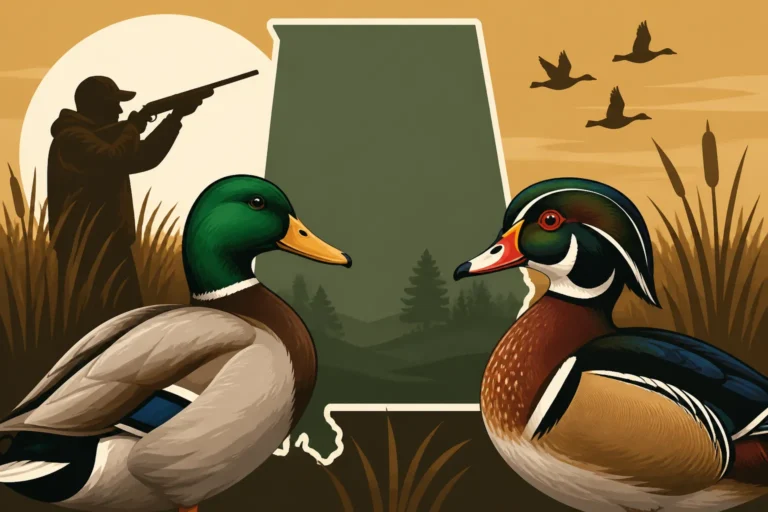
Few things are as frustrating as driving miles into the backcountry, wading through swampy bottoms, and setting out your spread, only to have the wood ducks ignore your calls and fly right over your blind. It often feels like these beautiful, elusive birds have a secret language and hidden pathways known only to them. But don't worry, friend; this guide is going to pull back the curtain on hunting wood ducks in Alabama's incredible river swamps, helping you understand their world so you can finally put more birds in the bag.
The Allure of Alabama's River Swamps for Wood Ducks
When you talk about wood ducks in Alabama, you're really talking about swamps. These aren't just any old wet woods; they're unique ecosystems perfectly tailored to the woodie's needs, offering everything from prime nesting real estate to a buffet of natural foods. If you understand why they love these places, you're already halfway to finding them.
The Perfect Blend of Water and Timber
Alabama's river swamps are a mosaic of slow-moving water, diverse timber, and dense undergrowth. Think about places like the Mobile-Tensaw Delta, the backwaters of the Alabama River, or even smaller creek bottoms feeding into larger drainages. These aren't wide-open lakes or swift-moving rivers. Instead, they feature vast areas of flooded timber, often dominated by water oak, cypress, tupelo gum, and black gum trees. The water itself varies, from shallow sheet water that barely covers your boots to deeper sloughs and oxbow lakes.
What makes this blend so perfect? First, the timber provides crucial overhead cover, making wood ducks feel safe from avian predators like hawks and owls. They can weave through the canopy with incredible agility. Second, the water provides access to their favorite foods and acts as a highway for travel. Imagine a stretch of swamp where the water is just deep enough for them to dabble and feed on acorns dropped from water oaks, or to sift through the mud for aquatic insects and seeds. If the water is too deep, they can't reach the bottom. If it's too shallow, it might dry up too quickly. It's a delicate balance that these river swamps often strike perfectly. The dense understory, often consisting of buttonbush, swamp privet, and various vines, offers incredible concealment for resting and loafing birds during the day. It's truly a complex habitat where every element plays a role in attracting and holding wood ducks.
Nature's Nurseries: Cavity Nesting and Brood Rearing
One of the most defining characteristics of the wood duck, and a primary reason they thrive in Alabama's swamps, is their reliance on tree cavities for nesting. Unlike most other ducks, which nest on the ground, wood ducks are "cavity nesters." This means they seek out natural hollows or old woodpecker holes high up in trees. In a healthy river swamp, you'll find plenty of older, mature trees—cypress, tupelo, and various oaks—that naturally develop these cavities over time. These holes provide a secure, elevated shelter for the hen to lay her eggs and incubate them, protecting them from many ground-based predators like raccoons, snakes, and opossums.
Once the ducklings hatch, usually within 24 hours, a truly remarkable event occurs: the hen will call them from the ground, and one by one, the tiny ducklings will jump out of the cavity, sometimes from heights of 20 to 50 feet! Their lightweight bodies and strong legs allow them to bounce harmlessly upon landing. From there, the hen leads her brood to sheltered, vegetated areas within the swamp, often referred to as brood-rearing habitat. These areas are typically dense with emergent vegetation like duckweed, smartweed, and various grasses, offering abundant insect life for the growing ducklings and crucial cover to hide from predators like large fish, snapping turtles, and raptors. Without these specific nesting and brood-rearing habitats, the wood duck population simply wouldn't be as robust as it is today in Alabama.
Seasonal Dynamics: Water Levels and Food Availability
The life of a wood duck in an Alabama river swamp is inextricably linked to the seasonal fluctuations of water levels. Our state experiences significant rainfall variations, particularly in late fall and winter, which often lead to extensive flooding in bottomlands. These rising waters unlock vast new feeding grounds for wood ducks. As river levels swell, they push water into previously dry sloughs, oxbows, and timbered flats, making once-inaccessible mast crops, like acorns, available to dabbling ducks.
Consider a typical year: in late summer and early fall, as acorns begin to drop, the swamps might still be relatively dry, concentrating wood ducks in permanent water bodies. However, once the fall rains begin, and especially as we move into December and January, those same low-lying timber areas become flooded, creating a paradise for woodies. Suddenly, acres of new feeding habitat open up, rich with submerged seeds, insects, and detritus that were previously out of reach. This is why understanding the current water levels is paramount for any hunter planning a trip to a river swamp. A dry spell can render vast areas unfishable for ducks, while prolonged flooding can disperse birds across such a wide area that finding concentrations becomes a real challenge. You need to keep an eye on river gauges and local precipitation reports to anticipate where the ducks will be holding.
Understanding the Wood Duck's Life in the Deep South
To truly become a successful wood duck hunter in Alabama, you need to think like a wood duck. Understanding their daily routines, what they eat, and how they respond to the world around them will give you an undeniable edge.
Daily Rhythms: Feeding, Roosting, and Travel
Wood ducks are creatures of habit, following a fairly predictable daily rhythm, especially during the hunting season. Their day typically begins just before sunrise when they depart their secluded night roosts. These roosts are often in incredibly dense, flooded timber, sometimes even in standing corn or thick brush, offering maximum concealment and protection from predators. As the first light appears, you'll hear their characteristic "woo-eek" call as they begin to stir.
From the roost, they'll make their way to preferred feeding areas. These spots are usually shallow, flooded timber flats, beaver ponds, or sloughs rich with acorns, seeds, and aquatic invertebrates. This early morning flight to the feeding grounds is often the best opportunity for hunters. After an hour or two of intense feeding, they'll typically move to a loafing area—a sheltered spot with dense cover where they can preen, rest, and socialize without expending much energy. This might be a sunny bank, a tangle of downed trees, or simply a thick patch of buttonbush in the water. As late afternoon approaches, they'll typically make another, shorter feeding foray before heading back to their roost for the night, often flying high and fast. Knowing this pattern helps you decide whether to focus on a morning hunt near a feeding spot or an evening hunt along a flight path to a known roost.
Dietary Delights: What Sustains Them
The wood duck's diet in Alabama's river swamps is incredibly varied, but they definitely have their favorites. As "dabbling ducks," they feed primarily by tipping up in shallow water or foraging on land at the water's edge. Their most prized food source, especially in the fall and winter, is acorns. Water oaks, pin oaks, willow oaks, and laurel oaks are all high on their menu. When these trees drop their mast into flooded timber, it's like a five-star restaurant for woodies. Hunters who find areas with a good acorn crop and sufficient water will often find concentrations of birds.
Beyond acorns, wood ducks consume a wide array of seeds from emergent aquatic plants. Think smartweed, wild rice, duckweed, sedges, and millet. They'll also actively hunt for aquatic insects, small crustaceans, and snails, especially during the warmer months and when feeding their broods. During the hunting season, however, it's often the carbohydrates from acorns and various seeds that draw them in. Understanding what's available in your specific swamp will help you predict where the birds will be. This is where scouting becomes crucial; you're not just looking for birds, you're looking for their grocery store.
Migration and Local Movements
While many ducks are long-distance migrants, wood ducks, particularly those in the southern states like Alabama, exhibit a mix of migratory and resident behaviors. Many wood ducks hatched in Alabama will stay in the state year-round, especially in areas with consistent water and food sources. However, we also see an influx of migratory wood ducks from more northern breeding grounds as fall progresses and winter sets in. This is a significant factor in our state's generous wood duck populations during hunting season.
The timing of this northern migration into Alabama can vary based on weather patterns. Early, harsh cold fronts up north can push birds south quickly, while a mild fall might see them linger longer in their breeding grounds. Once they arrive in Alabama, their movements can still be quite localized. If a particular swamp or a series of beaver ponds offers excellent food and undisturbed resting areas, they might stay there for weeks. However, significant changes in water levels – either drying up or extensive, deep flooding – or heavy hunting pressure can cause them to make short-distance flights to find new, more favorable habitat. This means that a spot that was hot last week might be barren today, making consistent scouting vital throughout the season. Checking for signs of local movements, like fresh droppings or disturbed mud where they've been feeding, can tell you if the birds are still using an area.
Scouting Alabama's Swampy Haunts for Wood Ducks
You can't just show up to a river swamp and expect to find wood ducks. These birds are particular, and the terrain can be challenging. Effective scouting is your most valuable tool, allowing you to pinpoint their preferred locations before you ever carry a gun into the woods.
Reading the Water and Woods from Afar
Before you even get your boots wet, you can do a tremendous amount of scouting from the comfort of your home. Start with online mapping tools. Satellite imagery can reveal flooded timber, beaver ponds, oxbows, and sloughs that are likely wood duck magnets. Look for areas with a mix of open water and dense tree cover, especially where water appears relatively shallow. Pay attention to changes over time; sometimes historical imagery can show you how water levels fluctuate in an area. Brands like GoHunt offer incredibly detailed mapping layers, including public land boundaries and topographical features, which are invaluable for identifying promising habitat. You can zoom in and identify potential roosting areas (dense, dark timber) and likely feeding spots (flooded oak flats).
Beyond satellite imagery, keep an eye on river gauge reports. Websites like the National Weather Service (NWS) provide real-time water levels for major rivers and their tributaries. A slight rise in the river can push water into prime backwater areas, while a significant drop can leave those same spots high and dry. Cross-reference these water levels with your map study. If you see a cluster of potential feeding trees on a map, and the river gauge indicates the water is just right to flood those trees, you've found a strong candidate for an in-person scouting trip. Don't forget to check the Alabama Waterfowl Zones and Seasons information online to ensure you're scouting within legal parameters for your chosen area.
Boots on the Ground (or in the Waders): Identifying Key Signs
Once you've narrowed down some promising areas on your maps, it's time to hit the ground – or rather, the water. This phase of scouting is crucial for confirming your suspicions and finding the exact spots where wood ducks are actively using the swamp. Always go during the middle of the day, preferably outside of hunting hours, to avoid disturbing the birds before opening day. Wear waders, because you will get wet. As you move quietly through the swamp, look for specific signs of wood duck activity.
Fresh droppings on logs, stumps, or along the water's edge are a dead giveaway. They'll look like small, greenish-white splats. Feathers, particularly the iridescent purple and green flank feathers or the distinct primary feathers, are another excellent indicator that birds are frequenting the area. Look for disturbed mud or vegetation where birds have been dabbling for food. If you find an abundance of small, chewed-up acorns in the water, you've likely found a feeding hotspot. Listen for their distinctive calls – the "woo-eek" of the hen and the "jeb-jeb-jeb" of the drakes. If you hear them, try to identify their flight paths or where they might be loafing. Be subtle; often, the best scouting involves simply sitting quietly in a concealed spot and observing for an hour or two, letting the swamp reveal its secrets. Pay close attention to areas with good canopy cover, standing timber, and shallow water for optimal Jump-Shooting Alabama Beaver Ponds for Wood Ducks.
Using Technology for Pre-Season Planning
In addition to satellite imagery and river gauges, several modern tools can significantly enhance your pre-season scouting and in-season hunting. GPS devices or smartphone apps like GoHunt, which we mentioned earlier, are absolutely essential for navigating dense river swamps. Not only do they show your current location on a detailed map, but many allow you to mark waypoints for promising spots, hidden sloughs, or even your preferred entry and exit points. This is particularly useful in an environment where landmarks are few and far between, and it's easy to get disoriented. Knowing exactly where you are and where you want to go minimizes wasted time and helps ensure you don't inadvertently wander onto private land if you're hunting Alabama Wildlife Management Areas.
Another piece of technology that can be a game-changer is a high-quality trail camera, especially if you have access to areas where you can place them legally and discreetly. While not typically used to capture images of ducks in flight, a trail camera placed overlooking a potential feeding area or a narrow slough can confirm if wood ducks are using the area and at what times. This information can be invaluable for timing your hunts. Remember, however, to be mindful of regulations regarding trail camera use on public lands, as rules can vary by WMA or national forest. A good pair of binoculars, while not high-tech, remains an indispensable tool for quietly observing distant birds without disturbing them.
Strategic Hunting Approaches for River Swamp Woodies
Wood ducks are exhilarating to hunt. They fly fast, often through thick timber, and their iridescent plumage is breathtaking. But they can also be challenging. Success often comes down to employing the right tactics for the specific swamp environment and the wood duck's predictable behaviors.
The Thrill of Jump-Shooting Beaver Ponds
Jump-shooting beaver ponds is perhaps one of the most exciting and traditional ways to hunt wood ducks in Alabama's river swamps. It's an active, engaging method that often yields quick results if you find the right pond. The key to successful jump-shooting lies in stealth, surprise, and knowing how to approach. Start by identifying beaver ponds or narrow sloughs that are likely holding birds. Maps and pre-season scouting are critical here. You're looking for water that's relatively small and contained, where ducks are likely concentrated and don't have too many escape routes.
Once you've identified a spot, your approach needs to be as quiet as possible. Wear waders, use natural cover, and move slowly. The goal is to get within shooting range before the ducks even know you're there. Often, this means sneaking up to a bend in a slough or a point overlooking a pond. Listen for their calls or the splashing of feeding birds. When you surprise them, they'll typically erupt from the water in a flurry of wings, offering quick, challenging shots. It's fast-paced action, and you need to be ready. This method is particularly effective in the middle of the day when birds are loafing or doing a mid-day feed, and it's a fantastic way to fill your Alabama Duck Daily Bag Limit for woodies quickly.
Patient Pursuit: Setting Up in Flooded Timber
While jump-shooting is dynamic, setting up a static blind in flooded timber offers a different, often equally rewarding, experience. This strategy works best for early morning or late evening flights when wood ducks are moving between roosts and feeding areas. The beauty of flooded timber is that the trees themselves provide natural concealment. You don't need an elaborate blind; often, simply backing up against a large tree trunk or hiding in a dense patch of buttonbush is sufficient. The most critical aspect is to be completely still and blend into your surroundings.
Choose a setup location that offers good visibility of a likely flight path or a known feeding spot. Look for areas where the timber thins slightly, creating natural "lanes" for ducks to fly through, or where a concentration of acorns is dropping. Concealment is paramount; even a slight movement or a splash from your waders can alert incoming birds. Decoys play a significant role here, as they draw the attention of passing wood ducks, giving you time to shoulder your gun. Setting up early, well before first light, allows you to get settled without disturbing the birds and be ready when the action starts. This is a common tactic also used for Hunting Flooded Timber for Mallards, though woodies often prefer slightly thicker canopy cover.
The Art of Attraction: Decoys and Calls
Decoys and calls are powerful tools for luring wood ducks into shooting range, especially when hunting from a static blind. Wood duck decoys are distinct; they feature the drake's vibrant colors and the hen's subtle browns. A spread of 6-12 wood duck decoys is often sufficient, but the placement is more important than the quantity. Place your decoys in shallow water where real ducks would naturally feed, often near cover or along a subtle current break. Create a natural-looking hole or landing zone in front of your blind, leaving space for incoming birds to set their wings. You can also mix in a few mallard or gadwall decoys, as wood ducks will often associate with other dabblers.
As for calling, the wood duck hen's "woo-eek" is relatively easy to replicate on a specialized wood duck call. The key is subtlety and realism. Don't overcall; a few soft "woo-eeks" every minute or two is often more effective than loud, incessant calling. Use your call to get their attention, then let your decoys do the rest. If you see a group of wood ducks flying high and fast, a series of quick, excited "woo-eeks" might bring them down for a look. Once they commit and start circling, switch to softer, contented calls. Practice is crucial here; listening to real wood ducks in the swamp and trying to mimic their sounds will make you a more effective caller. Remember, patience and proper decoy placement are just as important as your calling prowess.
Safeguarding the Future of Alabama's Wood Ducks
The story of the wood duck is one of the greatest conservation success stories in North American wildlife. Their populations plummeted in the early 20th century due to habitat loss and unregulated market hunting. However, thanks to dedicated conservation efforts, they have made an incredible comeback. As hunters, we have a vital role in ensuring their continued prosperity.
A Conservation Success Story
It’s truly remarkable to think that just over a century ago, the wood duck was facing severe decline, largely due to overhunting and the destruction of the very timbered wetlands they depend on. Thankfully, early conservationists recognized the crisis. The Migratory Bird Treaty Act of 1918 provided critical protection, halting unregulated hunting. But perhaps the biggest game-changer was the widespread implementation of habitat restoration projects and, notably, the introduction of artificial nesting boxes. These boxes, designed to mimic natural tree cavities, were deployed across suitable wetland habitats, including many of Alabama's river swamps.
This concerted effort, coupled with sustainable hunting regulations that ensure annual harvests do not impact breeding populations, has allowed the wood duck to rebound dramatically. Today, wood ducks are one of the most abundant duck species in Alabama and across the eastern United States. This success story serves as a powerful reminder of what can be achieved when scientific wildlife management and dedicated conservation efforts are put into action. It's a testament to the idea that hunting, when properly managed, can be a tool for, rather than a threat to, wildlife conservation. The fact that we can enjoy such robust Alabama Duck Harvest Numbers today is a direct result of these past efforts.
Protecting and Enhancing Swamp Habitat
While wood duck populations are strong, the ongoing challenge is the protection and enhancement of their critical river swamp habitats. Wetlands continue to be threatened by development, agriculture, and changes in water flow. Healthy river swamps are complex ecosystems that require specific conditions to thrive – the right balance of water, mature timber, and diverse vegetation. Conservation organizations, state agencies like the Alabama Department of Conservation and Natural Resources (ADCNR), and private landowners are constantly working to preserve existing wetlands and restore degraded ones. This might involve setting back water levels, planting native trees that provide food and nesting cavities, or managing invasive species that can choke out beneficial vegetation.
Hunters can contribute significantly to these efforts. Supporting organizations like Ducks Unlimited or buying your Alabama Duck Stamp Requirement directly funds wetland conservation initiatives. Participating in local habitat projects, even something as simple as helping to clean up a stream or plant trees along a riverbank, can make a difference. The more we understand the intricate needs of the river swamp ecosystem, the better we can advocate for its protection. Remember, a healthy swamp isn't just good for wood ducks; it benefits countless other wildlife species and provides crucial ecological services like water filtration and flood control.
Hunter's Role in Sustainable Populations
As ethical hunters, we are often the first line of defense for conservation. Our passion for the outdoors and the species we pursue fuels many of the conservation efforts that benefit wood ducks and other wildlife. For wood ducks, this means strictly adhering to bag limits, season dates, and all other regulations outlined in your Alabama Migratory Bird Certification. Alabama's hunting regulations are carefully crafted based on scientific data to ensure that harvest levels are sustainable and do not negatively impact the overall population.
Beyond following the rules, responsible hunting involves practicing good sportsmanship, respecting private land, and retrieving all downed birds. It also means educating ourselves and others about the importance of conservation. When you purchase your hunting license and stamps, a portion of those funds directly goes towards wildlife management and habitat restoration. Every time you buy ammunition, you're also contributing through excise taxes that fund conservation programs via the Pittman-Robertson Act. So, when you're out there enjoying a hunt in Alabama's beautiful river swamps, remember that you're not just a participant; you're an integral part of a larger conservation legacy, ensuring that future generations can also experience the thrill of a wood duck whistling through the timber.
| Habitat Feature | Wood Duck Preference | Why It's Important |
|---|---|---|
| Water Level | Shallow (6-18 inches), slow-moving | Allows dabbling for food, access to flooded timber |
| Timber Type | Mixed mature hardwoods (oak, cypress, tupelo gum) | Provides acorns, nesting cavities, and overhead cover |
| Cavity Trees | Older trees with natural hollows or old woodpecker holes | Essential for secure nesting (e.g., cypress, oaks) |
| Emergent Vegetation | Buttonbush, smartweed, duckweed, sedges | Offers food (seeds, insects), loafing cover, brood cover |
| Beaver Activity | Active dams, flowages, ponds | Creates ideal shallow, impounded water for feeding/loafing |
| Remote/Secluded Areas | Minimally disturbed backwaters, dense thickets | Provides safety from predators and hunting pressure |
Disclaimer
Please ensure you always consult the latest Alabama Department of Conservation and Natural Resources (ADCNR) regulations and local ordinances before engaging in any hunting activities. Seasons, bag limits, and specific area rules can change, and it is your responsibility to be aware of and comply with all applicable laws. This guide is for informational purposes only and does not supersede official regulations.