What Happens If You Shoot an Alabama Bear
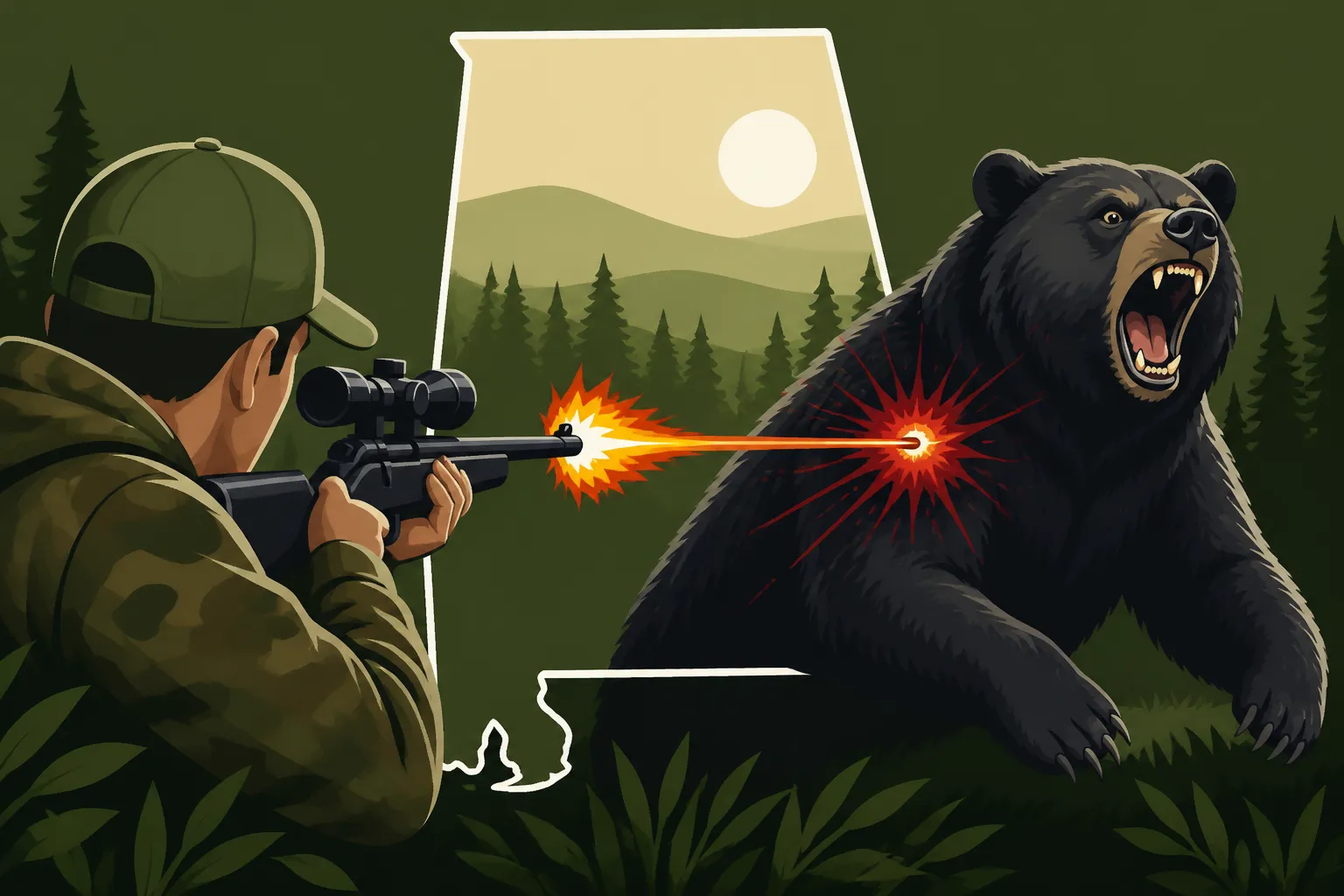
It's every hunter's worst nightmare: the sudden, gut-wrenching realization that you've fired on the wrong animal. In Alabama, where our black bear population is small but growing, mistaking a bear for another game animal, or worse, intentionally taking one, carries extremely serious consequences. This isn't just a minor infraction; it's a significant wildlife crime that can lead to hefty fines, jail time, and the loss of your hunting privileges for years. This guide will walk you through what happens if you shoot an Alabama bear, the legal repercussions, and how to prevent such a devastating mistake.
The Protected Status of Alabama's Black Bears
Alabama's black bear population holds a special place in our state's conservation story. Unlike deer or turkey, which have robust hunting seasons, black bears are a fully protected species, a testament to decades of hard work aimed at restoring them to their native habitats.
Why There's No Bear Season in Alabama
For many years, black bears were almost entirely extirpated from Alabama due to unregulated hunting and habitat loss. By the early to mid-20th century, their numbers were critically low, confined to a few isolated pockets. Thankfully, through focused conservation efforts, including habitat protection and reintroduction programs, our bears are making a slow but steady comeback. Because their population is still considered vulnerable and not robust enough to sustain hunting pressure, the state maintains a strict "no hunting" policy. It's a critical part of ensuring their continued recovery. This means that any take, intentional or accidental, is a violation of state wildlife law. The Alabama Department of Conservation and Natural Resources (ADCNR) takes these cases very seriously, as protecting this recovering species is a high priority. If you're curious about their status, you can learn more about Why Alabama Protects Black Bears Statewide.
Legal Ramifications of Taking a Protected Species
When you pull the trigger on a protected animal like a black bear, you're not just looking at a simple ticket. You're facing potential felony or serious misdemeanor charges, depending on the specifics and intent. Alabama law classifies the illegal take of protected wildlife as a serious offense. This isn't like mistakenly exceeding your bag limit on doves; this is in a whole different league of severity. The legal system views it as a direct threat to the state's conservation efforts and the very existence of a species we're trying to bring back from the brink. It can be a terrifying situation to find yourself in, and the repercussions are far-reaching, affecting your freedom, finances, and future ability to hunt.
Immediate Steps After an Incident
In that heart-sinking moment when you realize you've shot an Alabama bear, panic can easily set in. However, what you do in the immediate aftermath is absolutely crucial. Making the wrong choices can turn a tragic accident into a full-blown legal nightmare.
Prioritizing Safety and Not Moving the Animal
First and foremost, ensure your safety and the safety of anyone with you. An injured animal can be incredibly dangerous. Once the immediate safety is secured, do not, under any circumstances, move or attempt to conceal the animal. This is paramount. Tampering with the scene, attempting to butcher the animal, or trying to hide it will only compound your legal problems, potentially escalating an accidental shooting into a charge of intentional poaching and evidence tampering. The scene itself is evidence, and disturbing it can lead to assumptions of guilt or malicious intent. Leave the animal exactly where it fell. Resist the urge to fix, hide, or alter anything. Your honesty and cooperation from the very beginning are your best, and perhaps only, defense.
Contacting Law Enforcement (ADCNR)
After an incident, the very next step is to immediately contact the Alabama Department of Conservation and Natural Resources (ADCNR). This means calling a game warden or the local conservation enforcement office. It’s a terrifying phone call to make, but it’s essential. Self-reporting, especially for an accidental take, can make a significant difference in how your case is handled. It demonstrates a level of responsibility and respect for wildlife laws, even in a dire situation. Be prepared to provide:
- Your exact location.
- A clear and concise explanation of what happened.
- Your contact information.
- Details about the animal.
Do not try to make excuses, lie, or downplay the situation. Be factual and honest. The game wardens are professionals trained to investigate these incidents, and they will quickly discern inconsistencies. Hiding information or outright lying can turn a potentially regrettable accident into a clear-cut case of criminal intent. You can find contact information for local ADCNR offices and game wardens on the Outdoor Alabama website, often under the Enforcement or Wildlife and Freshwater Fisheries sections.
Understanding the Penalties and Legal Process
The moment you notify ADCNR, a formal investigation begins. This isn't a quick chat; it's a serious inquiry into the circumstances surrounding the incident, and the potential penalties are severe.
Fines, Jail Time, and License Revocation
Alabama law imposes substantial penalties for taking a protected species. While specific fines can vary based on the judge and the details of the case, you could be looking at:
- Significant Fines: Expect fines ranging from a few hundred to several thousand dollars. Some violations involving protected species can carry a minimum fine of $500, and for a black bear, this can easily jump to $5,000 or more, plus court costs.
- Jail Time: Yes, imprisonment is a very real possibility. Depending on the intent and circumstances, you could face up to one year in jail. If the prosecutor believes there was clear intent or gross negligence, charges could even escalate.
- Mandatory License Revocation: This is a consequence that hits many hunters particularly hard. Your hunting license will likely be revoked for a period ranging from several years to potentially a lifetime ban, especially if there's a history of violations or if the incident is deemed intentional. This isn't just an Alabama-specific revocation; Alabama is part of the Interstate Wildlife Violator Compact, meaning your hunting, fishing, and trapping privileges could be revoked in nearly every other state that participates.
- Restitution: Beyond fines, a court can order you to pay restitution to the state for the value of the animal, which for a protected species like a black bear can be substantial.
These penalties are designed to deter illegal activity and underscore the state's commitment to protecting its wildlife resources.
The Role of Intent and Circumstance
The game warden and prosecuting attorney will heavily scrutinize your intent and the circumstances surrounding the shot. This is where your immediate actions and honesty become critical.
- Accidental Take (Mistaken Identity): If it was a genuine, verifiable accident—perhaps in extremely low light, thick cover, or a moment of severe misjudgment where you truly believed it was a large feral hog—the outcome might be less severe, though still serious. You would still face charges, but the court might consider it a misdemeanor with a lower fine or probation rather than jail time. However, proving "mistaken identity" for a black bear (which looks distinctly different from a hog) is an uphill battle, especially if you were targeting deer. The burden of proof would be on you to demonstrate your genuine mistake.
- Self-Defense: If you shot the bear because you genuinely believed your life or the life of another person was in imminent danger, this is a separate legal defense. However, simply seeing a bear is not grounds for self-defense. You would need to demonstrate that the bear was acting aggressively and posing an immediate threat. These situations are rare, and they are thoroughly investigated.
- Intentional Take (Poaching): If the investigation reveals any indication of intentional shooting, attempts to conceal the animal, or prior knowledge that it was a bear, the penalties will be significantly harsher, often escalating to felony charges with maximum fines, jail time, and permanent license revocation. There is little sympathy for intentional poaching of protected species.
The investigating officers will look at everything: your hunting experience, the visibility, the type of weapon used, the shot placement, and your behavior after the incident. They might even use digital tools like GoHunt to review satellite imagery of the location and assess visibility and habitat.
| Factor | Accidental Take (Mistaken Identity) | Self-Defense | Intentional Take (Poaching) |
|---|---|---|---|
| Initial Report | Immediate, honest, cooperative | Immediate, honest, cooperative | Often involves concealment, delayed report, lies |
| Primary Goal | Preserve evidence, explain mistake | Preserve evidence, detail threat | Avoid detection, hide evidence |
| Legal Outcome | Serious misdemeanor, fines, license loss | Legal defense (if proven), potential dismissal | Felony charges, max fines, jail, lifetime ban |
| License Impact | Multi-year revocation | Minimal (if justified) or multi-year revocation | Lifetime revocation |
| Public Perception | Sympathy (if genuinely accidental) | Justified (if genuinely threatened) | Outrage, condemnation |
Distinguishing Between Bears and Hogs
Let's be brutally honest: mistaking a black bear for a feral hog, especially in Alabama where both exist, is often cited in accidental shooting cases. But for an experienced hunter, these animals have distinct differences. Taking the time for positive identification is paramount, every single time. If you're hunting in areas known for both, like the Mobile River Basin or parts of the Black Belt, extra vigilance is absolutely non-negotiable.
Key Visual Differences in the Field
While both can be dark-colored and robust, their body plans are quite different. Learning to tell them apart, even at a glance, can save you from a world of trouble.
- Body Shape:
- Bears: Have a relatively short, stocky body with a noticeable hump over their shoulders. Their rear end is typically higher than their shoulders, and they have a short, stubby tail almost invisible under their fur. Their head is proportionate to their body, and they often appear "top-heavy" or like they're leaning forward.
- Hogs: Possess a more elongated, barrel-shaped body. Their shoulders are often higher than their rear, giving them a sloped back. They have a more prominent tail (often thin and hairless) that is usually visible. Their heads tend to be long and tapered, ending in a distinct snout or "pig nose."
- Head and Face:
- Bears: Have a relatively broad head, often with a prominent forehead. Their ears are rounded and sit on top of their head. Their nose is blunt and black, with a distinct "bear" look.
- Hogs: Characterized by a long, cone-shaped snout and smaller, pointed ears that stick out to the sides. Their eyes are small and set further back on the head.
- Legs and Gait:
- Bears: Walk flat-footed (plantigrade), like humans, giving them a shuffling, deliberate gait. Their legs are muscular and proportioned.
- Hogs: Walk on their toes (unguligrade) and have relatively thin legs compared to their body. Their movement can appear more jerky or trot-like.
- Size: While a big hog can be impressive, adult black bears are generally larger and bulkier than most feral hogs in Alabama. Bears can weigh anywhere from 150 to over 300 pounds, while a large boar might hit 200-250 pounds, but often looks less "dense."
These visual cues are what you need to train your eye for, especially when scouting an area using tools like GoHunt that show terrain and cover.
Sound and Behavioral Cues
Beyond sight, bears and hogs have different sounds and behaviors that can tip you off to their identity.
- Sounds:
- Bears: Are generally quiet when moving through the woods. They might make huffing sounds, grunts, or jaw-popping if agitated, but these are less common during normal foraging.
- Hogs: Are often much noisier. They root around constantly, making grunting, snorting, and "woofing" sounds. If a group is moving, you'll hear their characteristic rustling and grunting as they tear up the ground. They are much less stealthy than bears.
- Movement and Foraging:
- Bears: Are omnivores. While they will root for grubs or berries, their rooting is less extensive than a hog's. They'll also climb trees, especially younger bears, and will tear apart logs or stumps looking for insects. Their movement is typically deliberate and solitary, though sows with cubs are an exception.
- Hogs: Are notorious for their destructive rooting behavior, leaving widespread, distinctive "plowed" areas in their wake. They often travel in social groups called sounders. If you see extensive rooting damage and multiple animals moving together, it's almost certainly a group of hogs. Remember, Hunting Alabama's Year-Round Feral Hogs is encouraged due to their destructive nature.
Always ask yourself: does this animal fit all the characteristics of my intended target? If there's any doubt, whatsoever, don't take the shot.
Preventing Accidental Bear Encounters While Hunting
The best way to avoid the devastating consequences of shooting an Alabama bear is to prevent the situation entirely. This requires vigilance, education, and adherence to fundamental hunting ethics.
Scouting and Awareness in Bear Habitats
Preparation is key. Before you ever step foot in the woods, especially in areas where bears are known to roam, do your homework.
- Know Bear Ranges: While black bears are found across Alabama, their populations are densest in specific regions. The Mobile River Basin (including the Mobile-Tensaw Delta and surrounding counties) and the Little River Canyon area (northeastern Alabama) are primary strongholds. There's also a smaller, growing population in west-central Alabama. Be extra cautious if you're hunting in or near these areas.
- Research Your Hunting Area: Utilize resources like the Outdoor Alabama app or online mapping tools like GoHunt. These can help you identify public lands, dense cover, and potential food sources that might attract bears. Look for any ADCNR advisories regarding bear activity in your specific hunting zone. Scouting before the season is always a good idea, and using an app like GoHunt can help you understand the terrain, identify potential bedding areas, and plan your approach. You can even use it for Reading Aerial Photos for Piedmont Deer, which might indirectly show areas bears would frequent.
- Look for Bear Sign: While scouting, keep an eye out for bear sign. This includes large scat, claw marks on trees (especially softer bark like pine), or overturned rocks and logs where they've foraged. Fresh tracks are also a clear indicator. Knowing what you're seeing can help prevent surprises during hunting season.
Positive Identification Before Taking a Shot
This is the golden rule of hunting, and it applies more than ever when protected species are present.
- Wait for Good Light: Don't rush a shot in dim light. The few extra minutes it takes for the sun to rise or for a cloud to pass could prevent a lifelong regret. Mistaken identity is far more likely in poor visibility.
- Use Binoculars or a Scope: Always positively identify your target through optics before raising your weapon. Never use your rifle scope for initial identification. This isn't just about identifying the species; it's about seeing if it's a buck or a doe (if antler restrictions apply), or if it has the required number of points. It's about being absolutely certain.
- Consider the Background: Just as important as identifying your target is identifying what's behind it. This is a critical safety principle, but also a factor in responsible hunting.
- "If in Doubt, Don't Shoot": This adage is your ultimate safeguard. If there's any hesitation, any question, any "what if" in your mind about what you're looking at, do not pull the trigger. A missed opportunity is always better than a grave mistake that harms a protected animal and ruins your life. This goes for all game, but especially for species like bears where the consequences are so severe. Take the time to be absolutely sure. This mindset is crucial whether you're deer hunting or considering Filling a Three-Buck Season Limit.
Being a responsible hunter means upholding wildlife conservation. Understanding the rules, knowing the wildlife in your area, and exercising extreme caution are not just recommendations; they are obligations.
Disclaimer
This information is intended for educational purposes only and does not constitute legal advice. Hunting regulations and legal penalties can change. Always consult the most current Alabama Department of Conservation and Natural Resources (ADCNR) regulations and, if involved in a wildlife incident, seek legal counsel immediately.