Mobile-Tensaw Delta Public Hunting Ground
Navigating the vast, sprawling network of rivers, swamps, and bayous that make up the Mobile-Tensaw Delta can feel incredibly overwhelming for any hunter, especially if you're used to more traditional timber tracts or open fields. It’s a truly unique ecosystem, a labyrinth of water and dense vegetation that holds incredible potential for a diverse range of game, but it demands a completely different approach and skillset. This guide will walk you through what makes the Mobile-Tensaw Delta such a special public hunting ground, the species you can pursue, and practical tips for making your hunt successful in this watery wilderness.
Understanding the Mobile-Tensaw Delta's Unique Landscape
The Mobile-Tensaw Delta isn't just a place; it's an experience, a sprawling wilderness covering hundreds of thousands of acres at the confluence of the Mobile and Tensaw Rivers, ultimately feeding into Mobile Bay. It’s one of the largest river deltas in the United States and a globally recognized wetland system, often referred to as Alabama's Amazon. For hunters, this means an immense, wild landscape dominated by cypress-tupelo swamps, bottomland hardwood forests, intricate creek systems, and expansive marshes. This isn't your typical walk-in deer woods; it's a place where water is king, and access often relies on a boat.
The sheer scale of the Delta can be intimidating. You're looking at an area that is crisscrossed by countless sloughs, oxbow lakes, and main river channels, all interconnected. The land itself is often low-lying, prone to flooding, and incredibly dense with undergrowth in drier spots. This unique environment creates prime habitat for a wide array of wildlife, but it also presents significant challenges for navigation and hunting strategy. Understanding the ebb and flow of water levels, especially after heavy rains or during strong tides, is paramount here. Hunters who learn to read this landscape are the ones who consistently find success.
Geographical Features and Ecosystem
Imagine a mosaic of aquatic and semi-aquatic habitats. The higher ground consists of mature bottomland hardwoods – oak, sweetgum, cypress – while the lower areas are dominated by bald cypress and water tupelo swamps, often with standing water for much of the year. Interspersed within these are vast areas of freshwater marsh, teeming with aquatic vegetation. This diverse landscape supports an incredible biodiversity, making it a critical area for migratory birds and resident game species alike.
The major river systems, like the Mobile, Tensaw, Apalachee, and Blakely rivers, serve as highways for wildlife and hunters alike. Smaller creeks and sloughs branch off, leading to hidden pockets of habitat that rarely see human pressure. When planning a hunt, it’s crucial to use detailed mapping tools like onX Hunt to identify these smaller waterways, potential high ground, and boat launch points. Without a comprehensive understanding of the geography, you can quickly get lost or find yourself in impenetrable terrain. This is a place where a good map is literally your lifeline, helping you scout remotely and plan your routes efficiently.
Public Access Points and Regulations
While much of the Delta is publicly accessible, it's not all open season everywhere. A significant portion falls under the jurisdiction of the Alabama Wildlife and Freshwater Fisheries Division, managed as part of the Mobile-Tensaw Delta Wildlife Management Area (WMA). This WMA is a massive tract, designed to provide public hunting and outdoor recreation. However, like all WMAs, it comes with specific regulations that hunters need to be intimately familiar with. You'll need an Alabama WMA Permit Requirement in addition to your standard hunting license.
Access to these public lands is primarily via boat launches along the major rivers and bayous. Common launch points might include areas off I-65 or Highway 43, but local knowledge or a detailed map application will be your best friend in finding suitable spots. Some areas might have small dirt roads leading to interior sections, but these are often few and far between and can become impassable after rain. Always check the specific WMA regulations for the Mobile-Tensaw Delta, as rules regarding seasons, bag limits, and legal weapons can vary from statewide regulations. For instance, Alabama Public Land Hunting Hours are typically dawn to dusk, but always double-check for specific WMA nuances.
Prime Hunting Opportunities in the Delta
The Mobile-Tensaw Delta offers an incredibly rich tapestry of hunting opportunities, primarily known for its excellent waterfowl and feral hog hunting, but also providing good prospects for deer and various small game. This diverse habitat, from flooded timber to dense cane thickets, means hunters can pursue different species across various seasons, often even on the same trip if they plan carefully. The unique challenges of the Delta environment often mean less hunting pressure in its deeper reaches, rewarding those willing to put in the effort.
Waterfowl Hunting
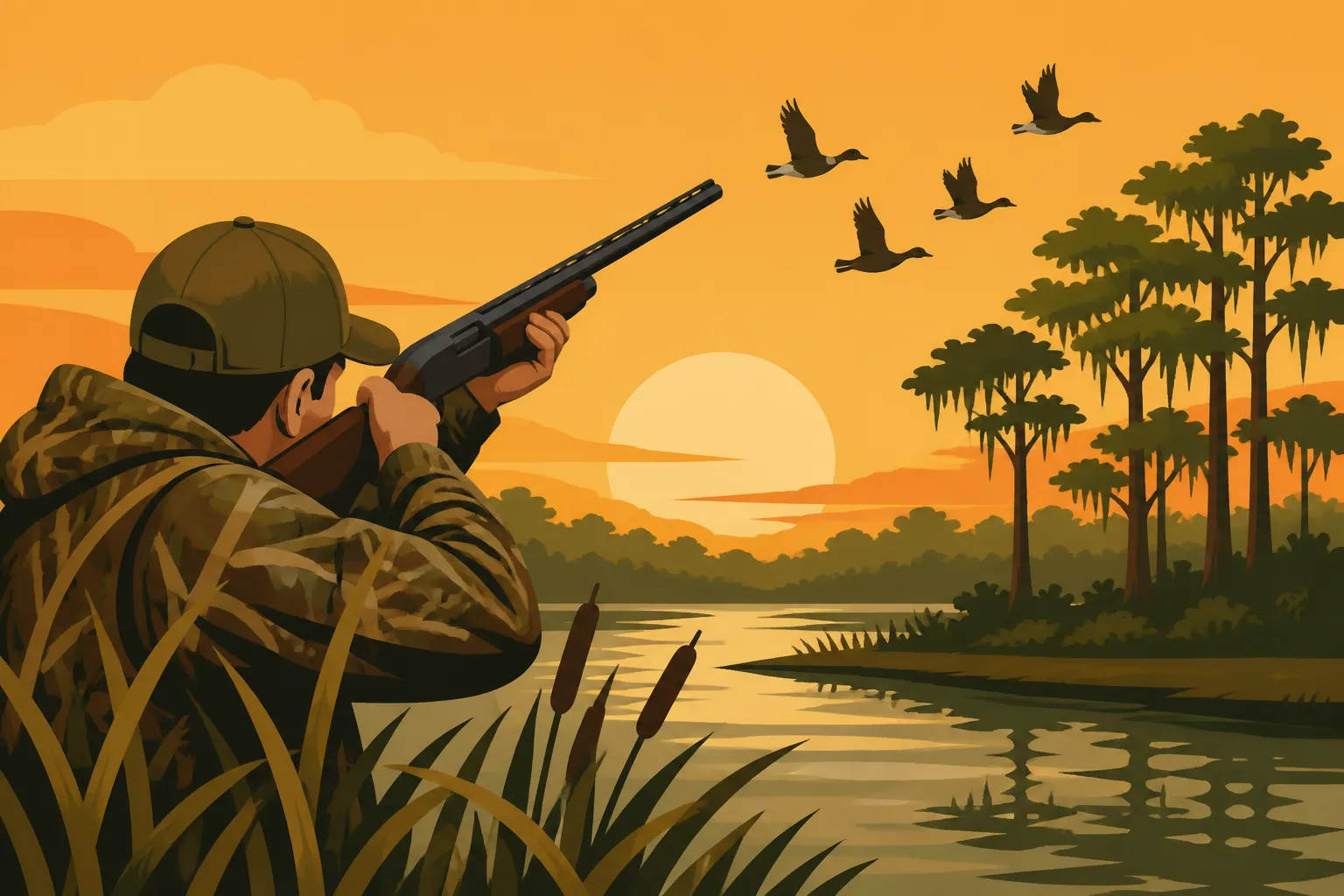
If there's one species that truly defines hunting in the Mobile-Tensaw Delta, it's waterfowl. Sitting squarely on the Mississippi Flyway, this region attracts a vast array of ducks and geese during the migration. Mallards, wood ducks, gadwall, teal, and pintails are common visitors, taking advantage of the abundant food sources and secluded resting areas found within the Delta's cypress swamps, open marshes, and river sloughs. Waterfowl Hunting Alabama's River Deltas is a comprehensive look at what makes these areas so productive.
Hunting waterfowl here often means setting up in flooded timber, along marshy edges, or in strategic open water pockets. Decoy spreads are crucial, as is effective calling, to draw birds into range. Many hunters use boats – everything from shallow-draft Jon boats to airboats – to access remote areas. You'll definitely want to understand the Alabama Duck Zone Rules and Alabama Duck Daily Bag Limit before heading out. Don't forget that both an Alabama State Duck Stamp Cost and a Federal Duck Stamp are required, in addition to your regular hunting license and Alabama Migratory Bird Certification. A good strategy is learning how to spot Reading a Delta Slough for a Morning Flight, as these can be dynamite spots for jump-shooting or setting up a spread.
Feral Hogs
Feral hogs are rampant throughout Alabama, and the Mobile-Tensaw Delta is certainly no exception. In fact, the dense cover, consistent water sources, and abundant food make it an ideal breeding ground for these destructive animals. They are present year-round, and hunters can pursue them at almost any time on private land, while on public lands like the WMA, they are often fair game during regular open seasons for other species. Alabama Feral Hog Regulations provide all the details on rules and limits.
Hunting hogs in the Delta can be challenging due to the thick cover. Still-hunting through cane thickets, setting up over known travel corridors, or baiting (where permitted) are common tactics. Many hunters also use dogs, as the dense cover often makes tracking and retrieving wounded hogs difficult without canine assistance. The year-round nature of Hunting Alabama's Year-Round Feral Hogs means you can often combine a hog hunt with a deer or waterfowl trip, adding another layer of excitement to your outing. Night hunting with lights is often allowed on private land, but always check WMA rules for specific prohibitions or allowances for public hunting.
White-Tailed Deer
While perhaps not as famous for trophy bucks as some of Alabama's Black Belt counties, the Mobile-Tensaw Delta holds a healthy population of white-tailed deer. These deer are often smaller-bodied than their open-country cousins, adapted to navigating dense cover. The hunting here is typically close-quarters, still-hunting through thick bottomland hardwoods or setting up stands along natural funnels created by sloughs and changes in elevation. Scouting for trails and rub lines, especially along the edges of drier humps within the swamp, is key.
Deer season here aligns with the general Alabama Deer Season Structure Explained, though hunters must always adhere to specific WMA dates and bag limits. Expect to work hard for your deer in the Delta; these animals are masters of concealment. Ground blinds brushed into thick cover can be effective, allowing hunters to blend seamlessly into the environment. Knowing where deer seek refuge from rising water is a huge advantage, as they will often congregate on higher ground during flood events.
Small Game and Other Species
Beyond the headliners, the Mobile-Tensaw Delta also provides opportunities for various small game species. Squirrels are abundant in the bottomland hardwoods, particularly gray squirrels, offering a fun and active hunt. Rabbit hunting is also popular, especially in areas with brushy edges and cane breaks. Hunters should consult the Alabama Small Game Season Rules for specific dates and bag limits.
Additionally, the Delta's unique environment means you might encounter other fascinating wildlife. Trapping for furbearers like raccoons and opossums is possible for those with the appropriate licenses and knowledge. The vast wetlands also hold numerous non-game species, making it a fantastic destination for wildlife viewing and photography, even if you're not pulling the trigger.
Navigating the Delta's Challenges
Hunting in the Mobile-Tensaw Delta is an adventure, but it comes with its own set of challenges that can quickly turn a dream hunt into a frustrating ordeal if you're not prepared. From battling the elements to understanding the unique terrain, success in the Delta often hinges on meticulous planning and respect for its wild nature.
The Role of Water and Tides
The most significant factor in Delta hunting is water. The Mobile-Tensaw is a tidal delta, meaning water levels are constantly fluctuating with the tides from Mobile Bay, as well as being heavily influenced by rainfall upstream. A spot that was dry and accessible in the morning could be under several feet of water by afternoon, or vice versa. This can impact everything from game movement to your ability to access hunting spots and retrieve game.
Understanding the tidal charts for Mobile Bay and keeping an eye on river gauges for the Mobile and Tensaw rivers is absolutely critical. High water often concentrates deer and hogs onto higher ground, which can be a blessing if you know where those islands are, but a curse if your access routes get flooded. Conversely, very low water might make some sloughs impassable by boat, forcing you to find alternative routes or even wade through muddy areas. Always factor in water levels when planning your entry and exit points, and consider how they might change throughout your hunt.
Essential Gear for Delta Hunting
Given the watery nature of the Delta, your gear list will look a bit different than for an upland hunt. A reliable boat is paramount, preferably one with a shallow draft like a Jon boat or an airboat if you're venturing into extremely shallow areas. Outboard motors, especially mud motors, are common. Beyond the boat, here's some essential gear:
- Mapping Technology: A robust GPS unit or a smartphone with a reliable mapping app like onX Hunt is non-negotiable. With its ability to show property boundaries, satellite imagery, and even water depths in some areas, onX Hunt can be a game-changer for navigating the labyrinthine Delta. It helps identify public hunting grounds and pinpoint potential stand locations. Using Outdoor Alabama Without Cell Service is a related read that underscores the importance of offline maps.
- Waders and Waterproof Clothing: You will get wet. Hip waders or chest waders are essential for wading through shallow water, retrieving downed game, or setting up decoys. Layered, waterproof clothing is key to staying comfortable.
- Navigation Aids: Beyond GPS, bring a physical map and compass as a backup. Marker tape or flagging can also be invaluable for marking your route through dense cover, especially if you're still-hunting.
- Bug Spray: Mosquitoes, gnats, and other biting insects can be relentless, especially in warmer months. Bring plenty of industrial-strength repellent.
- Safety Equipment: Always have life vests, a whistle, a first-aid kit, and communication devices (VHF radio, fully charged phone, satellite messenger if venturing deep) on your boat. Tell someone your float plan and expected return time.
- Powerful Lights: For early morning setup or late evening retrieves, a strong headlamp and a spotlight are vital, particularly if you're hunting hogs at night where permitted.
| Species | Primary Habitat | Best Access Method | Key Gear Considerations |
|---|---|---|---|
| Waterfowl | Flooded timber, marshes, open sloughs | Boat (Jon, airboat) | Decoys, calls, waders, waterproof blind material |
| Feral Hogs | Cane thickets, dense hardwoods, high ground | Boat, foot, ATV (where permitted) | Thermal optics (night hunting), powerful lights, dogs (optional) |
| White-Tailed Deer | Bottomland hardwoods, dry humps, transition zones | Boat, foot | Stand/blind, scent control, binoculars, tree stand safety harness |
| Small Game | Bottomland hardwoods, brushy edges | Foot | Small gauge shotgun, squirrel dog (optional) |
Dealing with Dense Cover and Navigation
The Delta's vegetation is incredibly thick. Cane brakes, privet hedges, and dense undergrowth can make walking nearly impossible in some areas. This is why boats are so critical – they allow you to bypass much of the impenetrable interior. When you do venture on foot, be prepared for a strenuous trek. Look for game trails, old logging paths (if they exist), or navigate along slough banks.
Using a GPS or onX Hunt to mark your entry point and specific stand locations is not just a convenience; it's a necessity. The landscape can look very homogenous, and it's incredibly easy to get turned around, especially with changing light or foggy conditions. Trust your navigation tools, and always have a plan for how you'll get back to your boat. Consider Scouting Alabama Public Land Before Season to get a feel for the terrain and identify potential bottlenecks or clearings.
Tips for a Successful Delta Hunt
Hunting the Mobile-Tensaw Delta is incredibly rewarding, but it's a place that demands respect, preparation, and a willingness to adapt. Here are a few tips to help you maximize your chances of success and ensure a safe, enjoyable experience in this unique Alabama wilderness.
Prioritize Scouting and Local Knowledge
You simply cannot overstate the importance of scouting in the Delta. This isn't a place where you can just show up on opening day and expect to find prime hunting ground. Aerial imagery on platforms like onX Hunt is an invaluable tool for identifying potential access routes, areas of higher ground (especially crucial for deer and hogs), and potential waterfowl roosts or feeding areas. Look for subtle changes in vegetation, evidence of past timber cuts, or areas where water might funnel game.
If possible, visit the Delta during the off-season to run your boat, walk some areas, and familiarize yourself with the terrain when you're not under the pressure of a hunt. Talk to locals, visit bait shops, or check in with the WMA office for current conditions or insights. Local knowledge, gleaned from those who spend their lives navigating these waters, can be priceless. Don't be afraid to ask questions; most seasoned Delta hunters are happy to share general tips, even if they won't give up their secret honey holes.
Hunt Smart, Hunt Safe
Safety in the Delta should always be your top priority. The combination of dense cover, water, and often remote locations means that things can go wrong quickly. Always wear a PFD when in a boat, especially when navigating unfamiliar waters or in low light. Let someone know your hunting plan, including where you're going, your expected return time, and who you're with. This is not the place for solo, spur-of-the-moment adventures, particularly if you're unfamiliar with the area.
Be mindful of changing weather conditions. Storms can blow up quickly in Alabama, turning calm waters choppy and making navigation dangerous. Always check the forecast before heading out and be prepared to cut your hunt short if conditions deteriorate. Understanding the specific Alabama Firearms Discharge Setback Rules is also vital, especially when hunting near residential areas or busy waterways. Also, be aware of other users – fishermen, kayakers, other hunters – and always maintain ethical hunting practices and courtesy.
Adapt and Be Flexible
The Delta environment is dynamic, and what worked last week might not work today. Be prepared to adapt your strategy based on water levels, weather, and game movement. If a slough you planned to hunt is unexpectedly dry, have a backup plan. If the ducks aren't flying, consider switching to hogs for the afternoon. Flexibility is key to success here.
This might mean embracing different hunting methods. If still-hunting isn't productive, consider a ground blind in a high-traffic area. For waterfowl, if the main river is too busy, try pushing into a more secluded backwater. The Mobile-Tensaw Delta rewards persistence and an open mind. It's a challenging but incredibly rewarding place to hunt, offering a truly wild Alabama experience that’s unlike anywhere else in the state. Hunting Coastal Alabama River Swamps provides more context on this unique type of hunting environment.
Disclaimer
This article is for general informational purposes only and does not constitute professional advice. Laws, prices and regulations vary by location and change over time. Consult a qualified professional for guidance on your specific situation.