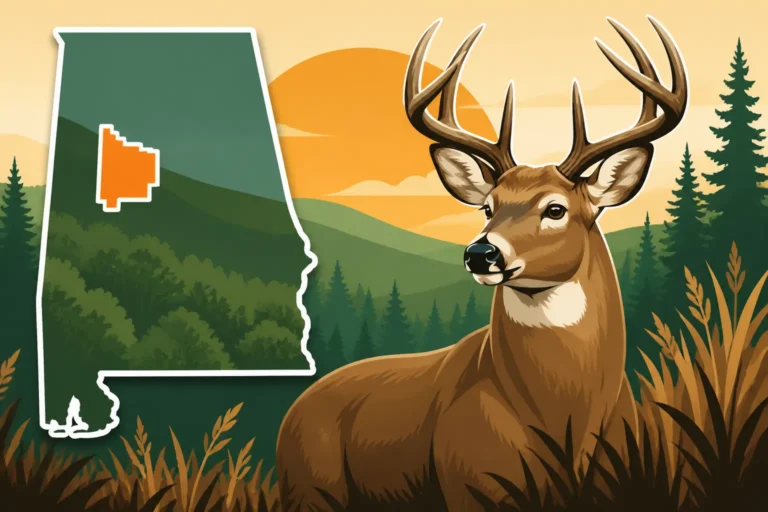
Choctaw County Public Land for Deer
Finding quality public land to hunt deer in Alabama can feel like trying to find a needle in a haystack, especially when you start looking beyond the biggest national forests. Many hunters get discouraged, thinking all the good spots are either leased up or overrun with other folks. But I'm here to tell you that counties like Choctaw, tucked away in the southwestern part of our state, offer some fantastic, often overlooked opportunities for public land deer hunting, if you know where to look and how to approach it. This guide will help you uncover those gems and put venison in your freezer from Choctaw County's public tracts.
Understanding Choctaw County's Unique Deer Habitat
Choctaw County might not immediately jump to mind when you think of Alabama's hunting hotspots, but it offers a distinct blend of habitat that can be incredibly productive for whitetails. It’s part of that transitional zone between the pine plantations of the southern part of the state and the hardwood bottomlands that crisscross the central Black Belt. This mix creates a rich tapestry for deer, often providing both the cover and diverse food sources they need to thrive.
The Role of Timber and Bottomlands
Much of Choctaw County's landscape is defined by its timber operations. You'll find vast expanses of pine plantations in various stages of growth, from clear-cuts with dense briar thickets to mature stands with open understories. These pines, while not always ideal for food, provide crucial bedding and security cover. Deer love to bed down in those young, dense pine thickets, especially after a clear-cut where new forage is starting to pop up. But the real magnets are often the hardwood bottomlands and creek drainages that snake through these timberlands. These areas are ecological goldmines, offering mast crops like acorns, lush browse, and a natural travel corridor for deer moving between bedding and feeding areas. Understanding how deer utilize the interface between dense pine cover and productive hardwoods is key to success here. You’ll often find sign where these two habitat types meet, whether it's a rub line along a pine edge next to a creek bottom or fresh tracks entering a thicket from a stand of oaks.
Agricultural Influences and Food Sources
While Choctaw County isn't as heavily agricultural as some of the Black Belt counties to its east, you will still find pockets of farmland, particularly on private holdings, that influence deer movement. Fields of corn, soybeans, and even peanuts can act as significant attractants, especially during the late season when natural browse becomes scarcer. Even if public land doesn't directly border these fields, deer will travel considerable distances to access these high-calorie food sources. For public land hunters, this means paying close attention to aerial maps, even those showing private property, to identify these agricultural hubs. Deer moving to and from these fields will often use natural funnels, like timber lines, creek bottoms, or old fencerows, that might extend onto public property. Additionally, native browse like greenbrier, honeysuckle, and various forbs are abundant, providing year-round nutrition. Keeping an eye out for these natural food sources, especially those that stay green longer into the colder months, can be just as productive as hunting over a planted food plot on private ground.
Key Public Land Opportunities in Choctaw County
When you're looking for public land deer hunting in Choctaw County, you're primarily going to be focusing on state-managed Wildlife Management Areas (WMAs). Unlike some other parts of Alabama with large national forest tracts, Choctaw's public footprint is more concentrated in these specific management units, which come with their own unique sets of regulations and opportunities.
Choctaw Wildlife Management Area
The Choctaw WMA is the crown jewel for public land hunters in the county. It's managed specifically for wildlife, meaning habitat improvements are often ongoing, and hunting pressure is spread out across its acreage. This WMA offers a diverse landscape, featuring a mix of mature hardwoods, pine plantations, and bottomland swamps. Deer here benefit from these varied habitats, offering hunters different tactical approaches depending on the season and prevailing conditions. For instance, early season archery hunters might focus on stands of white oaks dropping acorns in the hardwoods, while later in the gun season, those thick pine replantings become prime spots for deer seeking refuge. It’s absolutely critical to consult the most current Outdoor Alabama WMA regulations for specific hunt dates, legal weapons, and antler restrictions before you ever set foot on the property. These rules can change from year to year, and being caught unaware can ruin a hunt and lead to serious penalties. Don't assume the rules are the same as last year or another WMA; always double-check.
Understanding WMA Regulations and Access
Hunting on a WMA like Choctaw WMA means adhering to a specific set of rules that often differ from statewide regulations. This isn't just about deer limits or weapon types; it includes details about check-in/check-out procedures, vehicle access, camping, and even which stands you can use. Many WMAs require a WMA license in addition to your general hunting license. You might also encounter special youth hunts or archery-only periods that differ from the general season structure. I've seen too many hunters get frustrated because they didn't realize they needed to register their vehicle or that a certain road was closed. Make sure you understand the nuances. The good news is that these regulations are designed to manage wildlife populations effectively and ensure a quality hunting experience for everyone. Using tools like onX Hunt can be incredibly helpful here, as they often have WMA boundaries and regulations layered directly onto their maps, saving you a lot of guesswork on the ground. Always use the official Outdoor Alabama website as your primary source for the most up-to-date information. When hunting public land, it's also smart to check Alabama Public Land Hunting Hours to ensure you're in compliance.
Strategies for Scouting and Hunting Public Land Deer in Choctaw County
Hunting public land successfully, especially in a county like Choctaw, requires a bit more intentionality than hunting a well-managed private lease. You've got to be a good detective, understanding not just where deer should be, but where they actually are given pressure and habitat.
Pre-Season Scouting and Map Study
Before you even step foot in the woods, the most valuable tool you have is your computer or phone. Spend serious time poring over aerial maps. Look for transitions in timber types—where mature hardwoods meet thick pines, or where a clear-cut abuts a creek bottom. Identify potential funnels, saddles, and pinch points where deer are naturally compelled to travel. These are often the same places year after year. Pay attention to water sources, especially during drier periods, as deer will congregate around them. Remember those agricultural fields we talked about earlier? Even if they're private, deer paths leading to and from them onto public land can be high-traffic zones. Using mapping applications like onX Hunt or GoHunt is a game-changer for this kind of scouting. They allow you to mark waypoints, measure distances, and understand topography in a way that paper maps simply can't. Once you have a few promising spots identified on the map, then it's time for boots-on-the-ground scouting. Look for fresh rubs, scrapes, and most importantly, deer trails. Pay attention to the size and direction of the trails, indicating heavy usage. Don't forget to check for old logging roads or fire breaks, as these often serve as easy travel routes for deer and can be excellent places to find sign. Learning to read Reading Aerial Photos for Piedmont Deer can be adapted to many different regions, including Choctaw.
Stand Placement and Entry/Exit Routes
Once you've identified a promising area, the next critical step is intelligent stand placement and planning your entry and exit routes. On public land, minimizing your impact is paramount. Deer on public land are often more wary due to higher hunting pressure. Your approach to and from your stand should be as scent-free and undetected as possible. Think about prevailing winds and thermals—how will your scent travel in the morning as temperatures rise, or in the evening as they fall? A good entry route might follow a creek bed, a deep ditch, or a dense fencerow, using natural cover to conceal your movement. When placing your stand, consider not just where the deer are, but where they will be when you're hunting. Are they moving from bedding to feeding? Are they cruising during the rut? A stand overlooking a funnel between a bedding area in thick pines and a feeding area in a hardwood bottom can be incredibly effective. Don't be afraid to experiment with different types of stands. Sometimes, a well-brushed-in ground blind might be the ticket, especially if you're hunting a field edge or a specific patch of cover. Using a Ground Blind on Alabama Public Land offers excellent advice that applies well to Choctaw.
| Habitat Type | Common Deer Sign | Best Time to Scout / Hunt | Hunting Strategy Consideration |
|---|---|---|---|
| Mature Hardwoods | Acorn caps, large rubs/scrapes, heavy trails | Early Archery Season | Focus on mast crop production, travel corridors. |
| Pine Plantations | Dense bedding areas, small trails, occasional rubs | Mid-Late Season | Hunt edges, funnels, and transition zones, especially thick younger pines. |
| Creek Bottoms | Heavy trails, bedding, rubs, tracks in mud | All Season | Natural travel routes, food (browse/mast), excellent cover. |
| Clear-Cuts | Heavy browse, small trails in dense growth | Mid-Late Season | Bedding cover, new growth food source. Hard to hunt, consider adjacent edges. |
| Swamps/Wetlands | Tracks in mud, bedding in dry humps, thick cover | Late Season (drier) | Refuge for pressured deer, difficult access. |
Navigating Challenges and Maximizing Success
Hunting public land in Choctaw County, like anywhere, comes with its own set of challenges. It's not always easy, but with the right mindset and tactics, you can definitely tip the odds in your favor.
Dealing with Hunting Pressure and Finding Seclusion
One of the biggest frustrations for public land hunters is encountering other people. Choctaw WMA, while offering great hunting, can see its fair share of pressure, especially during peak gun season. The key is to be willing to work harder and go where others aren't. Often, this means walking further than most are willing to go, pushing past the easily accessible areas near roads and parking lots. Deer quickly learn to avoid these high-traffic zones and will seek refuge in thicker, more remote sections. Look for areas on your map that have difficult access—steep ravines, dense swamps, or long, winding hikes. These are the places where deer will feel secure, and where you're more likely to find less pressured animals. Learning to identify Finding Ground Others Walk Past is a skill developed over time, but it starts with curiosity and a willingness to explore. Don't be afraid to try a new entry point, or to venture deeper into a seemingly impenetrable thicket. Sometimes, the nastiest places hold the biggest rewards.
Adapting Tactics for Choctaw's Specifics
The varied habitat in Choctaw County means you can't rely on a single hunting tactic. You need to be adaptable. In the dense pine thickets or bottomland swamps, visibility can be limited to mere yards. This is where still-hunting becomes a powerful tool, slowly sneaking through the woods, stopping frequently to scan for movement. For these situations, a shotgun with slugs, a muzzleloader, or a crossbow might be more effective than a rifle, allowing for quicker, close-range shots. Conversely, if you find a more open hardwood ridge or the edge of a large clear-cut, a rifle with good optics will give you the reach you need. During the rut, rattling and grunting can be highly effective, especially when paired with patience in a known travel corridor. Consider the time of year and the specific deer behavior you're trying to capitalize on. Late season often finds deer focused on remaining food sources or seeking thermal cover on cold days. Early season might mean focusing on water sources or transitioning food like early mast. Rattling and Grunting in Alabama can work wonders if timed right, even on public land. Always remember to report your harvest through Alabama Deer Reporting Rules and Checking an Alabama Deer Harvest Online once you've successfully tagged out. This contributes to vital wildlife management data.
Disclaimer
This article is for general informational purposes only and does not constitute professional advice. Laws, prices and regulations vary by location and change over time. Consult a qualified professional for guidance on your specific situation.