Lowndes County Public Land for Deer
It's no secret that Alabama's Black Belt region holds a legendary reputation for its whitetail deer. Talk to any seasoned hunter, and they'll likely recount tales of heavy-antlered bucks and prime habitat stretching for miles. So, when you look at a map and see a county like Lowndes, sitting right in the heart of that coveted Black Belt, it's easy to get excited. The frustrating reality, however, for many hunters, is that finding accessible public land in such a rich, largely privately-owned area can feel like trying to find a needle in a haystack. This guide aims to cut through that frustration, offering realistic insights and practical strategies for hunting deer on Lowndes County public land.
The Allure and Reality of Hunting Lowndes County Public Land
Lowndes County, often heralded as a jewel of the Black Belt, offers a unique blend of fertile agricultural lands, sprawling timber, and dense creek bottoms that deer absolutely thrive in. The challenge isn't whether the deer are there – they absolutely are – but rather, gaining access to them on public ground. This section will delve into why Lowndes County holds such appeal and how that translates into the practicalities of public land hunting.
Why Lowndes County is So Prized and Often Privately Held
The Black Belt region, named for its dark, fertile soil, is an agricultural powerhouse. This rich earth produces abundant food for whitetails, from planted crops like soybeans and corn to natural browse and mast crops like acorns. Couple this with excellent genetics and decades of deer management on many large private tracts, and you have the recipe for consistently larger, healthier deer with impressive antlers. It's a hunter's paradise, but a significant portion of this paradise is tightly controlled by private landowners, hunting clubs, and expensive leases.
This means that while the potential for a trophy buck or a freezer-filler exists in Lowndes County, accessing it on public land demands extra effort and a strategic approach. It's easy to drive through and see fantastic habitat, only to realize "No Trespassing" signs line nearly every fence row. The frustration of seeing prime land you can't hunt is a common lament among Alabama hunters, and it’s especially acute in areas like Lowndes County.
Identifying Available Public Hunting Ground in Lowndes County
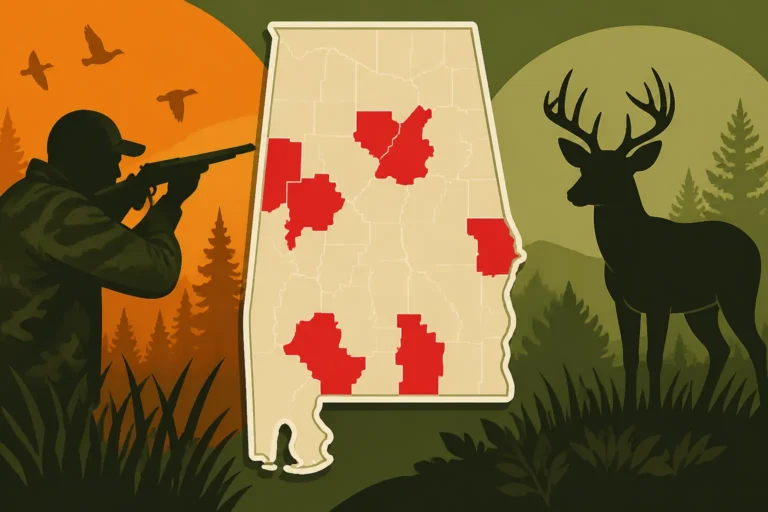
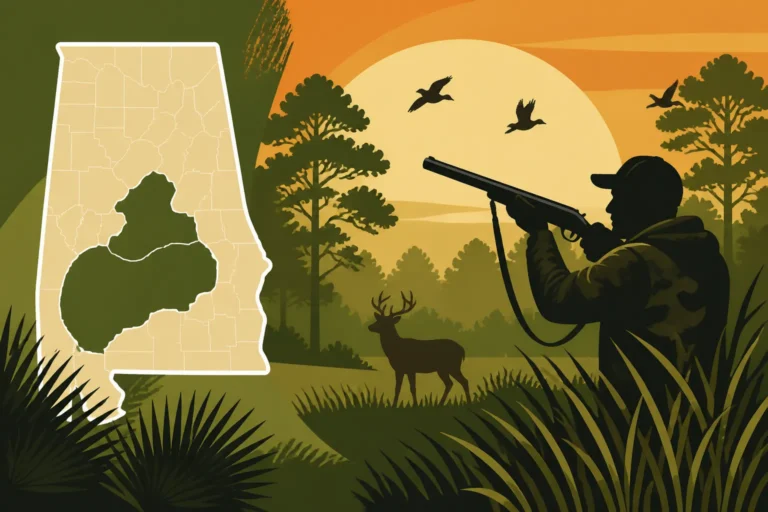
Despite the dominance of private ownership, Lowndes County does offer a significant piece of public hunting ground in the form of the Lowndes Wildlife Management Area (WMA). This WMA is often the primary, if not sole, focus for public land deer hunters looking to hunt directly within the county. However, don't just assume it's like every other WMA. Its location within the Black Belt means it often experiences higher hunter pressure, particularly on opening weekends and during the peak of the rut.
To find these areas, start with the official Alabama Department of Conservation and Natural Resources (ADWFF) website. Their interactive maps and annual regulations are your bible. Beyond that, digital mapping tools like onX Hunt are absolutely invaluable. You can overlay property lines, public land boundaries, and satellite imagery to meticulously scout from home. This allows you to identify access points, locate potential bedding areas, and plan routes to avoid heavily trafficked zones, all before ever setting foot in the woods. GoHunt also provides similar tools and resources for planning, helping you visualize the landscape and pinpoint promising spots that might otherwise go unnoticed.
Navigating Lowndes WMA for Whitetails
The Lowndes WMA offers a tangible opportunity to hunt deer in the heart of the Black Belt. But success here isn't about luck; it's about understanding the specific characteristics of the WMA and applying smart hunting tactics.
Understanding the Habitat and Terrain
The habitat within Lowndes WMA is a classic mosaic of the Black Belt. You'll encounter sprawling mixed pine and hardwood forests on higher ground, transitioning into thick bottomland hardwoods and swampy areas along the many creeks and sloughs that meander through the WMA. Pockets of agricultural fields, often leased or managed for wildlife, might border the WMA, influencing deer movement. The fertile soils mean a rich understory in many areas, providing ample browse.
Deer in this environment behave predictably based on these features. They'll bed in the densest cover—pine thickets, briar patches, or in the tangled vegetation of creek bottoms. They'll travel along natural funnels created by terrain features, creek bends, or changes in vegetation. Understanding these patterns is key. For example, a thick pine plantation adjacent to a mature acorn flat can be a textbook bedding-to-feeding scenario. Creek bottoms provide water, cover, and travel corridors, especially during warm weather or when seeking refuge from pressure. You need to read the landscape like a book, understanding how each habitat type plays a role in a deer's daily life.
Strategies for Scouting and Stand Placement
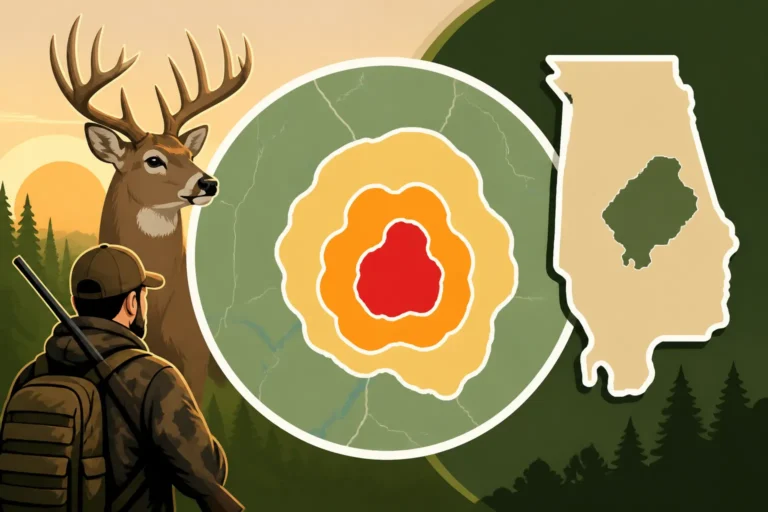
Pre-season scouting is paramount on Lowndes WMA. Don't just show up on opening day hoping for the best. Start by pouring over aerial maps using onX Hunt or similar tools. Look for those hidden fingers of timber, tight creek bends, and subtle elevation changes that might funnel deer. Identify potential bedding areas—thick cover often adjacent to a food source. Reading Aerial Photos for Piedmont Deer can give you a lot of insight, even if Lowndes is Black Belt, the principles of map reading apply.
Once on the ground, look for fresh sign. Tracks along muddy creek banks, rubs on saplings, and especially active scrape lines are huge indicators of deer presence and travel routes. Scrape Lines Along a Logging Road are often ignored, but they can be highways for bucks. When placing your stand, always consider the wind and thermals. In Lowndes County, especially in the creek bottoms, thermals can be tricky, dropping into low areas in the morning and rising in the evening. A slight breeze might be overridden by these thermal currents, so always check before you commit. Access routes are also critical; plan how you'll get to and from your stand without spooking deer, utilizing natural cover or terrain features. Think about how you'll approach a potential setup without being seen or smelled.
Dealing with Hunting Pressure and Other Hunters
Let's be realistic: public land, especially a desirable WMA in a prime deer county, is going to see hunting pressure. It's a frustration many of us face, but it's part of the deal. You'll likely encounter other hunters, especially on weekends, early in the season, and during the rut. The key is to acknowledge this and plan around it.
One strategy is to simply walk further than most hunters are willing to go. Many folks stick close to roads and parking areas. The deeper you venture into the WMA, the more likely you are to find less-pressured deer. Consider hunting mid-week if your schedule allows, as pressure often dips significantly. Another tactic is to target areas that are difficult to access, like those requiring a long walk through thick cover or across wet ground. Deer learn quickly where hunters go, so areas that seem "uninviting" to humans might be sanctuaries for whitetails. Hunting Pressure on Alabama Public Land covers this topic in more detail, offering insights into how to find those overlooked pockets. Always be courteous and respectful to fellow hunters, and maintain a safe and ethical distance from their setups.
Essential Gear and Tactics for Success
Hunting Lowndes WMA requires a thoughtful approach to gear and strategy. Adaptability is key, as conditions can change rapidly, and deer behavior responds directly to hunter presence and weather.
Mobile Hunting Setups and Gear
Given the potential for hunting pressure and the need to adapt to changing deer patterns, a mobile hunting setup is often your best bet on Lowndes WMA. This means lightweight climbing stands, adaptable hang-on stands, or even a saddle hunting system. These setups allow you to move quickly and quietly, adjusting your location based on fresh sign, wind shifts, or pressure. You don't want to be locked into a single spot if the deer aren't there.
Beyond your stand, quality optics are crucial for spotting subtle movement in dense cover or across food plots. Reliable scent control is non-negotiable in an area with smart, pressured deer. Invest in comfortable, waterproof boots; you'll be doing a lot of walking, potentially through wet or muddy terrain. Alabama weather can be fickle, so layering clothing is essential, allowing you to adapt from chilly mornings to warm afternoons. Warm-Weather Sitting Strategy in Alabama can offer some advice on how to dress for those milder days.
Calling and Decoying Strategies
Deer calls can be highly effective in Lowndes County, especially during the rut, which typically peaks in January for much of the Black Belt. Grunt calls can pique a buck's curiosity or challenge a dominant male. Rattling antlers, mimicking two bucks fighting, can draw in curious deer, particularly if used strategically in thick cover where visibility is limited. Rattling and Grunting in Alabama provides a deep dive into these techniques.
| Call Type | Best Use | Notes for Lowndes WMA |
|---|---|---|
| Grunt Call | Curiosity, challenge, stop moving deer | Effective for all seasons, especially the rut. Use varied tones. |
| Doe Bleat | Attract bucks, calm does | Subtle, can draw in bucks looking for a receptive female. |
| Rattling | Mimic fighting bucks, draw in dominant males | Best during the rut. Use sparingly, especially on public land. |
Decoys, while useful in some scenarios, are less common on pressured public land like a WMA. They require a more static setup and can be cumbersome to carry. Also, with other hunters in the area, there's an added safety consideration with decoys, so always exercise extreme caution and be aware of your surroundings if you choose to use one. Ensure you understand Alabama's Ten-Day Decoy Restriction before using any turkey or deer decoys.
Post-Shot Tracking and Recovery
When you finally get that shot opportunity on Lowndes WMA, patience after the shot is absolutely critical. Even a well-hit deer can travel a surprising distance, especially in dense Black Belt cover. Give the animal time before you begin tracking, typically 30 minutes to an hour for a good lung shot, and longer for less ideal hits.
When you do start tracking, look for blood, broken branches, disturbed leaves, and tracks. Mark your last known blood spot with flagging tape (and remove it when you're done!). Don't push the deer too quickly; if the blood trail diminishes, back out and give it more time. Recovering a deer in a thick creek bottom or a dense pine plantation can be incredibly challenging. Having a good flashlight, even during the day, is invaluable for spotting blood. Blood Trailing After Dark in Alabama offers crucial advice for those times when the hunt extends past sunset, a common scenario in thick Alabama woods. Always be aware of WMA rules regarding blood trailing onto adjacent private land; typically, you need permission to cross boundary lines.
Understanding Regulations and Planning Your Hunt
Hunting Lowndes WMA means adhering to specific rules that differ from general statewide regulations or private land. Knowing these details is non-negotiable for a successful and legal hunt.
Lowndes WMA Specific Rules and Regulations
Every WMA in Alabama has its own set of rules, and Lowndes WMA is no exception. Before you even plan your trip, download and thoroughly read the current year's ADWFF hunting guide, paying specific attention to the section on Lowndes WMA. These rules cover everything from hunting dates (which can vary from statewide seasons), specific bag limits (which might differ for antlered and unantlered deer), and weapon restrictions (e.g., archery-only periods, specific gun hunt dates, or muzzleloader-only days). Alabama Deer Season Structure Explained gives a good overview of the state, but always double-check the WMA-specific details.
Crucially, WMAs often require a WMA license or permit in addition to your regular Alabama hunting license. This fee helps fund the management of these public lands, so consider it an investment in your hunting future. Alabama WMA Permit Requirement will provide the specifics. You'll also need to be familiar with the Game Check system, mandatory for reporting all deer harvested in Alabama.
License Requirements and Game Check
To hunt deer in Lowndes County, whether on the WMA or any private land you might gain access to, you'll need a valid Alabama hunting license. This will typically be an "All-Game" license for residents or one of the nonresident options. Alabama Hunting Licenses and What They Cost covers the various types and their associated fees.
Once you harvest a deer, you are legally required to report it through the Game Check system. This can be done online, over the phone, or via the Outdoor Alabama app, usually within 48 hours of harvest. This data is vital for wildlife biologists to manage the state's deer herd effectively. Alabama Deer Reporting Rules are clear, and failure to comply can result in penalties. The Outdoor Alabama app is incredibly handy not just for reporting but also for carrying proof of your license and checking regulations on the go. Scouting With the Outdoor Alabama App also highlights its many other features.
Leveraging Digital Tools for Lowndes County
In today's hunting world, digital tools are game-changers, especially on public land where every advantage counts. We've already touched on onX Hunt, and it bears repeating: it's an indispensable tool for Lowndes WMA. Its layers showing property boundaries, public land ownership, and topographic maps allow you to identify remote corners of the WMA, understand elevation changes, and pinpoint potential funnels that might hold deer. This can save you countless hours of unproductive scouting.
The Outdoor Alabama app isn't just for Game Check; it's a treasure trove of information. You can access current regulations, check season dates, and even find WMA maps directly on your phone. For those looking for deeper analytics or planning across multiple states, platforms like GoHunt can provide useful insights into hunting strategies and data that might inform your approach to a WMA like Lowndes. Using these digital resources means you're not just hoping to stumble into a deer; you're actively planning and executing a strategic hunt, maximizing your chances of success.
Disclaimer
This article is for general informational purposes only and does not constitute professional advice. Laws, prices and regulations vary by location and change over time. Consult a qualified professional for guidance on your specific situation.