Which Alabama County Has the Most Public Land
It’s a common frustration for hunters in Alabama: you’ve got the fever, the season is open, but finding a spot that isn’t already leased up or choked with private property signs feels like a constant battle. We all dream of vast, open forests where we can truly roam and hunt without feeling hemmed in. If you’ve ever wondered which corner of our beautiful state offers the most unrestricted public hunting opportunities, you've come to the right place. This guide will dive deep into which Alabama counties boast the most public land, explaining what makes them special, and how you can best utilize these invaluable resources for your next hunting adventure.
The Undisputed King: Winston County and the Bankhead National Forest
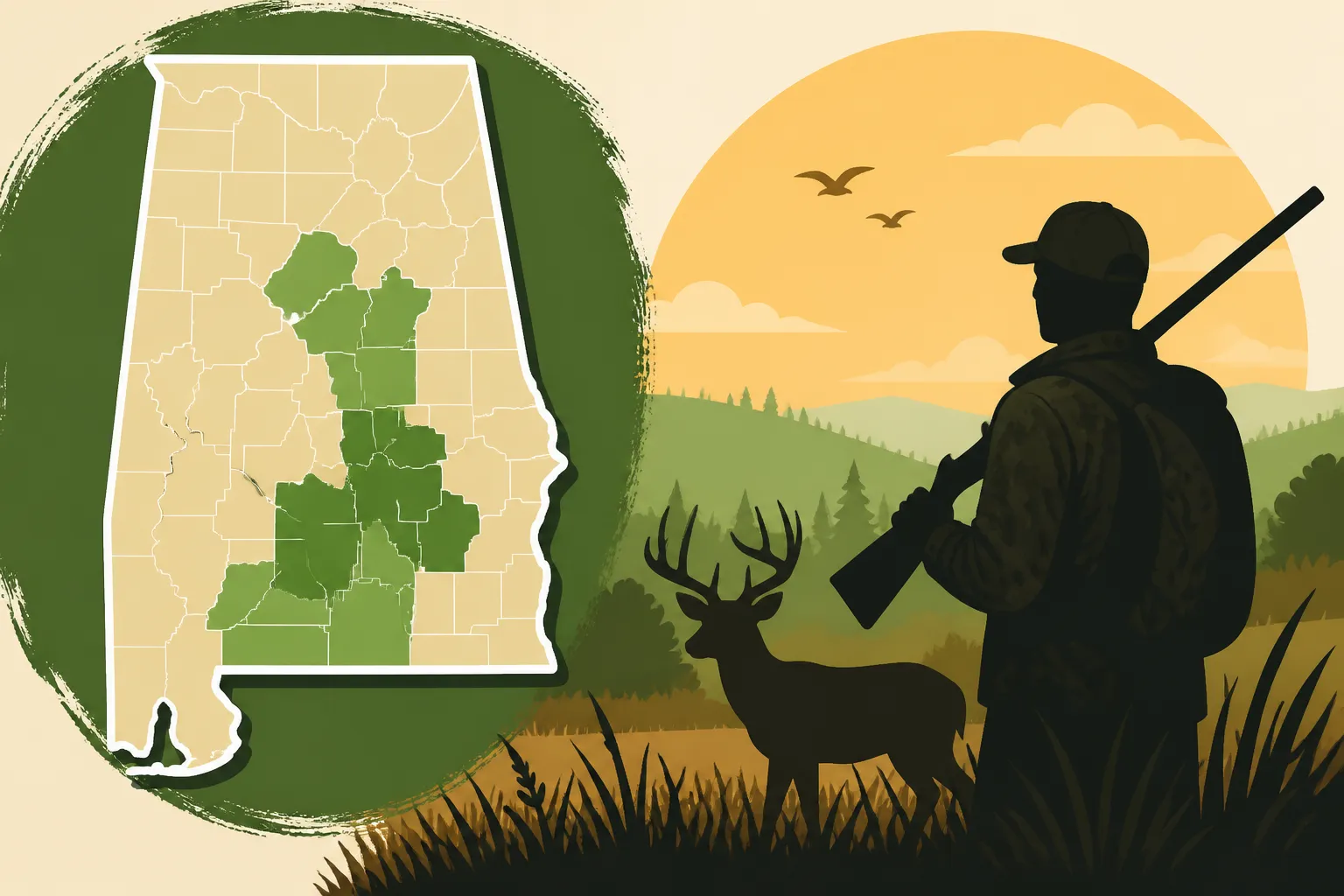
When it comes to sheer acreage of public land available for hunting, Winston County often takes the crown in Alabama, largely thanks to the majestic William B. Bankhead National Forest. This isn't just a patch of woods; it's a massive expanse of rugged terrain, towering hardwoods, and clear-flowing creeks that offers some of the most diverse public hunting experiences in the state. If you’re looking for a place where you can truly get lost (in a good way!) and escape the crowds, Winston County is your best bet.
A Deep Dive into William B. Bankhead National Forest
The William B. Bankhead National Forest, often affectionately called "Bankhead" by locals, covers over 180,000 acres, and a significant portion of that lies right in Winston County. This vast area is managed by the U.S. Forest Service, providing a wealth of opportunities for deer, turkey, small game, and feral hog hunting. The landscape here is characterized by steep ravines, impressive rock outcroppings, and dense timber stands, making it both challenging and incredibly rewarding for the persistent hunter. The sheer size means you can often find secluded spots, even during peak season, if you're willing to put in the legwork. It's a place where you can really practice Still-Hunting Bankhead Forest Ridges and immerse yourself in the wild.
The forest is also home to the Sipsey Wilderness Area, a federally designated wilderness where motorized vehicles and even bicycles are prohibited. While hunting rules within the wilderness itself have specific nuances, the surrounding national forest lands offer abundant access. The diverse habitat supports a healthy population of whitetail deer, and the mature timber provides excellent roosting and foraging areas for wild turkeys. Where Bankhead Forest Bucks Bed often involves these untouched pockets away from easy access. For those who enjoy chasing squirrels or rabbits, the bottomland hardwoods and creek drainages are rich with small game.
Why Bankhead Offers So Much Opportunity
What makes Bankhead, and by extension, Winston County, such a public land powerhouse? It's a combination of factors. First, its immense size allows for extensive habitat diversity, from dense pine plantations to mature oak-hickory stands and riparian zones. This variety caters to different game species and hunting styles. Second, while popular, its rugged nature naturally disperses hunters. Many areas require significant walking, sometimes miles from the nearest road, to reach prime hunting spots. This self-selects for hunters who are willing to put in the effort, leaving more accessible areas less pressured. Third, the long history of public land management means established infrastructure like designated camping areas and forest roads, even if some roads are gated seasonally.
The opportunity isn't just about deer and turkey, either. Bankhead is a fantastic place for pursuing Squirrel and Small Game Hunting in Alabama, with bushy-tailed and fox squirrels thriving in the diverse hardwood mast crops. And let's not forget about feral hogs. They are present throughout the forest, offering a challenging, year-round hunting opportunity that can provide some exciting action and help with habitat management. For anyone who truly loves the feeling of being deep in the woods, with nothing but the sounds of nature and the possibility of a wild encounter, Winston County’s Bankhead National Forest is an unparalleled resource.
Beyond Winston: Other Public Land Powerhouses in Alabama
While Winston County might hold the top spot for sheer acreage, Alabama is blessed with several other counties that offer significant public hunting opportunities through various national forests and wildlife management areas. These areas might not individually match Bankhead's total footprint, but collectively they provide a vast network of accessible land.
Talladega National Forest: A Piedmont Gem
Spanning multiple counties, including large sections within Cleburne, Clay, and Talladega counties, the Talladega National Forest is another enormous public land resource. This forest offers a completely different hunting experience compared to the ruggedness of Bankhead. Located in the Appalachian foothills and the Piedmont region, Talladega is characterized by mountainous terrain, extensive pine plantations, and mixed hardwood draws. For hunters targeting deer and turkey, the varied elevation and timber types create unique challenges and opportunities.
Counties like Cleburne often boast substantial portions of the Talladega National Forest's Talladega Division. Hunters here can expect to navigate steep ridges and hollows, where scouting for natural funnels and food sources is key. Talladega National Forest Hunting is a rewarding experience, but it demands good physical conditioning and diligent scouting. You'll find a mix of pine-dominated areas and hardwood creek bottoms, which can be fantastic for both deer and turkey. It’s a great place to learn about Wind and Thermals on a Piedmont Ridge and how they affect game movement. The sheer size of these sections means that, like Bankhead, you can often find solitude if you're willing to hike away from primary access points.
Conecuh National Forest: South Alabama's Expansive Gem
Down in South Alabama, primarily within Covington and Escambia counties, lies the Conecuh National Forest. This forest offers yet another distinct habitat type: the longleaf pine savanna, interspersed with flatwoods, swamps, and titi thickets. While not as mountainous as Bankhead or Talladega, Conecuh presents its own set of challenges and rewards. It's a fantastic area for deer, feral hogs, and even some unique waterfowl opportunities in its numerous ponds and swampy areas.
Covington County, in particular, contains a large portion of the Conecuh. Hunting here means adapting to dense undergrowth in places, navigating muddy trails after rain, and understanding how game moves through these unique southern pine habitats. Conecuh National Forest Hunting provides a different flavor of public land hunting, often requiring different tactics than those used in the hillier northern forests. The flat topography can make still-hunting or stalking more challenging, often leading hunters to rely more on stand hunting over natural funnels or food sources. Its year-round hog population also makes it a popular destination for those looking to extend their hunting season.
Wildlife Management Areas WMAs: Smaller but Strategic Options
Beyond the vast national forests, Alabama's Wildlife Management Areas (WMAs) provide crucial public hunting access, often in counties that might not have a national forest presence. While individual WMAs are typically smaller than national forest divisions, they are intensely managed for wildlife, often resulting in higher game densities and quality hunting. Counties like Bibb, for example, might not have a National Forest, but they host parts of the Oakmulgee Division of the Talladega National Forest and WMAs like the Cahaba River WMA. These areas are managed by the Alabama Division of Wildlife and Freshwater Fisheries (ADWFF) and come with specific regulations and sometimes quota hunt requirements.
Each WMA offers unique characteristics. Some, like Barbour WMA (in Barbour County), are known for their deer management strategies and can offer excellent buck hunting. Others, such as Skyline WMA (Jackson/Madison counties), provide prime turkey and deer hunting in mountainous settings. The beauty of WMAs is that they are strategically located across the state, ensuring that most hunters are within a reasonable drive of some form of public land. Before heading out, always check the specific regulations for the WMA you plan to visit, as rules on vehicles, camping, and even antler restrictions can vary significantly. Don't forget, most WMAs require an Alabama WMA Permit Requirement in addition to your state hunting license.
Navigating Alabama's Public Hunting Lands: Tools and Tactics
Finding public land is one thing, but knowing how to effectively navigate and hunt it is another challenge entirely. With thousands of acres at your disposal, it can feel overwhelming. Luckily, modern technology and some tried-and-true scouting methods can make all the difference.
Essential Mapping Apps: Your Digital Compass
Gone are the days when a crumpled paper map was your only guide (though a paper map is still a good backup!). Today, apps like onX Hunt have revolutionized how hunters locate and navigate public land. Using onX Hunt, you can instantly see property lines, land ownership, and precisely where public land begins and ends. This is invaluable in Alabama, where public and private parcels can be intricately interwoven. You can also mark waypoints for potential stand sites, food sources, and travel corridors, making your scouting and hunting trips much more efficient.
Another fantastic resource is the Outdoor Alabama app, which offers official WMA maps and current regulations right on your phone. Even if you don't have cell service deep in the woods, many of these apps allow you to download maps for offline use, ensuring you always know where you are. Investing in a good mapping app and learning its features can significantly boost your confidence and success rate on public land. It helps immensely in avoiding accidental trespass and making sure you're always within legal hunting boundaries.
Scouting Smarter: Pre-Season Intel
Just because it's public land doesn't mean you can just show up opening day and expect success. Pre-season scouting is paramount, and it blends traditional boot-on-the-ground work with digital reconnaissance. Start with satellite imagery on your mapping app to identify potential bedding areas, bottlenecks, creek crossings, and changes in topography that might funnel deer or provide turkey roosting spots. Look for areas with diverse habitat, where different timber types meet, or where natural features create cover and travel routes.
When you're out physically scouting, look for fresh sign: rubs, scrapes, tracks, and droppings. Identify key food sources in the area, whether it's acorns, persimmons, or browse. Pay attention to how deer move through the landscape and try to identify less-traveled routes. Don't be afraid to walk further than most. How Far to Walk From a Forest Road is often directly correlated with finding undisturbed game. Public land often means pressure, so finding those out-of-the-way spots is critical. Resources like GoHunt can also provide valuable insights into hunting trends and strategies, helping you approach your scouting with a more informed plan.
Understanding Regulations and Boundaries
Public land, particularly WMAs and national forests, comes with its own set of rules that can differ from statewide regulations. Before you even think about setting foot in the woods, thoroughly review the specific regulations for that particular WMA or national forest. This includes season dates, bag limits, weapon restrictions, and rules regarding ATVs, camping, and even the type of treestand you can use. For instance, some WMAs have specific Treestand Rules on Alabama Public Land about climbing stands versus ladder stands or leaving stands overnight.
Always be mindful of boundaries. While mapping apps are a huge help, confirm property lines with physical markers like painted trees or boundary signs where available. Accidental trespass can lead to serious consequences and reflects poorly on all hunters. Respecting the land, its wildlife, and other users is fundamental to ensuring these public hunting opportunities remain available for generations to come.
Making the Most of Your Public Land Adventure
Hunting public land in Alabama is a rewarding challenge. It requires adaptability, persistence, and a willingness to learn. But with the right mindset and strategies, you can have incredibly successful and memorable hunts.
Dealing with Hunting Pressure
Let's be realistic: public land often means hunting pressure, especially on opening day or during peak times. But pressure doesn't have to mean no success. It just means you need to hunt smarter. One common strategy is to simply walk further than other hunters. Most people stick within a certain radius of roads and parking areas. By hiking an extra half-mile or mile into tougher terrain, you drastically increase your chances of finding less pressured game. This is where fitness truly pays off. Hunting Pressure on Alabama Public Land is a reality, but it can be overcome.
Another tactic is to hunt mid-week instead of weekends, if your schedule allows. Even a single day mid-week can feel like a whole different forest. Consider hunting during less popular times of day, like midday, when many hunters have gone back to camp for lunch. Deer on pressured land often become more active during these quiet periods. Also, learn how deer react to pressure. They will often seek out the thickest, nastiest cover available – places most hunters avoid. These spots, while challenging, can be goldmines.
Finding Undisturbed Pockets
Finding those undisturbed pockets of public land is the holy grail for many hunters. This often involves a combination of satellite imagery, topographical maps, and boots-on-the-ground scouting. Look for areas with natural barriers like steep ravines, rivers, or dense, impenetrable thickets. These features naturally deter casual hunters and can create sanctuaries where deer and turkey feel safe.
Think about elevation changes. Ridges and saddles, especially those not directly adjacent to roads, can be fantastic travel corridors or bedding areas. Creeks and drainages often create natural funnels. Use your mapping app to identify these features and then plan scouting trips to investigate them. Sometimes, the "undisturbed pocket" isn't miles deep but just a small, overlooked patch of thick cover right off a main trail that everyone walks past. Learning to read the land for these subtle nuances is a skill that develops over time and through countless hours in the woods. Consider checking out resources on Scouting Alabama Public Land Before Season to refine your approach.
Packing Smart for Public Land Hunts
When you're hiking into public land, especially in rugged areas like Bankhead or Talladega, what you carry on your back matters. Every ounce counts. A good quality backpack, comfortable hiking boots, and appropriate layers for Alabama's notoriously fluctuating weather are non-negotiables. Don't forget essentials like plenty of water, high-energy snacks, a first-aid kit, a headlamp, and a reliable compass (or fully charged phone with downloaded maps).
If you’re planning on staying for a few days, familiarize yourself with Camping Rules on Alabama National Forest Land, as designated camping areas or dispersed camping rules vary. A lightweight, packable stand is often preferred over heavy ladder stands if you're hiking deep. Always carry out everything you carry in, including trash and spent casings. Leaving no trace is part of being a responsible public land hunter and ensuring these areas remain beautiful and wild for everyone.
Hunting Alabama's public lands, particularly in counties like Winston, Cleburne, and Covington, is an incredible privilege. With the right preparation, tools, and a respectful approach to these wild spaces, you're set for some truly memorable adventures.
Disclaimer
This article is for general informational purposes only and does not constitute professional advice. Laws, prices and regulations vary by location and change over time. Consult a qualified professional for guidance on your specific situation.