Camping Rules on Alabama National Forest Land
Trying to figure out where you can pitch a tent or park your camper when you're headed to hunt Alabama's vast National Forests can feel like navigating a maze without a map. It's frustrating to plan an exciting hunt only to worry if your chosen campsite is even legal. This guide is here to clear up all that confusion, walking you through the essential camping rules for Alabama's National Forest lands so you can focus on the hunt.
Understanding Alabama's National Forests for Camping
Alabama is blessed with significant tracts of National Forest land, like the Talladega, William B. Bankhead, and Conecuh National Forests. These public lands offer incredible hunting opportunities, but they also come with a responsibility to understand and follow the rules, especially when it comes to camping. It’s not just about avoiding a fine; it’s about preserving these beautiful places for future generations of hunters and outdoor enthusiasts.
The 'Leave No Trace' Ethos in National Forests
At the heart of all National Forest regulations, especially regarding camping, is the "Leave No Trace" principle. This isn't just a suggestion; it's the fundamental ethic that guides responsible outdoor recreation. For hunters, it means being mindful of your impact from the moment you arrive until you pack up.
When we talk about "pack it in, pack it out," it literally means everything you bring with you needs to leave with you. This includes food wrappers, spent shell casings, broken gear, and even biodegradable items like fruit peels or apple cores, which can take surprisingly long to decompose and can attract unwanted wildlife. Imagine pulling up to a remote, perfect hunting spot only to find someone else's trash. It ruins the experience for everyone. So, make sure you have a designated trash bag (or two) and plan to take every scrap home.
Minimizing campfire impacts is another huge part of this ethos. A roaring fire under the stars is part of the hunting camp experience for many, but it needs to be done responsibly. This means using existing fire rings whenever possible. If you're in a dispersed camping scenario without an existing ring, you'll need to create a small, contained fire pit that leaves no lasting scar on the landscape. We'll dive deeper into fire rules shortly, but the core idea is to make sure your fire is completely out and cold to the touch before you leave, and that no visible signs of a fire remain.
Finally, respecting wildlife and other visitors is paramount. We're all out there to enjoy nature, and that includes those who aren't hunting. Keep noise levels down, especially during prime wildlife activity hours. When it comes to wildlife, remember you're in their home. Store food properly to prevent attracting animals, and never approach or feed wild animals. They need to remain wild for their own safety and ours.
Designated vs. Dispersed Camping Opportunities
When you're planning your camping trip on Alabama National Forest land, you generally have two main choices: designated campgrounds or dispersed camping. Each has its own appeal and a distinct set of rules and expectations.
Designated campgrounds are what most people think of when they imagine camping. These are often managed sites with some amenities, which can range from basic vault toilets and picnic tables to more developed sites with water hookups, bathhouses, and even RV pads. They might have a host on-site, and there's almost always a fee involved. These campgrounds are fantastic if you want convenience, a bit more security, and don't mind having neighbors. They also provide a clear, established place to set up camp, which can be less stressful for new public land hunters. You'll find these campgrounds listed on the individual National Forest websites or through reservation systems.
Dispersed camping, on the other hand, is the more primitive option and often favored by hunters seeking solitude and a true wilderness experience. This means camping outside of developed campgrounds, usually along forest service roads or trails, or deep in the backcountry. The huge draw here is the freedom: you pick your spot, and there are no fees. However, with that freedom comes a greater responsibility. There are no amenities—no water, no toilets, no trash service. You are entirely self-sufficient. This style of camping requires careful planning, adherence to Leave No Trace principles, and a good understanding of where you are legally allowed to set up. Many hunters prefer Using a Ground Blind on Alabama Public Land in these more remote, dispersed areas for added concealment.
Here's a quick comparison of the two main camping types:
| Feature | Designated Campgrounds | Dispersed Camping |
|---|---|---|
| Location | Marked sites, often near popular areas | Undeveloped areas, along roads, backcountry |
| Amenities | Varies: toilets, water, picnic tables, trash service | None (no water, toilets, trash, etc.) |
| Cost | Generally requires a fee | Free |
| Privacy | Limited; often have neighbors | High; offers solitude and quiet |
| Vehicles | Usually at campsite parking; some drive-up sites | Parked safely off designated roads |
| Fire | Often in established fire rings | Must create or use existing low-impact fire rings |
| Suitability | Families, RVs, those seeking convenience | Hunters, backpackers, those seeking solitude |
| Impact | Concentrated, managed impact | Dispersed, requires strict Leave No Trace adherence |
Specific Regulations for Dispersed Camping
Since many hunters opt for the solitude and flexibility of dispersed camping, it's crucial to understand the specific rules that govern this type of camping on Alabama's National Forest lands. These aren't just arbitrary guidelines; they're designed to protect the environment and ensure everyone has a positive experience.
Location, Location, Location: Where You Can Set Up Camp
One of the most common questions about dispersed camping is, "Where can I actually pitch my tent?" The general rule of thumb on National Forests is to camp at least 100-200 feet (about 40-70 steps) away from any road, trail, or water source. This isn't just for aesthetics; it helps prevent erosion, keeps human activity from impacting sensitive riparian areas, and allows others to enjoy trails and water sources without stumbling upon your camp. For those looking to set up a deer camp, finding a good spot that's both compliant and strategic for hunting often means Scouting Alabama Public Land Before Season is essential.
You also need to be mindful of private property inholdings. National Forests aren't always continuous blocks of public land; they can contain parcels of private property within their boundaries. Setting up camp on private land, even unknowingly, is trespassing. This is where modern mapping apps like onX Hunt or GoHunt become invaluable. These apps layer property ownership data onto detailed topographical maps, allowing you to clearly see public and private land boundaries right on your phone or GPS device. Before you even head out, you can scout potential camp spots from home, ensuring you're well within the public land boundaries.
Regarding maximum stay limits, most National Forests have rules about how long you can continuously occupy a single dispersed campsite. This is usually around 14 days within any 30-day period. These limits are in place to prevent long-term residency and to ensure that all visitors have an opportunity to use popular camping areas. If you plan an extended hunting trip, be sure to check the specific forest or district regulations, as they can sometimes vary.
Fire Safety and Campfire Restrictions
A campfire is practically synonymous with a hunting camp, but fire safety is non-negotiable, especially in Alabama's often dry climate. The rules are clear: always attend your fire, keep it small and manageable, and make sure it's dead out before you leave.
Ideally, you should always use existing fire rings if one is present. If you're in a truly primitive dispersed area without a fire ring, you'll need to construct a temporary one. This means clearing all flammable material down to bare soil in a 10-foot radius around your proposed fire. Dig a small pit, use rocks to create a low ring, and only build a fire large enough for your needs. Never leave a campfire unattended, even for a short walk to retrieve more firewood. Embers can quickly be caught by a breeze and ignite dry leaves or pine straw, turning a pleasant evening into a dangerous situation.
Seasonal fire bans are a critical consideration. During prolonged dry spells or high-wind events, the Forest Service will issue fire restrictions, which can range from banning all open flames to only allowing fires in designated campgrounds with approved fire rings. Always check the specific National Forest website or call the ranger district office before your trip to find out if there are any current fire restrictions. Ignoring a fire ban isn't just risky; it carries significant penalties.
When it's time to put out your fire, don't just kick dirt over it. Use water, lots of it, and stir the ashes with a stick or shovel until everything is completely drenched and cool to the touch. You should be able to place your bare hand on the ashes without feeling any warmth. This thoroughness is crucial to prevent smoldering embers from reigniting hours later.
Waste Management and Sanitation
In a dispersed camping environment, you are your own waste management system. This means adhering strictly to "pack it in, pack it out" for all your trash, as mentioned before. But it also extends to human waste and greywater.
For human waste, the standard practice is to dig a "cat hole" at least 6 to 8 inches deep and at least 200 feet (70 steps) away from water sources, trails, and campsites. After use, cover it thoroughly with soil and natural materials. Toilet paper should either be packed out with your other trash or buried deeply in the cat hole. Some experienced backcountry users even pack out their toilet paper to ensure no trace is left behind.
Greywater—the water used for washing dishes, cooking, or personal hygiene—also needs to be handled responsibly. Never dump it directly into a stream or lake. Instead, disperse it widely over solid ground, at least 200 feet from water sources. Use biodegradable soaps if you must use soap, but even then, disperse the greywater. Food particles in greywater can attract animals and contaminate water sources, so try to scrape plates clean before washing. This attention to detail is part of the deep respect for nature that comes with Hunting Alabama's Year-Round Feral Hogs or chasing elusive deer in the backcountry.
Vehicle and Treestand Rules Related to Camping
When you're establishing a hunting camp on National Forest land, it's not just about where you sleep; it's also about how you access your spots and what you leave behind in the woods. Misunderstanding vehicle or treestand rules can lead to fines or, worse, safety issues.
Vehicle Access and Parking Near Campsites
One of the biggest differences between private land and public land like National Forests is where you can drive and park. Generally, vehicles are restricted to designated roads and trails. This means no driving off-road to get closer to your perfect camp spot or hunting area unless it's explicitly marked as an open route. The Forest Service maintains a system of numbered roads, and not all of them are open to public vehicle traffic. Some are gated, some are restricted to administrative use, and others are simply too rough for conventional vehicles.
When you find a dispersed camping spot, you'll need to park your vehicle safely off the main road, ensuring you're not blocking any traffic, gates, or access points for other users or emergency vehicles. This is especially important on smaller, less-maintained forest service roads. Never create new pull-offs by driving over vegetation or into ditches. Use existing pull-offs or wide spots that clearly don't impede flow. Knowing your route in advance, perhaps even using a mapping tool like onX Hunt or GoHunt to identify forest road numbers and public access points, can save a lot of headaches and keep you from venturing onto restricted areas.
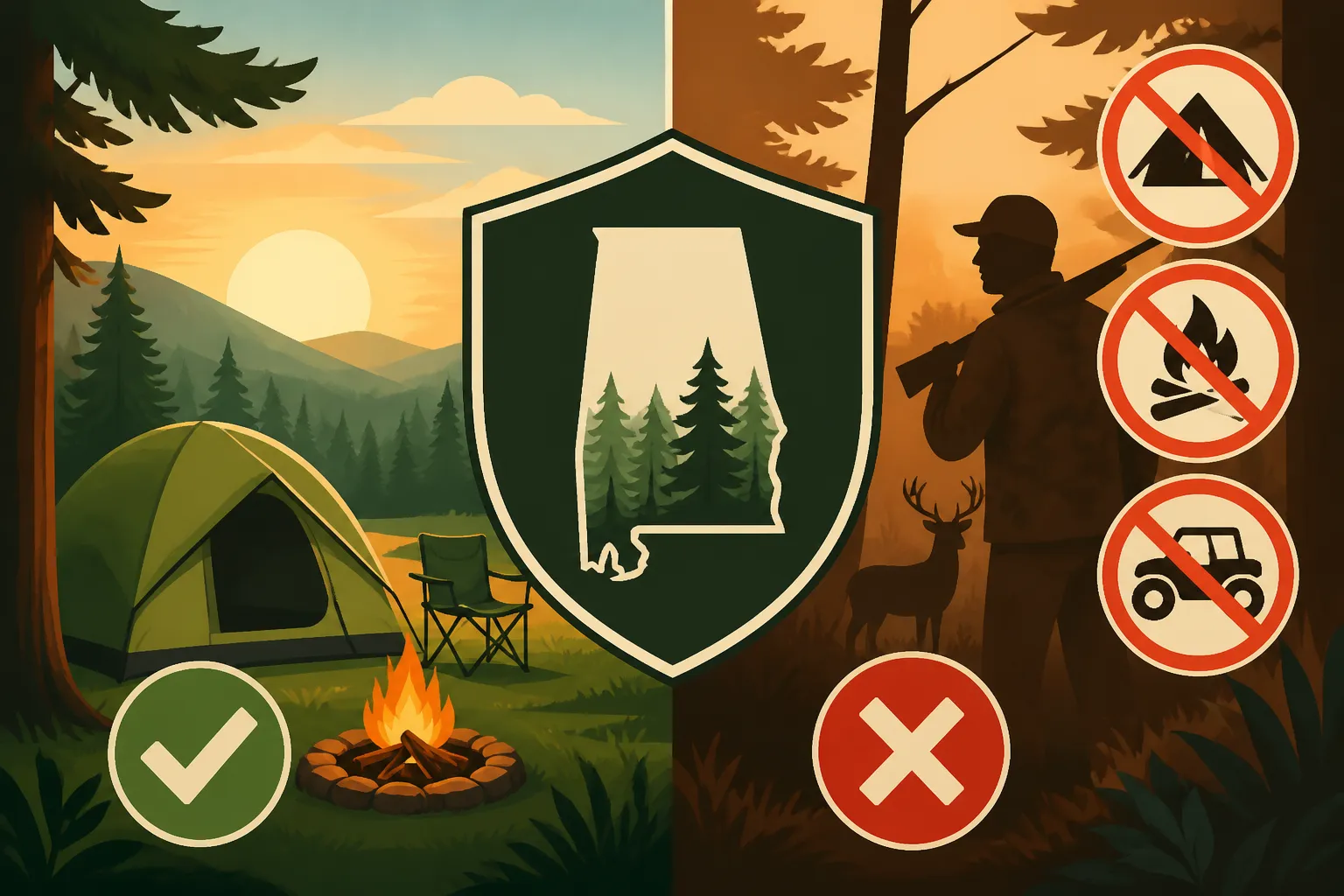
Off-road vehicle (ORV) restrictions are very strict on National Forests. Generally, unless a specific trail or area is designated and signed for ORV use, cross-country travel is prohibited. This includes ATVs, UTVs, and even dirt bikes. Always check the specific Motor Vehicle Use Map (MVUM) for the National Forest district you plan to hunt. These maps are the official record of what roads, trails, and areas are open to motorized vehicles. Ignoring these rules can lead to significant fines and damage to sensitive ecosystems.
Integrating Hunting Camps with Treestand Placement
For many deer hunters, a treestand is an indispensable tool. When camping on National Forest land, your treestand strategy needs to align with both hunting regulations and camping rules. It's not uncommon to hike a good distance from your camp to a prime hunting location, especially if you're targeting areas Where Bankhead Forest Bucks Bed or you're trying to escape pressure.
Most National Forests allow the use of temporary treestands on public land, but they usually come with specific guidelines. Permanent stands—those that use lag bolts, platforms nailed to trees, or other methods that damage the tree—are almost universally prohibited. Stick to climbing stands, ladder stands, or hang-on stands that use straps and chains that don't injure the tree. Always remember that any stand you put up is temporary and must be removed at the end of the hunting season, often within a specific timeframe after the season closes. Check the Alabama Department of Conservation and Natural Resources (ADCNR) regulations for exact dates.
Stand identification is another key rule. Most public lands require you to clearly mark your stand with your name and address, or in some cases, your hunting license number. This helps enforcement officers know who the stand belongs to and ensures compliance. Leaving a stand up year-round or not identifying it can lead to its removal by the Forest Service.
When planning your camp, consider its proximity to your intended hunting spots. While you want your camp to be discreet and adhere to setback rules, you also want an efficient, quiet entry and exit route to your treestand. A longer walk from camp to stand in the pre-dawn darkness means more opportunity to spook deer. Many hunters will place their camp a reasonable distance from their primary hunting area to minimize disturbance, but close enough for convenience. This might mean Hanging a Stand on a Talladega Ridge and setting up camp a half-mile away, using careful approach tactics.
Planning Your National Forest Camping Hunt
A successful hunting trip that involves camping in Alabama's National Forests requires more than just knowing the rules; it demands thoughtful preparation. A little pre-trip research and gear planning can make all the difference between a memorable hunt and a frustrating ordeal.
Researching Your Specific National Forest or WMA
Alabama's National Forests—Talladega, Bankhead, and Conecuh—each have unique characteristics, and sometimes specific districts within them might have slightly different nuanced rules. Before you even pack your first item, spend some serious time researching the exact area you intend to hunt and camp. The official websites for the U.S. Forest Service often have pages dedicated to each National Forest, listing contact information for ranger districts, current conditions, fire restrictions, and Motor Vehicle Use Maps (MVUMs). Don't just assume what applies in one forest will apply exactly the same in another.
This is also where those modern mapping tools truly shine. Apps like onX Hunt and GoHunt are indispensable for hunters in Alabama. You can download maps for offline use, which is critical because cell service is often nonexistent deep within the National Forests. These apps allow you to:
- Identify Public vs. Private Land: Crucial for ensuring your camp and hunting spots are legal.
- Locate Forest Service Roads and Trails: Helps you plan vehicle access and understand what's open or closed.
- Mark Water Sources and Topography: Essential for finding safe drinking water (with purification) and understanding terrain for campsite selection and hunting strategies.
- Track Your Movement: Records your path, helping you navigate back to camp after a long day of hunting, especially when Blood Trailing After Dark in Alabama.
Beyond maps, be sure to check the specific regulations for any Wildlife Management Areas (WMAs) that might be within or adjacent to the National Forest land you're targeting. WMAs often have their own set of rules regarding hunting seasons, bag limits, and even camping, which can differ from general National Forest rules. Alabama WMA Permit Requirement is a good article to review to understand those specific rules.
Finally, always be prepared for Alabama's unpredictable weather. Even if the forecast calls for clear skies, pack rain gear and layers. The climate can shift quickly, especially in the more mountainous regions of the Talladega National Forest. A sudden cold snap or heavy rain can turn a comfortable camp into a miserable one if you're not ready.
Essential Gear for a Successful National Forest Camp
Beyond your core hunting equipment, a successful camping trip in a National Forest requires a few specialized items to ensure comfort, safety, and compliance with regulations. Think self-sufficiency.
- Water Filtration/Purification: Unless you're in a designated campground with potable water, you'll need a way to make natural water sources safe to drink. A high-quality water filter, purification tablets, or a portable UV purifier are absolute must-haves. Don't rely on finding springs; they can dry up or be contaminated.
- Food Storage: To comply with Leave No Trace and protect yourself and wildlife, proper food storage is vital. This means either a bear-resistant canister (though bear encounters are less common in Alabama than in some other states, it's still good practice), or hanging a bear bag at least 10 feet off the ground and 4 feet from the tree trunk. The goal is to keep food odors away from your tent and out of reach of animals like raccoons, possums, and yes, even potential bears in areas like The Mobile River Basin Bear Population.
- Navigation Tools: While mapping apps are great, always have a backup. A physical map of the area and a compass are essential, especially if your phone battery dies or gets wet. Knowing how to use them is even more important than just having them.
- Appropriate Shelter: Consider the season and expected weather. A lightweight backpacking tent is perfect for warmer weather, but if you're hunting during Alabama's late season, you might need a more robust tent with a good rainfly and insulation. For truly cold conditions, a canvas wall tent with a wood stove might be more appropriate, but remember the fire safety guidelines.
- First-Aid Kit: A comprehensive first-aid kit is non-negotiable for any backcountry adventure. Include supplies for cuts, scrapes, blisters, insect bites, and any personal medications.
- Illumination: Headlamps are invaluable for hands-free light in camp and for navigating to your stand in the dark. Bring extra batteries.
- Camp Shovel/Trowel: Essential for digging those cat holes and managing campfire ashes.
- Trash Bags: Bring more than you think you'll need for packing out every piece of trash.
By taking the time to understand these camping rules and preparing appropriately, you'll ensure your Alabama National Forest hunting trip is not only successful in the field but also responsible and enjoyable. Whether you're chasing deer, hogs, or turkeys, a well-managed camp makes all the difference.
Disclaimer
This article is for general informational purposes only and does not constitute professional advice. Laws, prices and regulations vary by location and change over time. Consult a qualified professional for guidance on your specific situation.