The Four-Point Rule Exception in Barbour County
It's easy to feel like you need a law degree to understand all the nuances of Alabama's deer hunting regulations, especially when you start looking at antler restrictions that seem to shift the moment you cross a county line. This guide will walk you through the specific exception in Barbour County concerning antlered bucks, shedding light on why it exists and what it means for you as a hunter so you can approach your hunt with clarity and confidence.
Understanding Alabama's General Antler Restrictions
Before we dive into the specific rules for Barbour County, it’s really helpful to grasp the statewide framework for harvesting antlered deer. This foundation helps illustrate why Barbour County’s approach stands out and why it’s so important to understand the distinctions. Most hunters are familiar with the basic antler point regulations, but the devil, as they say, is in the details, especially when those details directly impact what you can and cannot harvest.
The Statewide Three-Buck Limit
Across most of Alabama, hunters are allowed to harvest a maximum of three antlered bucks per deer season. This limit is a cornerstone of deer management, designed to prevent overharvesting of the male segment of the deer population while still providing ample opportunity for hunters. It's not just a number pulled out of a hat; this limit helps maintain a healthy buck-to-doe ratio and promotes a more balanced age structure within the herd, which is crucial for robust rut activity and overall herd health.
Many hunters find the three-buck limit a fair compromise, offering enough opportunity without putting undue pressure on the population. However, the type of bucks you can harvest within that limit is where the rules become a bit more intricate. For example, your first antlered buck of the season generally allows for any visible antler, regardless of point count or spread. This provision is often seen as a way to allow younger hunters or those new to deer hunting to experience success, while still nudging more experienced hunters towards letting smaller bucks walk later in the season. But once that first "any antlered" buck is tagged, the rules for subsequent bucks often get tighter, leading us to the common antler point restrictions. This understanding is key as you prepare for your hunt, and sites like GoHunt can be invaluable for staying current on these specific regulations. For a broader overview, check out the information on Alabama's Three-Buck Season Limit.
The Standard Four-Points-on-One-Side Rule
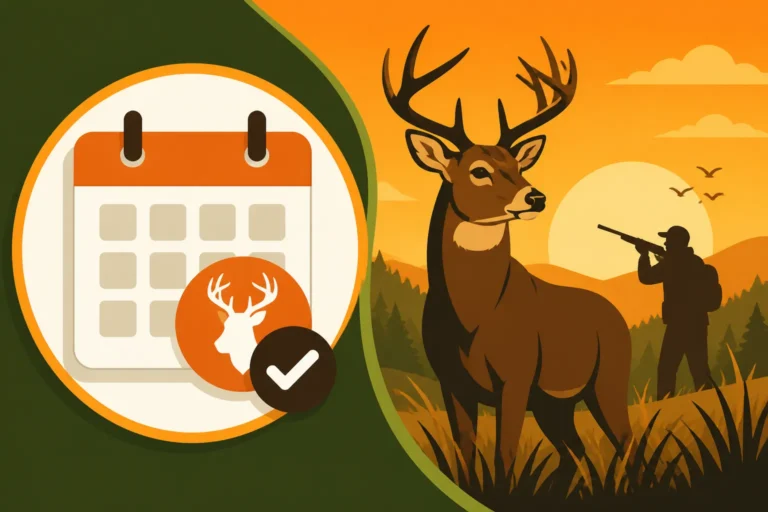
Beyond the initial "any antlered" buck, Alabama implements a standard rule for the second and third bucks you harvest in a season. These bucks must have either four points or more on one side of their antlers, or an outside antler spread of at least 13 inches. This regulation, often referred to as an Antler Point Restriction (APR), is a primary tool for quality deer management. The whole idea behind it is to protect younger bucks, particularly those yearlings and two-and-a-half-year-olds who might have smaller racks but possess excellent genetic potential. By letting these younger bucks mature, the hope is to see an increase in older age-class bucks with larger antlers across the state.
Imagine you're sitting in your stand, and a decent-sized buck walks out. Your heart starts pounding. If it's your second or third buck, you've got to quickly assess its antlers. Does it have four points on one side? That means four distinct points, one inch or longer, including the brow tine, G2, G3, etc. Or does it have an outside spread wider than your ears, roughly 13 inches? Making this judgment call in the field, sometimes in low light or at a distance, can be challenging. Many hunters practice by looking at photos or even using props to calibrate their eye to what 13 inches looks like. The frustration comes when you make a mistake, or when a buck that looks "good enough" doesn't quite meet the legal definition. These regulations are designed to improve the herd, but they certainly add a layer of complexity to decision-making during a hunt.
The Unique Case of Barbour County
Now, let's talk about Barbour County, because this is where the plot thickens. While the general statewide rules serve as a baseline, certain counties, like Barbour, have adopted specific variations that reflect localized deer management objectives. Understanding this deviation is critical for anyone planning to hunt in this particular region. It’s not just a minor tweak; it’s a distinct approach that can change your entire hunting strategy.
Origins and Purpose of the Exception
Barbour County's antler restriction rule isn't arbitrary; it's rooted in a long-standing commitment to quality deer management that predates many statewide initiatives. The county, known for its rich hunting heritage and abundant deer population, embraced more stringent antler restrictions years ago with a clear goal: to significantly improve the age structure and antler quality of its buck herd. The philosophy here is that by requiring hunters to pass on younger bucks, those bucks get more opportunities to reach older age classes, where they can fully express their genetic potential in terms of body size and antler development.
This approach was a bold move at the time and required significant buy-in from local hunters, landowners, and hunting clubs. It's about playing the long game – sacrificing immediate gratification for a healthier, more robust deer population down the road. The idea is to create a sustained environment where mature bucks are more common, leading to a better hunting experience overall. This kind of targeted management often starts at a local level, demonstrating a community's dedication to specific wildlife goals. It's a testament to how local initiatives, often driven by passionate hunters, can truly shape the landscape of deer hunting. For more context on why specific regulations might be implemented, it's worth understanding Alabama Deer Population Estimate trends and how they inform management decisions.
Specifics of Barbour County's Antler Restriction
So, what exactly is the rule in Barbour County? Unlike the statewide regulation that allows for one "any antlered" buck before the four-points-on-one-side or 13-inch spread rule kicks in, Barbour County historically has required that all antlered bucks harvested meet the standard of having at least four points or more on one side, OR an outside antler spread of 13 inches or greater. This means there is no "free pass" for an initial smaller buck. Every single antlered buck taken in Barbour County must meet these specific criteria from the first trigger pull of the season.
To put it plainly, if you're hunting in Barbour County and you shoot a spike buck or a small four-point with less than a 13-inch spread, even if it's your first buck of the season, you've harvested an illegal animal. This is a significant distinction that can easily trip up hunters accustomed to the general statewide rules. The goal is to maximize the number of bucks that survive past their yearling and two-year-old phases, allowing them to grow into the impressive animals that Barbour County is known for. This more restrictive approach requires hunters to be extra diligent in their buck identification and to truly commit to the quality deer management goals of the county. Websites like GoHunt and the official Outdoor Alabama resources are essential for double-checking these rules annually, as regulations can sometimes be adjusted.
Navigating the Rule: What Hunters Need to Know
Hunting with specific, county-level regulations like Barbour County’s antler restriction demands a heightened level of awareness and preparation. It's not enough to simply know the rule; you need to understand how to apply it practically in the field and where to find the most accurate, up-to-date information. Missing a detail can turn an exciting hunt into a costly mistake.
Verifying the Rules Before Your Hunt
The single most important piece of advice for any hunter is to always verify the current regulations before you step foot in the woods. Wildlife regulations are dynamic; they can be updated annually, and sometimes even mid-season, based on biological data, harvest numbers, and management objectives. Relying on what you "heard" last year, or what applies in a neighboring county, is a recipe for trouble.
For Alabama hunters, the Alabama Department of Conservation and Natural Resources (ADCNR) website and their annual digest are your authoritative sources. The Outdoor Alabama app is also incredibly useful, often providing easy access to regulations and mapping tools. Before your hunt in Barbour County, specifically navigate to the deer regulations section for that county. Pay close attention to the dates, zones, and any specific antler requirements. Consider printing out the relevant pages or saving screenshots on your phone. Even though cell service can be spotty in some hunting areas, having the information readily available for review can save you a lot of headache. A tool like GoHunt can also be a fantastic resource, allowing you to quickly look up regulations specific to your hunting location and even overlay property boundaries. This due diligence ensures you're hunting ethically and legally.
On-the-Ground Identification Challenges
Making an accurate antler judgment in the heat of the moment is one of the most stressful parts of hunting under APRs. A buck might appear quickly, stay for only a few seconds, or be partially obscured by brush. The adrenaline rush doesn't exactly help with calm, precise counting! Here are some common scenarios and tips:
- Distance and Lighting: What looks like a legal buck at 50 yards in bright daylight might look entirely different at 100 yards in twilight. Always use binoculars or a spotting scope to confirm antler characteristics before even thinking about raising your rifle.
- Counting Points: Remember, a point must typically be at least one inch long to count. Small bumps or broken tines might confuse you. Try to count each point distinctly. If you're unsure, it's always best to err on the side of caution and let the deer walk.
- Estimating Spread: The 13-inch outside spread can be tricky. A common trick is to mentally compare the antler spread to the deer's ears. A mature Alabama whitetail's ears are typically around 13-15 inches from tip to tip when alert. If the antlers don't extend past the ear tips, it’s likely under the 13-inch minimum. Again, practice makes perfect. Study photos and videos of deer, trying to guess their spread and point count.
- Broken Antlers: What if a buck breaks off a point? Generally, the regulation applies to the antler as it was, so if it had four points and broke one off, it's still legal. However, proving this to a game warden after the fact can be challenging. Again, if in doubt, let it walk.
- The Adrenaline Factor: Your brain will be screaming, "Shoot!" The best thing you can do is take a deep breath, find a steady rest, and force yourself to make the legal assessment before you make the shot. It takes discipline, but it’s part of being a responsible hunter, especially in Barbour County. This is a skill that improves over time and with experience, but preparation helps immensely. You can also refer to our guide on Why the Fourth Buck Needs Four Points for more insights on judging antlers.
Implications for Private vs. Public Land
The antler restriction rules for Barbour County apply across the board, whether you are hunting on sprawling private land, a small family tract, or one of Alabama's designated Wildlife Management Areas (WMAs) within the county. There isn't a separate set of rules for private versus public land when it comes to county-specific antler restrictions. If you're hunting in Barbour County, that rule is the law for all deer hunters within its borders.
This consistency simplifies things in one sense, as you don't have to juggle different regulations based on land ownership. However, it also means that hunters on private land, who might otherwise have more flexibility, are still bound by this specific regulation. Landowners and hunting clubs in Barbour County typically embrace these rules wholeheartedly, as they align with quality deer management goals and often reflect their own desired outcomes for their properties. For example, the Barbour Wildlife Management Area will rigorously enforce these rules, just as private landowners are expected to. The commitment to growing larger, older bucks is a shared one in this region, making it a distinctive place to hunt.
Management Philosophy Behind Antler Restrictions
Antler restrictions, especially the more rigorous ones seen in places like Barbour County, are not simply about making hunting harder or more complex. They are deeply rooted in a scientific management philosophy aimed at fostering healthier and more robust deer populations. Understanding this underlying reasoning can help hunters appreciate the long-term benefits, even when the immediate decision in the field feels challenging.
Promoting Buck Age Structure
The primary goal of antler restrictions is to protect young bucks, allowing them to survive more breeding seasons and reach older age classes. In an unmanaged or heavily pressured deer herd, younger bucks (especially yearlings and 2.5-year-olds) are often disproportionately harvested because they are numerous and often less wary. This can lead to a buck population heavily skewed towards young animals, which can have several negative consequences.
By implementing rules like Barbour County's, wildlife managers aim to:
- Increase the Number of Older Bucks: More bucks survive to 3.5 years old and beyond, allowing their antlers and body size to reach their full potential. This means more opportunities for hunters to encounter and harvest truly mature animals.
- Improve Rut Dynamics: A healthier age structure with more mature bucks can lead to a more intense and spread-out rut. Older bucks are more efficient breeders and contribute more effectively to the herd's genetics. They also tend to participate in more aggressive rutting behavior, which can be exciting for hunters to witness. This helps ensure better fawn recruitment and genetic diversity. Thinking about Hunting the Alabama Rut by Zone helps put this into perspective – the presence of older bucks directly influences rut activity.
- Enhance Genetic Potential: While antler size is influenced by nutrition and age, genetics play a role. Allowing bucks with good genetic potential to mature and breed helps propagate those desirable traits through the herd, potentially leading to better antler growth over generations. It’s a long-term investment in the quality of the deer herd that pays dividends for future hunting seasons.
Hunter Perception and Compliance
The implementation of antler restrictions often sparks lively debate among hunters. Some embrace the idea, seeing it as a necessary step for improving herd quality and the hunting experience. They value the opportunity to pursue older, more challenging bucks. Others express frustration, feeling that the rules add unnecessary complexity, limit harvest opportunities, or that judging antlers in the field is too difficult. It’s a natural tension between individual hunting freedom and collective management goals.
However, for these regulations to truly work, compliance is absolutely key. If a significant number of hunters fail to adhere to the rules, the intended biological benefits – the increased age structure and improved antler quality – simply won't materialize. This is why strong hunter education, clear communication from wildlife agencies, and community engagement are so vital. When hunters understand why the rules exist and see the positive impact, voluntary compliance increases. Groups like the Alabama Wildlife Federation and local hunting clubs often play a crucial role in fostering this understanding and promoting ethical hunting practices. It’s a shared responsibility to ensure Alabama’s deer populations remain healthy and thriving for generations to come.
Planning Your Hunt in Barbour County
A successful hunt in Barbour County, especially given its unique antler restriction, requires more than just showing up with a rifle. It demands careful planning, strategic scouting, and a thorough understanding of how the regulations will influence your approach to the entire season. Think of it as a chess match where every move, from scouting to shot placement, is considered.
Scouting and Strategy with the Exception in Mind
Your scouting strategy for Barbour County will definitely look a bit different compared to a county with standard statewide regulations. Since every buck you aim to harvest must meet the 4-point/13-inch spread rule, your focus shifts immediately to identifying mature buck sign and patterns.
- Targeting Mature Buck Sign: Instead of just looking for any deer tracks, you'll be keying in on larger tracks, rubs on bigger trees, and scrape lines that indicate a mature buck's presence. Finding significant rub lines or active scrape areas becomes even more critical, as these are often indicators of older, dominant bucks.
- Stand Placement: Your stand placement should reflect the mature buck strategy. Think about areas where older bucks feel secure during daylight hours. This might mean deeper timber, thickets adjacent to food sources, or along natural travel corridors that offer concealment. Avoid high-pressure areas where younger bucks might be more prevalent but older bucks are highly wary.
- Patience and Persistence: This rule demands patience. You might see several smaller bucks that, in another county, you could harvest as your "any antlered" buck. In Barbour County, you must pass them, waiting for that legal-sized animal. This often means longer sits, more discerning observation, and a willingness to come home empty-handed if the right buck doesn't present itself. This approach can be incredibly rewarding when you finally connect with a mature animal that truly meets the county's criteria. For those interested in advanced scouting techniques, consider looking into Scouting Alabama Public Land Before Season.
- Trail Cameras: Trail cameras become invaluable tools here. Not only do they help identify individual bucks, but they also provide a way to pattern them and assess their antler size without having to be in the woods physically. You can "inventory" the bucks on your property or hunting area, identifying those that meet the Barbour County standard before you even head out.
Using Technology and Resources for Barbour County
In today's hunting world, technology is your friend, especially when navigating specific county regulations. Using the right tools can significantly enhance your chances of success and ensure you stay compliant.
- Outdoor Alabama App: The official Outdoor Alabama app from the ADCNR is a must-have. It provides access to regulations, WMA maps, harvest reporting, and often shows county boundaries which are crucial for understanding where Barbour County's rules begin and end.
- Mapping Applications (e.g., GoHunt, onX Hunt): These apps are incredibly powerful. They allow you to overlay property lines, public vs. private land, and even satellite imagery with topo maps. For Barbour County, this is invaluable for knowing exactly where you are in relation to county lines and ensuring you are adhering to the correct regulations. You can mark specific rub lines, scrapes, and bedding areas identified during your scouting efforts, building a comprehensive picture of deer movement. GoHunt, for example, offers detailed map layers and property information that can be critical for staying on the right side of the law.
- Local Wisdom: Don't underestimate the value of local knowledge. Talk to seasoned hunters in Barbour County, visit local sporting goods stores, or attend community hunting events. Local game wardens are also excellent resources for clarifying regulations and offering insights into deer movement patterns in their specific area. They can often provide nuance that isn't always captured in written regulations.
- Reporting Your Harvest: Remember, regardless of the antler restrictions, Alabama requires all harvested deer to be reported through the Game Check system. This is a critical step in providing data to wildlife biologists for future management decisions. You can learn more about this process in The Alabama Deer Reporting Deadline.
Comparing Antler Restrictions: Statewide vs. Barbour County
To make the distinctions perfectly clear, let's put the statewide standard rules side-by-side with the specific exception found in Barbour County. This visual comparison can help cement your understanding and highlight the critical difference you need to remember when hunting in this region.
| Feature | Statewide Standard (Most Counties) | Barbour County Exception |
|---|---|---|
| Total Antlered Bucks | 3 bucks per season | 3 bucks per season |
| First Antlered Buck | Any antlered buck (any visible antler) | Must have 4 points on one side OR 13-inch outside spread |
| Second Antlered Buck | Must have 4 points on one side OR 13-inch outside spread | Must have 4 points on one side OR 13-inch outside spread |
| Third Antlered Buck | Must have 4 points on one side OR 13-inch outside spread | Must have 4 points on one side OR 13-inch outside spread |
| Primary Management Goal | Protect younger bucks after the first harvest, allow initial success | Protect all younger bucks to maximize age structure/antler growth |
| Hunter Impact | More flexibility for first buck, then stricter judgment required | Stricter judgment required for every antlered buck |
This table clearly illustrates that the Barbour County rule is consistently more restrictive, applying the higher antler criteria to all three potential bucks harvested, right from the start of your season. Understanding this distinction is paramount for a legal and ethical hunt in this unique Alabama county. For a complete understanding of all deer regulations, including season dates by zone, be sure to consult Alabama Deer Season Structure Explained.
Disclaimer
The information provided in this guide is for general informational purposes only and is not intended as legal advice. Hunting regulations are subject to change, and it is the hunter's sole responsibility to consult the most current Alabama Department of Conservation and Natural Resources (ADCNR) regulations and local ordinances before engaging in any hunting activities. Always verify specific season dates, bag limits, and legal requirements for your hunting location.