Setting Up a Dove Field Before Opening Day
It’s a tale as old as time for many Alabama hunters: you spend hours, even days, meticulously preparing a dove field, planting the right seeds, watching them grow, and then opening day arrives… only for the birds to be conspicuously absent. The frustration of seeing all that hard work yield little to no action can be genuinely deflating. You want to create an irresistible magnet for doves, a field that screams "all-you-can-eat buffet" to every bird in the county. This guide is dedicated to helping you plan and execute a dove field setup that consistently draws birds, making your next opening day a truly memorable experience.
Understanding Dove Biology and Their Habitat Preferences
To effectively set up a dove field, you first have to get inside a dove's head, so to speak. What makes them tick? What do they absolutely need to thrive and feel comfortable? Mourning doves, while common, are quite particular about their environment. They aren't going to just land anywhere there's food. They require a specific combination of elements to consider a spot their preferred dining establishment.
Their primary draw is, of course, food – small, easily digestible seeds. Unlike ducks that prefer flooded grains or deer that browse on leaves and twigs, doves are ground feeders. They need clear, open ground to land, forage, and take off quickly. Think about it from a predator's perspective: a dove on open ground has a much better chance of spotting a hawk or a coyote than one pecking through thick weeds. They also need a good supply of grit to aid digestion, and readily available water is absolutely essential. Beyond the basics, they look for elevated perches – power lines, dead trees, even tall fences – to stage on before dropping into a field, allowing them to survey the area for danger. Understanding these core needs is the first step in creating a field they can't resist. Knowing the Alabama Mourning Dove Migration Timing can also help you predict when to expect peak numbers and tailor your field's readiness.
Selecting the Ideal Location and Crop for Your Dove Field
The success of your dove field hinges significantly on two critical decisions: where you put it and what you plant in it. Get these right, and you're halfway there.
Strategic Site Selection for Optimal Dove Attraction
You can plant the best millet in the world, but if it’s in a bad spot, the doves won’t come. Doves are creatures of habit and efficiency. They need an open, sunny area, ideally with well-drained soil, so they're not landing in mud. Consider the topography: is it relatively flat, or does it have gentle slopes? Areas near existing water sources like ponds, creeks, or even drainage ditches are huge natural attractants. Doves drink daily, often twice a day, so a convenient water hole is a major bonus.
Another often overlooked but crucial element is the presence of suitable staging areas. Doves rarely fly directly into a field from a distant roost. They prefer to land on elevated perches—power lines, prominent dead trees, the tops of tall pines, or even fence lines—to survey the field for potential threats before dropping down to feed. If your chosen spot lacks these natural staging points, you might need to get creative and consider installing artificial perches if possible.
Finally, think about accessibility, not just for you to plant and maintain, but for safe hunting. Are there any nearby roads, homes, or livestock that could be within range of stray shot? Always check property lines carefully; tools like GoHunt can be invaluable for identifying exact boundaries and ensuring you’re not encroaching on a neighbor's land. This kind of mapping can help you visualize potential flight paths and optimal shooting zones. For those expanding their private land efforts, understanding Alabama Trespass and Permission Law is fundamental.
Choosing Your Crops for Maximum Dove Appeal
Once you have your spot, it's time to pick your poison – or, rather, your dove delicacies! Doves love small, exposed seeds. While many different grains will attract them, some are far more effective and easier to manage than others. Here’s a rundown of popular choices:
- Millet (Browntop, Proso, Foxtail): Browntop millet is a classic for a reason. It matures quickly, produces a high volume of small seeds, and doves absolutely devour it. Proso millet is another great choice, and foxtail offers variety. They are relatively inexpensive and widely available.
- Sunflowers: A true dove magnet, especially the black oil varieties. The large heads hold many seeds, and doves will return day after day. However, they are more expensive to plant, require good soil, and can be prone to insect and bird (blackbird, deer) predation before they're ready. They also take longer to mature.
- Corn: While doves will feed on shattered corn, it's not typically a primary dove field crop because the seed size is a bit large, and it needs to be "knocked down" or disked to expose the kernels. It's more commonly used in conjunction with other crops.
- Wheat: Often planted in fall or early spring, wheat can provide an early season food source. Once harvested or mowed, the dropped kernels are readily consumed by doves.
- Sorghum (Grain Sorghum/Milo): Another excellent choice, offering good seed production and drought resistance. Doves readily feed on sorghum, and it stands up well to adverse weather conditions.
Many hunters find success by planting a mix of crops, or having adjacent fields with different options, to provide a buffet throughout the season. For example, a strip of early-maturing browntop millet next to a field of sunflowers can offer continuous attraction. Before planting anything, get a soil test! This inexpensive step will tell you exactly what your soil needs in terms of pH adjustments (lime) and fertilizers (N-P-K) to ensure your chosen crop grows as vigorously as possible.
Here's a quick comparison of popular dove field crops:
| Crop Type | Planting Time (Alabama) | Maturity Time | Dove Preference | Cost | Notes |
|---|---|---|---|---|---|
| Browntop Millet | Late Spring to Mid-Summer | 60-70 days | High | Low | Fast-growing, excellent small seed producer. |
| Proso Millet | Late Spring to Mid-Summer | 70-80 days | High | Low | Similar to browntop, slightly longer maturity. |
| Sunflowers | Mid-Spring to Early Summer | 90-120 days | Very High | Medium-High | Strong magnet, but more costly and higher maintenance. |
| Grain Sorghum | Late Spring to Early Summer | 90-110 days | Medium-High | Medium | Drought tolerant, good seed production. |
| Wheat | Fall or Very Early Spring | 180-240 days | Medium | Low | Needs to be mowed/harvested to expose seeds. |
Essential Field Preparation and Planting Timing
Now that you've got your spot and your seeds, it's time to get your hands dirty. Proper field preparation is just as crucial as crop selection, ensuring your seeds have the best chance to germinate and grow into a lush, dove-attracting bounty.
Creating the Perfect Seedbed
Before any seed touches the soil, you need to prepare the ground. This often involves two main steps: weed control and creating a fine seedbed. If your field is currently choked with weeds, you have a couple of options. Chemical control, using a non-selective herbicide like glyphosate, can be very effective. Apply it a couple of weeks before you plan to plant, allowing it time to kill off existing vegetation. This ensures your newly planted seeds aren't competing for nutrients and water. Alternatively, mechanical control through repeated disking can work, though it might require more passes and a longer lead time to break down all the organic matter and achieve a clean slate.
Once weeds are handled, you'll want to disk the soil to create a loose, fine seedbed. This allows for good seed-to-soil contact, which is essential for germination. Break up any large clods and aim for a relatively smooth surface. This is also the time to incorporate any lime or fertilizer recommended by your soil test. Don't skip these amendments; they directly impact the health and yield of your crop, and ultimately, how many seeds are available for doves.
Precision Planting for a Bountiful Harvest
The timing and method of your planting are critical. For most summer dove field crops like millet and sunflowers, you'll typically be planting from late spring to early summer, usually after the last frost and once soil temperatures are consistently above 60-65°F. This usually means May through July in Alabama, depending on the specific crop and your target opening day. Work backward from your desired opening day, accounting for the crop's maturity time.
When it comes to planting, you have a couple of choices: broadcasting or drilling.
- Broadcasting: This involves scattering seeds over the prepared soil. It's often quicker and requires less specialized equipment. After broadcasting, a light pass with a cultipacker or even a drag harrow will ensure good seed-to-soil contact without burying the seeds too deep. Many dove field seeds are small and should only be planted about 1/4 to 1/2 inch deep.
- Drilling: Using a seed drill provides more precise spacing and depth, leading to more uniform germination and growth. While drills can be harder to come by for smaller private landowners, some local co-ops or conservation districts offer rentals.
Regardless of the method, ensure you're planting at the recommended seeding rate for your chosen crop. Too dense, and plants compete too much; too sparse, and you won't maximize your seed yield. If you're incorporating fertilizer, many growers apply a balanced N-P-K fertilizer at planting or as a side-dress once the plants emerge.
Post-Planting Management and Legal Considerations
Getting the seeds in the ground is just the beginning. What happens next, particularly how you manage the standing crop, is paramount to drawing doves legally and effectively.
The Crucial Mowing and Disking Strategy for Dove Fields
This is arguably the most misunderstood and critical step in preparing a dove field. Doves are ground feeders. They don't want to peck through tall, thick vegetation. They need exposed seeds. Therefore, simply letting your crop mature and stand won't cut it. You need to get those seeds on the ground where doves can easily access them.
The key is timing and technique. You cannot mow your entire field two days before opening day and expect miracles. Doves need time to find and get accustomed to the new food source. Start mowing or disking strips of your field gradually, typically 2-4 weeks before opening day. This phased approach creates a continuous supply of fresh, exposed seeds as birds deplete one section and move to the next. Some hunters will mow a third of the field, then another third a week later, and the final third the week before opening day. You can also disk strips, creating bare ground with shattered seeds.
Important Legal Note: This is where understanding baiting regulations is absolutely crucial. You are generally allowed to manipulate a crop as part of a normal agricultural practice. Mowing, disking, or bush-hogging a standing crop to expose seeds is usually considered a legal manipulation. However, scattering grain that wasn't grown on that field, or placing grain in a way that isn't consistent with normal agricultural practice, can be considered baiting, which is illegal. Always consult the Alabama Department of Conservation and Natural Resources (ADCNR) regulations, specifically for Alabama Dove Field Baiting Rules, to ensure you are compliant. It's a fine line, and ignorance is no excuse.
Providing Water, Grit, and Staging Areas
Beyond the exposed seeds, remember those other biological needs? Doves need water and grit. If your field isn't naturally close to a water source, you can create shallow puddles or depressions that collect rainwater. Even a simple kiddie pool sunk into the ground can provide a temporary water source. Doves also need grit – small pebbles or coarse sand – to help grind down seeds in their gizzard. You can create a "grit station" by simply spreading a pile of coarse sand or small gravel near the field edge.
And those staging areas we talked about earlier? They truly are vital. Doves will use dead trees, prominent snags, power lines, and even tall fencerows to perch and scan the area before dropping into the field to feed. If your field lacks natural perches, consider installing a few tall, sturdy poles or dead trees if feasible and safe. These small additions can make a huge difference in how quickly birds commit to your field. When it's time for Working a Dove Field on Opening Day, these staging areas will often dictate flight paths.
Final Preparations for Opening Day Success
You've put in the work, the seeds are on the ground, and the doves are starting to show interest. Now it's time for the final touches to ensure a safe, enjoyable, and successful opening day.
Intensive Scouting and Understanding Dove Flight Patterns
As opening day approaches, your role shifts from farmer to detective. Spend as much time as possible observing your field. Watch in the mornings and evenings, identifying exactly where the doves are landing, where their primary flight paths are, and which sections of the field they prefer. Are they flying in from a specific direction, hitting a particular corner, or favoring a certain patch of exposed seeds?
This intensive scouting is critical for optimal hunter placement. Use mapping apps like GoHunt to mark hot spots, flight corridors, and potential blind locations. The "notes" feature can be helpful for logging observations each day. This kind of detailed reconnaissance, similar to Scouting Alabama Public Land Before Season, helps you understand how the birds are using your specific setup. Pay attention to how the wind affects their flight, too. Doves typically land into the wind, so anticipating that can help you place hunters for better shot opportunities.
Strategic Blind and Stand Placement for Effective Hunting
With your scouting complete, you can now strategically place your hunters. The goal is to set up where you can intercept birds along their natural flight paths, or as they come in to land, without "flaring" them prematurely.
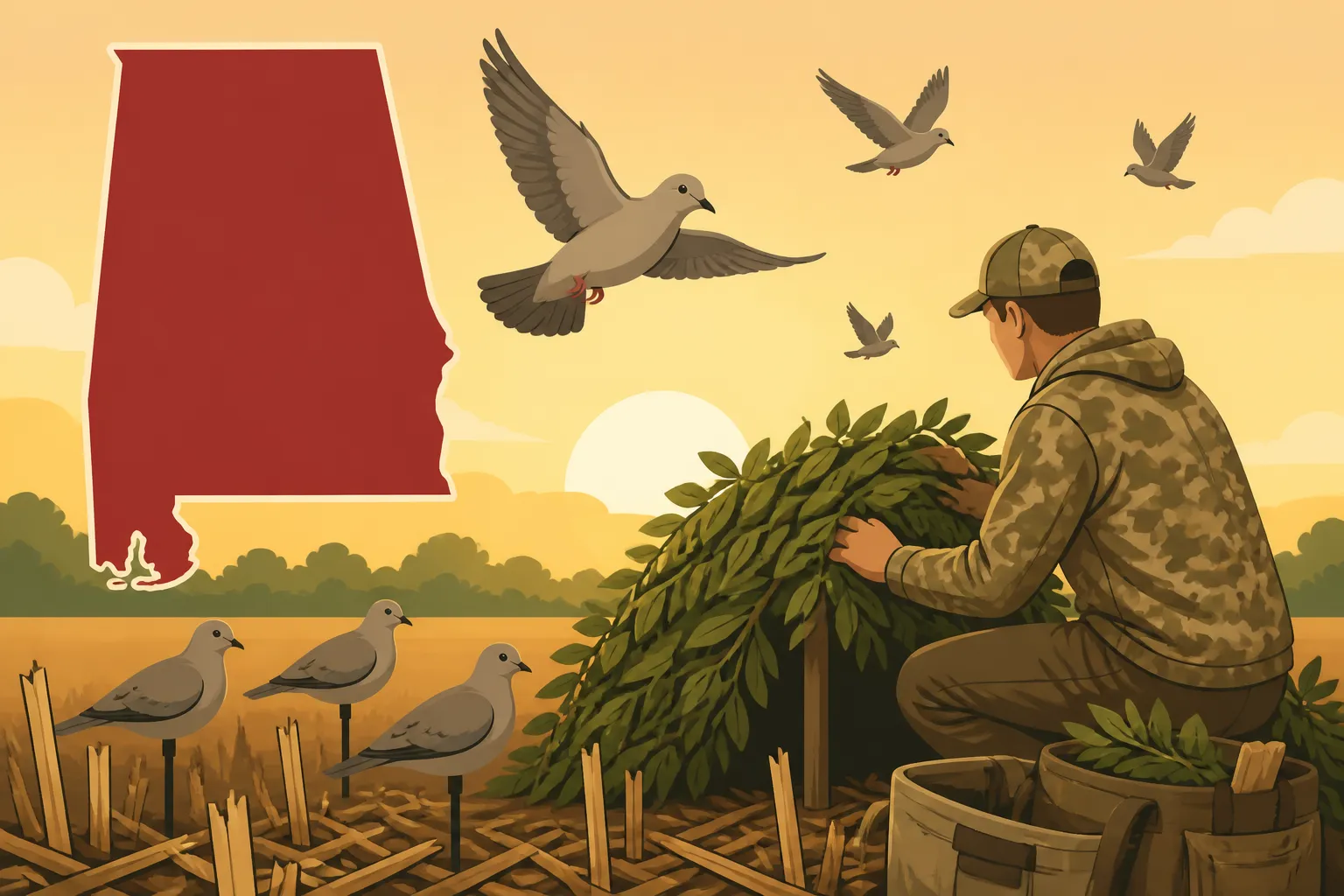
- Natural Cover: Doves have excellent eyesight. Utilize natural cover like standing crop edges, tall weeds, or tree lines to conceal hunters. If natural cover is sparse, build temporary blinds using burlap, camouflage netting, or even brush from around the field. Make sure your blind breaks up your silhouette effectively.
- Sun Angle and Wind: Always try to position hunters with the sun at their backs. This makes it harder for doves to see the hunters and easier for hunters to spot incoming birds. Also, consider the wind. Doves will generally approach a field by flying into the wind, so setting up downwind of their flight path can offer excellent crossing shots.
- Shooting Lanes: Ensure each hunter has clear, safe shooting lanes. This means trimming any small branches or tall weeds that might obstruct a shot or create dangerous ricochet risks. Always prioritize safety over the perfect shot.
- Hunter Spacing: If you have multiple hunters, ensure they are spaced adequately apart for safety. A good rule of thumb is at least 40-50 yards between hunters to minimize the risk of accidental discharge or shot impacting another hunter.
Remember that Opening Weekend Crowds in Zone A often mean doves are more pressured. On a private field, proper hunter management can make a huge difference in keeping birds coming in all day.
Hunter Management and Safety Briefing
On opening day, especially with a group, a clear plan and safety briefing are essential. Assign specific shooting positions to each hunter based on your scouting and blind placements. Before anyone loads a gun, review safety rules:
- Always identify your target and what is beyond it.
- Be aware of other hunters' positions.
- No ground-swiping or low shots, especially if hunting over a bare field where richochets are possible.
- Only shoot at birds within safe range.
- Retrieve downed birds promptly to avoid losing them.
- Stay hydrated and take breaks.
Having a designated "bird boss" who can call out incoming flights and direct shooters can also help keep things organized and safe. The more disciplined and organized your group is, the more enjoyable and successful the hunt will be.
Disclaimer
Hunting is an inherently dangerous activity. Always prioritize safety, adhere to all local, state, and federal hunting regulations, and ensure you have the necessary licenses and permits. The information provided in this guide is for informational purposes only and should not replace proper hunter education, professional guidance, or personal due diligence.