Nest Predation and Alabama Turkey Hatches
It's incredibly frustrating when you're passionate about wild turkeys, putting in the effort to manage your land or spend time afield, only to see disappointing hatch rates. Many factors contribute to the ups and downs of turkey populations, but few are as impactful and often overlooked as nest predation. This guide will dive deep into understanding what happens to those vulnerable nests, who the culprits are, and what practical steps you can take to help improve turkey hatches in Alabama.
Understanding the Problem: Why Nest Predation Matters for Alabama Turkeys
When we talk about wild turkeys, especially the spring gobbler season, we often focus on the birds themselves – their strutting, gobbling, and elusive nature. But before a gobbler ever steps out into a field to impress a hen, a delicate dance of survival begins with the nest. Nest predation, simply put, is when predators destroy turkey nests, consuming the eggs or even the incubating hen. This isn't just a minor setback; it's a critical bottleneck in the reproductive cycle that directly influences the number of poults that survive to adulthood, ultimately shaping the health and size of our turkey population.
The Lifecycle of an Alabama Turkey Nest
Imagine a lone hen, driven by instinct, quietly slipping away from her flock to find a secluded spot. She's looking for thick cover, something that offers concealment from the watchful eyes of predators above and the sniffing noses of those on the ground. She'll scratch out a shallow depression, often at the base of a tree, in a brush pile, or within tall grasses, and begin laying her clutch of eggs, typically one per day. This process can take over a week, leaving the nest vulnerable even before incubation truly begins.
Once the clutch is complete, she'll settle in, incubating those eggs for about 28 days. During this period, she's incredibly vulnerable, only leaving the nest for short periods to feed and drink. Her camouflage is often her best defense, but it's far from foolproof. Every day she spends on that nest is a gamble, and the success of the hatch, and thus the future of the flock, hangs precariously in the balance. It's a testament to their resilience that any nests make it through.
The Delicate Balance of Reproduction
The long-term health of Alabama's turkey populations relies on a delicate balance: the number of hens, the number of successful nests, and the survival rate of those tiny poults. If nest predation is too high, meaning too many nests are destroyed before they hatch, fewer poults hit the ground. When you see consistently low poult-to-hen ratios and what they mean, it's a clear red flag that something is impacting reproductive success. A few bad years can be absorbed by the population, but sustained high predation rates can lead to noticeable declines in turkey numbers over time, making future hunting seasons feel a lot more challenging.
It's not just about the absolute number of nests lost, but also about when those losses occur. An early nest failure might prompt a hen to re-nest, but subsequent nests usually have fewer eggs and a lower success rate. A late nest failure means no second chances, and those precious genetics are lost for the season. Understanding these dynamics helps us appreciate just how impactful nest predation truly is.
Common Culprits: Who's Eating Alabama's Turkey Eggs and Poults?
When a turkey nest disappears or is found destroyed, hunters often immediately point fingers at coyotes. While coyotes are indeed a significant threat, the reality is that a diverse cast of characters contributes to nest predation in Alabama. Identifying the specific culprits can be tricky, as many leave similar signs, but knowing the possibilities helps in developing targeted management strategies.
Mammalian Predators: The Usual Suspects
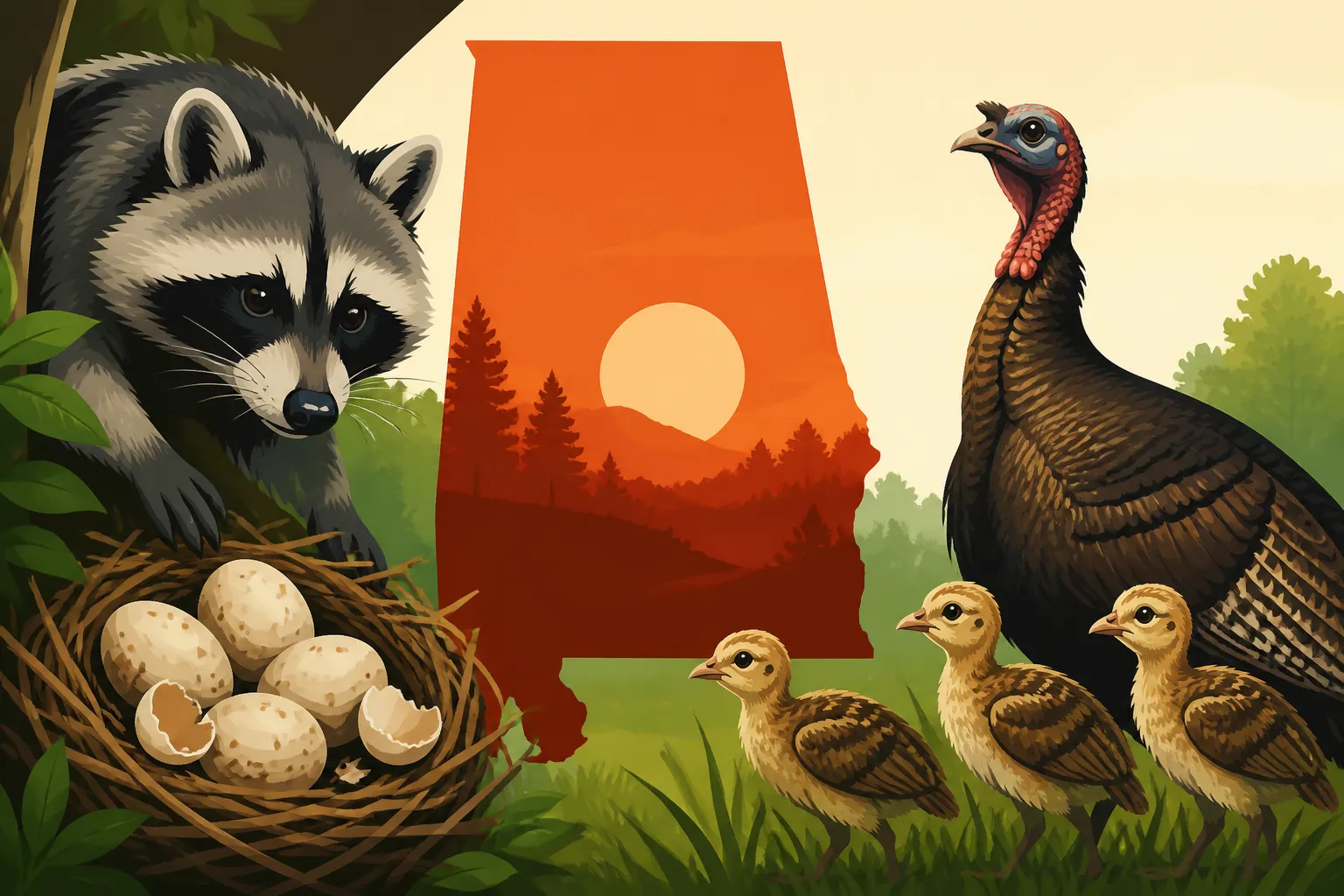
Raccoons, opossums, skunks, and foxes are all notorious nest predators. These opportunistic foragers have keen senses of smell and will systematically cruise through likely nesting habitat, sniffing out turkey eggs. Raccoons, in particular, are adept at locating nests, often leaving behind scattered eggshell fragments and signs of a messy feast. Opossums and skunks can also be incredibly destructive, and their presence is often signaled by a distinctive musky odor near a raided nest. Then, of course, there are the canids. While many hunters focus on coyotes, and they are a real issue, bobcats are also highly efficient hunters that will readily target turkey nests and even young poults. For more on these animals, you can look into Coyotes and Predators in Alabama.
Avian and Reptilian Threats
It's not just mammals on the ground. Birds like crows and even large raptors, while less common for nests, can certainly take a toll on young poults once they've hatched. Snakes, especially larger species like black snakes and rat snakes, are also significant egg predators. They can consume an entire clutch of eggs without leaving much trace, making it harder to identify their activity. A nest that simply disappears without scattered shells might be the work of a stealthy snake. While less frequent, wild pigs, or Feral Hogs Across Alabama, can also stumble upon nests and decimate them.
The Impact of Feral Hogs on Turkey Nests
Let's talk about feral hogs for a moment, because their presence has added another layer of complexity to nest predation. Unlike native predators that evolved with turkeys and are part of a natural predator-prey balance, feral hogs are an invasive species with an insatiable appetite. They aren't specifically targeting turkey nests, but their constant rooting and destructive foraging behavior means they simply stumble across and consume anything edible in their path – and that absolutely includes turkey eggs.
Hogs reproduce rapidly and can reach alarming densities, especially in the bottomlands and swamps common in parts of Alabama. Their sheer numbers and destructive habits mean that even if they aren't actively seeking nests, the probability of them rooting out and destroying a turkey nest is incredibly high. When you consider How Wild Hogs Spread Across Alabama, it becomes clear that this is an ever-growing problem, particularly in areas where they are abundant. Managing Hunting Alabama's Year-Round Feral Hogs is crucial not just for crops, but for turkey populations too.
Habitat's Role: How Land Management Impacts Nest Success
You can't talk about nest predation without talking about habitat. The quality and availability of nesting cover are paramount to a hen's ability to successfully hatch a clutch of eggs. Poor habitat means fewer safe places to nest, concentrating hens in limited areas and making them easier targets for predators. Conversely, well-managed habitat can scatter nesting efforts, provide better concealment, and make it harder for predators to efficiently find nests.
Importance of Dense Nesting Cover
Hens prefer to nest in areas with dense, horizontal cover that offers visual obstruction from all angles. Think about thickets of briars, tall clumpy grasses, or the understory of recently thinned pine stands. This type of cover makes it difficult for both aerial predators and ground-based sniffers to locate a nest. When suitable nesting habitat is scarce or fragmented, hens are forced to nest in less ideal spots, or they might all nest in the few good spots available, creating a "dinner bell" for predators.
A common issue across Alabama is the loss of this critical nesting cover due to certain land management practices, or simply the lack of active management. Open, park-like pine stands, while great for some things, offer little protection for a nesting hen. This is why understanding Alabama Turkey Brood Survey Results often correlates with habitat changes.
The Role of Prescribed Fire and Timber Management
Here's where proactive land management really shines. Prescribed fire, often used in Alabama, is a powerful tool. When applied correctly, it can rejuvenate native grasses and forbs, creating excellent nesting and brooding habitat. However, the timing and intensity are crucial. Burning too broadly or at the wrong time of year can temporarily remove crucial cover, leaving nests exposed. Landowners need to employ a mosaic burning approach, creating a patchwork of burned and unburned areas so hens always have cover available. For more on this, check out Prescribed Burns and Alabama Hunting Closures.
Timber management also plays a significant role. Thinning pine plantations allows sunlight to reach the forest floor, promoting the growth of a dense understory. Hardwood stands can also be managed to create varied age classes, leading to different cover types. The goal is to create a diverse landscape with varying levels of cover that offers both nesting sites and escape routes for poults.
Food Sources and Predator Activity
Another often-overlooked aspect is how food sources influence predator activity. Areas with abundant rodent populations, for instance, might attract more foxes and coyotes. Similarly, unmanaged feeding sites for deer or hogs can unintentionally draw in predators, increasing their presence in areas where turkeys might be nesting. While hunters are often concerned with Late-Season Food Sources for Alabama Whitetails, it's equally important to consider how those same sources might affect predator patterns throughout the year.
Think about areas near agricultural fields or food plots. While these can be great for turkeys in other seasons, if they lack thick, adjacent cover during nesting season, they can become magnets for predators seeking an easy meal. Understanding these interconnected dynamics is key to comprehensive land management for turkey success.
What Can Be Done: Strategies to Mitigate Nest Predation
So, what's a dedicated hunter or landowner to do? Feeling helpless when you see those low turkey numbers is common, but there are absolutely proactive steps you can take. Mitigation isn't about eliminating every predator – that's impossible and often undesirable for ecological balance – but rather about reducing their impact on turkey nests to allow more poults to hit the ground.
Predator Management on Private Land
On private land, direct predator management can be an effective tool. This often involves trapping raccoons, opossums, and skunks during the off-season. These animals have less fear of humans and can often be removed from an area without significant long-term impact on the broader predator population. For coyotes and bobcats, sustained trapping efforts can also help reduce their local density, especially during critical nesting periods. It's not a one-time fix, but an ongoing commitment.
You also need to address feral hog populations. Hogs are an absolute menace to turkey nests. Intense trapping, baiting, and Night Hunting Hogs With Lights on Private Land can make a significant difference. Remember, the goal isn't just to hunt them for sport, but to actively reduce their numbers to protect other wildlife. Trapping is particularly effective for controlling hog populations, and you can learn more about Trapping Alabama Feral Hogs to implement these methods.
Habitat Enhancement for Nesting Success
Beyond managing predators, creating better habitat for nesting hens is arguably the most impactful long-term strategy. This involves actively working to establish and maintain dense, secure nesting cover. Consider these actions:
- Native Grass Establishment: Planting or encouraging native warm-season grasses (like switchgrass, big bluestem, indiangrass) creates excellent vertical and horizontal cover that turkeys prefer for nesting.
- Thicket Creation: Allowing hedgerows, field edges, and small pockets of timber to grow into dense thickets provides critical escape cover and nesting sites.
- Prescribed Fire: Implement a rotational burning regime. Burn small sections of your property annually, leaving adjacent areas unburned to ensure a continuous supply of nesting cover. This mosaic approach is far better than burning everything at once.
- Timber Stand Improvement: If you have timber, work with a forester to thin stands strategically, promoting understory growth that benefits turkeys. For more details on landowner options, you could also explore Alabama Landowner Deer Permit Rules.
Remember, quality nesting habitat means more than just cover. It also means easy access to insects for newly hatched poults, which thrive on bugs in their first few weeks of life.
Monitoring and Data Collection
How do you know if your efforts are making a difference? You have to monitor. Keeping records of sightings, especially of hens with poults, helps you track trends over time. Conducting spring gobbler counts and listening surveys can give you an idea of the adult population. More specifically, participating in post-hatch brood surveys, often coordinated by state agencies, provides crucial data on poult-to-hen ratios, indicating reproductive success.
For private landowners, using trail cameras in potential nesting areas (respecting ethical considerations and local regulations) can sometimes offer insights into predator activity. Furthermore, using modern mapping applications, like those found with a GoHunt subscription, can help you identify areas with ideal nesting cover on your property and plan your habitat improvement projects more effectively. These tools help visualize terrain, identify bottlenecks, and track your progress. Knowing Alabama Turkey Population Trends overall can give you a baseline to compare your local efforts against.
Improving turkey hatches in Alabama isn't a quick fix, but a sustained effort combining thoughtful habitat management with targeted predator control. It requires patience and persistence, but the reward of seeing healthy flocks and hearing more gobblers in the spring is well worth the work.
| Predator Type | Typical Impact on Nests | Evidence Left Behind | Management Strategy |
|---|---|---|---|
| Raccoons | Eggs eaten, nest disturbed | Scattered eggshells, messy destruction, distinct tracks | Trapping (live or lethal), consistent removal |
| Opossums / Skunks | Eggs eaten, nest disturbed | Similar to raccoons, strong musky odor | Trapping, exclusion |
| Coyotes / Foxes | Eggs eaten, hen may be killed | Scattered feathers, chewed shells, distinct tracks | Trapping, predator calling, habitat modification |
| Feral Hogs | Nest rooted up, eggs consumed | Rooting signs, often entire nest gone, large tracks | Trapping, baiting, night hunting, sustained pressure |
| Snakes | Eggs swallowed whole | Nest appears undisturbed but empty, no shells | Habitat modification (reducing hiding spots for snakes) |
| Crows / Raptors | Less common for eggs, target poults | Evidence of poult disappearance, less direct nest signs | Habitat (dense brooding cover), harassing (for crows) |
Disclaimer
This article is for general informational purposes only and does not constitute professional advice. Laws, prices and regulations vary by location and change over time. Consult a qualified professional for guidance on your specific situation.