How Wild Hogs Spread Across Alabama
It's tough to talk about Alabama's wild places without eventually bumping into the topic of feral hogs. These incredibly adaptable and destructive animals have become a pervasive problem across our state, leaving a trail of ruined crops, damaged ecosystems, and frustrated landowners in their wake. Understanding how these intelligent and resilient creatures have managed to spread so effectively is the first step toward grappling with their presence and impact, and that's exactly what we're going to dive into today.
The Origin Story: How Wild Hogs First Arrived in Alabama
The story of wild hogs in Alabama isn't a simple one; it's a tapestry woven through centuries, involving deliberate introductions, accidental escapes, and a species' remarkable ability to adapt. What started as a minor curiosity has blossomed into a full-blown management challenge.
Early Introductions and European Wild Boar Crosses
The earliest ancestors of today's wild hogs likely arrived with European explorers and settlers as far back as the 1500s. These were domestic pigs, brought over as a reliable food source for burgeoning colonies. It wasn't uncommon for these pigs to be allowed to forage freely, often with minimal oversight, leading to natural escapes into the surrounding wilderness. Over generations, these escaped domestic pigs, freed from the confines of human husbandry, began to revert to a wilder, more self-sufficient state, growing tusks, thicker coats, and a more aggressive demeanor.
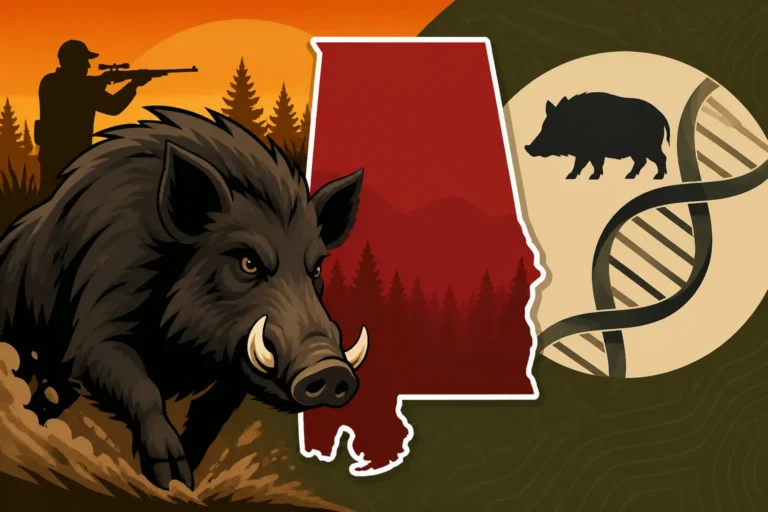
Fast forward to the early 20th century, and another significant chapter began: the deliberate introduction of true European wild boar. These magnificent, formidable animals were imported, primarily for sport hunting, to large private landholdings in states like Alabama, often in mountainous or heavily wooded regions. They brought with them a different genetic lineage, characterized by even greater wild instincts, incredible toughness, and a distinct physical appearance – think darker coats, more pronounced shoulders, and longer snouts. When these European wild boar inevitably escaped their enclosures, they interbred with the already feral populations of domestic pigs. The result? The hybrid "super pig" that we largely deal with today: a creature combining the large litter sizes and rapid maturity of domestic pigs with the hardiness, intelligence, and survival instincts of the European wild boar. This genetic cocktail created an animal perfectly poised to explode in numbers and range.
The Role of Fences and Escaped Domestic Stock
While deliberate introductions of European wild boar certainly played a part, the vast majority of wild hogs we see today are likely descended from domestic stock that simply "went wild" over generations. Farmers throughout Alabama's history, from small homesteads to large agricultural operations, have raised pigs. And pigs, as anyone who has ever tried to contain them will tell you, are master escape artists. A broken fence, a forgotten gate, or even a determined pig rooting its way under a barrier could lead to a few individuals gaining their freedom.
These escaped pigs, even just a handful, could quickly establish themselves in nearby woodlands. With no natural predators to speak of and an abundance of food, their numbers would grow. Consider a scenario where a local farmer in, say, Marengo County, had a small hog operation near a creek bottom. A flood washes out a section of fence, and a sow and her piglets escape. They find refuge in the dense river cane and palmettos. Within a year, that sow could have two litters of 6-8 piglets each. Her female offspring would be breeding at just 6-8 months old. This kind of exponential growth, fueled by even small, isolated escapes, has been happening for decades across Alabama, particularly in areas rich with water and cover like the Mobile-Tensaw Delta. The lack of robust early control measures meant that these localized populations were rarely eradicated, allowing them to expand their footprint bit by bit.
The Perfect Storm: Why Alabama's Environment Fuels Hog Proliferation
Alabama's natural landscape and climate, while beautiful and ideal for many native species, unfortunately provide the perfect conditions for wild hogs to thrive and expand their territories rapidly. It's a combination of generous resources and a distinct lack of natural checks and balances.
Abundant Food Sources and Mild Winters
One of the primary drivers behind the rapid spread of wild hogs across Alabama is the sheer abundance and variety of food available to them year-round. Our diverse agricultural landscape offers a smorgasbord, from vast fields of corn, peanuts, and soybeans to pecans and watermelons. Hogs are opportunistic omnivores, and they don't discriminate. They'll root up planted fields for seeds, feast on mature crops, and even target the tender shoots of newly sprouted plants. This direct impact is a major reason why Crop Damage Hogs Cause in Alabama is such a significant concern for farmers. Beyond cultivated lands, Alabama's extensive hardwood forests provide a continuous supply of acorns, a high-energy food source that helps hogs pack on weight and survive even leaner periods. They also consume roots, tubers, mushrooms, insects, grubs, eggs, and even small reptiles and amphibians.
Couple this endless buffet with Alabama's generally mild winters, and you have an environment where hogs rarely face significant food stress or mortality due to harsh weather. Unlike northern climates where deep snow or prolonged freezes can decimate hog populations, our mild conditions mean more food is accessible for longer, and young piglets have a much higher survival rate. This year-round access to nourishment directly supports higher reproductive rates and greater survival of offspring, propelling their population growth and subsequent spread into new areas.
Reproductive Superstars: High Fecundity and Early Breeding
If you want to understand how Why Alabama Hogs Reproduce So Fast, you need to look no further than their incredible reproductive biology. Wild hogs are, quite frankly, breeding machines. Sows can begin reproducing as young as six months of age, sometimes even earlier if conditions are particularly favorable. They typically have two litters per year, with an average litter size ranging from 4 to 8 piglets, though litters of 10-12 are not uncommon. Imagine a single sow, breeding twice a year, with her female offspring also becoming reproductively active within their first year. The math quickly becomes staggering.
This high fecundity, combined with early sexual maturity, means that hog populations can literally double in size in a single year under ideal conditions. What might start as a small group of three or four escaped animals can easily balloon into a sounder of twenty or thirty within a couple of years, pushing the boundaries of their initial range. Their ability to quickly replenish their numbers makes eradication incredibly difficult, as even removing a significant percentage of a local population often isn't enough to curb their exponential growth. This rapid breeding is a key factor in How Many Feral Hogs Alabama Has remains a constantly escalating challenge.
Lack of Natural Predators
In a truly balanced ecosystem, predators play a crucial role in regulating prey populations. Unfortunately for Alabama, when it comes to wild hogs, we simply don't have effective natural predators that can keep their numbers in check. While coyotes, bobcats, and even black bears might occasionally predate on very young piglets, they are not a significant threat to adult hogs, especially large, aggressive sows and boars. A full-grown wild hog, with its thick hide, tusks, and powerful build, is a formidable adversary that most native predators will actively avoid.
This absence of natural population control means that hogs face very little mortality outside of human hunting and trapping efforts. Without this ecological pressure, their numbers are allowed to grow unchecked, making it easier for them to saturate existing habitats and then push out into new territories. It's a major reason Why Alabama Hogs Have No Natural Predator Check and why human intervention is so vital, yet often feels like a losing battle against such a prolific and resilient species.
Human Impact: The Unintended Consequences of Our Actions
While wild hogs are biologically primed for expansion, human actions, both intentional and unintentional, have inadvertently accelerated their spread across Alabama, creating self-inflicted wounds in our battle against them.
Trap-and-Release: A Misguided Attempt at Control
In the early days of hog management, or rather, the lack thereof, many landowners or even state agencies sometimes engaged in a practice called "trap-and-release." The idea was often to simply remove nuisance hogs from one property and relocate them to another, usually larger, more remote piece of land, with the misguided hope that they would simply "disappear" or at least become someone else's problem. Others might have trapped hogs and released them into hunting areas, believing they were creating new hunting opportunities. This practice, however, was incredibly detrimental.
Each time a hog was moved and released, it became a potential source for a new, burgeoning population. These relocated hogs, already stressed, were quick to disperse and establish themselves, carrying their rapid reproductive capabilities with them. This single action could introduce hogs to an area previously untouched, jump-starting the colonization of entirely new regions, or accelerating the infestation of lightly impacted areas. It was like trying to put out a fire by spraying gasoline on new spots. Thankfully, this practice is now widely recognized as counterproductive and illegal in many forms, with Alabama Feral Hog Regulations strictly prohibiting the release of hogs without specific permits. However, the legacy of past trap-and-release efforts continues to manifest in today's widespread populations.
Intentional Releases for Hunting Opportunities
Perhaps one of the most frustrating aspects of the hog problem is the role of intentional, often illegal, releases for hunting purposes. Some individuals, seeing the popularity and challenge of hog hunting, have deliberately released hogs onto their own or even public lands to "seed" new hunting opportunities. The logic, however flawed, was that having more hogs would provide more sport. This practice is akin to introducing an invasive species deliberately.
These deliberate releases bypass the natural, albeit slow, dispersal rates of hogs. Instead of expanding a few miles each year, hogs could suddenly appear in a county hundreds of miles away, effectively leapfrogging across the state. This dramatically accelerated the statewide distribution of feral swine. Such actions not only compound the existing problem but also demonstrate a complete disregard for the ecological and economic damage that these animals inflict. The idea that introducing a destructive invasive species for "sport" is acceptable has been a significant driver of the hog explosion, creating hot spots in areas that might otherwise have been less impacted. This is why strict laws are in place regarding Alabama's Year-Round Hog Rule on Private Land, and why responsible hunters focus on managing existing populations rather than creating new ones.
The Spread of Disease and Ecological Damage
Beyond the direct physical spread of the hogs themselves, their presence, and especially their movement, contributes to the spread of diseases and broad ecological damage. Hogs are carriers of various diseases, including pseudorabies, brucellosis, and leptospirosis, which can impact domestic livestock, wildlife, and even humans. When hogs are moved, either accidentally or intentionally, they act as vectors, potentially introducing these diseases to previously healthy populations of animals. This poses a serious threat to Alabama's agricultural economy and wildlife health.
Their destructive rooting and wallowing behaviors also cause immense ecological damage. Hogs can completely devastate food plots meant for deer and turkey, consuming seeds and destroying young plants. They disturb sensitive habitats, degrade water quality by wallowing in streams and ponds, and even prey on ground-nesting birds, reptiles, and amphibians. They compete directly with native wildlife, like white-tailed deer and wild turkeys, for critical food resources like acorns. This widespread habitat degradation and competition for food further destabilizes ecosystems, making them more vulnerable and facilitating the hogs' ability to establish themselves in new areas once they arrive.
Tracking the Spread: Where Hogs Are Most Prevalent Now
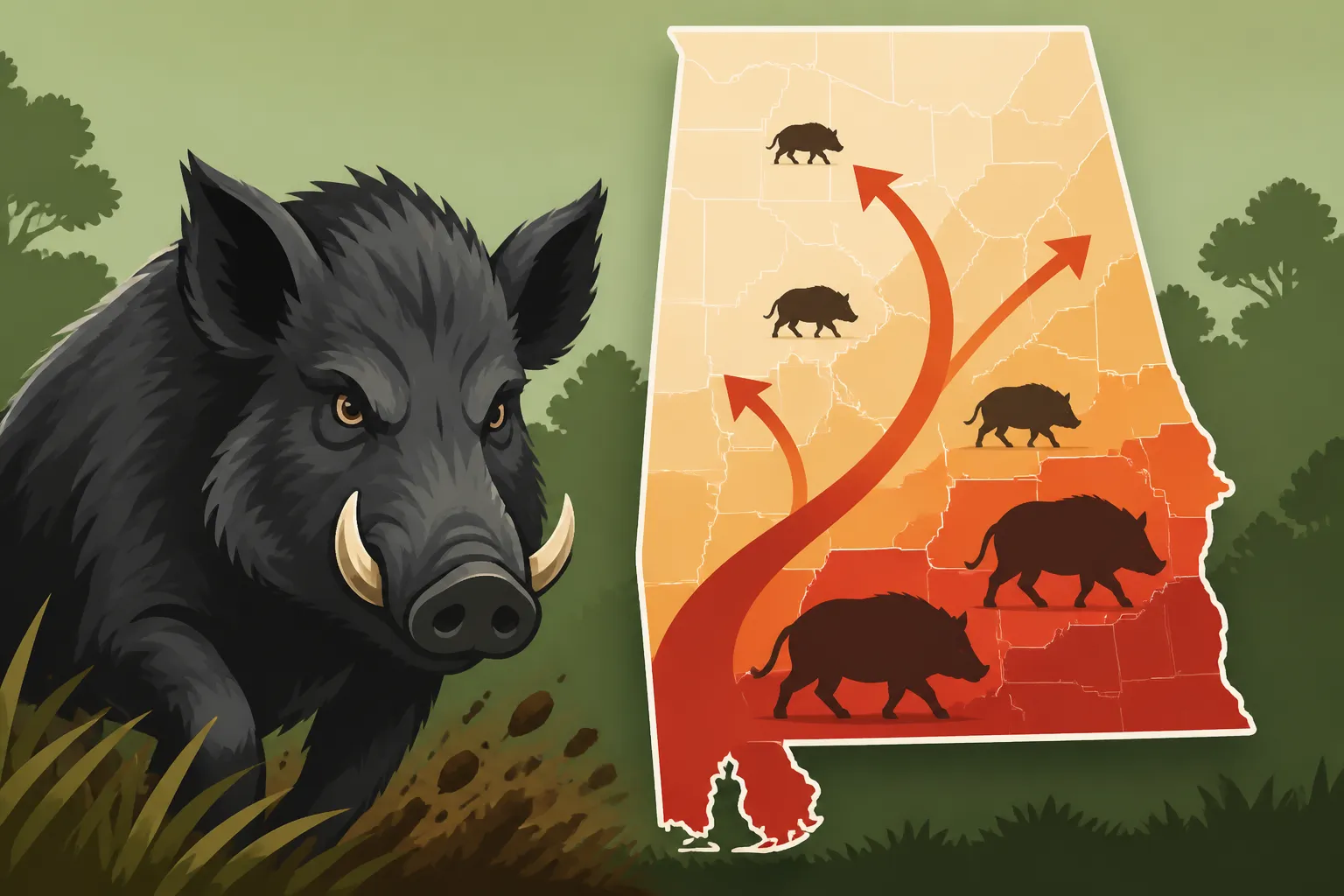
Understanding the mechanisms of spread is one thing, but seeing their actual distribution across the Alabama landscape really drives home the scope of the problem. Wild hogs are everywhere, but some areas bear the brunt of their destructive presence more than others.
River Bottoms and Agricultural Lands as Hotbeds
If you want to find wild hogs in Alabama, your best bet is to look for two things: water and food. That's why river bottoms and agricultural lands consistently rank as the highest prevalence areas for feral swine. Major river systems like the Tombigbee, Alabama, Coosa, Tallapoosa, and Tennessee provide ideal habitat with dense cover, abundant water, and natural travel corridors. The rich soils of these bottoms also provide prime rooting grounds for tubers and insects. These riparian zones act like highways for hog dispersal, allowing them to move quickly and relatively unmolested through the landscape.
Adjacent to these river systems are often Alabama's most productive agricultural fields. Hogs naturally gravitate to areas where they can easily access nutritious crops. Whether it's the Black Belt region with its fertile fields, the Wiregrass with its peanut crops, or the Tennessee River Valley's corn and soybean operations, hogs have found a continuous food source that fuels their populations. Counties in the Black Belt, such as Dallas, Wilcox, and Lowndes, historically see high hog numbers due to this combination of prime habitat and agricultural bounty. Mapping tools, like those found on GoHunt, can be incredibly useful for identifying these prime hog habitats by analyzing terrain, water sources, and proximity to agricultural fields, helping hunters decide where to focus their efforts. If you're looking to start Building and Freshening a Hog Bait Site, understanding these preferred habitats is critical for success.
Expansion into Urban and Suburban Areas
One of the more alarming trends in the spread of wild hogs is their increasing presence in urban and suburban environments. As rural areas become saturated and development encroaches on wild spaces, hogs are proving remarkably adaptable to living closer to human populations. It’s not uncommon now to hear reports of hogs rooting up golf courses, destroying landscaping in residential yards, or even being spotted crossing busy roads in areas around cities like Mobile, Montgomery, or even parts of Birmingham.
This expansion into suburban areas is problematic for several reasons. First, it brings the destructive behaviors of hogs right to people's doorsteps, causing significant property damage. Second, it increases the risk of human-wildlife conflicts, including potential vehicle collisions or direct encounters. Third, management options in these populated areas are far more limited due to safety concerns and local ordinances, making traditional methods like hunting or trapping more difficult to implement effectively. These bold movements highlight their incredible adaptability and the relentless nature of their spread. Stories of Feral Swine Sightings in North Alabama are becoming more frequent, demonstrating this outward expansion from traditional rural strongholds.
Using Technology to Monitor and Manage
In the face of such a widespread and elusive problem, technology has become an indispensable tool for monitoring hog populations and informing management strategies. Wildlife biologists and dedicated hunters alike use a range of tools, from GPS tracking collars to advanced aerial surveys using thermal imaging, to get a clearer picture of hog movements and population densities. These methods help identify new areas of infestation and track the effectiveness of control efforts.
For hunters, applications like GoHunt provide detailed satellite imagery, topographic maps, and public/private land boundaries, allowing them to scout and plan their hunts more effectively. By understanding hog habits, such as their preference for dense cover during the day and movement to food sources at night, hunters can use these digital tools to pinpoint potential ambush points or optimal locations for setting traps. Knowing What Hog Trappers Use in Alabama, like specific trap designs and bait, can be paired with high-tech scouting to increase success rates. This blend of traditional knowledge and modern technology is crucial for understanding where hogs are, where they're going, and how best to intercept them.
Table: Key Factors in Wild Hog Spread vs. Native Species (Deer)
| Feature | Feral Hog | White-tailed Deer | Impact on Spread |
|---|---|---|---|
| Reproductive Rate | 2 litters/year, 4-8+ piglets/litter, breed at 6-8 months | 1-2 fawns/year, breed at 1.5-2 years | Exponential growth, rapid population rebound after control efforts |
| Dietary Adaptability | Highly omnivorous (crops, acorns, roots, carrion, small animals) | Primarily herbivorous (browse, acorns, forbs, agricultural crops) | Can exploit diverse food sources, thrive in varied habitats, survive scarcity |
| Habitat Adaptability | Forest, swamp, agricultural, even suburban | Forest, agricultural edges, open woodlands | Can establish in almost any Alabama landscape, from deep woods to backyards |
| Social Structure | Sounders (family groups), facilitates learning & protection | Smaller family groups (does & fawns), bucks solitary | Collective rooting, defense, and knowledge transfer enhances survival & spread |
| Physical Barriers | Highly adept at rooting under fences, strong | Can jump most fences, but less persistent rooting | Can overcome typical fencing, enabling faster colonization of new areas |
The Economic and Ecological Toll of Feral Swine
The narrative of how wild hogs spread across Alabama isn't just an interesting biological study; it's a critical examination of a species that inflicts profound and costly damage on our state's economy and natural heritage.
Agricultural Devastation and Financial Losses
For Alabama farmers, wild hogs are nothing short of a plague. Their rooting behavior can destroy entire fields of crops overnight, making cultivated land look like it's been rototilled. Fields of corn, soybeans, peanuts, wheat, and even specialty crops like watermelons and sweet potatoes are prime targets. Hogs will root up newly planted seeds, eat young sprouts, or feast on mature crops just before harvest. This isn't just a nuisance; it represents significant financial losses for farmers who have invested countless hours and resources into their yields. Crop Damage Hogs Cause in Alabama is estimated to be in the tens of millions of dollars annually, a burden that often falls squarely on the shoulders of individual producers.
Beyond direct crop damage, hogs also damage irrigation systems, fences, and farm equipment, adding further repair costs and operational headaches. The financial strain is immense, leading many farmers to dedicate significant resources, time, and money to control efforts such as trapping and night hunting. These efforts are often ongoing battles rather than decisive victories, as the sheer numbers and reproductive capabilities of hogs make complete eradication on large tracts of farmland incredibly challenging, leading to a perpetual cycle of damage and control.
Habitat Destruction and Native Species Impact
The ecological toll of wild hogs extends far beyond agriculture, deeply impacting Alabama's native wildlife and sensitive habitats. Their incessant rooting churns up vast areas of forest floor and wetlands, destroying the delicate balance of ecosystems. This rooting behavior can lead to increased soil erosion, especially on sloped terrain and along stream banks, degrading water quality and impacting aquatic life. They decimate native plant communities, eating seeds, roots, and young saplings, which can alter forest regeneration patterns and reduce biodiversity.
Furthermore, hogs compete directly with native wildlife for food resources. They are voracious eaters of acorns, a critical food source for white-tailed deer, wild turkeys, and other small game like squirrels. This competition for food can stress native populations, particularly during lean years. Hogs also directly prey on the nests and young of ground-nesting birds, including our beloved wild turkeys and bobwhite quail, as well as reptiles and amphibians. This predation adds another layer of pressure to species already facing habitat loss and other environmental challenges. The presence of hogs can drastically alter the makeup of a local ecosystem, pushing out or severely impacting species that have evolved alongside it for millennia.
Water Quality Concerns and Disease Transmission
The impacts of feral hogs also extend to Alabama's precious water resources. Their habit of wallowing in shallow streams, ponds, and wetlands contaminates water sources with their feces, which can introduce bacteria like E. coli and other pathogens. This not only makes the water unsafe for human consumption but also degrades water quality for other wildlife, impacting fish populations and aquatic invertebrates. Sedimentation from their rooting along banks further exacerbates water quality issues.
As mentioned earlier, hogs are known carriers of diseases such as brucellosis and pseudorabies. While these diseases typically don't affect humans in the same way as some other pathogens, they pose serious risks to domestic livestock (pigs, cattle, horses) and other wildlife. The spread of these diseases through hog populations can lead to significant economic losses for livestock producers and can impact the health and viability of native wildlife populations. For hunters, awareness of these diseases is important, particularly when field dressing and handling harvested animals, underscoring the importance of responsible practices. The far-reaching consequences of their spread touch every aspect of Alabama's natural and agricultural landscape.
Disclaimer
The information provided in this guide is for general informational purposes only and should not be considered legal advice. Hunting regulations, licensing requirements, and wildlife management practices can change. Always consult the latest official regulations from the Alabama Department of Conservation and Natural Resources (ADCNR) and local authorities before engaging in any hunting activities. Always prioritize safety and ethical hunting practices.