Which Alabama Counties Have the Most Hogs
Feral hogs are a nightmare for landowners and a challenge for hunters across Alabama, tearing up fields, damaging natural ecosystems, and competing with native wildlife. If you're looking to target these destructive animals, knowing where their populations are most concentrated can drastically improve your success. This guide will dive deep into the Alabama counties facing the biggest battle against feral hogs, exploring why they thrive in certain areas and what hunters can do to help manage their numbers.
The Ubiquitous Problem of Feral Hogs in Alabama
Hogs aren't just a nuisance; they're an ecological and agricultural disaster in progress. They've spread to every single county in Alabama, but their impact isn't evenly distributed. Understanding the widespread nature of this problem helps contextualize why certain counties are hit harder than others. It's not just about seeing one or two hogs; it's about entire sounders tearing through acres of crops overnight or rooting up sensitive wetland areas, leaving behind a trail of incredible destruction.
Why Feral Hogs Thrive Here
Alabama's diverse landscape, with its rich river bottoms, vast agricultural fields, and dense timber tracts, provides an ideal environment for feral hogs to flourish. They're incredibly adaptable animals, capable of consuming a wide variety of food sources, from acorns and roots to agricultural crops like corn and soybeans. Beyond food, the climate here allows them to reproduce year-round, unlike colder climates where harsh winters might keep populations somewhat in check. This constant breeding pressure means that even with significant hunting efforts, their numbers can quickly rebound. When we talk about Why Alabama Hogs Reproduce So Fast, it's truly astounding how quickly a small group can explode into a massive problem. They have multiple litters a year, with large numbers of piglets in each, making them one of the most prolific invasive species. This rapid reproduction rate makes consistent pressure essential, yet incredibly difficult to maintain across vast landscapes.
The Damage They Inflict
The impact of feral hogs on Alabama's landscape and economy is immense. Agriculturally, they devastate crops, costing farmers millions in lost revenue each year. Imagine planting an entire field of corn or peanuts, only to have a sounder of hogs root through it just before harvest, leaving a trail of destruction that looks like a rototiller went through. Beyond the immediate economic hit, their rooting behavior causes significant soil erosion, degrades water quality, and destroys the habitat of native ground-nesting birds like wild turkeys and quail. They compete directly with white-tailed deer and other game for food sources, putting additional pressure on our native wildlife. It's a cascade effect, where their presence throws the entire ecosystem off balance. For more detail on the economic impact, you can look into Crop Damage Hogs Cause in Alabama. The sheer scale of destruction can be heartbreaking for those who work the land, making hog control a top priority for many private landowners. Their impact isn't just felt in rural areas; even suburban fringes can see significant damage to yards and gardens.
Identifying the Hotspots: Counties with High Feral Hog Populations
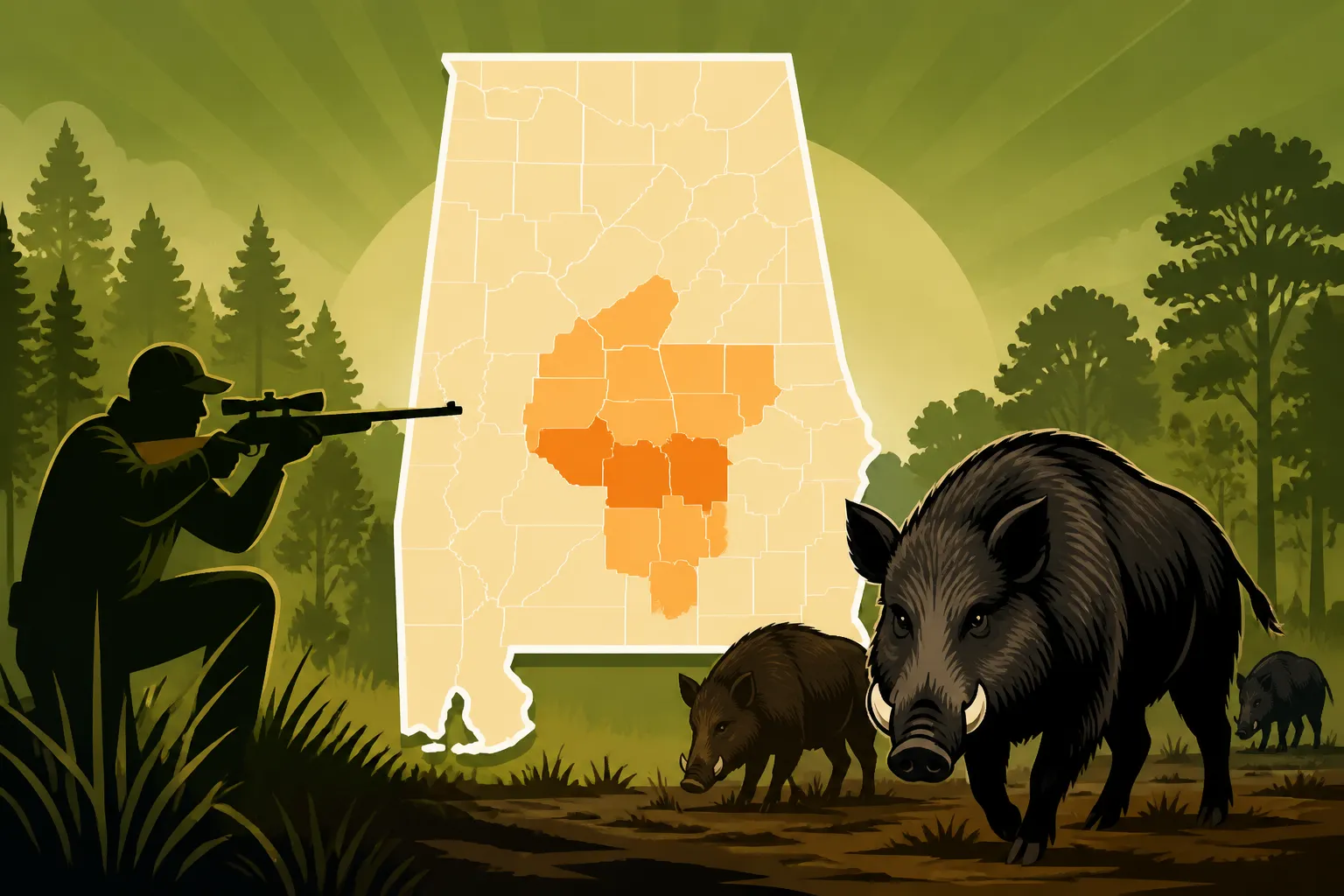
While hogs are everywhere, some counties are undoubtedly waging a tougher war against them. These are typically areas that offer a perfect combination of dense cover, reliable water sources, and abundant food, often tied to major river systems and extensive agricultural operations. The state doesn't typically release specific county-by-county hog population figures, but reports from wildlife biologists, landowners, and hunters consistently point to certain regions as having the highest concentrations and the most severe problems.
The Black Belt and River Systems
When you talk about high hog populations in Alabama, the conversation invariably turns to the Black Belt region and the major river systems that crisscross the state. Counties like Lowndes, Dallas, Wilcox, Marengo, Greene, Hale, Sumter, and Perry in the Black Belt are prime examples. The fertile soils of the Black Belt, historically rich for farming, now provide an endless buffet for hogs. Combine that with the dense, often swampy creek bottoms and riverine habitats along the Alabama, Tombigbee, and Cahaba rivers, and you have a haven for these animals. These river systems provide not only abundant food and water but also critical escape cover from hunters and predators. The sheer volume of thickets and bottomland hardwoods makes it incredibly challenging to access and control hog populations effectively. The continuous flow of water also aids in their dispersal, allowing them to travel easily between different tracts of land. These areas often have extensive tracts of private land where consistent management can be difficult without widespread, cooperative efforts.
Southern and Western Alabama Concentration
Beyond the core Black Belt, the southern and western parts of the state also report significant hog densities. Counties such as Choctaw, Clarke, Washington, Mobile, Monroe, Escambia, and Conecuh often come up in discussions about serious hog problems. These areas feature vast timberlands, large private landholdings, and a mix of agricultural plots, all of which contribute to strong hog numbers. The lower Alabama river basin, including the Mobile-Tensaw Delta, is another region where hogs thrive, benefiting from the extensive wetlands and abundant natural food sources. The deep swamps and inaccessible areas along these drainages provide sanctuary, allowing sounders to grow unchecked before venturing out into adjacent farm fields or pine plantations. Hunters often find themselves up against vast tracts of private timber land where hunting pressure might be inconsistent, allowing hog numbers to swell significantly. The prevalence of Alabama Feral Swine Genetics and Origin in these areas often reflects a long history of free-ranging pigs mixing with wild stock, contributing to their hardy and prolific nature.
Table: Snapshot of High Feral Hog Counties in Alabama
| Region | Representative Counties | Primary Contributing Factors | Typical Challenges for Hunters |
|---|---|---|---|
| Black Belt | Dallas, Lowndes, Marengo, Wilcox | Rich agricultural fields (corn, peanuts), extensive river/creek bottoms | Dense cover, vast private lands, high crop damage |
| Major River Systems | Sumter, Greene, Mobile, Clarke | Large floodplains, dense swamps, river access, diverse forage | Inaccessibility, thick vegetation, water travel required |
| Southern/Western AL | Choctaw, Washington, Escambia, Conecuh | Mix of timberland & agriculture, large private ownership, remote areas | Sporadic hunting pressure, expansive timber tracts |
| Northwest AL | Lauderdale, Colbert, Franklin | River valleys (Tennessee River), agricultural pockets, limestone features | Mixed terrain, increasing populations, CWD management |
Understanding the Factors Driving Hog Density
It's not just about where the hogs are, but why they're so concentrated in certain spots. Several interconnected factors create these ideal conditions, making control a continuous uphill battle for hunters and land managers alike.
Habitat and Food Availability
The most significant driver of high hog density is undoubtedly the abundance of suitable habitat and food. Imagine a county with miles of bottomland hardwoods, frequently flooded creek drainages, and adjacent fields of corn, peanuts, or soybeans. This is hog paradise. The bottomlands provide cover, water, and natural forage like acorns, roots, and grubs. Then, they simply stroll into the agricultural fields for an easy, high-calorie meal. This constant food source allows sows to maintain excellent body condition, which directly translates to more frequent breeding and larger litters. Areas with dense, undisturbed cover, whether it's thick pine plantations or impenetrable cane thickets, offer safe havens where hogs can escape hunting pressure and raise their young. A hunter using a mapping tool like GoHunt might quickly identify these combinations of habitat, such as extensive river frontage next to large agricultural operations, as prime areas for hog activity, even if GoHunt is more broadly known for other species. Identifying these key features on a map can save countless hours of boots-on-the-ground scouting.
Human Pressure and Management Efforts
Another critical factor is the level and consistency of human pressure, or rather, the lack thereof. On large private landholdings or in remote areas, hunting pressure can be sporadic or entirely absent. While landowners in agricultural zones are often desperate to remove hogs, inconsistent efforts across property lines allow populations to persist and grow. Even where hunting is active, if only a few hogs are removed at a time, the vacuum is quickly filled by new litters or hogs migrating in from neighboring properties. This highlights why managing Alabama's Year-Round Feral Hogs requires a concerted, sustained effort, often involving multiple tactics beyond just recreational hunting. Some areas might have specific limitations or unwritten rules about methods, further complicating consistent pressure. Understanding landowner permission is key here, and questions often arise about Do Feral Hogs Need Landowner Permission? even on private land, which always requires clarity. Effective management often means coordinated efforts between neighboring property owners.
Strategies for Hunting Hogs in High-Density Areas
For hunters looking to make a real impact on hog populations in these hotspots, a strategic approach is essential. It's often more than just stumbling upon a hog while deer hunting; it requires dedicated effort and specialized tactics tailored to the landscape and hog behavior.
Best Hunting Methods for Specific Terrains
Given the varied terrain in Alabama's hog hotspots, a single hunting method often isn't enough. In dense river bottoms or swampy areas, Running Dogs on Alabama Feral Hogs can be highly effective, as the dogs can push hogs out of cover that would be impossible for a human hunter to navigate quietly. For agricultural fields, especially at night, Night Hunting Hogs With Lights on Private Land using thermal or night vision optics has become incredibly popular and efficient. This method allows hunters to target large sounders feeding under the cover of darkness, minimizing disturbance to other wildlife while maximizing harvest numbers.
However, one of the most consistently effective methods for reducing hog numbers, particularly for landowners and those with consistent access, is Trapping Alabama Feral Hogs. Trapping allows for the removal of entire sounders at once, making a significant dent in local populations. Modern trap designs, often equipped with remote triggers and cameras, have made this even more efficient. Baiting, when done strategically, is also a critical component of many hog hunting and trapping strategies. Learning how to effectively utilize Building and Freshening a Hog Bait Site can significantly increase your success rates, drawing hogs into predictable locations for either hunting or trapping. Knowing What Hog Trappers Use in Alabama can also give you an edge, as specialized baits and trapping systems are often employed.
Using Technology and Resources
In today's hunting world, technology can be a huge asset in tackling feral hog issues, especially when trying to pinpoint their movements in high-density areas. Mapping applications like GoHunt can help you analyze terrain, identify potential travel corridors, locate water sources, and pinpoint crop fields where hogs are likely to feed. While GoHunt is traditionally known for big game species, its comprehensive mapping and scouting features are universally helpful for understanding land features and planning your approach, regardless of the target. You can mark hog sign, plot trap locations, and even track the movements of your hunting party, making it a valuable tool for any hunter.
Furthermore, staying informed about Alabama Feral Hog Regulations is paramount. While they're generally open to hunting year-round on private land, understanding any specific nuances for public land or regarding night hunting gear is crucial. Connecting with local wildlife agencies or extension offices can also provide valuable insights into local hog populations and ongoing management efforts. For those interested in more traditional, quiet approaches, Hunting Hogs Without Bait or Dogs relies heavily on scouting, understanding hog patterns, and executing precise still-hunting tactics. Regardless of the method, always prioritize ethical hunting and responsible game recovery. Considering Shot Placement on a Feral Hog is vital for a quick and humane harvest, as these animals are incredibly tough and can be dangerous if wounded. Tools like GoHunt can aid in planning stalk routes and understanding wind direction, critical elements for successful still-hunting.
Disclaimer
This article is for general informational purposes only and does not constitute professional advice. Laws, prices and regulations vary by location and change over time. Consult a qualified professional for guidance on your specific situation.