How CWD Reached Northwest Alabama
The unsettling news about Chronic Wasting Disease (CWD) arriving in Alabama has cast a long shadow over deer season for many of us. It’s a gut punch, really, to think that this devastating disease, which has plagued deer herds in other states for years, is now right here in our own backyard. For generations, hunting has been a cornerstone of life in the Yellowhammer State, and the health of our deer herd is paramount. This guide aims to demystify how CWD likely made its way into Northwest Alabama and what that means for our beloved whitetails and hunting traditions.
Understanding Chronic Wasting Disease and Its Threat to Alabama Deer
Before we dive into the specifics of CWD's arrival, it's crucial to understand what we're up against. This isn't just another deer illness; it's a persistent, always-fatal neurological disease that affects cervids, which include deer, elk, and moose. It attacks the brain and nervous system, leading to characteristic symptoms that are heartbreaking to witness in an animal.
The Nature of CWD and Its Impact on Deer Health
CWD is caused by abnormal proteins called prions. These aren't bacteria or viruses, which makes them incredibly difficult to destroy. Once a deer is infected, these prions slowly accumulate in the brain and other tissues, causing the brain to develop microscopic holes, essentially turning it into a sponge-like material. The symptoms progress slowly over months, sometimes even years. Initially, you might not notice anything, but as the disease advances, infected deer typically become emaciated, hence the "wasting" in its name. They might show neurological signs like stumbling, tremors, listlessness, excessive drooling, and an altered demeanor, losing their natural fear of humans. The tragic truth is there is no cure, and every deer that contracts CWD will eventually die from it. The disease also has a long incubation period, meaning an infected deer can appear perfectly healthy for a significant time, silently spreading the prions in its environment before showing any outward signs. This silent spread is one of the reasons it's so insidious and hard to contain.
The insidious nature of CWD extends beyond the individual animal. Prions can be shed through saliva, urine, and feces, contaminating the soil and vegetation. These prions can persist in the environment for many years, acting as a reservoir for future infections. Imagine a feeding site, a scrape, or even a bedding area that an infected deer has frequented; those prions can remain there, potentially infecting other deer that come into contact with them long after the original host is gone. This environmental persistence makes eradication incredibly challenging, if not impossible, once the disease becomes established in a wild population. For a deeper dive into the broader implications and concerns, you might want to read more about Chronic Wasting Disease Risk in Alabama.
Why This Disease Is Such a Game-Changer for Hunters and Wildlife Management
The arrival of CWD is a serious concern for a multitude of reasons, touching every aspect of our hunting culture and wildlife conservation efforts. For hunters, there are legitimate worries about the long-term health of our deer herds, potential impacts on hunting seasons, and even questions about the safety of consuming venison from infected areas. While there's currently no evidence of CWD transmitting to humans, the Centers for Disease Control and Prevention (CDC) still recommends not eating meat from animals that test positive for the disease. This caution alone changes how many of us approach harvest and processing, adding an extra layer of complexity to what was once a straightforward tradition.
From a wildlife management perspective, CWD presents an unprecedented challenge. Unlike other diseases that might be managed through vaccines or culling specific populations, the prion's environmental persistence and the disease's long incubation period mean traditional strategies are often ineffective. Agencies like the Alabama Department of Conservation and Natural Resources (ADCNR) are forced to implement complex and often unpopular measures, such as increased testing, carcass movement restrictions, and altered bag limits in affected areas, all aimed at slowing the spread and reducing disease prevalence. These measures are critical, but they also mean a significant shift in how we hunt and manage deer, fundamentally altering the landscape of deer hunting in affected regions. The ultimate goal is to keep our deer healthy and our hunting heritage alive, which means tough decisions and adapting to new realities. To understand the wider regulatory framework, take a look at Alabama's Chronic Wasting Disease Management Zone.
The Troubling Arrival: How CWD Was First Identified in Alabama
The day we all hoped would never come arrived on February 16, 2022. That's when the Alabama Department of Conservation and Natural Resources officially announced the first confirmed case of Chronic Wasting Disease in the state. It was a somber day for Alabama's hunting community, marking a new chapter in our ongoing efforts to manage and protect our wildlife resources.
The Initial Discovery in Lauderdale County
The very first confirmed case of CWD in Alabama was detected in a harvested white-tailed deer in Lauderdale County. This wasn't a random occurrence; it was the result of proactive surveillance efforts put in place by ADCNR, knowing that CWD was steadily advancing in neighboring states. The deer, an adult buck, was harvested by a hunter in northwest Alabama. When the hunter submitted the sample for voluntary testing, as part of the state's monitoring program, the results came back positive. This initial positive test triggered a series of confirmatory tests, including those by the National Veterinary Services Laboratories in Ames, Iowa, which is the official diagnostic lab for CWD. Once confirmed, the news was released to the public, officially placing Alabama on the list of states with CWD. This single deer fundamentally changed the conversation around deer hunting in Alabama, highlighting how crucial vigilance is. You can learn more about this specific event and its implications by reading Which County Found Alabama's First CWD Case and Why Lauderdale County Drives Alabama's CWD Count.
The location of this first case, deep in Lauderdale County, wasn't entirely a surprise to wildlife biologists. Lauderdale County sits right on the border with Tennessee, a state that had already documented CWD in its deer herd. Given the natural movement of deer populations and the proximity to known infected areas, it was almost a matter of "when," not "if," CWD would eventually cross into Alabama. However, even with this understanding, the confirmation still landed heavily. It meant that the imaginary line we hoped would hold the disease at bay had been breached, and the fight to mitigate its impact began in earnest. The discovery in Lauderdale County immediately led to concentrated efforts to understand the extent of the infection within that specific area and to implement measures to prevent its further spread.
The Swift Response and Establishment of Management Zones
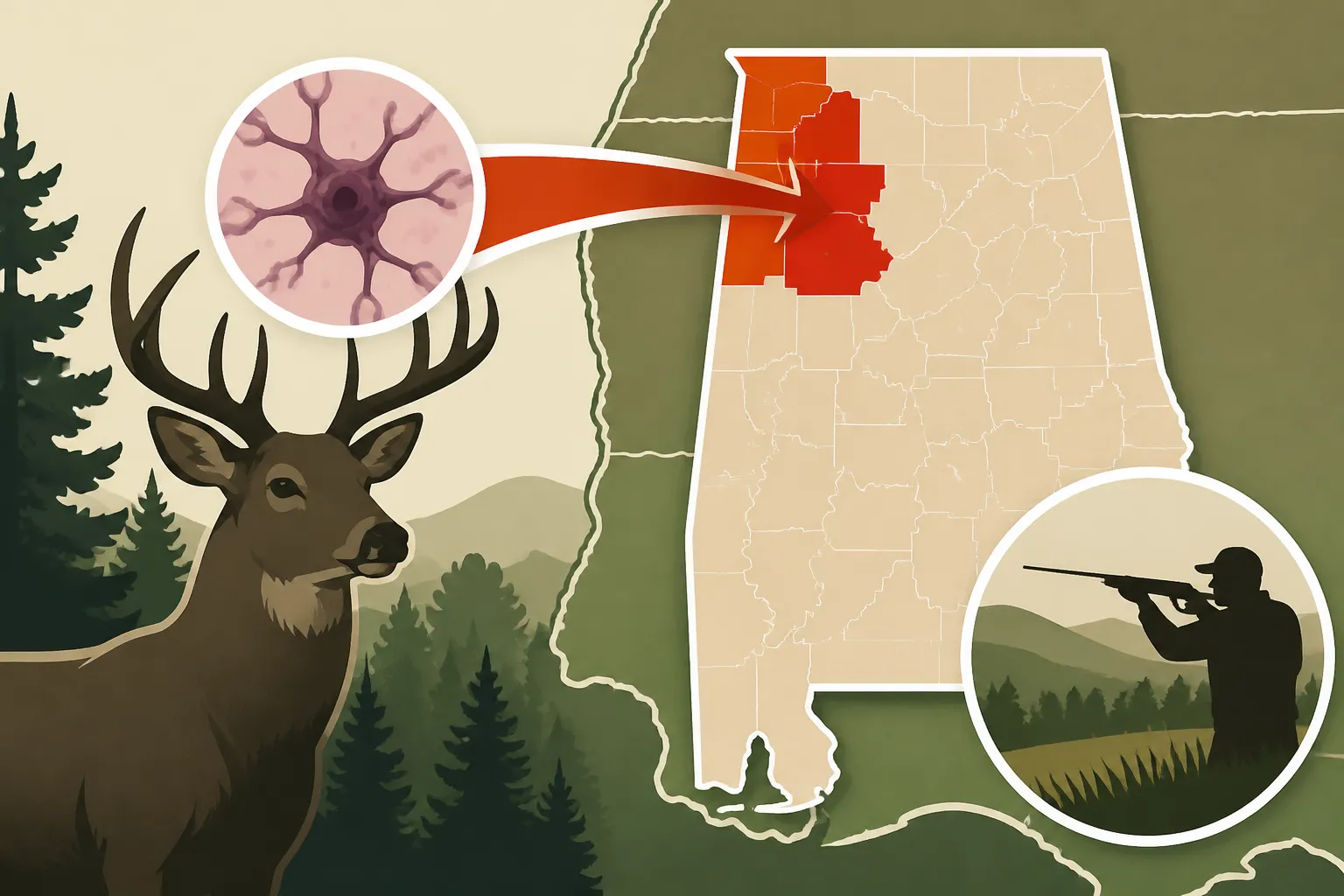
Upon the confirmation of CWD in Lauderdale County, the ADCNR wasted no time in implementing its CWD response plan. This plan, developed over years in anticipation of this very scenario, outlined a series of steps to monitor, contain, and manage the disease. One of the immediate actions was the establishment of a CWD Management Zone (CMZ). This zone initially included Lauderdale County and parts of Colbert and Franklin counties, which share borders with Lauderdale or were deemed at high risk for spread. The CMZ is essentially a geographical area where special regulations are in effect, designed to limit the movement of deer and deer parts, and to intensify surveillance.
Within the CMZ, enhanced regulations were put into place. These included mandatory testing of all harvested deer during specific periods, strict rules regarding the movement of deer carcasses or parts out of the zone, and prohibitions on feeding deer or using certain deer attractants that could concentrate deer and facilitate disease transmission. These measures, while sometimes inconvenient for hunters, are critical to managing CWD. The state also ramped up its public awareness campaigns, educating hunters and landowners about CWD, how to identify potentially infected deer, and the importance of adhering to the new regulations. This swift and comprehensive response was vital in the initial days following the discovery, setting the stage for long-term management efforts. For details on the broader management strategies, consult Alabama's Chronic Wasting Disease Management Zone.
Piecing Together the Puzzle: Probable Pathways of CWD Introduction
Understanding that CWD arrived in Northwest Alabama is one thing, but knowing how it got here is crucial for preventing future introductions and managing its spread. While no definitive "smoking gun" often exists with wildlife disease, biologists have identified several highly probable pathways based on scientific understanding and observations in other states.
Natural Deer Migration Across State Lines
One of the most widely accepted theories for CWD's arrival in Lauderdale County is the natural movement of white-tailed deer across state boundaries. Deer, especially bucks during the rut or young deer dispersing from their birth areas, can travel significant distances. Given Lauderdale County's direct border with Tennessee, where CWD had already been confirmed in several counties to Alabama's north, it’s highly probable that an infected deer simply walked into Alabama. Deer don't recognize state lines, after all.
Imagine a mature buck expanding its territory or a young buck striking out on its own, crossing the state line from a known CWD-positive area in Tennessee. This single movement, seemingly innocuous at the time, could have introduced the prion into Alabama's deer population. These movements are incredibly difficult to track, especially across vast tracts of contiguous habitat that span state borders. Tools like GoHunt's mapping features can help hunters understand terrain and potential deer corridors, but even the best technology can't predict every individual deer's path. This constant, natural movement of wildlife is a beautiful thing, but in the context of CWD, it also presents the most challenging vector for disease management.
The Role of Human-Assisted Spread and Carcass Movement
While natural deer movement is a primary suspect, human activity also plays a significant, if sometimes unintentional, role in the spread of CWD. One of the biggest concerns is the movement of infected deer carcasses or parts. A hunter who harvests a deer in a CWD-positive area in another state, or even in Alabama's CMZ, and then transports the entire carcass or certain high-risk parts (like the brain, spinal cord, or lymph nodes) across state or zone lines, could inadvertently be moving infected material. If these parts are disposed of improperly in a new, uninfected area, the prions can contaminate the soil and potentially infect local deer. This is why agencies implement strict carcass movement restrictions.
Another human-assisted pathway, though less likely for the initial introduction into a wild herd, is the illegal transport of live deer. While commercial deer farming and transport are heavily regulated, and illegal interstate transport is strictly prohibited, it remains a theoretical risk. Prions can also be spread through certain deer attractants, particularly those containing deer urine or other bodily fluids, which, if sourced from an infected area, could introduce prions. Although Alabama has had regulations against these practices for a long time, the risk of unwitting or intentional non-compliance exists. The ADCNR has strict guidelines on Alabama Carcass Movement Restrictions precisely to combat this risk, emphasizing the critical role hunters play in preventing further spread. Hunters must be diligent, informed, and compliant with these regulations to protect Alabama's deer.
Current Status and Ongoing Management Efforts in Northwest Alabama
Since the initial discovery, ADCNR and its partners have been working tirelessly to monitor, understand, and manage CWD in Alabama. This involves continuous surveillance, clearly defined management zones, and proactive strategies to protect the state's deer herd.
Defining the CWD Management Zone and High-Risk Areas
Following the first confirmed case, the ADCNR promptly established a CWD Management Zone (CMZ) in Northwest Alabama. Initially, this zone encompassed all of Lauderdale County, along with portions of Colbert and Franklin counties. This CMZ isn't just a line on a map; it's an area where specific hunting and deer management regulations apply, designed to limit the spread of the disease. Within the larger CMZ, there's also a smaller, even more critical area known as the High-Risk Zone (HRZ). This HRZ is typically defined as the immediate vicinity around a known positive CWD case or where multiple cases have been detected, indicating a higher prevalence of the disease. The regulations within the HRZ are often more stringent, reflecting the greater risk.
The delineation of these zones is dynamic and subject to change based on surveillance results. If new positive cases are found outside the current boundaries, the CMZ and HRZ might be expanded. Conversely, if extensive testing shows no further spread, boundaries might be adjusted. This adaptive management approach is crucial in the face of a persistent and evolving threat like CWD. It's vital for hunters to stay informed about the exact boundaries of these zones, as they dictate everything from antlerless deer harvest limits to carcass transport rules. To see which specific counties are currently impacted, check out Which Counties Sit in Alabama's CWD Zone and familiarize yourself with The High-Risk Zone Inside the CMZ.
Here's a snapshot of the current CWD situation in Alabama's CMZ:
| County | CWD Status | Key Regulations |
|---|---|---|
| Lauderdale | Primary CWD Management Zone; multiple positives | Mandatory testing periods, carcass restrictions |
| Colbert | Partially within CMZ; buffer area | Carcass restrictions, enhanced surveillance |
| Franklin | Partially within CMZ; buffer area | Carcass restrictions, enhanced surveillance |
| Limestone | Adjacent to CMZ; increased surveillance | Voluntary testing encouraged, monitor for spread |
| Lawrence | Adjacent to CMZ; increased surveillance | Voluntary testing encouraged, monitor for spread |
Note: This table reflects a general overview. Always check the official ADCNR regulations for the most current and precise information on CMZ and HRZ boundaries and rules.
Mandatory Testing and Surveillance Programs
One of the cornerstones of Alabama's CWD management strategy is an aggressive testing and surveillance program. This means collecting samples from harvested deer to determine the prevalence and geographical extent of the disease. In the CMZ, especially within the High-Risk Zone, mandatory CWD testing weekends are established during deer season. During these periods, hunters who harvest deer within specific areas are required to bring their deer to designated drop-off locations for sampling. This allows ADCNR biologists to gather critical data on how widespread the disease truly is and to identify any new areas of concern.
Beyond mandatory testing, ADCNR also encourages voluntary testing statewide, providing drop-off locations and opportunities for hunters outside the CMZ to submit samples. This voluntary participation is incredibly valuable, as it helps establish baseline data for areas currently thought to be CWD-free and provides an early warning system if the disease were to spread. The more samples that are collected and tested, the clearer the picture becomes, allowing for more informed management decisions. It's a collective effort, and every hunter who participates in testing contributes to the health of our deer herd. For specific dates and locations of testing, refer to Mandatory CWD Testing Weekends, and for an overview of the disease's current progression, check How Many Deer Have Tested CWD-Positive Since 2022. These ongoing efforts are crucial to protecting our deer hunting future.
Living with CWD: Hunter Responsibilities and Future Outlook
The reality is that CWD is likely here to stay in Alabama. While that's a tough pill to swallow, it doesn't mean we throw in the towel. Instead, it means adapting, becoming more vigilant, and understanding our crucial role as hunters in managing this disease. Our actions, both individually and collectively, will shape the future of deer hunting in Alabama.
The Hunter's Role in Preventing Further Spread
As hunters, we are often the first line of defense and critical partners in wildlife management. Our responsibility in preventing the further spread of CWD is paramount. The simplest, most effective thing we can do is to strictly adhere to all CWD-related regulations issued by the ADCNR. This includes understanding and respecting carcass movement restrictions – if you hunt in a CWD-positive county, know what parts you can and cannot take out of that county. This single act is one of the most important things you can do to prevent prions from being moved to new areas.
Beyond regulations, being an educated and observant hunter makes a huge difference. Know the signs of CWD: the emaciation, neurological issues, and unusual behavior. If you observe a deer exhibiting these symptoms, report it to the ADCNR immediately. Do not harvest or consume an animal that appears sick. Additionally, consider voluntary testing for your harvested deer, even if it's not mandatory in your area. This helps wildlife agencies gather vital data to monitor the disease's presence and prevalence. Utilizing resources like the GoHunt app can help you quickly check zone boundaries and regulations while in the field, making compliance easier. Every hunter's careful actions contribute to protecting the health of our overall deer herd and slowing down the disease's spread. It's a long game, and our diligence is key. For more on the current situation, be sure to read Alabama CWD Prevalence in the High-Risk Zone.
Safely Handling and Processing Deer from Affected Areas
Harvesting a deer in the CWD Management Zone or even adjacent to it brings with it additional responsibilities regarding safe handling and processing. While venison from a CWD-positive deer should not be consumed, the vast majority of deer harvested, even in affected areas, will test negative. However, caution is always warranted. The ADCNR, in alignment with CDC recommendations, advises specific precautions. If you harvest a deer in the CMZ, it's highly recommended to have it tested. Do not eat the meat until you receive a negative test result. If the test comes back positive, dispose of the carcass properly, following ADCNR guidelines, which often involve leaving the high-risk parts within the CMZ or at designated disposal sites.
When field dressing a deer in a CWD area, minimize contact with the brain and spinal cord. Wear gloves and use separate knives for field dressing versus butchering to avoid cross-contamination. Many hunters choose to quarter deer in the field, leaving the spine, head, and other high-risk materials at the harvest site within the CMZ. For those who hunt on public land within these zones, such as Freedom Hills CWD Zone Public Ground, these practices become particularly important. Taking these steps not only protects your health and your family but also helps prevent the accidental spread of prions to new areas. Understanding and implementing these safe handling practices are crucial aspects of being a responsible hunter in the age of CWD. Dive deeper into these specific guidelines by reading Handling Venison From the CWD Management Zone.
Disclaimer
This information is for general guidance only and is not a substitute for official regulations. Hunting laws and CWD management protocols can change rapidly. Always consult the latest official Alabama Department of Conservation and Natural Resources (ADCNR) regulations and advisories before hunting.