Alabama’s Year-Round Hog Rule on Private Land
Few things are as frustrating to Alabama landowners, farmers, and even just casual observers as the relentless destruction caused by feral hogs. These invasive animals wreak havoc on crops, timber, and native wildlife habitats year-round, leaving a trail of devastation that costs millions. This guide will walk you through Alabama's unique and liberal rules for hunting feral hogs on private land, offering insight into why these regulations exist and how you can effectively manage them.
Understanding Alabama's Unique Approach to Feral Hogs
If you've spent any time in the Alabama outdoors, chances are you've either seen the tell-tale signs of feral hog activity – torn-up fields, rooted-up food plots, or even actual hogs themselves. These aren't just a minor annoyance; they're a full-blown ecological and agricultural crisis across much of the state. Because of this widespread issue, Alabama has taken a particularly aggressive stance, especially when it comes to private land. The state recognizes the severe threat these animals pose and empowers landowners and hunters to take action without the usual seasonal or bag limit restrictions seen with game animals. This isn't about sport as much as it is about necessary population control and damage mitigation.
The Problem: Why Hogs are Such a Nuisance
Feral hogs are a nightmare for a multitude of reasons, and their impact reverberates through almost every aspect of Alabama's landscape and economy. For farmers, it's a direct hit to the bottom line. Imagine planting a pristine field of corn, peanuts, or soybeans, nurturing it through the growing season, only to wake up one morning and find acres of it churned into a muddy wasteland by a sounder of hogs. Their incessant rooting for food can completely destroy a crop overnight, making all the hard work and investment disappear. It’s not just agricultural land either; timberlands suffer too, as hogs root up delicate seedlings, preventing forest regeneration. Beyond agriculture and timber, feral hogs are an ecological disaster. They outcompete native wildlife for food, destroy the habitat of ground-nesting birds like wild turkeys and quail, and even prey on fawns and other small animals. They are also known carriers of diseases, some of which can be transmitted to livestock and even humans, raising serious concerns for both domestic animals and public health. This combination of factors explains why the state is so keen to encourage their removal.
The Solution: Unrestricted Hunting on Private Land
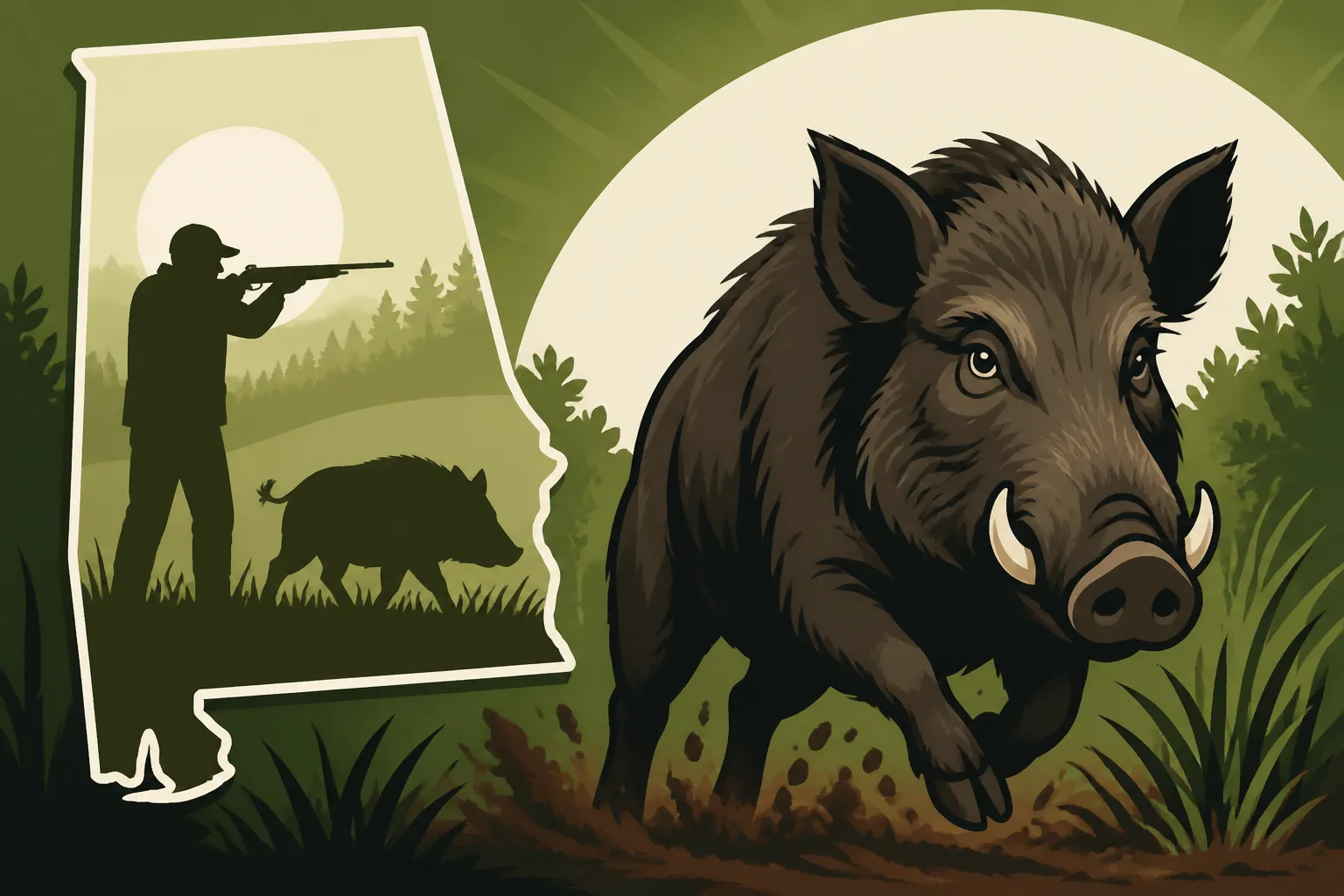
Given the relentless nature of the feral hog problem, Alabama has implemented an equally aggressive solution on private land: virtually unrestricted hunting. Unlike deer or turkey, which have specific seasons, bag limits, and legal hunting hours, feral hogs on private land can be hunted 365 days a year, 24 hours a day, using almost any legal hunting method you can imagine. This isn't a privilege; it's a necessity. The state recognizes that for landowners to have any hope of managing the damage, they need maximum flexibility. This means no daily or seasonal bag limits, no weapon restrictions (within legal parameters for private land, of course), and no time-of-day constraints. This broad allowance reflects the deep understanding that traditional game management rules simply won't work for an invasive species that reproduces at an alarming rate and causes continuous destruction. It puts the power directly into the hands of those most affected, offering a crucial tool in the ongoing battle against these destructive animals.
The Specifics of the Year-Round Rule
Let's cut right to the chase about what "unrestricted" really means for hunters and landowners dealing with feral hogs in Alabama. This isn't just a suggestion; it's a codified rule designed to empower you. Essentially, on private land, feral hogs are classified as an unprotected nuisance animal, which places them in a category completely separate from traditional game species. This distinction is critical because it liberates hunters from many of the constraints that apply to deer, turkey, or waterfowl. You don't need to worry about the calendar, a specific time of day, or how many you've already harvested. The goal is simple: reduce their numbers by any ethical and legal means necessary on your own property, or property where you have explicit permission.
Legal Definitions: What "Feral Hog" Means for Hunters
Understanding the legal definition of a "feral hog" in Alabama is important, though in practical terms, it's pretty straightforward for most hunters. A feral hog is generally defined as a free-ranging pig that is not a domestic animal, meaning it's not owned, tagged, or confined. These are animals that have escaped domestication or are descended from domestic pigs that have escaped and have adapted to living in the wild. They display the classic wild traits – often dark-haired, with tusks, and a general lean, rugged appearance. The key distinction from a legal standpoint is that they are not livestock in the traditional sense, even if they originated from domestic stock. This classification as an unprotected, non-game animal is what allows for the year-round, no-limit hunting. You won't find the term "feral hog" causing much confusion in the field; if it looks like a wild pig, acts like a wild pig, and is on private land, it's fair game.
No Closed Season, No Bag Limit: A Hunter's Dream (or Nightmare)
This is the golden rule when it comes to Alabama's private land hog hunting: there is no closed season and no bag limit. This means you can pursue feral hogs every single day of the year. There's no tag requirement like with deer, and you don't have to check them in with Game Check. This level of freedom is practically unheard of for any other animal you might hunt in the state. For example, when you're deer hunting, you're constantly aware of Alabama Deer Season Structure Explained or Alabama Archery Season Dates, but with hogs, that mental calendar can be tossed out the window. This isn't just a convenience; it's a necessary approach given the incredible reproductive capacity of feral hogs. A single sow can have multiple litters of piglets per year, and those piglets can reproduce themselves within months. Without continuous pressure, their populations can explode, making even aggressive hunting efforts feel like bailing water with a sieve. This perpetual open season allows for consistent management efforts, which is absolutely crucial for any hope of mitigating their impact.
Night Hunting and Special Equipment Considerations
One of the most powerful tools in the Alabama hunter's arsenal for feral hogs on private land is the ability to hunt at night. Unlike deer, where legal hunting ends at sundown, you can pursue hogs under the cloak of darkness. This is a game-changer because hogs are often most active after dusk, especially in warmer months or areas with high human pressure. To aid in night hunting, Alabama law on private land permits the use of artificial lights, including vehicle headlights or spotlights. This means you can illuminate fields, food plots, and travel corridors to spot these nocturnal destroyers.
Even more advanced equipment is allowed: thermal imaging and night vision devices. These technologies, once exclusive to military applications, are now readily available to civilians and are incredibly effective for hog hunting. With thermal optics, hogs, which often have higher body temperatures than their surroundings, glow brightly, making them easy to spot even in complete darkness or thick brush. Night vision amplifies ambient light, allowing you to see in low-light conditions.
Consider how these tools compare to the restrictions you face during Muzzleloader Deer Hunting in Alabama or even Hunting the Alabama Rut by Zone, where such aids are strictly forbidden. This liberal stance on equipment for hogs underscores the state's determination to help landowners gain the upper hand. If you're serious about year-round hog control on your property, especially when they're hitting your corn in the dead of night, investing in or borrowing some form of night optics can significantly increase your success rate. Companies like GoHunt offer a wide range of gear and insights into optimizing your hunt plans, including specific tools and strategies for night operations.
Navigating Private Land Permission and Responsibilities
While Alabama's rules for hunting feral hogs on private land are incredibly liberal, there's one non-negotiable aspect that underpins everything: permission. You absolutely must have explicit permission from the landowner before stepping foot on their property to hunt anything, especially hogs. This isn't just a courtesy; it's the law. Trespassing is a serious offense, and even with the best intentions of helping a landowner with their hog problem, showing up unannounced can land you in deep trouble. The freedom to hunt hogs year-round and with liberal methods doesn't grant you carte blanche access to anyone's land.
The Absolute Necessity of Landowner Permission
Let's be crystal clear: you cannot hunt feral hogs on private land without permission. This is not a suggestion; it is the fundamental legal and ethical requirement. Alabama's Alabama Trespass and Permission Law is clear: entering another person's property without their express consent, whether written or verbal, is illegal. While many landowners are desperate for help with their hog problem, assuming you have permission just because there are hogs is a dangerous mistake. Always, always, always ask first. This means having a direct conversation with the property owner, explaining your intentions, and getting their explicit approval. Even if you've hunted deer there before, clarify that hog hunting is also approved, especially if you plan to use methods like night hunting or trapping that fall outside typical deer season activities. Don't risk a confrontation, legal action, or burning a bridge with a potentially valuable hunting connection.
Building Relationships with Landowners
Securing permission for year-round hog hunting is often about more than just a quick phone call; it's about building a relationship of trust and respect with the landowner. Many rural landowners are wary of strangers, and rightfully so. They've often dealt with trespassers, litter, or irresponsible hunters in the past. Your approach needs to be professional, polite, and focused on demonstrating that you're a responsible individual who will respect their property.
Start by introducing yourself properly, explaining why you're interested in helping (e.g., you enjoy hunting, you understand the damage hogs cause, you want to help them protect their property). Offer to help with other tasks around the property if you're able, or provide processed hog meat from your harvests. Be clear about your hunting methods, especially if they involve night hunting or trapping, so there are no surprises. Discuss access routes, parking, and areas where they absolutely do not want you to hunt. Regularly communicate your success, or lack thereof, and always leave the property better than you found it. A strong, trusting relationship can lead to long-term access and even more hunting opportunities in the future. Remember, good connections can often be more valuable than knowing Best Alabama Counties for Big Bucks.
Safety and Ethical Considerations on Private Property
With the broad permissions given for hog hunting on private land, hunters carry an even greater responsibility for safety and ethical conduct. First and foremost, always be aware of your surroundings. Know what's beyond your target. While you might be hunting deep in the woods, property lines can be fluid, and neighboring houses, roads, or even livestock can be surprisingly close. Confirming property boundaries with the landowner and perhaps using a GPS mapping app like GoHunt to understand the exact perimeter of your hunting area is critical.
Ethically, while there's no bag limit, that doesn't mean indiscriminate slaughter without purpose. Many hunters aim to utilize the meat from harvested hogs, which can be surprisingly good, especially from younger animals. Consider donating meat if you can't use it all. If you're using methods like baiting or trapping, ensure they are deployed responsibly and checked regularly to prevent unnecessary suffering. Always inform the landowner of your plans, especially if you're setting traps or running dogs, as this could impact their daily routines or concern neighbors. By upholding the highest standards of safety and ethics, you not only ensure a positive experience for yourself but also reinforce the trust the landowner has placed in you, ensuring continued access for hog control.
Effective Strategies for Year-Round Hog Control
The year-round hog rule on private land in Alabama provides hunters with an unparalleled opportunity to truly make a dent in the hog population. However, simply heading out with a rifle isn't always enough to effectively control these intelligent and prolific animals. A multi-faceted approach, often combining several techniques, tends to be the most successful. The key is consistency and adapting your methods to the hogs' behavior, which can change based on food availability, pressure, and even weather. Remember, this isn't just a casual hunt; it's a dedicated effort to protect valuable resources.
Baiting and Trapping Tactics
Baiting is a hugely popular and effective strategy for concentrating feral hogs, making them easier to target. Corn is the most common bait, often fermented to create a stronger attractant. When Building and Freshening a Hog Bait Site, consistency is key. Establish a regular baiting schedule, and make sure the site is in an area where you can set up for a shot or place a trap discreetly. Hogs are smart; they learn patterns, so using motion-activated trail cameras is invaluable for scouting and understanding when they visit. You'll find that hogs will often adapt their feeding times to avoid human activity, which is where night hunting becomes so important.
Trapping is often considered the most efficient method for truly removing large numbers of hogs, especially sounders. Modern hog traps, often large panels or corral-style setups with remote triggering mechanisms, can capture an entire group at once. The principle behind successful trapping is similar to baiting: pre-bait the area for several days or even weeks to get the hogs comfortable entering the trap structure to feed. Once they are accustomed, you can then set and trigger the gate. Effective Trapping Alabama Feral Hogs can drastically reduce local populations, offering a sustainable solution for ongoing management. Always check your traps frequently to humanely handle captured animals.
Stalking, Ambush, and Dog Hunting
Beyond static methods like baiting and trapping, active hunting techniques can also be very productive. Stalking hogs, especially in areas of dense cover or along creek bottoms, requires patience, keen observation, and an understanding of hog behavior. They have an excellent sense of smell, so playing the wind is critical. Ambush hunting involves setting up in a natural travel corridor, near a water source, or at the edge of a field where hogs are known to feed, waiting for them to appear. This often requires early morning or late evening sits, similar to deer hunting, but with the added flexibility of hunting at night if legal on your specific private land.
For many Alabamians, Running Dogs on Alabama Feral Hogs is a traditional and highly effective method. This involves using trained cur dogs or catch dogs to locate and bay or hold hogs for hunters. The excitement and intensity of a dog hunt are undeniable, and it can be particularly good for finding hogs in thick, inaccessible terrain where still-hunting would be almost impossible. If you choose this route, ensure your dogs are well-trained, protected, and that you are hunting with experienced dog handlers who prioritize the safety of both the dogs and the hogs being pursued. Each of these methods for Hunting Hogs Without Bait or Dogs or with them, offers distinct advantages depending on the terrain, hog density, and personal preference.
Leveraging Technology: Thermal and Night Vision
We touched on this earlier, but it truly deserves its own moment, as modern optics have revolutionized year-round hog hunting, especially given the flexibility of Alabama's private land rules. Thermal imaging devices detect heat signatures, making it virtually impossible for hogs to hide in the dark or even in thick brush. Imagine scanning a dense field at midnight and seeing the bright, glowing outlines of multiple hogs that your eyes would never pick up. This capability dramatically increases success rates for night hunting and makes target identification much safer and more precise.
Night vision optics, while different from thermal, also offer a significant advantage by amplifying ambient light, turning a dark night into something resembling twilight. While they don't "see" heat, they allow for excellent situational awareness and shot placement in low-light conditions. Pairing either of these technologies with a suitable firearm, often an AR-style rifle for its capacity and quick follow-up shots, creates a highly effective hog control system. Using these tools responsibly, knowing your target, and being absolutely certain of your backdrop are paramount. The ability to hunt effectively during the hours when hogs are most active is a game-changer, helping you regain control over your property and mitigate the widespread Crop Damage Hogs Cause in Alabama. Before you invest, do some research on platforms like GoHunt that provide reviews and comparisons of different night hunting technologies.
The Broader Impact and Management Efforts
While individual landowners and hunters are on the front lines, the battle against feral hogs in Alabama is a statewide, ongoing effort with significant economic and ecological implications. The year-round private land rule is a critical component of this strategy, but it exists within a larger context of biological understanding and continuous adaptation to a persistent threat. It’s important to remember that every hog removed contributes to alleviating this broader problem, even if it feels like a drop in the bucket when facing a persistent sounder.
Economic and Ecological Consequences of Feral Hogs
The costs associated with feral hog damage in Alabama are staggering. Farmers lose millions annually due to crop destruction, while timber companies face significant losses from rooted-up seedlings and damaged forest floors. Beyond direct economic losses, there's the cost of repairing roads and dams damaged by their rooting, and the expense of disease monitoring and control. Feral hogs are known carriers of diseases such as brucellosis and pseudorabies, which can jump to domestic livestock, creating economic crises for ranchers.
Ecologically, the consequences are equally dire. As mentioned, hogs destroy native plant communities, outcompete deer and other wildlife for food, and prey on vulnerable species like fawns, turkey poults, and the eggs of ground-nesting birds. They act as ecosystem engineers in the worst way, fundamentally altering habitats and reducing biodiversity. The sheer number of How Many Feral Hogs Alabama Has across the state creates a pervasive threat that touches nearly every natural and agricultural landscape. The year-round hunting rule is a direct response to this devastating economic and ecological reality, providing a continuous means to combat their spread and damage.
Reporting Harvests and Disease Monitoring
While there's no mandatory reporting system for individual feral hog harvests in Alabama like there is for deer through Game Check, it's still good practice to be mindful of state efforts concerning disease monitoring. The Alabama Department of Conservation and Natural Resources (ADCNR) and other agencies continually monitor for diseases that feral hogs can carry. In areas near the Chronic Wasting Disease (CWD) Management Zone in northwest Alabama, for instance, biologists are always vigilant for any signs of disease in any cervids, but also for other potential vectors. While hogs aren't known to carry CWD, their presence complicates disease management by creating more avenues for pathogen spread and increasing stress on deer populations.
If you ever harvest a hog that appears sick or has unusual lesions, it's advisable to contact ADCNR or your local game warden. While not required, this information can be valuable for their ongoing monitoring efforts. Participating in voluntary surveys or research projects, if they become available, can also contribute to a better understanding of hog populations and disease prevalence. For general hunting licenses, you will still need to ensure you have an Alabama Hunting Licenses and What They Cost before any hunting, even for hogs, though some exceptions apply to landowners on their own land.
Future Outlook for Feral Hog Management in Alabama
The future of feral hog management in Alabama is likely to remain focused on aggressive control strategies, with the year-round private land rule continuing to be a cornerstone. There's little indication that these animals will ever be brought under control to the point where hunting restrictions would be necessary or even considered. In fact, as their range continues to expand and their numbers remain high, it's possible that even more innovative or widespread control measures could be implemented.
Biological research continues to explore new methods, such as species-specific toxicants or advanced fertility control, though these often come with significant regulatory hurdles and public acceptance challenges. For the foreseeable future, however, the primary defense against feral hogs will remain a combination of trapping and hunting pressure. Landowners and hunters using the flexibility provided by Alabama's current regulations will continue to be the most vital component in managing this relentless invasive species. Their persistent efforts, sometimes feeling like an endless chore, are absolutely critical to protecting Alabama's natural resources and agricultural economy.
Disclaimer
This article is intended for informational purposes only and does not constitute legal advice. Hunting regulations can change, and it is the responsibility of every hunter to consult the most current Alabama Department of Conservation and Natural Resources regulations before engaging in any hunting activities. Always prioritize safety and ethical hunting practices.