Glassing a Powerline Cut at Last Light
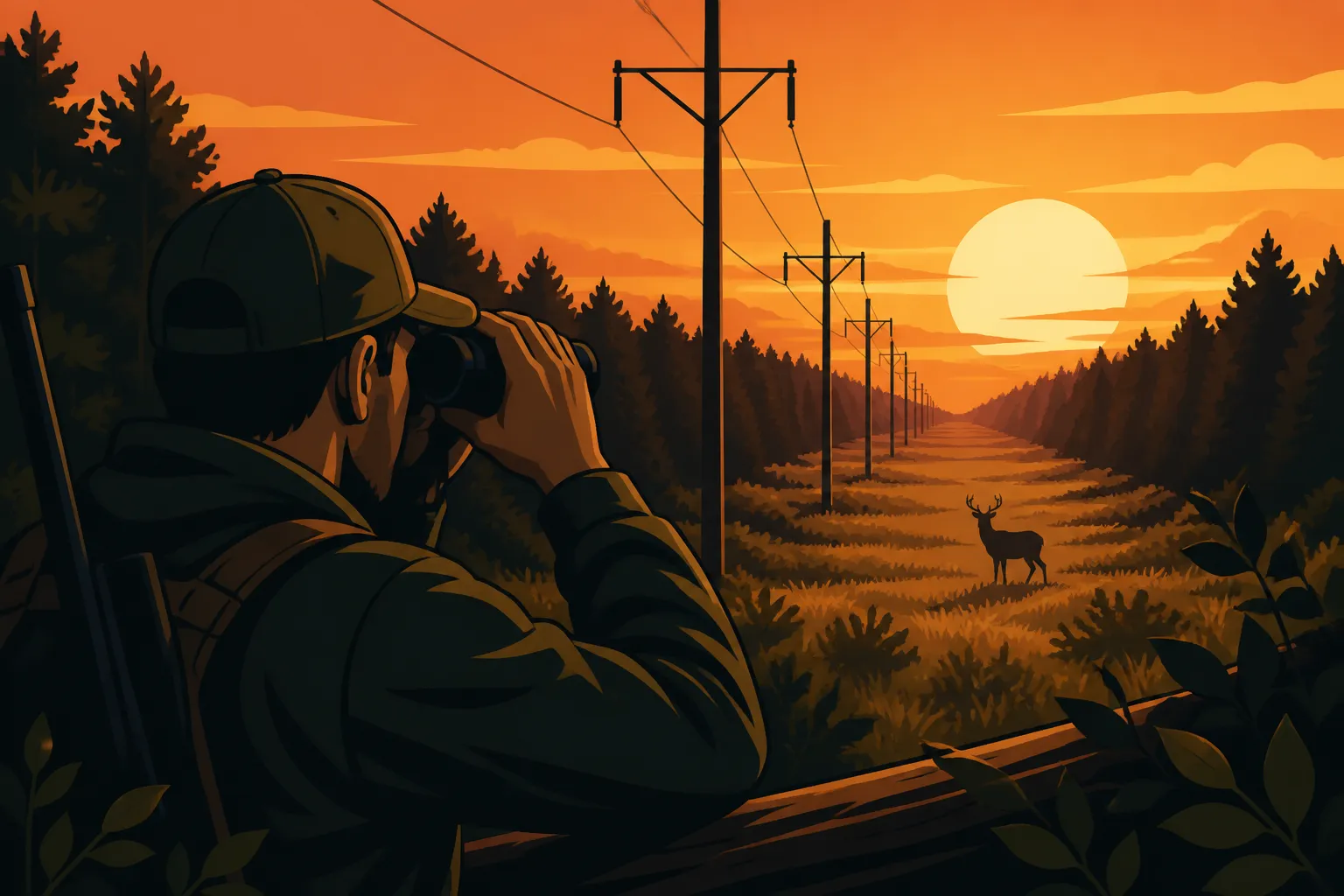
There's nothing quite as frustrating as sitting patiently, waiting for that deer to step out into the open at last light, only to realize too late that it was standing there all along, obscured by shadows or just a little too far for a clear shot. Many hunters find themselves in this exact predicament, especially when trying to pinpoint movement in the tricky, broken terrain of Alabama. This guide is all about mastering the art of glassing powerline cuts at last light, giving you the tactical edge to spot deer when they're most active and most vulnerable.
Understanding Powerline Cuts as Deer Habitat
Powerline cuts, those long, clear ribbons slicing through Alabama's forests and fields, might seem like barren zones at first glance. But for a keen deer hunter, they represent prime opportunities, especially as evening approaches. These often-overlooked corridors are magnetic for whitetails, offering a unique blend of resources that make them incredibly attractive when deer start to move.
Why Deer Use Powerline Corridors
Think about it: a powerline cut is essentially a giant, linear edge habitat, and deer absolutely thrive on edges. These areas are typically maintained, meaning they're often regenerating with young forbs, grasses, and woody browse that deer adore. Unlike the mature timber on either side, the sun penetrates these cuts, encouraging a different array of plant life—natural food plots, if you will. Deer often use these corridors as safe travel routes, connecting bedding areas in dense timber with feeding grounds or watering sources. They provide a clear path of travel, reducing resistance and allowing deer to move with relative ease compared to pushing through thick brush or grown-up woods.
Furthermore, these cuts offer unique thermal advantages. On a cool evening, the exposed ground within the cut might hold warmth longer, drawing deer out. Conversely, on warmer days, subtle breezes often funnel through these open spaces, providing a cooler path for movement. You'll often see deer staging just inside the tree line, utilizing the dense cover for security, only to step out into the cut for a quick bite or to cross at dusk. Whether it's a powerline cutting through a vast pine plantation in south Alabama, offering the only real browse for miles, or one winding through the mixed hardwoods of the northern counties, providing a sunny spot for a quick snack, the principles of deer utilization remain consistent. These aren't just empty spaces; they're vital arteries in a deer's daily life.
Identifying Key Features in a Powerline Cut
Not all powerline cuts are created equal, and understanding the subtle nuances within them is key to effective glassing. You're looking for transition zones, pinch points, and areas that offer a bit more security or a specific food source. A prime example is where the cut crosses a creek bottom or a subtle depression. These low spots often retain moisture, leading to different vegetation and offering a concealed travel route across the open expanse. Deer will naturally gravitate to these features, using them as natural funnels or hidden pathways.
Also pay close attention to where the cut intersects with other habitat types, like an old logging road, a field edge, or a finger of dense pines jutting out into the opening. These intersections create natural "choke points" where deer are more likely to appear. Small pockets of regeneration within the cut itself, particularly those with brambles, honeysuckle, or other favored browse, are also prime feeding locations. Before you even step into the field, tools like GoHunt's mapping features can be incredibly useful. You can spend hours identifying these subtle changes in terrain, vegetation, and cover on an aerial map, helping you pinpoint exactly where deer are most likely to emerge. This pre-scouting, even from your couch, can dramatically improve your chances of success and can be a critical component of Scouting Alabama Public Land Before Season.
Strategic Glassing Techniques for Last Light
Glassing effectively at last light isn't just about pointing your binoculars at a field and hoping for the best. It's a deliberate, disciplined process that requires careful planning, impeccable positioning, and a keen eye for detail. The goal is to maximize your visibility while remaining completely undetected, turning those fleeting moments of dusk into prime opportunities.
The Importance of Positioning and Wind
Your setup is paramount when glassing a powerline cut. You need to get into position well before the deer start moving, ideally an hour or two before sunset. This allows you to settle in, let the woods calm down, and absorb the landscape. When choosing your vantage point, the wind is your absolute best friend or worst enemy. Always, and I mean always, try to be downwind or crosswind from the area you expect deer to appear. Deer have an incredible sense of smell, and even a slight shift in wind can carry your scent directly to them, sending them into hiding before you ever get a glimpse.
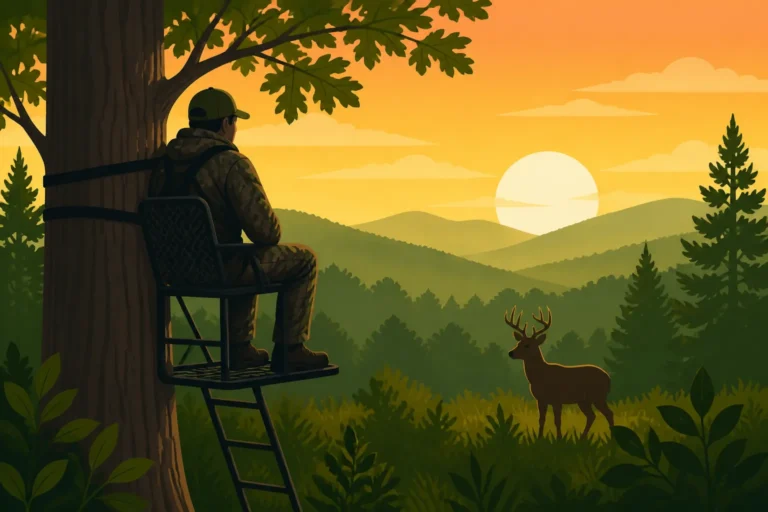
Elevation can also be a huge advantage. If you can find a slight knoll, a small ridge, or even a strategically placed Treestand Setups in Talladega National Forest on the edge of the timber, it can give you a much broader view of the powerline cut and help you pick apart the shadows. The key is to find a spot that offers an expansive view without silhouetting yourself against the sky. Being back in the shadows, or against a dark backdrop, will keep you hidden as the light fades. Sometimes, even Using a Ground Blind on Alabama Public Land can provide the concealment and stability needed for effective glassing, especially if you can brush it in well against the cut's edge.
What to Look For and How to Scan
Effective glassing is a slow, methodical art form. Don't just sweep your binoculars across the landscape quickly. Instead, pick a small section of the powerline cut—maybe 20-30 yards wide—and methodically grid it, slowly moving your binoculars side to side, then up and down. Focus on the edges first, where deer are most likely to step out from cover. Look for anything that seems "out of place": a horizontal line in a vertical world, a flicker of an ear, the slight twitch of a tail, or a patch of color that doesn't quite match the surrounding vegetation. Often, you'll spot just a part of a deer before you see the whole animal.
As the light fades, shadows deepen and play tricks on your eyes. Train yourself to look through the shadows, not just at them. Pay extra attention to any movement, no matter how slight. Sometimes a feeding deer will just appear as a subtle sway of grass or a branch. Using quality optics, a good pair of 10×42 or 10×50 binoculars, is critical for pulling light in these low-light conditions. A tripod or bipod is a game-changer for stability, allowing you to hold your binoculars steady for extended periods without fatigue, which is crucial for spotting those subtle details.
Here's a quick guide to last-light glassing:
| Time Before Sunset | Primary Focus Area | What to Look For | Equipment Priority |
|---|---|---|---|
| 60-30 Minutes | Timber edges, dense cover transition zones | Subtle movement, parts of deer, feeding patterns | High-quality binoculars (10×50), steady rest (tripod/bipod) |
| 30-10 Minutes | Openings, browse pockets within cut | Whole deer emerging, walking patterns, social interactions | Binoculars, rangefinder |
| 10 Minutes – Legal End | Any movement, darker shadows, established trails | Ghosting deer, final feeding opportunities before dark | Best low-light optics, extreme patience |
Remember, legal shooting light in Alabama is typically 30 minutes after sunset, so you need to be highly efficient in those last minutes. Always consult the Alabama Gun Deer Season by Zone regulations for specific local times to stay within legal parameters.
Gear and Environmental Considerations
Having the right equipment and understanding how Alabama's environment impacts your strategy can make a huge difference in your success when glassing powerline cuts. It's not just about having powerful optics; it's about having the right powerful optics and knowing how to use them effectively in specific conditions.
Essential Optics and Accessories
For last-light glassing, your binoculars are your most important tool. While 8x magnification is good for general use, I highly recommend 10x or even 12x for serious glassing, especially across wider powerline cuts. The larger the objective lens (the second number, e.g., 42mm or 50mm), the more light it can gather, which is absolutely critical as dusk settles in. A 10×50 or 12×50 pair will give you a brighter image in low light compared to a 10×42, making it easier to pick out details in the shadows. Brands like Vortex, Leupold, and Zeiss offer excellent options that won't break the bank while providing superior light transmission.
A stable platform is non-negotiable. Trying to hold binoculars steady for extended periods will lead to fatigue and blurry vision. A lightweight tripod with a sturdy binocular adapter will allow you to lock onto an area and scrutinize it for minutes without shaking. This level of stability is what enables you to differentiate a deer's leg from a tree stump or a flicker of an ear from a leaf rustle. Don't forget a good rangefinder either. Once you spot a deer, quickly ranging it allows you to assess the shot opportunity and plan your next move. Knowing the exact distance is crucial, especially in those fading light conditions where distances can be deceiving. Many hunters, myself included, rely on digital mapping tools like GoHunt to mark potential shooting lanes and reference points along the powerline cut beforehand, making rangefinding even more precise when the moment arrives.
Adapting to Alabama's Specific Conditions
Alabama's unique climate and terrain present specific challenges and opportunities for glassing. The high humidity, especially during early season or warmer late-season days, can create haze that reduces visibility, making distant objects appear fuzzy. You'll need to compensate by focusing on closer sections of the cut or by seeking higher vantage points. The dense vegetation along many powerline cuts, particularly in regions like the Black Belt or in river bottoms, means deer are often only partially visible. This isn't like western hunting where you see full animals on open plains; here, you're often looking for small clues. This is where the patient, grid-scanning technique truly shines.
Understanding the specific types of browse and cover in the area you're hunting can also guide your focus. For instance, deer in Hunting Black Belt Prairie Farmland Deer areas might be drawn to specific crop fields adjacent to the powerline, while those in Still-Hunting Bankhead Forest Ridges might be looking for acorn drops or specific regenerating saplings. Even something as simple as insect pressure needs to be addressed; battling mosquitoes and gnats can break your concentration, so bug spray or a head net is a must for comfortable, uninterrupted glassing sessions. Remember, the goal is to be completely still and focused, and itching every two minutes will ruin that. Also, always be mindful of legal shooting hours; Alabama's regulations on hunting times are strict, so make sure you know when the sun officially sets and when legal hunting light ends.
Advanced Tactics and Common Mistakes
Moving beyond the basics, there are some nuanced strategies and pitfalls to avoid that can elevate your powerline cut glassing game. It's about more than just seeing a deer; it's about understanding its intentions and maximizing your chances for a successful encounter.
Interpreting Deer Behavior at Last Light
Deer, especially mature bucks, are notoriously cautious animals, and their behavior at last light is often a calculated risk. They typically stage just inside the cover, observing the open powerline cut for an extended period before committing to stepping out. This is why getting into position early is so crucial; you want to be settled before they even think about moving. When they do emerge, they'll often feed purposefully, sometimes only for a few minutes, before heading back into the security of the woods for the night. You might see does and younger bucks appear earlier, acting as "scouts" for the more dominant animals.
During the rut, deer behavior in powerline cuts can be particularly exciting. Bucks might use these open corridors to cruise for does, or to scent-check adjacent cover. Understanding Hunting the Alabama Rut by Zone will give you a better idea of when these behaviors are most likely to occur in your specific area. A buck might follow a scrape line along a powerline edge, or even pause to rattle antlers if another buck is nearby. The "ghosting" effect is common – a deer might appear out of nowhere, seemingly materialize from the shadows, feed briefly, and then vanish just as quickly. You have to be constantly vigilant and ready to react. Pay attention to how deer enter and exit the cut; they often use the same points repeatedly, indicating a subtle trail you might be able to capitalize on on a future hunt. These late-season movements are also often tied to Late-Season Food Sources for Alabama Whitetails, so identifying preferred forage within the cut is key.
Avoiding Common Glassing Pitfalls
One of the biggest mistakes hunters make when glassing is rushing the shot or failing to identify the deer fully. In fading light, it's easy to mistake a small buck for a bigger one, or worse, to misidentify species. Take your time. Once you spot movement, put your binoculars on it, confirm it's a deer, and then assess its size and antler development if it's an antlered deer. Ethical hunting demands positive identification. Another common pitfall is overlooking subtle signs. Don't just look for entire deer. Look for disturbances in vegetation, nervous birds, or even the movement of small game that might indicate a larger animal is present or moving nearby.
Finally, never, ever silhouette yourself against the skyline. As the sun dips, your outline against a brighter background will be a dead giveaway. Stay tucked into the shadows, behind a tree, or against a dark backdrop. And always have an exit strategy. Once legal light is gone, and whether you've harvested a deer or not, you need to be able to leave quietly without spooking any deer you've seen or that might still be in the area. This preserves the spot for future hunts. Using mapping apps like GoHunt to mark your entry and exit routes, as well as specific features you observed during your glassing session, can significantly improve your overall hunting strategy, especially when it comes to planning follow-up hunts or even when Reading Aerial Photos for Piedmont Deer to understand terrain features.
Disclaimer
Hunting is an inherently dangerous activity. Always prioritize safety, adhere to all local, state, and federal hunting regulations, and obtain proper licenses and permits before heading into the field. The information provided in this guide is for informational purposes only and does not constitute professional advice. Ensure you have the necessary skills, experience, and equipment to hunt safely and responsibly.