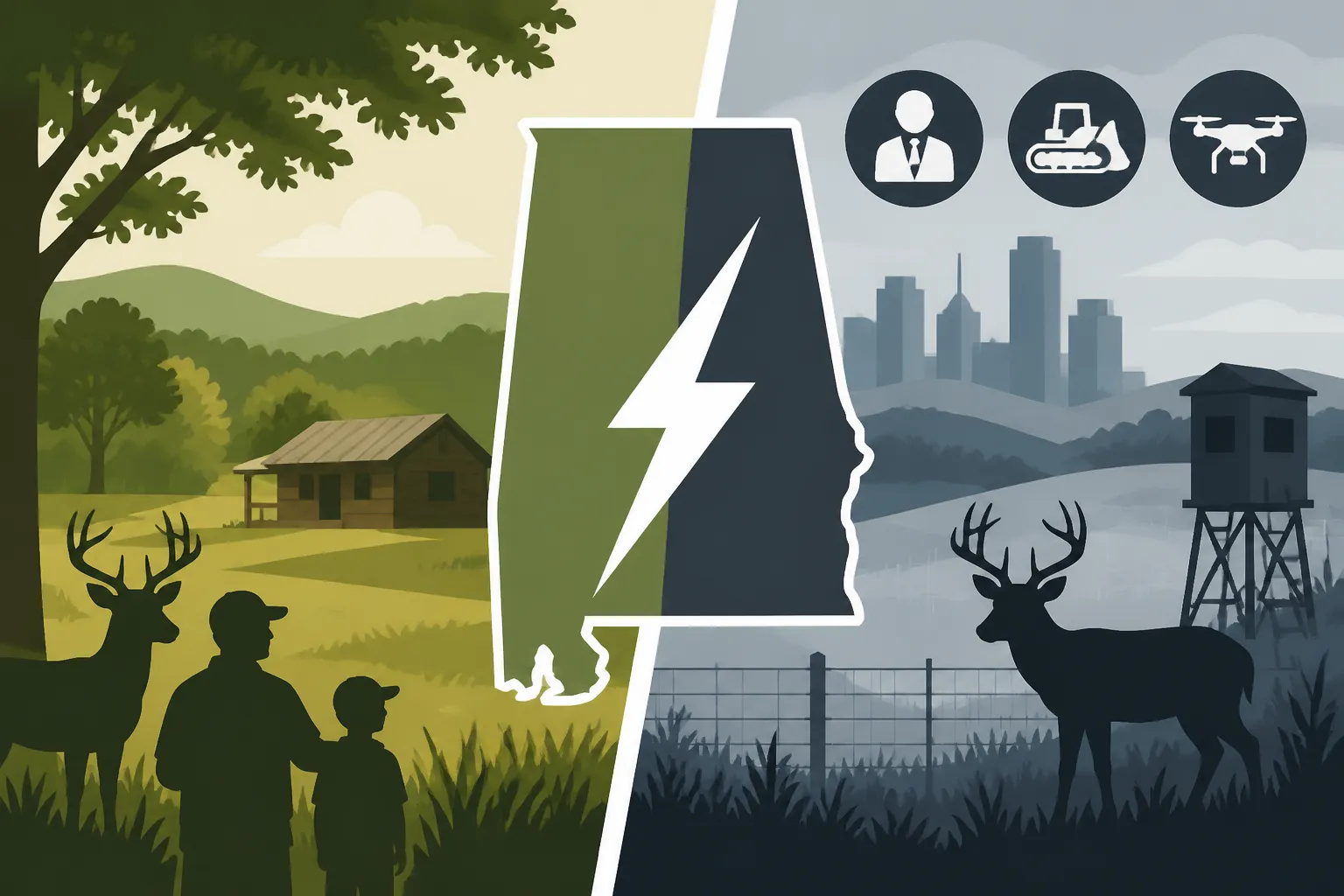
Family-Owned Versus Corporate Alabama Leases
Finding the right hunting lease in Alabama can feel like trying to solve a puzzle with half the pieces missing, especially when you're trying to figure out if a cozy family-owned tract or a more structured corporate lease is the best fit for your hunting style and budget. This guide is here to unravel the complexities, contrasting the unique aspects of both types of leases to help you make an informed decision and hopefully find your ideal hunting home.
Understanding the Lease Landscape in Alabama
The world of hunting leases in Alabama is diverse, much like the state's incredible landscapes. From the rich agricultural fields of the Black Belt to the vast timberlands of the national forests, opportunities abound, but they come in different packages. Generally, these packages fall into two broad categories: leases managed by individual landowners or multi-generational families, and those administered by larger corporate entities, often timber companies or investment groups. Each offers a distinct experience, shaped by its management philosophy and the resources behind it.
The Rise of Hunting Leases in Alabama
For generations, hunting in Alabama was often a matter of knocking on a farmer's door or joining a local club with informal arrangements. However, as land values increased and demand for quality hunting grew, the leasing model became more prevalent. Landowners, whether families or corporations, realized the economic potential of their timber and agricultural properties, leading to a more formalized system. This shift has created a vibrant market where hunters can secure exclusive access, but it also demands that hunters understand the different types of leases available and what they entail.
When you're looking for a place to hunt, whether it's for deer in the Alabama Deer Season Structure Explained or chasing gobblers during Spring Turkey Hunting in Alabama, a lease can be a game-changer. It provides consistency and a private sanctuary away from the often-crowded public lands. But that consistency comes in different forms, and understanding the history of how these leases developed helps paint a clearer picture of what you're stepping into.
Key Players in the Alabama Lease Market
On one side, you have the family landowners, often folks who have owned the land for decades, perhaps passing it down through generations. Their priorities might include maintaining family ties to the land, ensuring good stewardship, and generating some supplementary income. On the other side, you have large timber companies like Weyerhaeuser or CatchMark Timber Trust, or land management companies that specialize in leasing large blocks of land. Their primary drivers are usually maximizing financial returns and managing vast tracts for timber production, with hunting leases being a significant part of their revenue stream.
The approach to management, the terms of the lease, and even the "feel" of the hunting experience can vary wildly between these two types of landowners. It's not just about the acreage; it's about the entire philosophy behind how the land is used and managed, which directly impacts your hunting opportunities and responsibilities. Some hunters might prefer the personal touch of a family, while others value the expansive, professionally managed properties of a corporate entity.
The Allure of Family-Owned Leases
There's something inherently appealing about a family-owned hunting lease. It often evokes images of tradition, personal relationships, and a more intimate connection to the land. These leases, typically managed by individual landowners or small family groups, offer a distinctly different experience than their corporate counterparts.
Personal Connection and Flexibility
One of the biggest draws of a family-owned lease is the potential for a personal relationship with the landowner. Instead of dealing with a faceless corporate office or an online portal, you might be shaking hands with the farmer whose family has worked that ground for generations. This connection can lead to a deeper understanding of the land's history, local wildlife patterns, and even insights into specific stand locations that have historically produced good results.
This personal rapport often translates into greater flexibility. Need to plant a food plot a little early? Want to put up a permanent blind? A discussion with a family landowner might yield an easy "yes," whereas a corporate lease agreement could have strict, non-negotiable clauses. Maybe you're considering Building and Freshening a Hog Bait Site and need to discuss the long-term impact with the landowner. These informal discussions and gentleman's agreements are far more common and often more effective with a family landowner, fostering a sense of partnership and mutual respect that can significantly enhance your hunting experience.
Unique Habitat and Local Knowledge
Family-owned properties often represent a patchwork of different land uses—some timber, some agriculture, maybe some old growth hardwoods along a creek bottom. This diversity can create fantastic, complex habitat for game animals. Unlike large corporate timber tracts that might be dominated by monoculture pine plantations, a family farm could offer a rich mosaic of food sources and cover. The owner might have specific fields they plant for deer, or they might allow certain areas to grow wild to benefit quail.
Furthermore, these landowners often possess a wealth of local knowledge. They've seen countless seasons, witnessed the patterns of deer movement, and know the history of the property like the back of their hand. They can tell you where the biggest bucks were shot ten years ago, or where a particular gobbler likes to roost in the spring. This kind of nuanced, generational understanding is invaluable and can be a huge asset when you're trying to figure out Where Bankhead Forest Bucks Bed or Hunting the Alabama Rut by Zone in a specific area. This isn't just data; it's living history that enriches the hunt.
The Structure and Appeal of Corporate Leases
While family-owned leases offer a personal touch, corporate leases bring a different set of advantages to the table. These are often vast tracts of land, professionally managed, with clear rules and expectations. For some hunters, this structured approach is exactly what they're looking for.
Extensive Acreage and Professional Management
Corporate leases, particularly those from large timber companies, often encompass thousands of acres, sometimes even tens of thousands. This sheer scale provides a sense of wildness and ample room to roam, which is especially appealing to hunters who crave solitude and the challenge of covering new ground. You won't feel crowded, and the chances of encountering other hunters from your own lease group are often minimal. These properties are typically managed by professional foresters and land managers, ensuring clear timber rotations, road maintenance, and often wildlife-friendly practices that balance economic goals with habitat health.
The management extends to the lease itself. Terms are usually standardized, contracts are clear, and communication is often handled through dedicated lease managers or online portals. This can be a double-edged sword: less flexibility, perhaps, but also less ambiguity. If you're part of a larger hunting club on one of these tracts, the sheer size means you can divide it up for different members or implement different strategies, from Deer Drives With Three or Four Hunters to still-hunting vast sections of timber.
Predictable Terms and Fewer Surprises
One of the biggest advantages of a corporate lease is predictability. The lease agreement is a formal contract, clearly outlining the terms, duration, access points, restrictions, and responsibilities. This means you know exactly what you're getting into, often for a multi-year term. There are fewer last-minute surprises or changes based on a landowner's shifting personal circumstances. This stability is particularly valuable for hunting clubs or groups that invest heavily in improvements like food plots, roads, or permanent stands.
While the rules might be more rigid – for example, strict regulations on what kind of stands you can use or where you can park – they are consistently applied. This can be a relief for those who prefer clear guidelines over subjective interpretations. Plus, when searching for a lease, especially as a nonresident, online platforms like BookYourHunt or tools like GoHunt often have more corporate lease listings, as these companies actively market their available tracts through formal channels. The transparency of a corporate lease can simplify the process of understanding Alabama Hunting Lease Costs and comparing options.
Weighing Your Options: Pros and Cons
Deciding between a family-owned and a corporate lease really comes down to what you prioritize in your hunting experience. Both offer unique benefits and drawbacks that are worth considering carefully before you commit.
Advantages and Disadvantages of Family-Owned Leases
Family-owned leases often come with a charm and personal touch that many hunters cherish. The ability to build a relationship with the landowner, understand the nuances of the property, and potentially have more flexibility in management decisions can lead to a deeply satisfying hunting experience. Imagine discussing a new food plot location with Mr. Johnson, who remembers exactly where his granddaddy used to see the big deer. This personal connection can foster a sense of belonging and stewardship that's hard to replicate elsewhere.
However, these leases can also have their downsides. They might be smaller in acreage, potentially leading to more concentrated hunting pressure within your group. The terms might be less formal, which could lead to misunderstandings if expectations aren't clearly communicated. Furthermore, family circumstances can change. The land might be sold, or the next generation might have different ideas about leasing, leading to instability down the road. Finding these leases can also be more challenging, often relying on word-of-mouth or local connections rather than online listings. You might not find these on large online platforms; instead, it's about Knocking on Doors in Black Belt Farm Country.
Here's a quick comparison:
| Feature | Family-Owned Lease | Corporate Lease |
|---|---|---|
| Landowner Relation | Personal, direct contact, often long-term bonds | Formal, through lease manager or online portal |
| Flexibility | High, can often negotiate terms and improvements | Low, strict contract terms, less room for changes |
| Acreage | Typically smaller, varied habitat | Often very large, managed timberlands or agriculture |
| Management | Informal, based on mutual agreement | Professional, standardized, often timber-focused |
| Lease Term | Variable, often annual, sometimes informal | Typically multi-year, formal contracts |
| Amenities | Minimal, often requires self-sufficiency | May include established roads, gates, signage |
| Finding Leases | Word-of-mouth, local networks, direct inquiry | Online platforms, timber company websites |
| Cost Structure | Can be variable, sometimes negotiable | Standardized per-acre rates, often non-negotiable |
| Stability | Potentially less due to personal circumstances | More stable due to formalized agreements |
Advantages and Disadvantages of Corporate Leases
Corporate leases, with their extensive acreage and professional management, appeal to those who value scale and structure. The sheer size of these tracts means you often have vast areas to explore, reducing the feeling of congestion that can sometimes plague smaller properties. Knowing that a team of professionals is overseeing timber rotations, road maintenance, and overall land health can provide a sense of confidence in the property's long-term potential. This scale can be fantastic for groups planning larger operations, such as Deer Drives on Alabama Public Land, but on private ground and with exclusive access.
However, the corporate model also comes with its own set of trade-offs. The formal nature means less flexibility. You're signing a contract with specific terms, and deviations are rarely entertained. Want to build a new road or clear a section for a larger food plot? You might find strict limitations or outright prohibitions. Communication can feel less personal, often handled through generic emails or customer service lines, which can be frustrating if you have a specific question or issue. The focus on timber production also means that logging operations can occur during your lease term, potentially disrupting hunting and changing the landscape significantly. While some companies might offer compensation or alternative tracts, it's a factor that must be considered.
For those looking to understand the broader context of private land hunting, resources like Alabama Hunting Lease Costs and Finding an Alabama Hunting Lease offer valuable perspectives, often highlighting the structured nature of corporate offerings.
Navigating the Search for Your Next Lease
Whether you lean towards the personal touch of a family-owned lease or the expansive, structured environment of a corporate tract, the search process requires diligence and a clear understanding of your own priorities.
Tips for Finding Family-Owned Leases
Finding a family-owned lease often requires a more grassroots approach. These aren't always advertised online. Instead, start by networking within your hunting community, at local feed stores, gun shops, or even local diners in rural areas. Talk to people; you never know who might know someone with a piece of land to lease. Sometimes, you'll hear about an opportunity through a friend of a friend who knows a farmer looking to lease a few hundred acres.
Direct inquiry, respectfully and professionally, can also yield results. Identify areas of Alabama that interest you, then research landowners in those areas. A polite letter or a well-timed knock on the door (during non-hunting hours, of course) can open doors. Be prepared to clearly articulate your hunting philosophy, your commitment to responsible land stewardship, and what kind of long-term relationship you're hoping to build. Remember, these landowners are often looking for reliable, respectful hunters who will treat their property well, not just pay the check. Understanding Getting Private Land Permission in Alabama is crucial here, even for leases.
Strategies for Securing Corporate Leases
Corporate leases are generally easier to find through official channels. Many large timber companies have dedicated land management divisions or work with third-party lease managers who list available properties. Websites like BookYourHunt or GoHunt are excellent resources, as they often aggregate listings from various corporate landowners. These platforms allow you to search by acreage, location, and even specific game species like White-Tailed Deer Across Alabama or Feral Hogs Across Alabama.
When approaching corporate leases, be prepared for a more formal process. You'll likely apply online, review a standardized contract, and adhere to specific payment schedules. Pay close attention to the lease agreement's fine print, especially regarding timber operations, road maintenance, and any restrictions on improvements or structures. Don't be afraid to ask for clarification on any clauses you don't understand. It’s also wise to check references for the lease management company if possible, or read reviews, to ensure they have a reputation for fair dealings.
Making Your Lease a Home Away From Home
Regardless of whether you choose a family-owned or corporate lease, the goal is to make that property feel like your own private hunting haven. This involves active stewardship and building strong relationships.
Building Relationships and Earning Trust
On a family-owned lease, this means consistent, respectful communication with the landowner. Offer to help with chores around the property, check fences, or report anything unusual you observe. Bring them a small gift or some fresh game meat now and then. Showing you care about their land as much as they do will solidify your relationship and make your lease more secure for years to come. This personal investment is what often transforms a simple transaction into a cherished tradition.
With a corporate lease, while the relationship is more formal, it's still important to be a good lessee. Adhere strictly to all terms of the agreement. Report any issues promptly, such as illegal dumping or boundary infringements. By being a model tenant, you not only ensure your continued access but also contribute to a positive reputation for hunters, which benefits everyone. Don't underestimate the power of simply leaving gates as you found them and always packing out what you pack in.
Responsible Management and Improvement
For any lease, acting as a responsible land manager is paramount. This includes adhering to state hunting regulations, properly disposing of waste, and minimizing your impact on the environment. If your lease allows, consider small-scale habitat improvements. This could involve planting food plots for White-Tailed Deer Across Alabama, creating brush piles for small game like Alabama Small Game and Furbearers, or maintaining trails. Always clear any improvement plans with the landowner or lease manager first.
Whether you're working with a family farmer or a timber company representative, demonstrating that you are a careful and proactive steward of the land will only strengthen your position as a desirable lessee. A well-managed lease not only enhances your hunting opportunities but also ensures the property remains healthy and productive for generations to come, aligning with the values of both family and corporate landowners.
Disclaimer
This article is for general informational purposes only and does not constitute professional advice. Laws, prices and regulations vary by location and change over time. Consult a qualified professional for guidance on your specific situation.