Muzzleloader Deer Hunting in Alabama
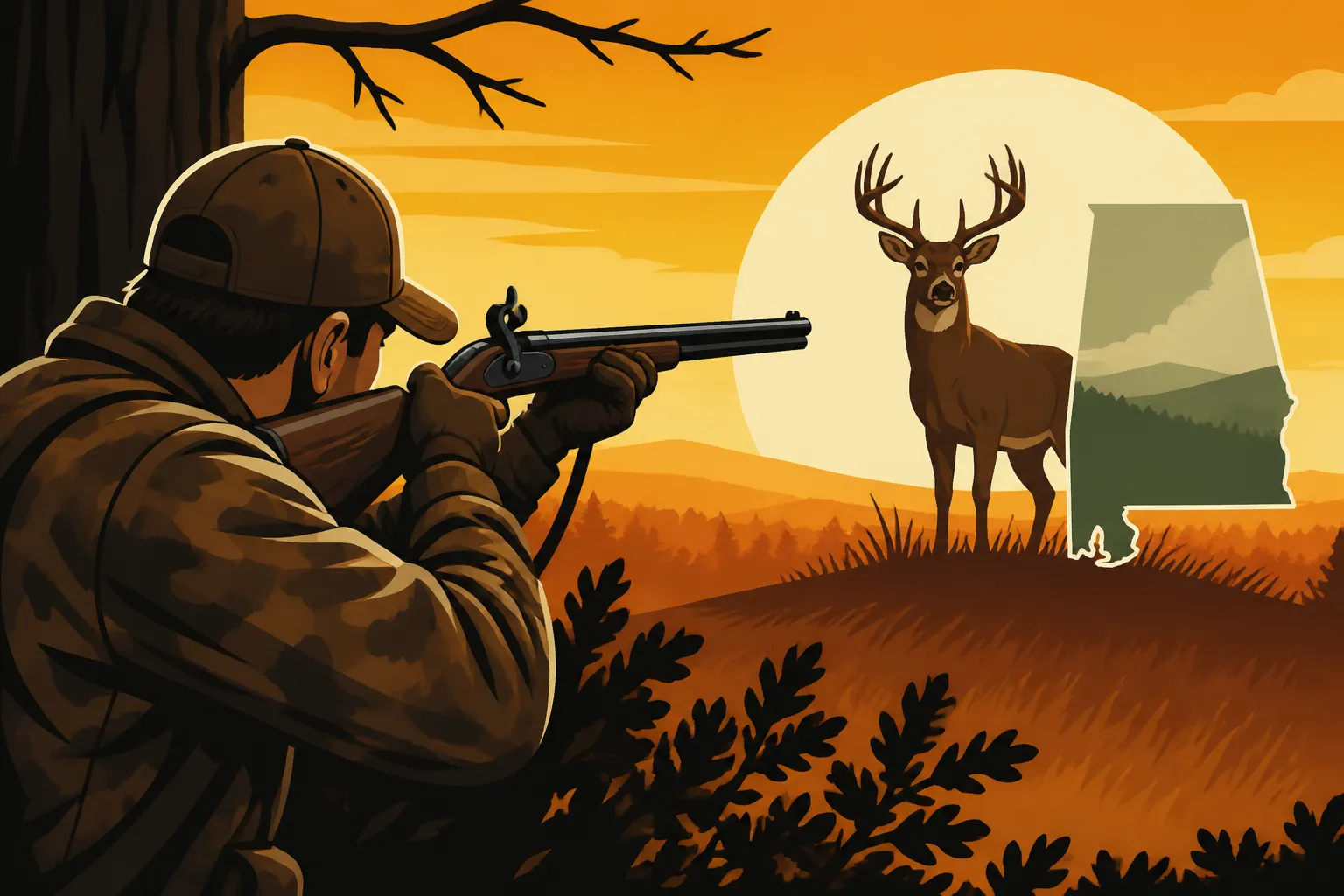
The distinct challenge of muzzleloader deer hunting in Alabama is something many hunters cherish, embracing the blend of tradition and skill it demands. It’s not just about pulling a trigger; it’s about deep preparation, understanding deer behavior during a specific window, and making that single shot count, often in conditions that aren't exactly ideal. This guide aims to equip you with the knowledge to confidently pursue whitetails with your muzzleloader across Alabama's diverse landscapes.
Understanding Alabama's Muzzleloader Seasons and Regulations
Alabama offers a unique opportunity for muzzleloader hunters, often bridging the gap between the archery-only and full gun seasons, or running concurrently with other methods. Knowing the specific rules for your zone is absolutely critical to a successful and legal hunt.
Key Dates and Zone Overlaps
Alabama's deer season structure is quite detailed, with five distinct zones (A, B, C, D, and E) each having slightly different opening and closing dates for archery, gun, and muzzleloader seasons. Generally, the muzzleloader season often opens shortly after archery season begins and can sometimes run concurrently with portions of the gun season, or even have a dedicated window before the main gun season kicks off. For example, in Zone A, the archery season typically starts in mid-October, followed by a muzzleloader and air rifle season that might open a week or two later, sometimes overlapping for a period. This means you might find yourself in the woods during a time when deer are still relatively unpressured, or, conversely, when they've already felt the impact of early archery hunters. Always check the official Alabama Muzzleloader and Air Rifle Season dates published by the Alabama Department of Conservation and Natural Resources (ADCNR) each year for the specific zone you plan to hunt. These dates can shift slightly, so never rely on last year's calendar. Being aware of the specific rules for your zone is key, especially if you're hunting in areas like the Black Belt or the mountainous regions of North Alabama, where deer behavior and hunting pressure can vary significantly.
The beauty of the muzzleloader season is its timing. It often falls right as the weather starts to cool down consistently, which can really get deer on their feet more during daylight hours. Depending on the zone, this could also coincide with early phases of the rut, or what we often call the "pre-rut," where bucks are actively scraping and rubbing, scent-checking for does. Understanding these nuances can significantly impact your scouting and hunting strategies. For instance, in zones with an earlier muzzleloader opener, you might still find bucks moving during daylight hours more predictably than during the intense pressure of the full gun season. Conversely, if your muzzleloader season runs later, say into December or January, you'll need to shift your focus to late-season food sources and bedding areas, as the deer will have been heavily hunted by then.
Legal Equipment and Ammunition
When it comes to legal equipment, Alabama has specific guidelines you absolutely need to follow to ensure your hunt is ethical and within the law. A legal muzzleloader for deer hunting must be loaded from the muzzle, meaning no breech-loading firearms are permitted under the muzzleloader classification. This is a crucial distinction. For powder, both black powder and approved black powder substitutes are legal, whether you prefer loose powder or pre-measured pellets. Many modern muzzleloaders are designed to safely handle pelletized powder, which can simplify loading in the field, but traditionalists often stick to loose powder for its versatility and historical accuracy. When selecting projectiles, you have options ranging from traditional round balls to modern saboted bullets and full-bore conical projectiles. The key is to ensure your chosen projectile creates a sufficient wound channel for a quick, humane kill on a whitetail. Most hunters opt for .50 caliber muzzleloaders, which offer excellent kinetic energy with a variety of bullet choices, but .45 caliber is also popular, especially with sabots.
Regarding optics, Alabama generally allows scopes on muzzleloaders, which is a big advantage for many hunters, especially in low light conditions or for longer shots. However, some traditional muzzleloader hunts might be restricted to open sights, so always double-check the specific regulations for any Wildlife Management Areas (WMAs) or special hunts you might participate in. The maximum range for ethical muzzleloader shots is generally much shorter than with modern centerfire rifles, usually under 150 yards for most setups and skill levels, making shot placement even more critical. Additionally, Alabama's regulations on Alabama Legal Firearms for Deer Hunting are pretty clear, and while muzzleloaders fall under a specific category, it’s good to be aware of the overall framework. Using high-quality percussion caps or 209 primers is also important for reliable ignition, especially in humid conditions. A misfire can be the difference between a successful hunt and a missed opportunity, so don't skimp on these small but vital components.
License and Reporting Requirements
Before you even step foot into Alabama's woods with your muzzleloader, you need to ensure you have the proper licenses. Every hunter in Alabama, with few exceptions for certain age groups or landowners hunting their own property, is required to possess a valid hunting license. For deer hunting, this typically means an "All Game" license for residents, or a specific non-resident deer license. You'll also need an Alabama Conservation ID number. It's easy to purchase your license online through the Outdoor Alabama website, or at many sporting goods stores across the state. Always carry proof of your license while hunting, whether it's a physical copy or stored digitally on your phone via the Outdoor Alabama app. For those who enjoy the unique experience, understanding the full Alabama Hunting Licenses and What They Cost can help you choose the best option for your needs.
Beyond the license, reporting your harvest is a mandatory step that helps ADCNR biologists manage the state's deer herd. Alabama uses a system called "Game Check," which requires hunters to report their deer harvest within 48 hours. This can be done online, through the Outdoor Alabama app, or by phone. You'll need information like the county of harvest, the date, sex of the deer, and the type of weapon used (muzzleloader, in this case). This data is vital for understanding deer populations and health across different zones. Failing to report a harvest can result in penalties, so make it a priority. While it might seem like an extra step, it's a small price to pay for the privilege of hunting Alabama's abundant whitetails and contributing to their sustainable management. The system is pretty straightforward, and familiarizing yourself with Alabama Deer Reporting Rules before you head out can save you a headache later.
Choosing the Right Muzzleloader for Alabama Terrain
Selecting the right muzzleloader for hunting in Alabama's varied landscapes is about balancing tradition, accuracy, and practicality. What works well in an open field might be less ideal in thick Alabama bottomlands.
In-line vs. Traditional Muzzleloaders
When you're looking at muzzleloaders for Alabama deer, you'll primarily be choosing between in-line and more traditional designs. Traditional muzzleloaders, like flintlocks or percussion cap rifles with external hammers, offer a deep connection to history. They're often beautiful firearms, and successfully taking a deer with one is incredibly rewarding. However, they can be more susceptible to misfires in damp weather, and their loading process is often slower and more involved. The sights are typically open, limiting effective range, and cleaning can be a bit more meticulous due to exposed moving parts. For those who prioritize the historical experience and aren't as concerned with maximum range or rapid reloading, a traditional muzzleloader can be a fantastic choice, especially for close-quarters hunting in dense timber or brush.
In-line muzzleloaders, on the other hand, are the workhorses for most modern hunters. They get their name from the firing pin being "in-line" with the powder charge, leading to more consistent ignition and better accuracy. Most in-lines use 209 primers, which are hotter and more reliable in all weather conditions than traditional percussion caps. They often come drilled and tapped for scopes, significantly extending effective range and improving shot placement. Brands like Traditions, CVA, and Thompson/Center offer excellent in-line models that are robust, easy to clean, and very accurate. For hunting in Alabama, where you might face anything from open pine plantations to thick, humid creek bottoms, the reliability and accuracy of an in-line often make it the more practical choice, especially for newer muzzleloader hunters or those seeking consistent performance. The ability to quickly reload (relatively speaking, for a muzzleloader) and maintain a consistent powder charge with pelletized powder adds to their appeal.
Caliber and Projectile Selection
For Alabama whitetails, the .50 caliber muzzleloader is by far the most popular and recommended choice. It offers an excellent balance of bullet weight, energy transfer, and a wide variety of available projectiles. A .50 caliber rifle firing a 250-300 grain sabot or conical bullet delivers more than enough power to ethically harvest a deer, even at moderate muzzleloader ranges. The larger bore size also often means a larger, more forgiving powder column, which can contribute to reliability. While .45 caliber muzzleloaders are also used, they typically rely on lighter, faster sabot bullets and require a bit more precision in shot placement to achieve the same energy transfer as a .50 caliber.
When it comes to projectiles, the world of muzzleloader bullets has evolved significantly. Saboted bullets, which use a plastic sleeve to allow a smaller diameter bullet to be fired through a larger bore, are incredibly popular for their accuracy and high ballistic coefficients. Examples include Hornady SST-ML, Barnes Expander MZ, and Thompson/Center Shockwave. These bullets offer excellent expansion and penetration. Full-bore conical bullets, like PowerBelt AeroLite or the heavier solid conicals, are another excellent option, especially for hunters who prefer not to use sabots. They shed less energy through friction and can deliver massive knockdown power. It's crucial to experiment with different powder charges and bullet combinations in your specific muzzleloader to find what shoots most accurately. Every rifle is a little different, and what works wonders for one might be mediocre in another. A good starting point is to check what the manufacturer recommends and then fine-tune from there at the shooting range.
Optic Considerations for Muzzleloaders
Choosing between a scope and open sights for your muzzleloader depends largely on your personal hunting style, the terrain you hunt, and your comfort level with longer shots. Open sights, typically a front blade and a rear notch, offer a traditional experience and are excellent for quick target acquisition at close ranges, generally under 75 yards. They are simple, rugged, and won't fog up or get knocked out of alignment easily. Many purists prefer them, and they can certainly be effective in the dense woods common in parts of Alabama, like the deep river bottoms or thick pine stands, where shot distances are rarely beyond 50 yards.
However, for most modern muzzleloader hunters, a scope offers undeniable advantages. A low-power variable scope (1-4x, 2-7x, or 3-9x) significantly improves accuracy, especially as light fades or for shots out to 100-150 yards. The ability to see your target clearly and place your shot precisely is paramount, particularly with a single-shot weapon. Many scopes designed for muzzleloaders feature specialized reticles with multiple aim points to compensate for the significant bullet drop that muzzleloader projectiles experience at longer ranges. Just be sure to zero your scope properly at your intended hunting distance and practice at varying ranges to understand your holdovers. When scouting public lands, platforms like GoHunt can help you visualize the terrain and anticipate shot distances, which can inform your optic choice. Whatever you choose, make sure it’s rugged enough to handle recoil and the occasional bump in the field.
Scouting and Locating Deer During Muzzleloader Season
Effective scouting is the bedrock of successful muzzleloader hunting, especially as deer behavior shifts through the fall and into winter. Knowing where deer will be, and why, is half the battle.
Post-Rut and Pre-Winter Food Sources
As Alabama's muzzleloader seasons often fall after or during the tail end of the rut, deer will be focused heavily on regaining lost body condition. This means seeking out high-energy food sources. If your muzzleloader hunt occurs in late November or December, after the main breeding push, bucks are often worn down and will prioritize food. Acorns, particularly white oak acorns if they are still available, are a huge draw. But don't overlook red oak acorns, which persist longer into the winter. Scout for areas with abundant mast, especially on ridges and in bottomlands, and look for fresh deer sign like droppings and disturbed leaves indicating active feeding. Often, a good acorn crop will congregate deer, making these areas prime for still-hunting or stand placement.
As the season progresses and natural food sources dwindle, deer will shift their attention to planted food plots or agricultural fields. Green fields planted with winter wheat, oats, clover, or rye are absolute magnets for deer in late season. Corn and soybean fields, even after harvest, can provide residual forage. If you're hunting near agricultural areas, pay close attention to field edges, especially where thick cover meets the food source. Deer will often stage in the cover just before dark, waiting to move into the open to feed. Using apps like GoHunt can help you identify these agricultural areas and potential travel corridors. Additionally, don't forget about browse – honeysuckle, greenbrier, and young saplings can be critical food sources, particularly in heavily timbered areas or after a poor mast crop year. Concentrated browse lines are a clear indicator of heavy deer use. Understanding what deer are eating when the Late-Season Food Sources for Alabama Whitetails are available is paramount.
Identifying Core Bedding Areas
Finding where deer bed is just as important as finding where they eat, especially for a single-shot hunting method like muzzleloading. Deer typically seek bedding areas that offer both security and thermal cover. In Alabama, this can mean dense pine thickets, cedar swamps, clear-cuts with heavy regrowth, or thick stands of privet and honeysuckle along creek bottoms. They want to feel safe from predators and hidden from human intrusion. Look for thick, impenetrable cover that's difficult for humans to navigate. Deer will often bed on south-facing slopes on colder days to catch the sun, or on ridge tops where they can scent the wind from multiple directions. During scouting, identify these areas, but be very careful not to push deer out of them. Instead, focus on the travel routes leading into and out of these bedding havens.
When you're trying to figure out where Bankhead Forest bucks bed, for example, you'll find they often use thick laurel and rhododendron thickets or the steepest, nastiest slopes where human access is limited. In the Black Belt, it might be an overgrown fencerow or a small island of thick cedars in a large pasture. The key is to locate these areas without disturbing them, then plan your approach and stand placement on a travel corridor downwind of the bedding area. A good strategy is to use aerial maps and satellite imagery (GoHunt is excellent for this) to identify potential bedding spots, then scout the perimeter from a distance, looking for distinct trails. The goal isn't to walk right through their bedroom, but to intercept them as they leave or return. This kind of nuanced scouting pays off huge, especially when you consider the limited range and single-shot opportunity of a muzzleloader.
Utilizing Topography and Funnels
Alabama's varied topography creates natural funnels and pinch points that deer frequently use, making them ideal spots for muzzleloader hunters to intercept movement. In rolling hill country or areas like the Talladega National Forest, saddles in ridges, creek crossings, and narrow strips of timber connecting larger woodlots are prime examples. Deer naturally prefer the path of least resistance, and these topographical features guide their movement, often predictably. Pay attention to how deer move between bedding and feeding areas. A ridge-top saddle, for example, might be used by bucks traveling between two valleys. A narrow strip of hardwoods bordering a clear-cut could be a major travel corridor.
Water features also create significant funnels. A bend in a river, a narrow section of a swamp, or a dry creek bed can all channel deer movement. Even subtle changes in elevation, like a slight rise in a flat bottomland, can serve as a natural travel route. When you're Reading a Ridge for North Alabama Deer, you'll notice how thermals also play a huge role, making deer often travel lower in the mornings and higher in the evenings. Using these predictable patterns, you can strategically place yourself to get a close shot with your muzzleloader. Aerial imagery and topographical maps are your best friends here. Study them intently, identify potential funnels, and then confirm them on the ground with sign like tracks, rubs, and scrapes. Setting up your Treestand Setups in Talladega National Forest in these funnels can drastically increase your odds.
Effective Muzzleloader Hunting Tactics in Alabama
Once you've done your homework and found promising areas, it's time to put those scouting insights into action with specific muzzleloader hunting tactics. Remember, you've got one shot, so every element of your approach needs to be precise.
Still-Hunting and Stalking Strategies
Still-hunting is a particularly effective tactic for muzzleloaders in Alabama, especially in thick cover or areas where deer are spread out. It involves moving through the woods extremely slowly, pausing frequently to observe your surroundings for extended periods. Think of it as a walking sit, scanning every shadow, every rustle, and every patch of cover. Your movements must be deliberate, quiet, and deliberate. Take 5-10 steps, then stop for several minutes, using your binoculars to dissect the woods. This allows you to spot deer before they spot you, and it gives you time to assess the situation for a shot. When you're still-hunting Bankhead Forest ridges, for example, you're looking for that slight twitch of an ear, a flick of a tail, or the horizontal line of a deer's back against the vertical trees.
When stalking, the objective is to close the distance on a deer you've already spotted. This requires even more stealth and an intimate knowledge of the terrain. Use cover to your advantage, move when the deer's head is down or obscured, and always be aware of the wind. A muzzleloader's limited range means getting within 75-100 yards is often ideal for a high-percentage shot. This can be challenging in open hardwoods but very effective in pine thickets or along creek bottoms where you have more natural concealment. Focus on placing your feet silently, avoiding crunchy leaves or snapping twigs. Some hunters even remove their boots and wear thick socks for a truly silent approach, though this requires careful attention to foot placement. This method requires immense patience, sharp observation skills, and the discipline to know when to stop and let the deer come to you versus continuing a potentially risky stalk.
Stand Placement and Setup
Choosing the right stand location and setting it up correctly is paramount for muzzleloader hunting. Since you have only one shot, you need to maximize your chances of a close, clear, and ethical shot opportunity. Whether you're using a treestand or a ground blind, wind direction is your absolute number one consideration. Always hunt with the wind in your favor, carrying your scent away from where you expect deer to approach. For treestands, position yourself not just for concealment, but also to have clear lanes for a shot at various distances. Trim shooting lanes well before the season, but be careful not to create obvious "tunnels" that deer will avoid. Think about potential deer movement patterns based on your scouting and position your stand to intercept them.
Ground blinds can be incredibly effective for muzzleloader hunters, especially on field edges or in dense cover where a treestand isn't practical. Brushing in a blind on a field edge, for instance, offers excellent concealment and a stable shooting platform. The key to successful ground blind hunting is allowing enough time for deer to get accustomed to it. Set it up weeks in advance if possible, so it becomes a natural part of the landscape. When Using a Ground Blind on Alabama Public Land, remember that concealment is not just visual; sound and scent control are equally important. Inside the blind, minimize movement and noise, and be prepared for shots from multiple directions. The beauty of a ground blind for muzzleloaders is the stable rest it provides, which can significantly improve accuracy for that critical single shot. Consider the sun's position too, avoiding setups where the morning or evening sun will shine directly into your blind or make it difficult to see oncoming deer.
Calling and Scent Control for Muzzleloaders
Even with a muzzleloader, calling and meticulous scent control can significantly enhance your hunting success. Deer communicate through vocalizations, and using calls to pique their curiosity or draw them closer can be effective. Grunt tubes, which imitate the sounds of bucks, and doe bleat calls can be particularly useful during the muzzleloader season, especially if it overlaps with the pre-rut or the secondary rut. A few soft grunts can often stop a cruising buck or bring one closer into muzzleloader range. However, less is often more. Over-calling can spook deer, particularly pressured ones. Observe deer behavior and respond naturally. If you're on a food source, a few subtle bleats might convince a doe to come closer, and a buck might follow.
Scent control is non-negotiable for muzzleloader hunting, arguably even more so because you need deer to be close for an ethical shot. Deer have an incredible sense of smell, and a whiff of human odor will send them scattering. Start with scent-free laundry detergent for all your hunting clothes. Shower with scent-free soap and shampoo before heading out. Use scent-eliminating sprays on your clothes and gear. Even your muzzleloader itself should be wiped down. Play the wind religiously – this is your most important scent control tool. If the wind isn't right for your chosen stand, don't hunt it. Consider using natural cover scents like pine or cedar, or even an attractant scent strategically placed to divert a deer's attention or make them stop in a clear shooting lane. The combination of playing the wind, minimizing human odor, and using subtle calls can give you the edge you need to capitalize on that single muzzleloader shot.
Overcoming Challenges of Muzzleloader Hunting
Muzzleloader hunting presents its own set of unique challenges that, with proper preparation and understanding, can be effectively managed. From fickle weather to shot recovery, being ready makes all the difference.
Dealing with Humidity and Rain
Alabama's weather can be notoriously humid, and sudden rain showers are always a possibility, especially during the early and mid-parts of deer season. Humidity is the bane of many muzzleloader hunters, as moisture can compromise powder and primers, leading to misfires or "hang fires." The most critical step is keeping your powder dry. If you're using loose powder, store it in a sealed, waterproof container. Pre-measured powder pellets simplify this, but still need protection. When in the stand, keep your muzzle pointed down and consider using a piece of electrical tape or a balloon over the muzzle to prevent moisture from entering the barrel. This won't affect accuracy at typical muzzleloader ranges.
Before heading into the woods, ensure your percussion cap or 209 primer is seated firmly and sealed as best as possible. Some hunters even use a dab of nail polish or sealant around the primer to further waterproof it, though this isn't always necessary with modern in-lines. If you experience a misfire, safely wait for a hang fire before attempting to unload. Once home, clean your muzzleloader meticulously after hunting in wet conditions, even if you didn't fire it, to prevent rust and corrosion. A thorough cleaning regimen, which we'll cover later, is absolutely crucial for the longevity and reliability of your firearm. Nothing is more frustrating than a deer stepping out and your muzzleloader failing to fire because of moisture.
Accuracy and Range Limitations
Let's be real: muzzleloaders, by their nature, generally have more limited effective range and can be less inherently accurate than modern centerfire rifles, particularly at longer distances. This isn't a drawback, but a characteristic you must respect. Most muzzleloader hunters aim for ethical shots within 100-125 yards, though some highly proficient shooters with dialed-in rifles might stretch it to 150 yards. Beyond that, the bullet drop becomes significant, and wind can have a considerable effect, making ethical shot placement challenging with a single-shot opportunity. The key to overcoming this is extensive practice. Spend time at the range, shooting from various field positions – off a bench, kneeling, standing with a rest – and at different distances.
Understand your muzzleloader's trajectory and practice using your scope's holdovers, or compensating with open sights. Knowing precisely where your bullet will impact at 50, 75, 100, and 125 yards is non-negotiable. Simulate hunting conditions: load your rifle with cold hands, practice your breathing and trigger squeeze. The "one shot" mentality means you can't afford a rushed or poorly executed shot. If a deer presents itself at a range beyond your comfortable and ethical limit, have the discipline to let it walk. Hunting is about clean kills, not pushing boundaries. This is where meticulous scouting to bring deer into your effective range truly pays off. The more confident you are in your accuracy at a given distance, the better your chances of success.
Tracking and Recovery After the Shot
Because muzzleloader projectiles are often slower and can sometimes create different wound channels than high-velocity rifle rounds, meticulous tracking and recovery after the shot are paramount. A deer hit with a muzzleloader may not always react as dramatically as one hit with a rifle, and they can sometimes travel a significant distance even with a lethal hit. Always assume a solid hit and give the deer time. Unless you see the deer pile up, wait at least 30 minutes to an hour (or even longer if the hit wasn't ideal or if it's hot) before beginning to track. This allows the deer to lie down and stiffen up, increasing your chances of finding it. When it comes to Tracking a Deer Through Alabama Pine Straw, you'll appreciate any blood trail you can find.
Before you leave your stand, mark the exact spot where the deer was standing when you shot and where you last saw it. Use a piece of toilet paper, surveyor's tape, or even a hat. This gives you a clear starting point for your track. Look for blood, hair, bone fragments, and disturbed earth. Follow the easiest sign, but be patient and methodical. If the blood trail becomes sparse, expand your search in ever-widening circles. Enlist a hunting buddy if available, but avoid trampling the area ahead of the track. If darkness falls, it's often best to back out quietly and return at first light, unless conditions (like warm weather or predators) dictate an immediate, aggressive search. The goal is always a swift, ethical recovery, and the unique characteristics of muzzleloaders demand extra diligence in this phase of the hunt.
Essential Muzzleloader Maintenance and Field Care
A muzzleloader is a unique beast when it comes to maintenance. Unlike modern firearms that can tolerate some neglect, a muzzleloader demands fastidious care to ensure its reliability and longevity, especially given the corrosive nature of black powder.
Cleaning and Storage Best Practices
The most critical rule for muzzleloader ownership is this: clean it thoroughly after every time you shoot it, and even after hunting in humid or wet conditions where moisture might have entered the barrel. Black powder and its substitutes leave behind corrosive salts that will quickly pit and rust your barrel if not removed promptly. The process is a bit different from cleaning a centerfire rifle. You'll need specialized muzzleloader cleaning solvents, patches, and a bore brush. Many hunters use hot, soapy water (dish soap works well) to neutralize the salts, followed by a thorough drying and oiling.
After disassembling your muzzleloader (following the manufacturer's instructions), start by removing the breech plug. Soak the breech plug in a solvent or hot, soapy water. Run a patch soaked in solvent or soapy water down the barrel, then scrub with a nylon or brass brush. Repeat with wet patches until they come out clean. Then, run dry patches until the barrel is completely dry. Finally, oil the bore with a quality gun oil or rust preventative. Don't forget to clean all other components – the bolt, firing pin, stock, and exterior of the barrel. Once clean and dry, reassemble and wipe down all metal surfaces with an oily cloth. Store your muzzleloader in a clean, dry gun cabinet or safe, preferably with a desiccant or dehumidifier, to prevent moisture from causing rust during storage. This diligent care will ensure your muzzleloader is always ready for that critical moment in the field.
Field Repairs and Emergency Kits
While muzzleloaders are generally robust, minor issues can arise in the field that could derail your hunt. Being prepared with a small emergency kit can save the day. A must-have item is a spare set of percussion caps or 209 primers, kept in a waterproof container. Primers can get wet, damaged, or simply be duds. Having a spare allows you to quickly replace a faulty one. Another essential is a nipple wrench (for percussion caps) or a spare breech plug and wrench (for modern in-lines). Breech plugs can become fouled, making them difficult to remove, or the flash hole can become clogged. Knowing how to safely remove and clean or replace it in the field is a valuable skill.
It's also a good idea to carry a short cleaning rod or a "worm" for your ramrod. This can be used to clear a squib load (where the primer fires but the powder doesn't ignite, leaving a bullet stuck in the barrel – a dangerous situation requiring expert handling if you're unsure) or to extract a bullet if you need to safely unload the rifle without firing. A small bottle of muzzleloader oil or a few pre-oiled patches are also useful for a quick wipe-down if caught in an unexpected rain shower. Finally, always have a small utility knife or multi-tool for general field adjustments. This kit should be small enough to fit in a pouch on your hunting pack, easily accessible for those unexpected moments. A well-maintained rifle is less likely to have issues, but preparedness is key when you're relying on a single shot.
Preparing for the Next Shot
Given the single-shot nature of muzzleloaders, the ability to prepare for a follow-up shot, however unlikely, or to efficiently reload after a shot, is a skill worth practicing. While most muzzleloader hunts ideally result in a deer down with the first shot, there's always a chance for a miss or a follow-up if the animal is wounded. For a quick reload, you'll want to have your components ready and organized. Many hunters use speed loaders, which are pre-packed tubes containing a measured powder charge and a bullet. These allow for much faster reloading than fumbling with separate components. Practice this process at home and at the range under timed conditions.
After firing, there's often residual fouling in the barrel that can make reloading difficult. Some hunters carry a small, pre-moistened patch (or "spit patch") on the end of their ramrod to quickly swab the bore once or twice before reloading. This helps clear the fouling and makes seating the next bullet much easier. For more information on effective techniques, check out our guide on Alabama Muzzleloader and Air Rifle Tactics. The key is muscle memory. In a high-stress hunting situation, you don't want to be fumbling or trying to remember the steps. Practice reloading until it's second nature, even if you hope to never need to do it in the field. This preparation can mean the difference between recovering a deer and losing it.
Alabama Muzzleloader Season Overview (Example – Always Check Current ADCNR Regs)
: The Alabama deer hunter navigating the transition from bow season into the early gun or muzzleloader periods faces a unique blend of opportunity and challenge. It's often a time of shifting patterns, changing food sources, and varying levels of pressure, making reliable scouting tools more critical than ever. This comprehensive guide will illuminate the intricacies of hunting Alabama's white-tailed deer during these pivotal transition times, focusing on strategies that maximize your chances of success.
Understanding Deer Behavior Post-Archery Opener
When the archery season has been open for a while, deer behavior naturally shifts. They've likely felt some pressure, and their patterns might become a bit more nocturnal, but the right approach can still lead to success.
Impact of Early Archery Pressure on Deer
Once Alabama's bowhunting season gets rolling, those deer that were once so predictable in their summer patterns start to get wise. It doesn't take long for them to learn that humans are now venturing into their domain, and that sense of security they enjoyed all summer long begins to erode. This early pressure often causes a noticeable shift in deer behavior. Those daylight movements you might have observed over a green field in late September often become more sporadic, pushing activity closer to dawn and dusk, or even entirely into the cover of night. Bucks, especially, become more reclusive, favoring thicker bedding areas and sticking to dense travel corridors. They're still active, of course, but they’re not as careless.
This behavioral change is why your early season scouting, done before the pressure hits, is so vital. It gives you a baseline of their undisturbed patterns. Now, as the season progresses, you’ll need to adapt. You might find fewer deer frequenting wide-open feeding areas during shooting light. Instead, they’ll be hitting those food sources under the cloak of darkness and then retreating to the thickest cover available well before sun-up. Recognizing this shift means you need to adjust your strategy from primarily hunting food sources to intercepting deer between those food sources and their secure bedding areas, or even daring to get closer to the bedding itself. Hunters who continue to hunt the same old spots with the same old strategies after the early archery pressure often find themselves frustrated by empty stands.
Shifting Deer Patterns with Cooler Weather
One of the best things about the deer season progressing in Alabama is the arrival of cooler temperatures, which can be a game-changer for deer activity. Unlike those sweltering September and October days where deer move minimally during daylight, a significant cold front can really get them on their feet. Cooler weather means deer don't have to worry as much about overheating, so they're more willing to browse, move between bedding areas, and chase does for longer periods throughout the day. This is especially true for bucks, who are beginning to feel the urge to breed. They'll expend more energy, which in turn drives them to seek out more food.
When the mercury drops, you'll often see an increase in rub and scrape activity. Bucks are beginning to mark their territory more aggressively, leaving behind scent and visual indicators of their presence. This is a crucial window for hunters, as deer may become more visible during legal shooting hours. Knowing how to adapt your strategy when Hunting Deer After a Cold Front can drastically increase your success rate. Look for newly opened scrapes and fresh rubs along travel corridors. This heightened activity isn't just about breeding; it's also about satisfying their increasing caloric needs as they prepare for the rigors of the rut. Therefore, targeting primary food sources, especially those with high protein content, becomes incredibly important.
Muzzleloader Season Overlaps and Opportunities
Alabama's muzzleloader season often presents a unique tactical window, bridging archery and gun seasons, providing opportunities for hunters willing to master this single-shot method.
Navigating the Muzzleloader-Only Window
Many hunters eagerly anticipate the designated muzzleloader-only window within Alabama's deer season. This period, often falling between the full archery season and the general gun season, or sometimes coinciding with early gun opportunities depending on the zone, offers a fantastic chance to hunt with less pressure from high-powered rifles. It’s a bit of a sweet spot: deer have been educated by archery hunters, but they haven’t yet faced the full onslaught of gun season. This often means they’re still moving somewhat predictably, and mature bucks haven’t gone completely nocturnal yet. Understanding the specific dates for Alabama Muzzleloader and Air Rifle Season in your zone is your first step.
The key to capitalizing on this window is to treat it like a serious, dedicated hunt. Don’t just view your muzzleloader as a secondary weapon. Use your scouting from early archery season to pinpoint key food sources, bedding areas, and travel corridors. Because muzzleloaders generally have a shorter effective range, focusing on areas that allow for closer shots—think thick creek bottoms, dense pine plantations, or the edges of overgrown clear-cuts—is crucial. This is a time when patiently still-hunting through thick cover or setting up an ambush stand on a well-used trail leading from bedding to a preferred food source can be highly effective. The single-shot nature of the muzzleloader also forces you to be more selective, ensuring you have a high-percentage, ethical shot.
Understanding Muzzleloader Specific Tactics
Hunting with a muzzleloader isn't just about weapon choice; it dictates specific tactical considerations. The inherent limitation of a single, slower shot means precision in every aspect of your hunt is amplified. Unlike centerfire rifle hunting where a quick follow-up shot might be possible, a muzzleloader demands that your first shot is the only shot. This places enormous emphasis on shot placement, understanding bullet trajectory, and effective range. Alabama Muzzleloader and Air Rifle Tactics often revolve around careful planning. When you get to your stand, you need to think through every possible shooting lane, at every possible distance, and visualize where a deer might appear.
Scouting becomes even more critical. You need to know exactly where deer are likely to step out and what obstacles might obscure your shot. This is where apps like GoHunt can be invaluable, allowing you to mark specific trees, brush piles, or terrain features that define your shooting windows. Because muzzleloaders are prone to issues with humidity and moisture affecting powder and primers, careful preparation of your firearm is also a tactic. Sealing your muzzle with electrical tape or a small balloon, keeping your powder dry, and ensuring your primer is fresh are all part of the tactical approach. The muzzleloader season truly rewards the hunter who is patient, methodical, and dedicated to their craft, forcing a deeper connection to the hunt itself.
Scouting and Strategy for Success
Effective scouting doesn't stop once the season starts; it's an ongoing process that adapts to conditions and deer behavior. For muzzleloader hunting, this means focusing on overlooked areas and adjusting to increased pressure.
Identifying Unpressured Pockets of Deer
In many parts of Alabama, public land, and even some private tracts, can experience significant hunting pressure once the seasons open. Deer are smart, and they quickly learn to avoid areas with high human activity. This means a crucial part of your muzzleloader strategy should be finding those unpressured pockets where deer feel safe. These often aren't the easiest places to get to. Think about areas that are a half-mile or more from common access points, behind locked gates (if legal to walk through), or across difficult terrain like swamps, steep ridges, or dense thickets. Deer will naturally seek out these sanctuaries.
To identify these areas, use aerial maps and topographical features. Look for dense, unbroken blocks of cover, particularly those surrounded by more open or accessible areas. These can act as natural deer refuges. Platforms like GoHunt allow you to layer different maps, identify public land boundaries, and even track user activity (though less so for specific pressure points, it helps visualize access). Once you identify a potential unpressured pocket, scout it cautiously. Look for fresh sign like rubs, scrapes, and tracks, but do so without making your presence known. You don't want to alert the deer that their sanctuary has been discovered. Often, the bigger bucks will gravitate to these areas, providing an excellent opportunity for a muzzleloader hunter willing to put in the extra effort. For example, some hunters find success with Finding Ground Others Walk Past on popular WMAs.
Adapting to Late-Season Food Sources
As the muzzleloader season progresses, especially if it extends into late November or December, natural food sources become increasingly scarce. Acorns are either gone or heavily picked over, and lush green growth begins to die back. This forces deer to concentrate around remaining high-energy food sources, making them predictable targets if you know where to look. Late-season food sources can include hard mast like red oak acorns (which drop later and persist longer than white oaks), muscadines (if available), and other lesser-known browse plants. More importantly, deer will heavily rely on planted food plots or agricultural fields.
Winter wheat, oats, clover, and rye plots become absolute magnets. If you have access to private land with food plots, these are prime areas. On public land, look for natural clearings or edges that still offer some forage. Deer will also hit cut agricultural fields, picking through leftover corn or soybean residue. The key is to scout regularly during this period to identify the currently preferred food source. Deer patterns can change weekly based on availability. Setting up a stand or blind on the downwind side of a hot food source, especially in the late afternoon, offers an excellent chance for a muzzleloader shot. Always consider the impact of the Late-Season Food Sources for Alabama Whitetails on deer movement.
Utilizing Wind and Thermals for Close Encounters
Mastering wind and thermals is perhaps the most critical skill for any deer hunter, but it's amplified when you're hunting with a muzzleloader and need to get close. Deer's noses are their primary defense, and if they smell you, the hunt is over before it begins. The basic rule is simple: always hunt with the wind in your face, blowing your scent away from where you expect deer to approach. However, in Alabama's varied topography, wind can be tricky. Valleys, ridges, and dense timber can create swirling currents that make predicting wind direction difficult.
This is where understanding thermals comes in. Thermals are air currents that rise as the air warms (updrafts) and fall as the air cools (downdrafts). In the morning, as the sun heats the ground, air generally rises, carrying your scent upward. In the evening, as the air cools, it sinks, carrying your scent downward into valleys and low-lying areas. Therefore, in the morning, hunting higher on a ridge might be advantageous to keep your scent above deer moving in the bottom. In the evening, hunting lower might be better. When you're dealing with Wind and Thermals on a Piedmont Ridge, for instance, you have to be extra vigilant. Always carry a wind checker (a small bottle of powder or milkweed seeds) and use it frequently to monitor even subtle changes. If the wind shifts unexpectedly and starts blowing towards a known deer travel route or bedding area, it's often best to pack up and try another spot. A blown opportunity with a muzzleloader is a long wait for the next chance.
Treestand and Ground Blind Strategies
Whether you prefer hunting from elevated positions or ground level, your setup needs to be optimized for the unique demands of muzzleloader hunting in Alabama.
Strategic Treestand Placement for Muzzleloaders
For muzzleloader hunters, treestand placement requires an even higher degree of precision than for rifle hunting, mainly due to the shorter effective range. Your goal isn't just to see deer, but to get them within that critical 50-125 yard window for a confident, ethical shot. This means getting closer to known travel corridors, bedding areas, or food sources. When thinking about Treestand Setups in Talladega National Forest, consider the terrain. On a ridge, you might place your stand to intercept deer moving along the contour or crossing a saddle. In a bottomland, focus on pinch points where deer are forced into a narrow path between a swamp and a field edge.
Concealment is also key. Position your stand so your silhouette is broken up by tree limbs or against a dark backdrop. Always trim shooting lanes before the season, but do so judiciously to avoid creating obvious "tunnels" that deer will shy away from. Think about the angles of your shots – elevated shots often present a steeper angle, requiring you to aim slightly lower than you would for a broadside shot on the ground to hit the vitals. Practice these angled shots at the range. Finally, consider your entry and exit routes. You need to be able to get to and from your stand without spooking deer, especially when hunting close to bedding areas. An undetected approach is often the difference between success and failure with a muzzleloader.
Effective Ground Blind Setups for Muzzleloaders
Ground blinds offer an excellent alternative to treestands for muzzleloader hunters, providing superior concealment and a stable shooting rest, which is crucial for that single shot. They are particularly effective in areas where treestands are impractical or less desirable, such as open fields, dense brush, or in river bottoms. When Using a Ground Blind on Alabama Public Land, the most important aspect is early deployment and proper brushing in. Set up your blind weeks, if not months, before you plan to hunt it. This allows deer to become accustomed to its presence and view it as part of the natural landscape.
Once deployed, thoroughly brush in your blind using natural vegetation from the surrounding area. Cut branches, leaves, and tall grasses to blend it seamlessly into the environment. Don't just place a few branches around it; make it look like a natural thicket. Inside the blind, eliminate any light that could silhouette you. Black out windows you won't be shooting from, and wear dark clothing. The stable shooting platform of a ground blind is a huge advantage for muzzleloaders. You can use shooting sticks or a bipod to ensure a rock-solid rest, which significantly improves accuracy at longer ranges. Just like with treestands, careful consideration of wind direction and entry/exit routes is paramount to avoid spooking deer before they even get close.
Processing and Post-Harvest Considerations
The hunt doesn't end when the deer hits the ground. Proper field dressing, transportation, and meat care are critical, especially with Alabama's warm climate.
Field Dressing and Initial Meat Care in Warm Weather
Alabama's hunting seasons, particularly the early muzzleloader periods, can often feature surprisingly warm temperatures. This means that proper field dressing and initial meat care are absolutely critical to preserving the quality of your venison. The moment your deer is down, the clock starts ticking. Your primary goal is to cool the carcass as quickly as possible to inhibit bacterial growth. The first step is to Field Dressing a Deer in Warm Weather promptly. Remove the entrails as soon as you can, opening the body cavity to allow heat to escape. If you're hunting alone, this might be a quick, efficient process. If you have help, it goes even faster.
After field dressing, wipe out the body cavity with clean cloths or paper towels to remove any excess blood. Avoid using water inside the cavity unless you can thoroughly dry it afterward, as moisture can also promote bacterial growth. If you're a long way from your vehicle, consider skinning the deer in the field, as the hide retains a significant amount of heat. Once you get the deer back to camp or your vehicle, get it on ice immediately. If transporting it in the bed of a truck, layer ice inside the cavity and cover the entire deer with a tarp or blankets to keep it cool and clean. The faster you can get that core temperature down, the better your venison will taste.
Transportation and Processing Logistics
Once field-dressed, getting your deer from the field to a processor or your home for butchering requires careful planning. If you've hunted far into public land, dragging a deer out of a river bottom or up a steep ridge can be an exhausting task, often requiring the use of a deer cart, sled, or multiple hunters. Consider using a utility vehicle (where legal) to retrieve game from remote areas. When transporting the deer, ensure it's kept cool. In warmer weather, this means putting it on ice in a cooler or truck bed.
Processing options vary. Many hunters choose to take their deer to a professional processor, especially if they don't have the time, equipment, or expertise to do it themselves. Alabama has numerous processors who can handle everything from basic cuts to making sausage and jerky. Be sure to check with your chosen processor about their availability and turnaround times, especially during the peak of deer season. If you plan to butcher the deer yourself, ensure you have a clean workspace, sharp knives, and plenty of freezer bags or vacuum sealer supplies. Processing your own deer can be a rewarding experience, allowing you to customize your cuts and ensure the highest quality control. Remember to always follow Alabama Deer Reporting Rules by logging your harvest through Game Check after the shot.
Disclaimer
Please note that hunting regulations, seasons, and licensing requirements can change annually. It is the responsibility of each hunter to consult the latest official Alabama Department of Conservation and Natural Resources (ADCNR) regulations prior to engaging in any hunting activities. This guide is for informational purposes only and does not supersede official state regulations.