Alabama Gopher Tortoise Burrow Habitat
Many people don't realize the quiet but profound importance of the gopher tortoise to Alabama's rich biodiversity. These slow-moving reptiles, often overlooked, are actually engineers of their ecosystem, digging burrows that become vital shelters for countless other species. This guide will walk you through everything you need to know about gopher tortoise burrow habitat in Alabama, from understanding what makes a good home for them to identifying their distinctive burrows and recognizing the critical role they play in the environment.
Understanding the Gopher Tortoise in Alabama
The gopher tortoise isn't just another turtle; it's a foundational member of the ecosystem, especially in the southern parts of our state. Without these industrious diggers, many other creatures would struggle to survive. Their existence is deeply tied to a specific type of Alabama landscape, and understanding that connection is the first step to appreciating their significance.
A Keystone Species of the Longleaf Pine Ecosystem
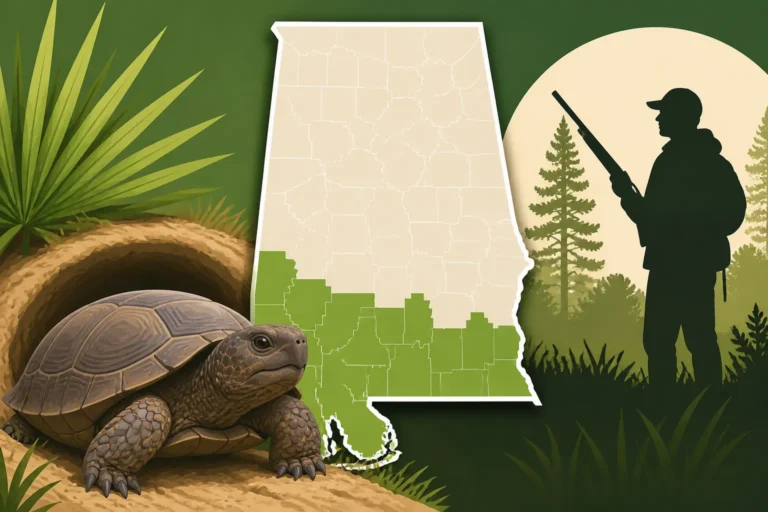
When we talk about a "keystone species," we mean an organism that has a disproportionately large effect on its natural environment relative to its abundance. The gopher tortoise fits this description perfectly. They are the primary excavators of underground burrows in the longleaf pine ecosystem, which once covered vast stretches of the Southeast, including much of southern and central Alabama. These burrows, sometimes reaching depths of 10 feet and extending 30 feet or more horizontally, provide stable microclimates. Imagine a scorching Alabama summer day or a surprisingly cold winter night; these burrows offer a refuge from extreme temperatures and predators for not just the tortoise but also hundreds of other species.
Think of it like an apartment building: the gopher tortoise builds the structure, and then countless tenants move in. Snakes, frogs, lizards, insects, and even larger animals like opossums and foxes have been documented using these burrows. This shared shelter is absolutely vital in an environment often shaped by wildfires, offering a safe haven when flames sweep through. Without the gopher tortoise, this unique ecosystem would drastically change, losing many of its diverse inhabitants.
Legal Protections and Conservation Status
It's important to know that the gopher tortoise is not just a fascinating creature; it's also a protected one. In Alabama, the gopher tortoise is listed as a State Protected Species, and in the western portion of its range, which includes parts of Alabama, it is federally listed as threatened under the Endangered Species Act. This means there are serious legal consequences for disturbing, harming, or possessing gopher tortoises or their burrows. You can't just pick one up, move it, or fill in a burrow you find on your property without proper permits. The laws are designed to safeguard these animals and their essential habitats.
The conservation efforts around the gopher tortoise in Alabama are a testament to its critical status. Various state agencies, including the Alabama Department of Conservation and Natural Resources (ADCNR), along with private land managers and non-profits, are actively working to restore longleaf pine forests, implement prescribed burning regimes, and protect existing tortoise populations. For instance, areas within Conecuh National Forest Hunting are often managed with gopher tortoise habitat in mind, highlighting the interconnectedness of wildlife management and conservation.
Identifying and Characterizing Gopher Tortoise Burrows
Spotting a gopher tortoise in the wild can be a rare treat, but finding their burrows is a much more common occurrence for anyone spending time in the right habitat. Learning to identify these unique structures is key to appreciating their role and respecting their protected status.
What a Gopher Tortoise Burrow Looks Like
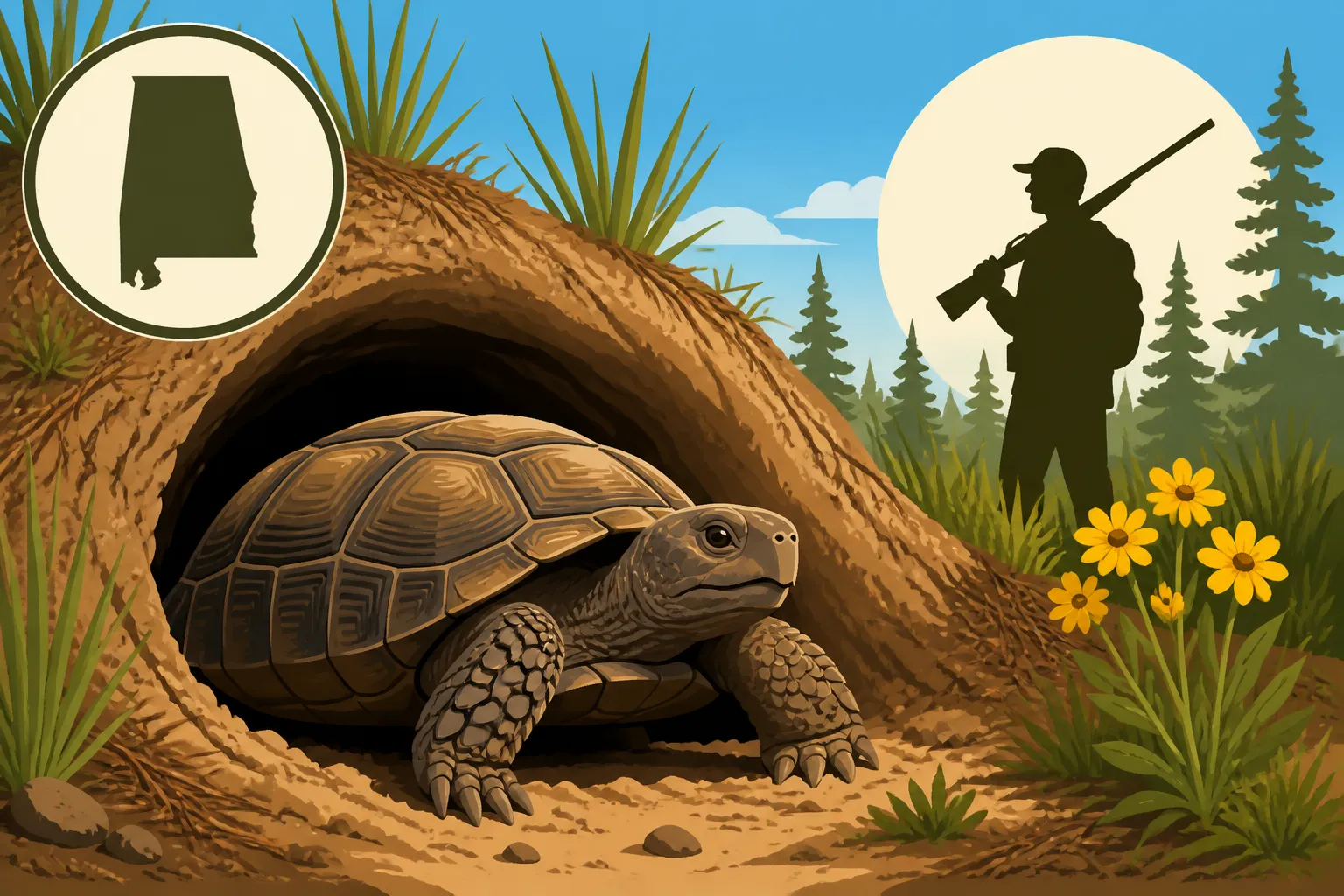
A gopher tortoise burrow has a very distinctive appearance that, once you know what to look for, is hard to mistake for anything else. The most defining feature is the entrance: it's typically a half-moon or D-shaped opening, flattened on the bottom, as if a tortoise body just squeezed through. This isn't a round hole like a rodent might dig. The entrance often has a smooth, sandy "apron" or mound of excavated soil fanning out from it, where the tortoise has pushed dirt out. This apron can be quite large, indicating a frequently used burrow.
The size of the burrow entrance can vary significantly, corresponding to the size of the tortoise using it. A young tortoise might have an opening only a few inches wide, while a mature, adult tortoise can create an entrance that's a foot or more in width. When you're out Scouting Alabama Public Land Before Season, keep an eye out for these tell-tale signs, especially in sandy, open areas. It's a reminder that even when you're focused on game, you're sharing the landscape with a diverse array of protected wildlife.
The Microclimate Within the Burrow
One of the most incredible aspects of a gopher tortoise burrow is the stable microclimate it creates. Alabama weather can be notoriously unpredictable, swinging from sweltering humidity to unexpected freezes. Inside these burrows, the temperature and humidity remain remarkably consistent, insulated from the outside extremes. This is a lifesaver for the tortoise during both the intense heat of summer and the occasional cold snaps of winter.
But it's not just the tortoise that benefits. As mentioned, hundreds of other species rely on this underground sanctuary. Imagine a severe drought: the burrow offers a pocket of moisture. During a wildfire, the burrow provides a safe refuge from the flames and smoke. This communal shelter effect is why the gopher tortoise is so vital to the longleaf pine ecosystem. It's a testament to nature's ingenuity and the interconnectedness of species, where one animal's home literally supports an entire community.
Ideal Gopher Tortoise Habitat in Alabama
Gopher tortoises aren't found just anywhere. They have very specific habitat requirements that dictate where they can thrive. Understanding these needs is fundamental to recognizing their habitat and, by extension, supporting conservation efforts.
The Critical Role of Longleaf Pine Forests
The longleaf pine forest is the quintessential home of the gopher tortoise. Historically, these majestic forests dominated the coastal plain of the southeastern United States, including a large portion of Alabama. What makes longleaf so special for tortoises? It's not just the trees themselves, but the entire ecosystem they support. Longleaf pine forests naturally maintain an open canopy, allowing plenty of sunlight to reach the forest floor. This sunlight is crucial for the growth of a diverse understory of grasses, herbs, and wildflowers – the primary food sources for gopher tortoises.
Furthermore, longleaf pine ecosystems are fire-dependent. Frequent, low-intensity prescribed burns are essential to clear out dense underbrush, prevent hardwood encroachment, and stimulate the growth of palatable forage for the tortoises. Without fire, the understory becomes thick and shaded, making it difficult for tortoises to move, feed, and even dig their burrows. Many Alabama Wildlife Management Areas actively practice prescribed burning to maintain this critical habitat, which also benefits game species like deer and quail. Understanding the dynamic role of fire in these environments is key to appreciating why these habitats look the way they do.
Sandy Soils and Well-Drained Terrain
While the longleaf pine ecosystem provides the overall framework, the specific soil conditions are what enable the gopher tortoise to literally dig in. Gopher tortoises absolutely need sandy, well-drained soils. Imagine trying to dig a tunnel in heavy clay or rocky ground – it would be incredibly difficult, if not impossible, for a tortoise with its relatively short limbs. Sandy soils, like those found in the Hunting Alabama's Wiregrass Region or parts of Conecuh National Forest, are loose and easy to excavate, allowing them to construct their elaborate burrows with relative ease.
Well-drained terrain is equally important. Burrows cannot be prone to flooding; a flooded burrow would be a death trap. Tortoises will often choose slightly elevated areas or slopes within a sandy landscape to ensure their burrows remain dry. This preference for particular soil types means their distribution is often patchy, even within suitable longleaf pine regions. If you're mapping out potential hunting grounds with tools like GoHunt, understanding soil types and elevation can provide additional clues about where these keystone species might reside.
Abundant Forage and Open Understory
A tortoise needs to eat, and gopher tortoises are primarily herbivores, feasting on a variety of low-growing plants. Their diet consists mainly of grasses, legumes, wildflowers, and fruits. The open understory maintained by a healthy longleaf pine system provides exactly this: a rich buffet of palatable vegetation that is easily accessible. When the forest floor is choked with dense shrubs and saplings, typically a result of fire suppression, the tortoise's food sources become scarce and difficult to reach.
The frequent fires not only encourage the growth of these native food plants but also make them more nutritious by recycling nutrients back into the soil. An open understory also allows tortoises to bask in the sun, which is crucial for their thermoregulation. It's a delicate balance, and every piece of the puzzle – from the trees and the soil to the fire and the forage – must be present for the gopher tortoise to thrive. This intricate habitat system is a prime example of why preserving biodiversity is about protecting entire ecosystems, not just individual species.
Threats to Gopher Tortoise Habitat and Conservation Efforts
Despite their remarkable adaptations and protective burrows, gopher tortoises face significant challenges that threaten their long-term survival in Alabama. Understanding these threats is crucial for anyone interested in Alabama's wildlife and conservation.
Habitat Loss and Fragmentation
Historically, the single largest threat to gopher tortoises has been the widespread loss and fragmentation of their longleaf pine habitat. From the turn of the 20th century onwards, vast expanses of longleaf pine were logged for timber, converted to agriculture, or developed for human infrastructure. While some forests were replanted, many were replaced with faster-growing, denser pine plantations or hardwood forests that don't support the open, grassy understory tortoises require.
Today, what remains of longleaf pine habitat is often fragmented into smaller, isolated patches. This makes it difficult for tortoises to move between populations for breeding, leading to genetic isolation and reduced resilience to disease or environmental changes. Imagine trying to find a mate when all your neighbors are miles away, across roads or agricultural fields. This isolation is a major concern for conservationists working in areas like the Wiregrass Region Pine Flats, where historical habitat has seen significant change. Using mapping platforms such as GoHunt to identify suitable habitat corridors on larger private tracts can play a crucial role in mitigating this fragmentation.
Fire Suppression and Invasive Species
Another major threat stems from the alteration of natural processes, primarily fire suppression. For decades, the natural fire regime that shaped the longleaf pine ecosystem was actively suppressed. This led to a build-up of fuel and the encroachment of fire-intolerant hardwood species, shading out the diverse understory that tortoises depend on for food and movement. Without regular, low-intensity fires, the habitat becomes unsuitable. The Prescribed Burns and Alabama Hunting Closures sometimes create temporary inconveniences for hunters, but they are absolutely vital for the health of the longleaf ecosystem and, by extension, the gopher tortoise.
Invasive species also pose a problem. Non-native plants can outcompete and displace native forage, reducing the food available for tortoises. Furthermore, species like feral hogs, which are sadly abundant across Alabama, can directly prey on gopher tortoise eggs and hatchlings, and even destroy burrows through their rooting behavior. The challenge of Hunting Alabama's Year-Round Feral Hogs is not just about managing a nuisance species; it's also about protecting vulnerable native wildlife.
Alabama's Conservation Initiatives
Thankfully, there's a strong and growing commitment to gopher tortoise conservation in Alabama. The ADCNR, along with federal partners, private landowners, and conservation groups, are implementing a variety of strategies. These include acquiring and managing land specifically for longleaf pine restoration, conducting extensive prescribed burning programs, and educating the public about the importance of these animals. Programs that offer incentives for private landowners to manage their property with gopher tortoise habitat in mind are also gaining traction.
Many of Alabama's Wildlife Management Areas and National Forests, such as the Conecuh National Forest, are critical strongholds for gopher tortoise populations. These areas are actively managed to mimic natural longleaf pine conditions. The goal is not just to maintain existing populations but to expand and connect habitats, ensuring a healthier future for the gopher tortoise and the countless species that depend on its burrows. When you're using tools like GoHunt to scope out potential hunting areas or understand land characteristics, recognizing optimal gopher tortoise habitat contributes, in its own small way, to a broader appreciation for conservation efforts across our state.
Here's a quick comparison of ideal versus degraded gopher tortoise habitat:
| Feature | Ideal Gopher Tortoise Habitat | Degraded Gopher Tortoise Habitat |
|---|---|---|
| Dominant Trees | Open-canopy longleaf pine | Dense pine plantations, hardwood encroachment, mixed forest |
| Understory | Abundant grasses, wildflowers, legumes; low shrub cover | Thick, dense shrubs; shade-tolerant plants; invasive species |
| Soil Type | Sandy, well-drained | Heavy clay, rocky, poorly drained |
| Fire Regime | Frequent, low-intensity prescribed burns (2-5 year cycle) | Infrequent or no fire; uncontrolled, intense wildfires |
| Sunlight | Plenty of direct sunlight reaching forest floor | Shaded, dense canopy |
| Connectivity | Large, contiguous blocks of habitat; habitat corridors | Fragmented, isolated patches; barriers like roads/development |
| Biodiversity | High diversity of plants and burrow-dependent animals | Lower diversity; fewer burrow associates |
Disclaimer
This article is for general informational purposes only and does not constitute professional advice. Laws, prices and regulations vary by location and change over time. Consult a qualified professional for guidance on your specific situation.