Alabama Coyote Range and Density
The distinct yip-howl of a coyote cutting through the pre-dawn quiet is a sound many Alabama hunters and landowners have grown all too familiar with. What once was a rare sighting or a whispered rumor from western states has become a pervasive reality across the entire state, often leading to frustrations over declining fawn recruitment, fewer small game sightings, and even livestock losses. This guide aims to pull back the curtain on this adaptable predator, exploring exactly how coyotes established themselves in Alabama, their current distribution and population density, and the significant impact they have on our cherished wildlife and agricultural interests.
Coyote's Unstoppable March: Arrival and Spread in Alabama
For those of us who grew up hunting deer and small game in Alabama, the coyote was a creature we only read about in outdoor magazines, typically associated with the vast expanses of the western United States. But that's a distant memory now. The truth is, coyotes are an incredibly adaptable species, and their expansion across the continent, including deep into the Southeast, is one of the most remarkable wildlife stories of the last century. It wasn't a sudden invasion, but rather a gradual, relentless spread that has forever altered the ecological landscape of our state.
Historical Context of Expansion
Coyotes, originally native to the plains and deserts of the western US, began their eastward migration in earnest during the early to mid-20th century. This wasn't a planned movement; it was a natural response to changing environments and opportunities. As human populations grew and agricultural lands expanded, large swaths of forests were cleared, creating more open, disturbed habitats that coyotes thrive in. Think about it: a coyote is a generalist, meaning it can eat almost anything and live almost anywhere. This adaptability, combined with the removal of top predators like wolves and cougars from eastern landscapes, left a wide-open niche for them to fill. They followed major river drainages, highway corridors, and areas where human activity inadvertently provided ideal conditions for their expansion.
Another significant factor in their spread was the human element. While not intentionally released in large numbers in Alabama, there were instances of translocation by individuals who mistakenly believed coyotes would help control burgeoning deer populations or provide sport for hunting with hounds. These isolated introductions, combined with the natural dispersion from neighboring states like Mississippi and Tennessee, accelerated their presence in the state. By the time many Alabamians realized what was happening, coyotes were already firmly entrenched, moving into every corner of our diverse landscapes. Their ability to cross formidable natural barriers and quickly establish breeding populations is truly astounding, making them a permanent fixture in our wildlife community.
Key Expansion Routes Through the State
When we talk about how coyotes spread through Alabama, it’s not hard to picture their journey. They primarily entered our state from the west and north, following pathways that offered both food and cover. The Mississippi state line was a major entry point, with coyotes pushing eastward across the Black Belt and into the central and southern parts of the state. From the north, they filtered down from Tennessee, populating the ridges and valleys of North Alabama, especially areas around the Tennessee River drainage.
These adaptable canids didn't just stick to the wilderness; they quickly learned to exploit agricultural areas, suburban fringes, and even urban green spaces. Farm country, with its mix of open fields, brushy fencerows, and abundant rodent populations, provided ideal hunting grounds. The network of highways and interstates, while a danger, also allowed for relatively rapid travel and access to new territories, essentially acting as corridors. Today, if you ask any farmer or hunter from the coastal plains to the northern mountains, they'll tell you coyotes are everywhere. Their distribution is a testament to their incredible resilience and capacity to adapt to whatever environment Alabama throws at them. It’s no longer a question of if you have coyotes, but how many and what impact they’re having on your land.
Current Range and Regional Differences
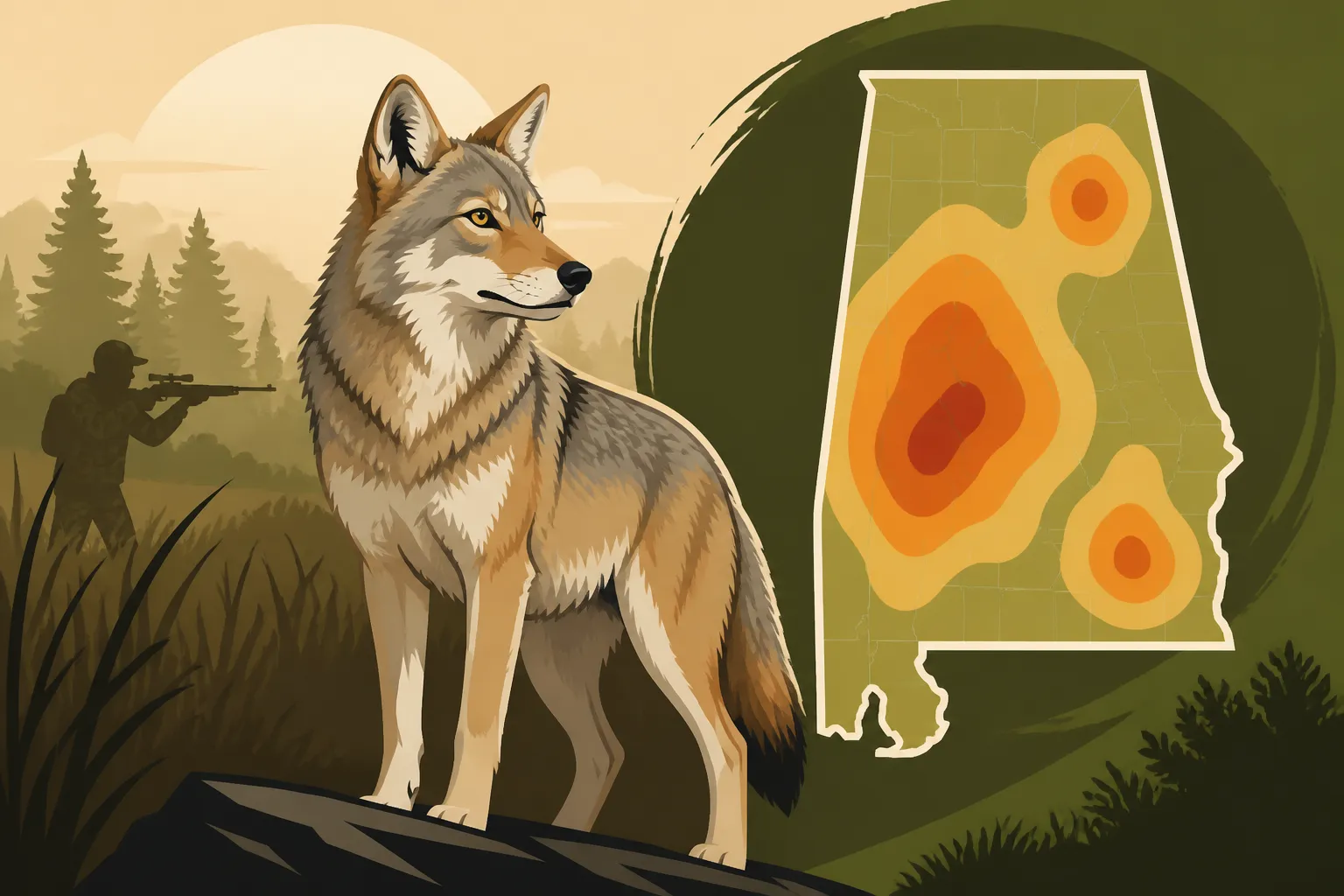
It's safe to say that coyotes have successfully colonized every single county in Alabama. Their adaptability means they're not restricted to one type of habitat; you'll find them just about anywhere there's a food source and some cover. However, while they are ubiquitous, their prevalence and behavior can vary slightly depending on the specific region of our state.
Statewide Presence and Observed Patterns
The undeniable truth is that coyotes are now found from the foothills of the Appalachians in the north to the Gulf Coast in the south. There's not a single habitat type in Alabama that seems off-limits to them. You'll hear them yipping in the deep swamps of the Mobile-Tensaw Delta, see their tracks in the sandy soils of the Wiregrass region, and catch a glimpse of them darting across a field in the Black Belt. This widespread distribution is a stark contrast to just a few decades ago and presents unique challenges for wildlife managers, hunters, and landowners alike.
One of the interesting patterns observed is that while they are everywhere, their impact might feel more pronounced in certain areas. For example, in heavily forested regions, coyotes often rely more on deer fawns and small mammals. In agricultural areas, their diet might shift to include more rodents, insects, and even domestic poultry or small livestock if not properly protected. The prevalence of certain prey species, the density of human populations, and the intensity of hunting and trapping efforts can all create localized variations in their observable presence and behavior. It's a complex puzzle, and understanding the nuances of how coyotes interact with each different landscape is crucial for any effective management strategy. When you're scouting new territory, perhaps using a tool like GoHunt to analyze aerial maps for cover and open spaces, it's always wise to assume coyotes are present and plan your approach accordingly.
Regional Variations in Density and Impact
While coyotes are statewide, their density can differ, leading to varying levels of impact across Alabama's distinct geographical regions. These variations are often linked to habitat, prey availability, and human population density.
First, let's consider the Black Belt Prairie region. This area, renowned for its rich soils and agricultural lands, often supports a high density of prey animals, from small rodents to white-tailed deer. The mix of open fields, fencerows, and timbered creek bottoms provides excellent hunting opportunities and cover for coyotes. Hunters in this region frequently report significant coyote activity and express concerns about their impact on deer fawn survival. The abundance of food means that coyote populations here can thrive and potentially reach higher densities than in more nutrient-poor habitats. These Black Belt coyotes are often well-fed and can grow quite large, making them formidable predators.
Moving north to the Piedmont and Appalachian regions, characterized by rolling hills, mixed pine-hardwood forests, and more rugged terrain, coyote densities can also be high, but their distribution might be more concentrated in areas with good cover and access to food sources. Here, they might rely heavily on the abundant wild turkey poults, squirrels, and deer fawns. The fragmented nature of some of these landscapes, with interspersed clear-cuts and pine plantations, creates edges that coyotes exploit effectively for hunting. When you're trying to gauge their presence in these areas, tools like those on GoHunt can help you spot potential travel corridors or bedding areas that these adaptable canines might use.
Down in the Coastal Plain and Wiregrass regions, characterized by longleaf pine forests, swamps, and agricultural fields, coyotes are equally at home. Here, they might contend with more dense underbrush in some areas, but the presence of feral hogs, small game, and even sea turtle eggs in coastal areas offers a diverse diet. While the specific prey items might change, the opportunistic nature of the coyote ensures their continued success. Landowners in these regions often face challenges protecting poultry and small calves from predation.
Understanding these regional differences is vital for anyone trying to manage wildlife or protect livestock. What works in the Black Belt might need modification in the mountains or near the coast.
| Alabama Region | Primary Habitat Types | Observed Coyote Density Tendency | Main Impact Concerns |
|---|---|---|---|
| Black Belt | Agricultural fields, hardwood bottoms, fencerows | High | Deer fawn predation, livestock depredation |
| Piedmont/Appalachian | Mixed pine-hardwood forests, rolling hills | Moderate to High | Deer fawn & turkey poult predation, small game |
| Coastal Plain | Longleaf pine, swamps, agricultural fields | Moderate | Small game, occasional livestock, ground-nesting birds |
| Mobile-Tensaw Delta | River swamps, marshes, fragmented forests | Moderate | Waterfowl nests, small game, fawns |
Understanding Coyote Density and Population Trends
It's one thing to know that coyotes are everywhere, but it's another to understand their actual numbers and how those populations are changing. Estimating wildlife populations, especially for such elusive and widespread animals, is a complex science. However, researchers and wildlife agencies in Alabama continuously monitor trends to get a clearer picture of coyote density and their overall population dynamics.
How Coyote Populations are Measured and Estimated
Estimating coyote populations isn't like counting deer from a helicopter over a food plot. These animals are incredibly secretive, mostly nocturnal, and masters of concealment. Wildlife biologists rely on a variety of methods to gauge their numbers and trends, though getting an exact count is nearly impossible.
One common approach involves remote camera surveys. By strategically placing trail cameras across different habitat types, biologists can capture images of coyotes, identify individuals (if distinct markings are present, though this is rare), and track activity levels. The frequency of coyote sightings and the number of unique individuals recorded can provide an index of their relative abundance in a given area. This method is also excellent for observing their behavior and interactions with other wildlife.
Another technique is scent station surveys. Here, a small area is cleared and covered with sand or fine dirt, then a lure (often a territorial scent or food-based attractant) is placed in the center. Tracks left in the sand over a set period can indicate the presence and frequency of coyotes and other furbearers. This provides a measurable index of activity, even if it doesn't give a precise population number.
Harvest data from trappers and hunters also provides valuable insights. While hunting and trapping aren't effective at controlling widespread populations, the number of coyotes reported harvested, their age, sex, and weight can offer clues about population health and trends. A consistently high harvest might suggest a robust population, while changes in average age or condition could signal shifts. Organizations like the Alabama Department of Conservation and Natural Resources (ADCNR) collect this data diligently to inform their management strategies.
Finally, acoustic surveys can be used. Researchers will play coyote howls at specific listening points and record responses. The number and intensity of calls can help estimate the presence and relative density of packs in an area. Each of these methods, when used in conjunction, helps build a more comprehensive, albeit still challenging, picture of Alabama's coyote population. The critical thing to remember is that these are estimates and indices, not exact head counts, but they provide reliable trends over time.
Factors Influencing Coyote Density
Coyote density isn't static; it's a dynamic figure influenced by a complex interplay of environmental factors. Understanding these drivers helps us comprehend why coyote numbers might seem higher in one area compared to another.
Food Availability is arguably the most critical factor. Where there's an abundance of prey – be it deer fawns, rabbits, rodents, or even insects and berries – coyote populations will generally be higher. Areas rich in white-tailed deer, for example, can sustain more coyotes, especially when fawns are vulnerable. Similarly, agricultural lands with ample crop residues or rodent populations provide a consistent food base. This explains why areas like the Alabama Black Belt, with its fertile grounds and high deer densities, often see a thriving coyote population. The article on Alabama Predator Impact on Fawn Recruitment delves deeper into this particular concern for deer hunters.
Habitat Structure and Cover also play a significant role. Coyotes prefer a mosaic of open hunting areas and dense cover for resting, denning, and avoiding detection. Think of timber edges, thickets, brushy creek bottoms, or dense pine plantations. Areas with a good interspersion of these elements will typically support more coyotes than vast, unbroken forests or completely open plains. Access to water is another consideration, as all wildlife needs it.
Competition and Predation from other species can affect coyote numbers, though in Alabama, coyotes are largely at the top of the food chain in most areas. While Alabama's Recovering Black Bear Population is present in some areas, bears rarely prey on adult coyotes. Other predators like bobcats and foxes might compete for smaller prey, but generally, coyotes dominate. However, diseases like mange, which affects Mange in Alabama Coyotes and Foxes, can periodically reduce local populations.
Lastly, Human Activity profoundly impacts coyote density. Hunting and trapping efforts, particularly consistent and widespread ones, can reduce local populations. However, coyotes are incredibly resilient, often compensating for losses with larger litter sizes and higher survival rates when pressure is removed. Habitat alteration through development or land management practices (like prescribed burning or clear-cutting) can either create new opportunities or reduce suitable habitat, influencing where coyotes settle and thrive. A hunter using a detailed map or an app like GoHunt to analyze changes in forest cover can often predict where coyotes might concentrate their efforts.
Population Dynamics and Trends in Alabama
The general trend for coyotes in Alabama, as with much of the Southeast, has been one of increasing numbers and expansion over the past few decades. However, there's a growing consensus that while their overall range covers the entire state, specific population densities may have stabilized or are even decreasing in some localized areas due to factors like sustained hunting and trapping pressure, habitat changes, and disease.
Early on, when coyotes were first colonizing Alabama, they experienced what biologists call a "boom" phase. With abundant food, no natural predators to speak of, and plenty of suitable habitat, their numbers soared rapidly. This is typical for an invasive or newly arrived species. As they filled available niches, competition among themselves increased, and their populations reached a kind of carrying capacity for certain habitats.
Today, while they are still widespread, many hunters and trappers report that while coyotes are common, they might not be quite as overwhelmingly numerous as they were at their peak in some regions. This doesn't mean they're disappearing, but rather that their populations have settled into a more stable, albeit still high, level. The resilience of coyotes is remarkable; they are highly adaptable, breed prolifically, and exhibit "compensatory reproduction," meaning if their numbers are reduced through culling, the remaining females tend to have larger litters and a higher percentage of young survive. This makes true eradication nearly impossible on a large scale.
Disease, like the aforementioned mange, can cause localized declines, but these are usually temporary, with populations rebounding quickly. Droughts or prolonged periods of low prey availability can also stress populations, but Alabama's rich biodiversity generally ensures a consistent food supply. The most significant ongoing influence on their populations will likely remain the combined efforts of Predator Hunting in Alabama and trapping, paired with land management practices that either favor or disfavor their presence. Ultimately, while localized fluctuations occur, coyotes are a permanent and integral part of Alabama's ecosystem, and their numbers will continue to be a significant factor in wildlife management decisions.
Impacts of a High Coyote Population
The presence of a thriving coyote population, while a natural ecological development, brings with it a host of challenges and concerns for Alabama's other wildlife species, agricultural interests, and even domestic pets. It's a complex situation with no easy answers, and understanding these impacts is the first step toward effective management.
Deer Fawn Predation and Herd Recruitment
Perhaps the most talked-about and frustrating impact of coyotes among Alabama deer hunters is their significant role in deer fawn predation. Many hunters invest countless hours and resources into managing their land for healthy deer herds, only to see fawn recruitment suffer year after year. It's disheartening to scout for doe-fawn groups in late summer and find a noticeable absence of young ones. This isn't just anecdotal; scientific studies across the Southeast have confirmed that coyotes are often the primary predator of white-tailed deer fawns.
Coyotes are incredibly efficient at hunting fawns, especially during the first few weeks of their lives when they are most vulnerable. A newborn fawn's primary defense is to lie still and rely on camouflage, a strategy that often fails against a keen-nosed, persistent coyote. While a doe will aggressively defend her fawn, she can only protect one at a time, and coyotes often hunt in pairs or small packs, making them highly effective. The peak fawning season in Alabama often coincides with a period when coyotes are raising their own pups, creating a perfect storm where hungry coyote adults and pups are actively seeking easily accessible protein. This intensive predation can severely depress Alabama Fawn Survival Rates, leading to a lower number of yearlings entering the population.
The long-term consequence of this fawn predation is a reduced deer herd recruitment. If a significant percentage of fawns don't make it to adulthood, it impacts future breeding populations and overall deer numbers. This can lead to skewed age structures in the herd and, for some hunters, fewer deer sighted and lower harvest success. The article Alabama Predator Impact on Fawn Recruitment offers a deeper dive into how this plays out in our specific environment, highlighting why hunters are so passionate about managing coyote numbers.
Decline in Small Game Populations
Beyond deer, coyotes also have a measurable impact on Alabama's small game populations. Species like rabbits, squirrels, and ground-nesting birds are all on the coyote menu. Hunters who remember abundant rabbits and quail from decades past often point to the rise of the coyote as a major factor in their decline, and they're not wrong to feel that way.
Rabbits, for instance, are a staple food source for coyotes. Their quick breeding cycle can partially offset predation, but sustained pressure from a healthy coyote population can keep rabbit numbers depressed, making them harder for hunters to find. Similarly, coyotes are opportunistic hunters of squirrels, especially young ones or those caught on the ground. When these small game populations are already under pressure from habitat loss or other factors, increased predation by coyotes can be a significant blow.
Ground-nesting birds, such as wild turkeys and bobwhite quail, are also vulnerable. Coyote predation on eggs, poults, and even adult hens during nesting season can significantly impact reproductive success. For Bobwhite Quail in Alabama's Black Belt, which are already struggling due to habitat changes, coyote predation adds another layer of challenge to their recovery efforts. While coyotes are just one piece of a larger ecological puzzle, their pervasive presence and broad diet mean they contribute substantially to the pressures faced by our beloved small game species.
Livestock Depredation and Farmer Concerns
The impact of coyotes extends beyond wild game; they also pose a serious threat to livestock, leading to considerable financial losses and stress for Alabama farmers and ranchers. This is a very real, often heartbreaking, frustration for those trying to make a living off the land.
Calves are particularly vulnerable, especially newborns. Coyotes, often working in pairs or small groups, will target young calves, sometimes causing fatal injuries. Sheep and goats are also common targets, as their smaller size makes them easier prey. For small farm operations, even the loss of a single animal can represent a significant economic hit. Poultry, from chickens to turkeys, are almost irresistible targets if not housed in secure coops, and it's not uncommon to hear stories of entire flocks being wiped out overnight. The article Alabama Coyote Attacks on Livestock provides more detailed insights into this specific problem facing our agricultural community.
The constant threat of depredation means farmers must invest in protective measures, whether that's guardian animals (like dogs or donkeys), electric fencing, or even night-time surveillance. These measures add to the cost of production and represent another burden on producers. For some, the emotional toll of losing animals to predators is as heavy as the financial one. Coyotes are incredibly intelligent and persistent, quickly learning to exploit vulnerabilities in protective setups. This makes their management around livestock a continuous, challenging battle for rural Alabamians.
Managing Coyote Populations for Game and Livestock
Given the widespread presence and impact of coyotes across Alabama, effective management strategies are crucial for protecting game species and livestock. While complete eradication is neither feasible nor desirable, localized control efforts can help mitigate their negative impacts. This often involves a multi-pronged approach combining various techniques.
Hunting Strategies for Coyote Control
Hunting is one of the most accessible and popular methods for managing coyote populations in Alabama, and it provides an opportunity for hunters to actively contribute to wildlife balance. Many hunters are motivated to reduce coyote numbers to benefit deer and turkey populations, especially when scouting indicates a strong coyote presence.
Calling is arguably the most effective hunting strategy. Coyotes are curious and territorial, making them susceptible to various calls. Electronic calls are highly popular because they can perfectly mimic the sounds of distress (like a rabbit in peril or a fawn bleating), territorial howls, or pup distress calls. Hand calls, while requiring more skill, are also very effective. Successful calling often involves setting up quietly with the wind in your favor, using good camouflage, and being patient. The article Coyote Calling in Alabama Farm Country provides specific tactics for enticing these wary predators.
Still-hunting and ambush hunting can also be productive, especially in areas where coyotes are known to travel, such as logging roads, field edges, or creek bottoms. Hunters can position themselves in a concealed location during times of peak coyote activity (dawn and dusk) and wait for an opportunity. Understanding coyote travel patterns, perhaps aided by detailed mapping tools like those on GoHunt, is key to success here.
Night hunting with lights is a legal and highly effective method for coyote control on private lands in Alabama, often with the aid of powerful spotlights or thermal imaging equipment. This method requires proper permitting and knowledge of local regulations, but it allows hunters to target coyotes during their most active periods, increasing success rates significantly. The internal link Night Hunting Rules for Alabama Coyotes outlines the specific guidelines for this practice.
While hunting alone is unlikely to eliminate coyotes from a large area due to their reproductive capabilities, consistent hunting pressure can reduce local densities, disperse packs, and make the remaining coyotes warier, which can temporarily lessen their impact on vulnerable prey species. It’s an ongoing effort that many passionate Alabama hunters embrace.
Trapping as an Effective Control Method
For sustained and effective coyote control, especially for individuals dealing with recurrent livestock depredation or managing specific tracts for game, trapping often proves to be a more efficient and impactful method than hunting alone. Trapping allows for targeted removal of specific problem animals and can reduce populations over a longer period.
Foot-hold traps and snares are the most common tools used by licensed trappers in Alabama. Foot-hold traps are designed to capture an animal by the foot, holding it humanely until the trapper can remove it. Snares, when set correctly, quickly and effectively dispatch the animal. Trapping requires significant skill, knowledge of coyote behavior, and a deep understanding of setting techniques to be both effective and ethical. Trappers learn to read sign, identify travel corridors, and understand how to blend their sets into the natural environment. The Trapping Alabama Feral Hogs article touches on similar principles of trapping, although hog traps differ significantly in design.
Professional nuisance wildlife control operators often employ trapping as their primary method for addressing specific problem coyotes, particularly around residential areas or livestock operations. These professionals have the expertise and equipment to set traps safely and effectively, ensuring that non-target animals are avoided as much as possible. For landowners experiencing chronic issues, consulting with a professional trapper or participating in trapper education programs can be incredibly valuable.
Trapping is a year-round activity for coyotes on private land in Alabama, and specific seasons and regulations apply for public lands or for fur harvesting. It's a method that requires dedication and often a higher level of commitment than occasional hunting, but its impact on local coyote densities can be substantial. For those interested in broader furbearer management, learning about Trapping Alabama Raccoon and Bobcat can expand one's skills and understanding of these effective control measures.
Integrated Management Approaches
Truly effective coyote management often involves an integrated approach, combining multiple strategies rather than relying on a single method. This holistic view acknowledges the coyote's adaptability and seeks to leverage various tools to achieve specific conservation or protection goals.
An integrated strategy might combine hunting and trapping efforts throughout the year. For instance, trapping in late winter and early spring can remove breeding adults before fawning season, while calling throughout the year can target opportunistic individuals. Hunters can also use their time in the field, perhaps while Scouting Alabama Public Land Before Season, to identify areas of high coyote activity or fresh sign, relaying that information to trappers or coordinating hunting efforts.
Habitat management can also play a subtle but important role. While you can't eliminate coyotes through habitat changes, you can manage for species that are less vulnerable or create conditions that make it harder for coyotes to hunt effectively. For example, maintaining open sight lines in certain areas or creating dense escape cover for fawns might alter coyote hunting success. Protecting and enhancing critical habitat for game species like quail or turkeys can help these populations withstand some level of coyote predation.
For livestock protection, an integrated approach often includes non-lethal methods in conjunction with lethal control. This could mean using livestock guardian dogs, installing fladry (strands of flagging that deter canids), night corralling of vulnerable animals, and ensuring proper disposal of carcasses to avoid attracting coyotes. When non-lethal methods are insufficient, targeted hunting or trapping of problem animals becomes necessary. The goal is to make livestock a difficult and unrewarding target for coyotes.
Finally, education and outreach are critical components of integrated management. Sharing knowledge about coyote behavior, effective control methods, and the importance of responsible wildlife management helps build a community of informed landowners and hunters. Collaborating with local wildlife agencies and understanding their research, like studies on Alabama Coyote Diet in Farm Country, can help refine local strategies and ensure efforts are aligned with broader conservation goals. By combining these diverse tactics, Alabamians can strive for a balanced approach to living with and managing our statewide coyote population.
Disclaimer
This article is for general informational purposes only and does not constitute professional advice. Laws, prices and regulations vary by location and change over time. Consult a qualified professional for guidance on your specific situation.