Alabama Coyote Diet in Farm Country
Coyotes are a fact of life in Alabama's farm country, and if you've spent any time on agricultural land, you've likely seen their tracks, heard their calls, or dealt with the impact they have on livestock and game. Understanding what these adaptable predators eat is the first step in comprehending their presence and managing their effects, and this guide aims to pull back the curtain on the Alabama coyote's varied diet in these rural settings.
Understanding the Coyote's Adaptable Palate
The coyote (Canis latrans) is a survivor, a creature of incredible adaptability. Unlike some highly specialized predators, coyotes aren't picky eaters, and that's precisely why they thrive in diverse environments, from suburban fringes to the deepest forests and, of course, our sprawling farm country. This flexibility in their diet is their superpower, allowing them to exploit whatever food source is most abundant and easiest to acquire.
The Ultimate Opportunist
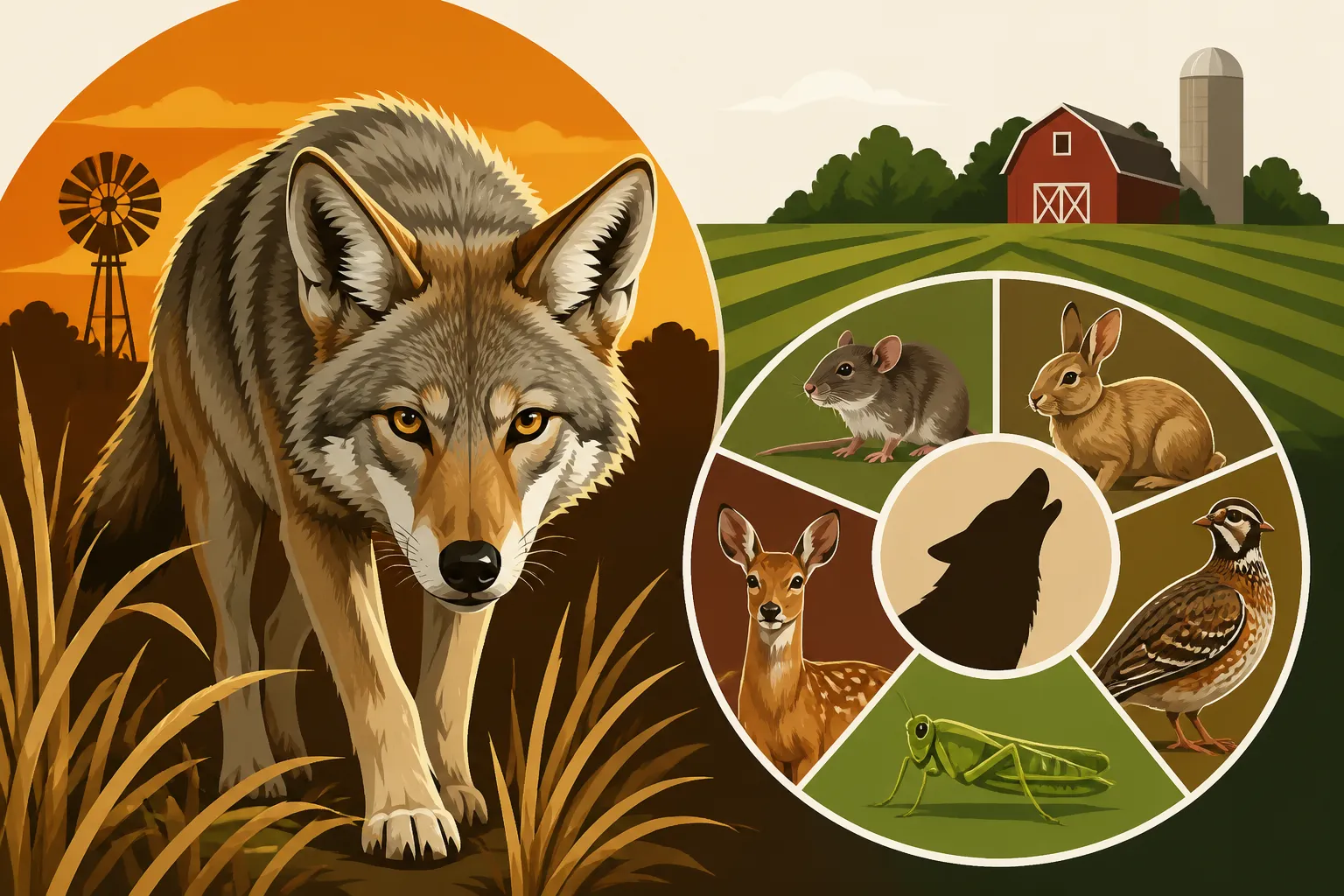
Think of a coyote as the ultimate opportunist. They don't stick to a rigid menu. If there's a wild rabbit, they'll chase it. If there's a field mouse, they'll pounce. If a deer fawn is tucked away, vulnerable and small, they'll find it. But their diet isn't limited to fresh kills. They are keen scavengers, readily consuming carrion, whether it's roadkill, an animal that succumbed to disease, or even gut piles left by hunters. This means that even in lean times, a coyote usually finds a way to fill its belly, which is a major reason their populations have expanded so successfully across the state. They're not just hunters; they're also very efficient clean-up crews, which can sometimes be a double-edged sword for landowners.
Dietary Flexibility and Survival
This dietary flexibility is crucial for their survival, particularly in areas like Alabama's farm country where food sources can fluctuate. Crop rotations change, small game populations ebb and flow, and even weather patterns can affect what's available. A coyote doesn't care; it simply adjusts. If insects are plentiful after a rain, they'll eat them. If berries are ripe in a fencerow, they'll graze. This ability to shift from a carnivorous diet to an omnivorous one, even incorporating plant matter, ensures that starvation is rarely an issue for a healthy coyote population. Hunters often use mapping tools like onX Layers for Alabama Land Status to understand terrain and habitat, which can inadvertently reveal areas where coyotes might find a diverse food base. This versatility makes them incredibly resilient, a quality that both frustrates and fascinates those who study them.
Primary Prey in Alabama Farm Country
While coyotes are generalists, certain food sources form the backbone of their diet in agricultural settings. These are the items they actively seek out and rely on most heavily, directly influencing their presence and impact on local ecosystems and farm operations.
Small Mammals: The Staple
Without a doubt, small mammals are the bread and butter of the Alabama coyote's diet, especially in farm country. Voles, mice, rats, and cotton rats are incredibly abundant in pastures, crop fields, and field edges, providing a consistent, easily caught food source. These little critters thrive in the disturbed habitats of farms, finding ample food in spilled grains, growing crops, and dense fencerows. Coyotes spend a significant portion of their hunting time mousing, using their acute hearing to pinpoint movement under grass and snow (if we get any!). A single coyote can consume dozens of these rodents in a day, making them effective natural pest control, ironically, while also being a nuisance in other ways. When you see a coyote slowly walking through a field, head tilted, it's often looking for its next small-mammal meal.
Beyond the tiny rodents, larger small game also makes it onto the menu. Rabbits, especially cottontails found along fencerows and brushy areas, are a significant food source. Rabbit Hunting Alabama Fencerows is a popular pastime for many hunters, but coyotes are just as effective, if not more so, at pursuing these fast-footed animals. Groundhogs (woodchucks), another common resident of farm fields, also fall prey to coyotes. These burrowing animals, while larger, provide a substantial meal and are often hunted when they venture out to feed. The sheer abundance of these small mammals means that coyotes almost always have something to eat, even when other prey might be scarce.
Deer and Fawn Predation
This is often the most contentious aspect of the coyote's diet for deer hunters and wildlife managers. While adult, healthy deer are generally too fast and powerful for a lone coyote, fawns are incredibly vulnerable, particularly during their first few weeks of life. When does drop their fawns in late spring and early summer, coyotes are on high alert, actively searching for these hidden, defenseless youngsters. A coyote's keen sense of smell allows them to locate fawns bedded down in tall grass or brush. This predation can have a significant impact on Alabama Fawn Survival Rates, especially in areas with high coyote densities, and it's a major concern for those working to maintain healthy deer populations.
It's not just fawns, however. Coyotes will also prey on weakened or injured adult deer. This could be a deer that was hit by a car, one suffering from disease, or an older, infirm animal. While they might not be actively "hunting" a healthy, prime buck, if the opportunity arises, they won't pass up an easy meal. This scavenging on deer carrion is also a consistent dietary component, as they'll readily consume gut piles left by hunters or deer that didn't make it through the winter. This behavior helps cycle nutrients back into the ecosystem, but for hunters, it often feels like a direct competition for game. Understanding the timing of When the Alabama Rut Peaks by Zone and when fawns are born can help hunters anticipate coyote activity.
Birds and Their Eggs
While not always a primary food source, birds and their eggs certainly contribute to the coyote's diverse diet, especially in farm country where ground-nesting birds are common. Turkeys, for instance, are vulnerable during nesting season. Coyote predation on turkey nests and poults can affect Poult-to-Hen Ratios and What They Mean, which is a key indicator of turkey population health. A coyote will systematically search fields and forest edges for nests, consuming eggs and newly hatched chicks. This is particularly true in early spring when other food sources might still be somewhat limited.
Beyond turkeys, other ground-nesting birds like bobwhite quail and various songbirds are also at risk. Bobwhite Quail in Alabama's Black Belt are a valued game species, and their nests are often in areas where coyotes actively hunt for small mammals. The same applies to waterfowl nests near farm ponds or wetlands adjacent to agricultural fields. Additionally, coyotes will readily consume insects, berries, and fallen fruits found in and around farm fields, further diversifying their diet and demonstrating their incredible adaptability. This plant matter, along with various insects like grasshoppers and beetles, provides supplementary nutrients and moisture, especially during drier periods.
Seasonal Shifts and Opportunistic Feeding
The Alabama coyote's diet isn't static; it shifts with the seasons, reflecting the availability of different food sources throughout the year. Understanding these seasonal variations can provide insight into their behavior and presence on farm properties.
Spring: Vulnerable Young and Emerging Life
Spring in Alabama's farm country is a time of renewal, and for coyotes, it's a season of abundant, vulnerable prey. As mentioned, the birthing season for deer fawns is a critical period. Coyotes actively patrol deer birthing grounds, whether it's a dense thicket, a stand of tall pines, or a field of new growth, seeking out those defenseless youngsters. This high level of fawn predation directly impacts deer recruitment.
But it's not just fawns. Spring also brings turkey nesting season, and coyotes are notorious nest predators. They'll locate and consume turkey eggs and newly hatched poults. Alabama Turkey Brood Survey Results often reflect the challenges young turkeys face, and coyotes are a significant factor. Furthermore, as agricultural fields are planted, they become magnets for rodents and insects, providing an easy buffet for coyotes. Young rabbits also emerge, presenting another readily available food source. This period often sees coyotes working edges of freshly planted fields, sniffing out activity.
Summer: Abundance and Variety
Summer sees a boom in almost all food sources. Small mammal populations are at their peak, providing a constant supply of food. The sheer density of mice, voles, and rabbits in overgrown fencerows and maturing crops means coyotes don't have to work as hard for a meal. Many species of birds are fledging their young, and while most are too fast for coyotes, some clumsy fledglings can become easy targets.
Beyond animal protein, summer also means a bounty of plant matter. Ripe berries, wild plums, and even some cultivated crops (if accessible) can become part of a coyote's diet. I've even seen evidence of them eating watermelons and cantaloupes in farmer's fields, likely for the moisture content as much as the nutritional value. The longer daylight hours and warmer nights also mean coyotes are more active, covering wider ranges and exploiting the rich summer buffet. This is a good time to understand Alabama Coyote Range and Density to see how these factors combine.
Fall and Winter: Scavenging and Persistence
As fall hunting seasons begin and winter approaches, the coyote's diet shifts again, often relying more heavily on scavenging and the remaining resilient prey. Deer hunting season brings with it gut piles and deer that may be wounded and escape, only to succumb later. These are prime targets for coyotes, offering large, calorie-rich meals that can sustain them through colder periods. Farmers' fields, after harvest, might still hold spilled grains and residual rodents, attracting coyotes to glean what's left.
Winter can be the toughest time for coyotes, but their adaptability shines through. While small mammal populations might dip, those that remain are often easier to spot in sparser cover. They become more reliant on carrion, whether it's an animal that perished from cold or disease, or a deer struggling to survive the late season. Coyotes are incredibly persistent hunters, and in winter, their keen senses are especially valuable for finding food when other predators might struggle. Hunters using mapping apps like GoHunt can pinpoint areas of dense cover or creek bottoms where deer might yard up in winter, inadvertently identifying potential coyote hunting grounds. Late-Season Food Sources for Alabama Whitetails are also critical for coyotes, as they often follow the deer.
Impact on Livestock and Game Species
The adaptable diet of the Alabama coyote, while a testament to its survival skills, inevitably leads to conflicts with human interests, particularly in agricultural areas where livestock and valuable game species are present.
Threat to Farm Animals
One of the most immediate and significant concerns for farmers in Alabama is the predation of coyotes on livestock. While coyotes typically prefer smaller, wild prey, the opportunity to take an easy meal from a farm can be irresistible. This threat is particularly acute for young animals like calves, lambs, and goat kids. During calving season, a coyote might target a newborn calf separated from its mother, or a pair might work together to bring down a larger, but still vulnerable, young animal. This can result in heartbreaking losses for livestock producers.
Poultry is also a common target. Free-range chickens, turkeys, ducks, and geese are easy pickings for a hungry coyote, especially if they aren't properly secured at night or have ample opportunity to wander. Even domestic cats and small dogs can fall victim to coyotes, particularly those that roam freely near the edges of woodlands or fields bordering farm properties. These incidents highlight the direct economic impact coyotes can have on farming communities, leading many landowners to seek methods for Predator Calling Alabama Pine Plantations or trapping to mitigate losses.
Influence on Deer and Turkey Populations
For Alabama's hunters and wildlife enthusiasts, the coyote's impact on deer and turkey populations is a major talking point. As discussed, fawn predation is a significant issue. A healthy deer population relies on strong recruitment of young deer into the adult population, and high coyote densities can depress these numbers. While coyotes often target weaker or less healthy fawns, ensuring a strong gene pool, their sheer numbers can lead to a reduction in overall deer available for hunters. This is especially noticeable in areas where deer populations are already struggling or where habitat quality is low.
Similarly, wild turkeys face pressure from coyotes, particularly during nesting and brood-rearing periods. A coyote destroying a turkey nest or preying on poults can significantly affect the annual hatch and the overall Alabama Turkey Population Trends. While turkeys have adapted strategies to cope with predators, such as multiple nesting attempts, persistent coyote pressure can make it difficult for populations to expand or even maintain their numbers. Many hunters believe that aggressive coyote management is essential for boosting both deer and turkey numbers. Using mapping tools like GoHunt to identify prime turkey nesting cover can also show areas where coyotes might concentrate their spring efforts.
Managing Coyote Populations Through Diet Knowledge
Understanding what Alabama coyotes eat in farm country isn't just academic; it's a vital tool for those looking to manage their populations and mitigate conflicts. Knowing their dietary habits informs more effective control strategies and helps us coexist, even if uneasily, with these pervasive predators.
Targeting Food Sources in Trapping and Hunting Strategies
If you know what coyotes are eating, you can use that knowledge to your advantage in predator control. For instance, knowing that small mammals are a primary food source can guide trapping efforts. Setting traps in areas with high rodent activity—like dense fencerows, field edges, or areas of heavy cover near cultivated fields—can be more effective. Baits and lures used in trapping often mimic the scents of their natural prey, whether it's a musky small mammal scent or a distress call of a rabbit. Running a Trapline in Rural Alabama effectively relies heavily on such knowledge.
During deer fawning season, focusing coyote hunting or trapping efforts around known deer birthing areas or dense bedding cover can significantly reduce fawn predation. Similarly, in spring, when turkeys are nesting, strategic placement of calling setups or traps near prime nesting habitat can be beneficial. Coyote callers often imitate the sounds of distressed fawns or rabbits because they know these are irresistible meals for a hungry coyote. By understanding their food-seeking behaviors, hunters can make themselves more effective. Tools like GoHunt can help identify these key areas for setting up a stand or placing traps.
Understanding Their Role in the Ecosystem
While coyotes certainly present challenges, particularly for livestock and game populations, it's also important to acknowledge their ecological role. They are natural predators that help control populations of rodents and other small mammals, which can otherwise cause significant damage to crops. They also act as scavengers, cleaning up carrion and preventing the spread of disease by removing decaying animals from the landscape. This balance is a delicate one, and complete eradication, even if possible, could have unforeseen consequences for other species.
The goal for many landowners and wildlife managers isn't necessarily to eliminate coyotes entirely, but to manage their numbers to a level that minimizes negative impacts while allowing them to fulfill their natural role. This often involves a multi-faceted approach, combining hunting, trapping, and deterrents for livestock protection. Education about the coyote's diet and behavior is fundamental to developing realistic expectations and effective, sustainable management strategies that respect both agricultural interests and the broader ecosystem of Alabama.
Table: Common Alabama Farm Country Coyote Diet Components by Season
| Prey Category | Spring | Summer | Fall | Winter | Primary Example |
|---|---|---|---|---|---|
| Small Mammals | High | Very High | High | Medium | Voles, Mice, Rats, Rabbits |
| Deer (Fawns/Carrion) | High (Fawns) | Medium (Fawns/Carrion) | High (Carrion/Wounded) | High (Carrion/Weakened) | Deer Fawns, Roadkill, Hunter Gut Piles |
| Birds & Eggs | Medium (Nests/Poults) | Low (Fledglings) | Low | Low | Turkey Eggs, Quail, Fledgling Birds |
| Livestock | Medium (Young) | Low | Low | Medium (Young/Weakened) | Calves, Lambs, Poultry |
| Insects | Medium | High | Medium | Low | Grasshoppers, Beetles |
| Plant Matter | Low | Medium (Berries/Fruit) | Medium (Fallen Crops) | Low | Berries, Wild Plums, Waste Grain |
Disclaimer
This article is for general informational purposes only and does not constitute professional advice. Laws, prices and regulations vary by location and change over time. Consult a qualified professional for guidance on your specific situation.