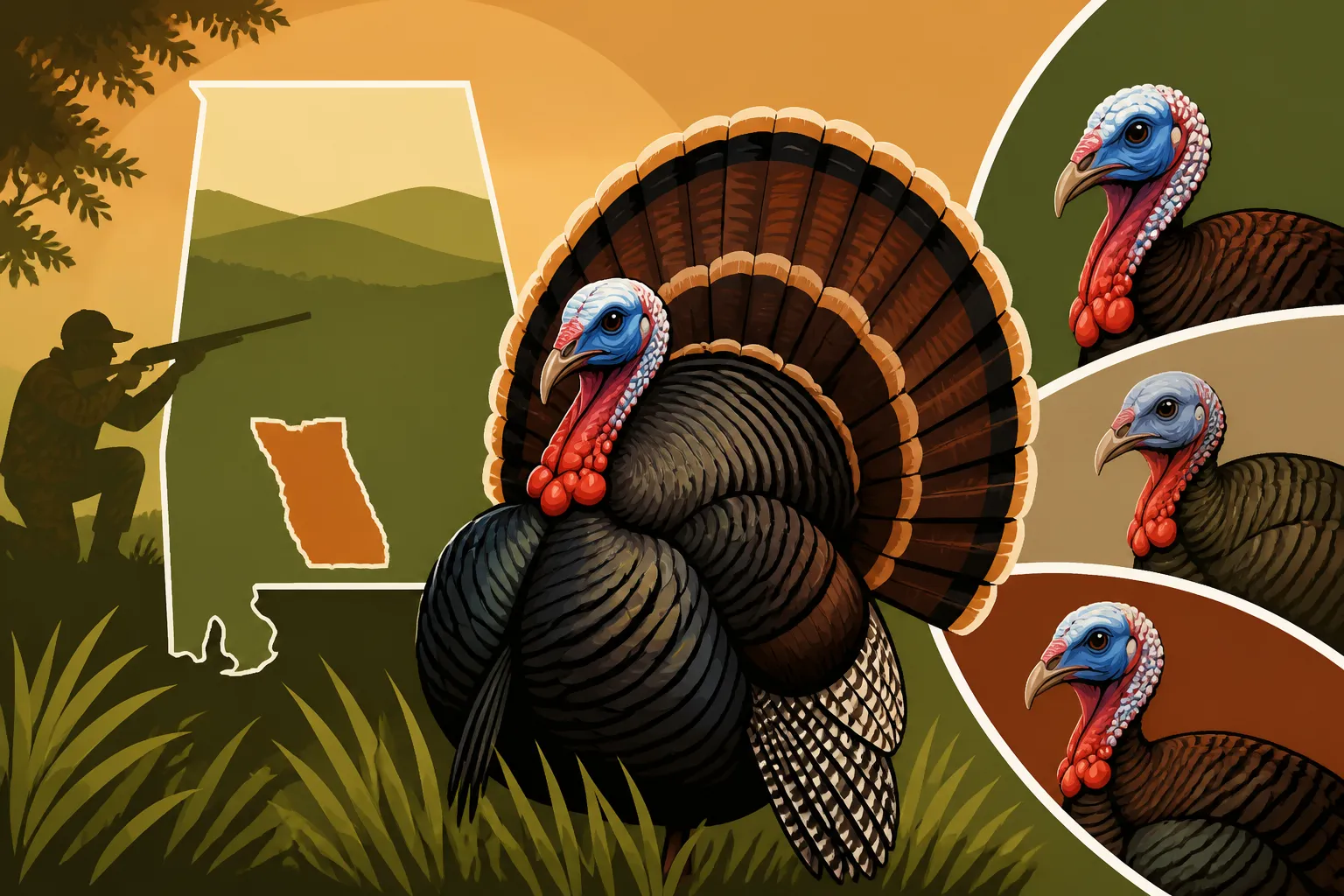
Alabama Wild Turkey Subspecies
For many of us who chase spring gobblers across Alabama's diverse landscapes, there's often a lingering question: just what kind of turkey am I actually hunting? With different subspecies roaming North America, it's easy to wonder if that deep-gobbling bird in the Black Belt is the same as the one you're trying to sneak up on in the piney woods of South Alabama. Understanding the specific subspecies that calls our state home helps paint a clearer picture of their behavior, habitat, and why Alabama is such a fantastic place to hunt them.
The Eastern Wild Turkey: Alabama's Reigning Gobbler
When you're slipping through the hardwoods of Talladega National Forest or patiently waiting on a field edge in the Black Belt, the magnificent bird you're pursuing is almost certainly an Eastern Wild Turkey. This particular subspecies, known for its intelligence and often elusive nature, is the sole native turkey found throughout Alabama. They've been here for centuries, adapting to everything our state can throw at them, from dense river bottoms to rolling upland ridges. Their recovery from near extinction in the early 20th century is one of Alabama's great wildlife success stories, a testament to dedicated conservation efforts and the birds' incredible resilience.
Physical Characteristics and Identification
Eastern Wild Turkeys are impressive birds, easily distinguished by their size and distinct plumage. Adult gobblers, especially those mature birds we all dream of encountering, can weigh upwards of 20 pounds, sometimes even more in prime habitat. Their plumage is a striking display of iridescent copper, bronze, and green, which shimmers in the sunlight, especially on their body feathers. The tail feathers are typically tipped with a dark chestnut or rusty brown band, and the primary wing feathers are barred with alternating black and white bands. Their head and neck, largely devoid of feathers, can change color rapidly depending on their mood, shifting from pale white and blue to an intense red during displays. Hens are generally smaller and less colorful, with duller feathering and a smaller, often absent, beard. A key feature for hunters is that the Eastern's body feathers, particularly the primary and secondary wing feathers, tend to be darker and more iridescent than some other subspecies, which helps them blend into the dappled light of our deep Southern forests.
Habitat Preferences and Range Across Alabama
The Eastern Wild Turkey is incredibly adaptable, which is why it thrives throughout Alabama. They prefer a mix of mature hardwood forests, pine timber stands, and open fields or clearings. This diverse habitat provides everything they need: large trees for roosting safely at night, dense undergrowth for nesting and cover from predators, and open areas for feeding on insects, seeds, and acorns. You'll find them in the rolling hills of the Appalachian foothills, the rich farmlands of the Black Belt, the expansive pine plantations of the Wiregrass, and even the river swamps of the Gulf Coast region. Their ability to utilize various ecosystems means that no matter where you are in Alabama, if there's suitable cover, food, and water, there's a good chance you'll find Easterns. Scouting often involves looking for signs in these mixed habitats – scratching in the leaves, dusting bowls, and especially tracks around water sources or along logging roads. Wild Turkeys in Alabama details more about their statewide distribution.
Behavior and Vocalizations
Eastern Wild Turkeys are known for their strong gobbling, especially in the spring, which is the primary sound that gets us out of bed long before dawn. Their gobble is a loud, resonant "gobble-obble-obble" that can carry for long distances. Beyond the gobble, they have a complex vocabulary, including clucks, yelps, purrs, putts, and kee-kees, each communicating different messages, from contentment to alarm. Learning these calls is crucial for a successful hunt. Behaviorally, they are cautious birds, with excellent eyesight and hearing. They often move in small flocks outside of the breeding season, but spring finds gobblers becoming more solitary or forming small bachelor groups, focused on finding receptive hens. Understanding their daily routines – when they leave the roost, where they feed, and when they return to roost – is vital. Observing their patterns during pre-season scouting, perhaps even using a tool like GoHunt to analyze historical patterns or pinpoint potential habitat features, can give you a significant advantage. Spring Turkey Hunting in Alabama covers many of these tactical elements.
The Absence of Other Subspecies in Alabama
While North America is home to five distinct subspecies of wild turkey – Eastern, Osceola, Rio Grande, Merriam's, and Gould's – Alabama hosts only the Eastern. This is a common point of confusion, especially for hunters who travel to other states or see images of turkeys that look different from what they encounter in their home woods.
Why No Osceola, Rio Grande, or Merriam's?
The distribution of turkey subspecies is largely geographical, dictated by historical ranges, habitat types, and climate.
- Osceola Wild Turkeys (also known as Florida Wild Turkeys) are found exclusively in the southern two-thirds of Florida. They are slightly smaller and darker than Easterns, with less white on their wing barring. While geographically close, Alabama's distinct habitats mark the northern limit of their range.
- Rio Grande Wild Turkeys inhabit the plains states, including Texas, Oklahoma, and Kansas, stretching west into states like New Mexico. They are known for their lighter, buff-colored tail tips and often occupy more open, arid landscapes with brush and mesquite, a stark contrast to Alabama's dense forests.
- Merriam's Wild Turkeys are birds of the mountains, primarily found in the western United States, including states like New Mexico, Arizona, and Colorado, and extending north into the Dakotas. They are characterized by their white or buff-white tail tips and lighter overall appearance, adapted to pine and fir forests at higher elevations.
- Gould's Wild Turkeys have the most restricted range, found predominantly in the mountains of Arizona and New Mexico, and heavily in northern Mexico. They are the largest of the subspecies and are quite distinct visually.
Alabama's ecology simply doesn't align with the specific habitat requirements that define the ranges of these other subspecies. Our dense, humid forests and consistent rainfall provide the ideal conditions for the Eastern to thrive, while excluding the others.
Hybridization and Management Concerns
Historically, there have been instances, particularly during early restoration efforts in various states, where turkeys of different subspecies were released outside their native ranges. This sometimes led to hybridization, where birds with mixed characteristics could be found. However, in Alabama, the reintroduction efforts focused specifically on the Eastern Wild Turkey, primarily through trap-and-transfer programs using native Alabama birds or those sourced from genetically similar Eastern populations. This careful management by the Alabama Wildlife and Freshwater Fisheries Division has ensured that the Eastern Wild Turkey genetic integrity remains strong within the state. Today, you're highly unlikely to encounter a true hybrid in Alabama. Management efforts continue to focus on maintaining healthy Eastern populations, monitoring for disease, and ensuring sustainable hunting practices. Understanding Alabama Turkey Population Trends helps biologists guide these efforts effectively.
Here's a quick comparison of the primary North American wild turkey subspecies:
| Subspecies | Primary Range | Tail Tip Color | Body Color Dominance | Size (Relative) | Habitat Preference |
|---|---|---|---|---|---|
| Eastern | Eastern/Southeastern US (incl. Alabama) | Chestnut/Rusty Brown | Dark, Iridescent | Large | Mixed hardwoods, pine forests, agricultural edges |
| Osceola (Florida) | Peninsular Florida | Dark Brown/Black | Dark, Iridescent | Medium | Pine flatwoods, cypress swamps, palmetto thickets |
| Rio Grande | Central US (TX, OK, KS) & parts of Mexico | Buff/Light Tan | Copper/Green | Medium | Open woodlands, brush country, riparian zones |
| Merriam's | Western US (Mountain West) & parts of Canada | White/Buff White | Bronze/Copper | Medium | Mountain pine/fir forests, Ponderosa pine |
| Gould's | Southern AZ/NM & Northern Mexico | White | Green/Bronze | Largest | High elevation mountain forests, oak woodlands |
Factors Affecting Alabama Turkey Populations Beyond Subspecies
While understanding the subspecies is important, many other factors significantly influence turkey populations in Alabama, often more so than the genetic makeup of the birds themselves. These environmental and ecological elements play a huge role in how many gobblers you'll hear in the spring and how many poults make it to maturity.
Habitat Loss and Fragmentation
One of the most persistent challenges for Alabama's wild turkey population is the ongoing loss and fragmentation of suitable habitat. As urban and suburban areas expand, and large tracts of timber are clear-cut without adequate replanting for wildlife, the contiguous blocks of diverse forest that turkeys need are shrinking. Turkeys require large, unfragmented areas that offer a mix of mature trees for roosting, dense cover for nesting, and open areas for foraging. When these areas are broken up by roads, developments, or monoculture timber plantations, it impacts their ability to nest, rear poults safely, and find sufficient food throughout the year. The long-term health of our turkey population relies on careful land management, including thoughtful timber practices and conservation easements that protect critical turkey habitat. Understanding how Alabama's Chronic Wasting Disease Management Zone affects land use and hunting regulations is also important for comprehensive habitat management.
Predation and Nest Success
Predation is a natural part of any wildlife ecosystem, but it can have a significant impact on turkey populations, especially nest success and poult survival. Predators like raccoons, opossums, skunks, snakes, and coyotes frequently prey on turkey eggs and young poults. While healthy adult turkeys are generally adept at evading predators, nests are vulnerable, and young poults are highly susceptible during their first few weeks of life. Factors like habitat quality, which provides ample cover for nesting hens and hiding spots for poults, can influence predation rates. In areas with high predator densities, often exacerbated by fragmented habitats, turkey recruitment can suffer. Effective predator management, where appropriate and legal, can sometimes be a component of broader turkey conservation efforts, particularly on private lands where intensive management is undertaken. Alabama Turkey Population Estimate discussions often highlight these challenges.
Weather and Brood Survival
The weather, particularly during the critical nesting and brood-rearing periods in late spring and early summer, plays a huge role in the annual turkey hatch. Prolonged periods of cold, wet weather when poults are newly hatched can be devastating. Young turkeys are highly susceptible to hypothermia and pneumonia, and heavy rains can also flood nests or make it difficult for hens to find adequate insect protein for their growing young. Conversely, very dry conditions can lead to reduced insect availability, which is a vital food source for rapidly growing poults. A mild, dry spring after a good winter can lead to an excellent hatch, boosting overall turkey numbers. These year-to-year fluctuations are natural, but extreme weather events, which seem to be more common, can create significant challenges for turkey managers and hunters alike. Keeping an eye on localized weather patterns during the nesting season can give you a hint about what the population might look like in the following spring.
Hunting Considerations for Alabama's Eastern Wild Turkey
Hunting the Eastern Wild Turkey in Alabama is a rich tradition, filled with anticipation, challenge, and the thrill of matching wits with one of the wariest game birds. Since we only have one subspecies, understanding the Eastern's specific behaviors and adapting your tactics to Alabama's unique terrain is paramount.
Understanding Local Behavior Patterns
Eastern Wild Turkeys, even within Alabama, can exhibit localized behavior patterns influenced by the specific habitat they inhabit and the hunting pressure they experience. For instance, gobblers in heavily hunted public land might be "heavier" on the roost, gobbling less frequently or moving off the roost silently, compared to birds on large, lightly hunted private tracts. Turkeys in the Black Belt, with its vast agricultural fields, might spend more time feeding in open areas, while those in the dense pine forests might stick to deeper timber and smaller clearings. Pay attention to how the birds in your particular hunting area respond to calls, their preferred roosting locations, and their travel routes. This local knowledge, often gained through extensive scouting and observation, is invaluable. Knowing when Alabama Gobblers Go Quiet in May or how they react to differing pressure can make all the difference.
Season Dates and Bag Limits
Alabama offers a generous spring turkey season, but it's crucial to be aware of the specific dates and bag limits, which can vary slightly by zone and year. Alabama is divided into two turkey zones, with Zone 1 typically opening a week earlier than Zone 2. This staggered opening helps spread out hunting pressure and offers hunters in Zone 1 an early start. The general bag limit allows for a certain number of gobblers per season, often with a daily limit. It’s absolutely essential to consult the current Alabama Department of Conservation and Natural Resources (ADCNR) regulations booklet or their Outdoor Alabama website before heading afield. They provide the most up-to-date information on Alabama Spring Turkey Zones and Dates, Alabama Turkey Bag Limit Rules, and Alabama Legal Turkey Hunting Hours. Don't guess—check the rules every year to ensure compliance.
Popular Hunting Methods and Gear
Hunting Easterns in Alabama typically involves a combination of scouting, calling, and strategic setup.
- Run-and-Gun: A popular tactic on public lands, especially during the early morning, involves covering ground, stopping to listen for gobbles, and quickly setting up if a bird is heard. This can be very effective for locating birds that are moving or responding to calls. Run-and-Gun Turkey Tactics on Public Land is a great resource if you're exploring this method.
- Static Setup: For more patient hunters or in areas with predictable bird movement, setting up near a known roost, strutting zone, or travel corridor and calling birds in can be highly effective. This often involves using a ground blind or finding natural cover against a large tree, ensuring you're concealed from sharp-eyed gobblers.
- Calling: Mastering various turkey calls – slate calls, box calls, diaphragms, and even wingbone calls – is a core skill. Mimicking hen yelps, clucks, and purrs to entice a gobbler into range is the essence of spring turkey hunting. Experiment with different calls and volumes to see what the birds in your area respond to.
- Gear: Essential gear includes camouflage clothing (head-to-toe), a comfortable vest with plenty of pockets for calls and other essentials, a shotgun (12-gauge or 20-gauge with appropriate choke and turkey loads), and often a decoy or two. A good pair of binoculars can also be invaluable for spotting birds from a distance, especially in open country or Hunting Black Belt Prairie Farmland Deer where fields are common. For those embracing modern technology, apps like GoHunt can help with mapping, property lines, and even keeping track of your scouting notes, giving you an edge in finding those elusive gobblers.
Regardless of your chosen method, safety should always be your top priority. Be absolutely sure of your target and what's beyond it.
Disclaimer
This article is for general informational purposes only and does not constitute professional advice. Laws, prices and regulations vary by location and change over time. Consult a qualified professional for guidance on your specific situation.